Quick Summary
A balancing valve is a critical component used to regulate and stabilise fluid flow in HVAC and industrial piping systems. Without proper balancing, even the most advanced systems suffer from uneven distribution, wasted energy and persistent operational issues. This comprehensive guide explains how balancing valves work, the different types available, and how to select and apply them correctly for long-term performance and efficiency.
Opening Scenario – Why Systems Fail Without Balancing
Imagine a newly commissioned HVAC system in a commercial building. Some rooms are overheated, others remain cold, and the pumps are running harder than expected. Engineers check the equipment—everything is installed correctly. The real problem? The system was never properly balanced.
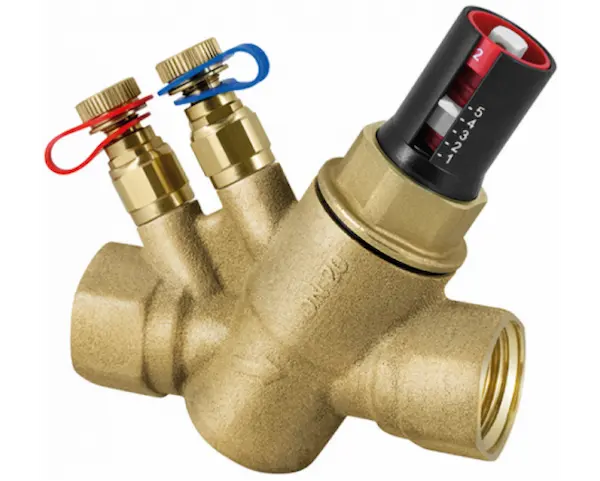
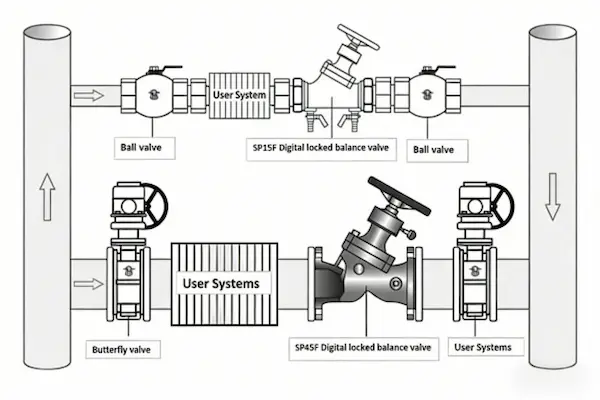
A flow balancing valve is one of the key components used to distribute design flow across branches, risers and terminal units. It works together with correct pump sizing, control valves, piping design, commissioning and maintenance to keep the system stable.
User Pain Points
Uneven Flow Distribution
Without hydronic balancing, water naturally follows the path of least resistance, starving distant circuits while overfeeding nearby ones.
Excessive Energy Consumption
Poorly balanced systems force pumps to operate at higher speeds, increasing electricity costs and accelerating mechanical wear.
Difficult Commissioning and Maintenance
Systems without proper balancing valves are time-consuming to commission and extremely difficult to troubleshoot later.
Solutions & Professional Recommendations
Solution 1: Use Balancing Valves During Initial System Design
Including balancing valves during system design makes commissioning and flow verification easier, but accurate flow regulation still depends on correct valve sizing, installation position, available differential pressure, commissioning procedure, test instruments and documented settings.
Solution 2: Select the Correct Valve Type for the Application
| Valve Type | More Accurate Explanation | Main Use |
|---|---|---|
| Static balancing valve | Manually preset or adjusted valve used to set design flow under measured conditions | Constant-flow or simpler hydronic systems |
| Dynamic balancing valve | Automatic flow-limiting valve that helps maintain target flow within a specified differential pressure range | Variable-flow systems and terminal units |
| Differential pressure control valve | Controls pressure difference across a circuit, riser or control valve group | Reducing pressure fluctuation and stabilizing control |
| PICV / Pressure independent control valve | Combines flow limitation and control-valve function in one package | Terminal units requiring flow control and actuator control |
Solution 3: Combine Valves with Proper Measurement & Commissioning
Using test points and flow indicators allows engineers to verify performance and maintain long-term accuracy.
Typical Application Scenarios
Case 1: Commercial HVAC Retrofit
In commercial HVAC retrofit projects, dynamic balancing valves or PICVs may be considered where variable flow, unstable terminal-unit flow, or excessive manual commissioning effort is observed. Actual energy savings should be verified by pump data, BMS records, flow measurements and before-after operating conditions.
Case 2: Industrial Cooling Loop
In industrial cooling circuits, static or dynamic balancing valves can help distribute flow among branches and equipment circuits when the system is correctly sized, commissioned and maintained.
Data, Engineering Logic & Comparison
| Valve Type | Flow Control | Automation | Typical Use |
|---|---|---|---|
| Static Balancing Valve | Manual | No | Small/medium HVAC systems |
| Dynamic Balancing Valve | Automatic | Yes | Modern HVAC networks |
| Differential Pressure Valve | Pressure-independent | Yes | Variable flow systems |
Correct hydronic balancing can reduce over-pumping, improve terminal-unit flow distribution and support better pump control, but actual energy savings depend on system design, pump control strategy, operating schedule, load profile, control valves, commissioning quality and maintenance records.
Trends & Market Insights
-
Growing demand for energy-efficient HVAC systems
-
Increased adoption of pressure-independent balancing valves
-
Smart buildings integrating balancing valves with sensors and BMS
-
Strong growth in industrial flow-control markets due to sustainability regulations
Balancing valves are no longer optional—they are a regulatory and operational necessity.
Style & Usage Recommendations
-
Install balancing valves on each branch circuit, not only at main headers
-
Always document valve settings after commissioning
-
Re-check balancing after major system modifications
-
Choose corrosion-resistant materials for long service life
At On-Off Valve, we recommend selecting valves based on actual flow data, not assumptions.
Conclusion
A well-designed system without proper balancing is like a high-performance engine without tuning. Balancing valves ensure stability, efficiency and predictable performance across HVAC and industrial applications.
A balancing valve should be selected as part of the complete hydronic design, not as a standalone accessory. Correct performance depends on valve type, flow range, differential pressure, commissioning method, measuring points, pump control and documented settings.
👉 Learn more about our engineering capabilities on our About Us page
Optimise your system today — don’t let poor balancing waste energy tomorrow.
FAQ
Q1: What is a balancing valve used for?
A balancing valve regulates flow rate in a piping system to ensure even distribution and stable operation.
Q2: What is the difference between static and dynamic balancing valves?
Dynamic balancing valves are designed to maintain a set flow within a specified differential pressure range. They cannot compensate for pressure conditions outside their rated range, incorrect sizing, blocked strainers, debris, air in the system, or insufficient pump head.
Q3: Where are balancing valves typically installed?
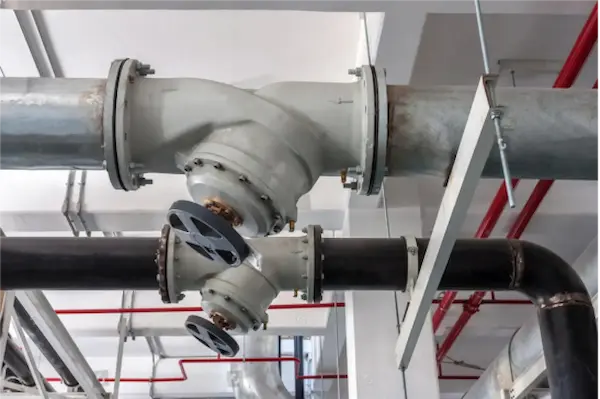
They are commonly installed on branch lines, risers, terminal units and equipment circuits in HVAC systems.
Q4: Do balancing valves improve energy efficiency?
Proper hydronic balancing can support energy efficiency by reducing over-flow, improving terminal-unit performance and enabling better pump control. However, energy savings are not automatic and should be verified from pump operation, control strategy, load profile, flow measurements and BMS or energy records.
Q5: Are balancing valves required by standards?
Many building-services projects require testing, adjusting, balancing or commissioning of hydronic systems through local code, owner specifications, ASHRAE/CIBSE/BSRIA-related guidance, or project commissioning requirements. The exact requirement should be checked from the project documents and local regulation.
Q6: Can balancing valves be used in industrial systems?
Absolutely. Industrial balancing valves are widely used in cooling, heating and process fluid systems.