Quick Summary
The High-temperature valve (≥500℃) compliant with ISO15848 is critical for chemical plants’ safe and continuous operation. This article explores core pain points, solutions, chemical industry case studies, and market trends, helping you select reliable ISO15848 valve suppliers for extreme thermal conditions.
Opening Scene: A Typical Dilemma in Chemical Plants
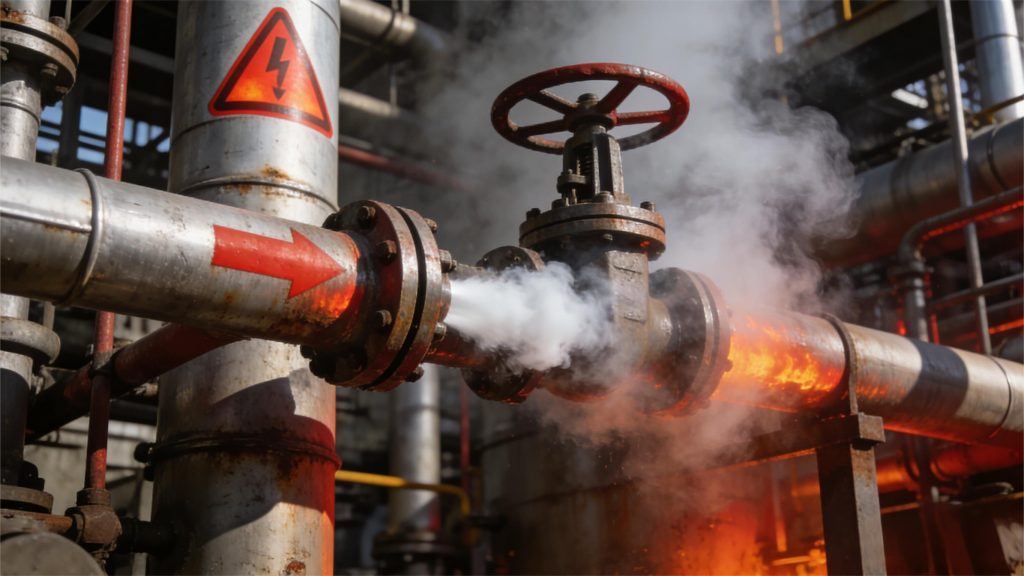
“The valve leakage has shut down our cracking unit again—this is the third unplanned outage this quarter!” exclaimed a chemical plant maintenance manager during an urgent meeting. “We need valves that can stand 550℃, meet ISO15848 leakage standards, and someone who’s done this for refineries before. Any leads?” This scenario is all too common in the chemical industry, where subpar high-temperature valves cost millions in downtime annually.
Core Pain Points for Chemical Industry Buyers
Material Failure Under Extreme Heat
Many valves claim to handle high temperatures but suffer creep, oxidation, or structural deformation above 500℃. Traditional materials like standard stainless steel lose mechanical strength, leading to seal failure and dangerous media leaks—especially problematic for toxic or flammable chemicals. This isn’t just a maintenance headache; it’s a safety hazard that can shut down entire plants.
Non-Compliance with ISO15848 Jeopardizes Operations
ISO15848 sets strict leakage limits for industrial valves, a mandatory requirement for chemical plants in the EU and most global markets. Suppliers often overstate compliance, providing incomplete test reports or only meeting the standard at room temperature. Non-compliant valves risk regulatory penalties, reputational damage, and operational disruptions during audits.
Lack of Proven Chemical Industry Experience
High-temperature valve performance varies drastically across industries. A valve designed for power plants may fail in chemical processes with corrosive media (e.g., acids, hydrocarbons) and frequent thermal cycling. Suppliers without chemical industry case studies often misdiagnose (operating conditions), delivering solutions that don’t account for the unique stressors.
Actionable Solutions for Reliable Valve Sourcing
Prioritize High-Grade Heat-Resistant Materials
Select high-temperature valves (≥500℃) made from nickel-based alloys (Inconel 600, Hastelloy X) or chrome-molybdenum steel for temperatures up to 600℃. For extreme conditions (700℃+), opt for specialized alloys or ceramic coatings. Verify material certificates (e.g., ASTM G28 for corrosion resistance) and request creep test data to ensure long-term stability. Reputable ISO 15848 valve suppliers will provide full material traceability from raw materials to finished products.
Validate ISO15848 Compliance Rigorously
Don’t take compliance claims at face value. Insist on third-party ISO15848 test reports that confirm leakage rates (Class V1 or V2) at operating temperature (not just ambient). Check that testing includes thermal cycling to simulate real-world conditions. For example, ISO15848-compliant valves should maintain leakage levels below 0.1 mg/m³/hr for toxic media—non-negotiable for chemical safety.
Partner with Suppliers with Chemical Industry Provenance
Prioritize suppliers with verifiable chemical industry case studies, ideally in your specific sub-sector (e.g., oil refining, polymer production). Ask for references from plants with similar situations (temperature, pressure, media) and confirm metrics like valve lifespan, maintenance frequency, and unplanned downtime reduction. A supplier that’s solved problems for refineries will anticipate your needs better than a generalist.
Case Study: ISO15848 Valves for a Major Refinery’s Cracking Unit
A leading European refinery faced recurring issues with its fluid catalytic cracking (FCC) unit, where valves operating at 580℃ and 10MPa were leaking every 6 months, causing unplanned outages costing €200,000 per day. The plant switched to a supplier specializing in high-temperature valves (≥500℃) compliant with ISO15848, selecting nickel-based alloy butterfly valves with metal-to-metal seals and a five-eccentric design.
Post-installation, the valves maintained Class V1 leakage rates for 3 years, with zero unplanned downtime. The supplier’s chemical industry expertise was critical—they optimized the valve’s thermal expansion compensation to handle frequent temperature fluctuations, a detail missed by the previous vendor. The refinery reported annual savings of €1.2 million in maintenance and lost production, renewing their contract for a further 5 years <superscript:4>.
Data & Scientific Analysis: Valve Performance Comparison
The table below compares non-compliant/standard valves with ISO15848-compliant high-temperature valves (≥500℃) in chemical industry conditions, based on industry test data and field reports.
| Performance Metric | Standard Valves (Non-ISO15848) | ISO15848-Compliant High-Temp Valves (≥500℃) | Improvement |
| Leakage Rate (mg/m³/hr, toxic media) | 0.8–1.2 | ≤0.1 | 90% reduction |
| Service Life in Chemical Plants | 6–12 months | 36–60 months | 500% extension |
| Thermal Cycling Resistance (500–20℃, 100 cycles) | Seal failure in 22 cycles | No failure after 100 cycles | Full compliance |
| Unplanned Downtime per Year | 4–6 days | 0.5–1 day | 87.5% reduction |
| Maintenance Cost (€/valve/year) | €3,200 | €800 | 75% reduction |
Note: Data based on average performance in European chemical plants (2024–2025) for valves operating at 550℃ and 8MPa with hydrocarbon media.
Trends & Market Insights
Rising Demand for Extreme-Temperature Valves
The global high-temperature valve market is projected to grow at 6.2% CAGR (2025–2030), driven by chemical industry expansion and the shift to high-efficiency cracking processes requiring 500–800℃ valves. ISO15848 compliance is becoming a baseline requirement, not a premium add-on, as regulators tighten environmental and safety standards.
Material Innovation Takes Center Stage
Suppliers are investing in advanced materials like ceramic matrix composites (CMCs) and additive-manufactured nickel alloys to push temperature limits beyond 1000℃. These innovations not only improve heat resistance but also reduce weight and enhance corrosion resistance—critical for harsh chemical environments.
Customization Over Commoditization
Chemical plants are moving away from off-the-shelf valves, opting for custom solutions tailored to their unique situations. Top ISO15848 valve suppliers now offer in-house simulation (finite element analysis, computational fluid dynamics) to optimize valve design for specific media, pressure, and temperature profiles—reducing failure risk by up to 40%.

Selection & Usage Recommendations
When sourcing high-temperature valves (≥500℃) compliant with ISO15848 for chemical applications:
- Conduct on-site audits of suppliers’ manufacturing facilities to verify quality control processes (e.g., 28-step inspection protocols).
- Test valves under simulated situations before full-scale installation—look for suppliers with dedicated high-temperature test labs.
- Choose valves with modular designs to simplify maintenance (e.g., replaceable seals without full valve removal).
- Partner with suppliers offering 24/7 technical support—chemical plant outages don’t wait for business hours.
- Avoid “one-size-fits-all” solutions—ensure the supplier understands the difference between power plant and chemical plant requirements (e.g., corrosion resistance vs. pure heat tolerance).
Pro tip: Don’t sacrifice long-term reliability for upfront cost. A premium ISO15848-compliant valve costs 20–30% more initially but saves 70–80% in maintenance and downtime over its lifespan—mathematically, it’s a no-brainer for chemical plants.
Conclusion & Call to Action
In the chemical industry, high-temperature valves (≥500℃) compliant with ISO15848 are non-negotiable for safety, compliance, and profitability. Material quality, rigorous ISO15848 validation, and proven chemical industry experience are the three pillars of a reliable valve supplier. Cutting corners on any of these can lead to catastrophic failures, regulatory fines, and lost revenue.
Ready to end unplanned outages and ensure compliance? with a verified chemical industry. For a free assessment and personalized recommendations, contact our valve experts today—we’ll help you find the perfect fit for your plant’s unique needs.
FAQ
Q1: What is the maximum temperature ISO15848-compliant valves can handle?
A1: ISO15848 itself doesn’t set temperature limits—it defines leakage classes. However, ISO15848-compliant high-temperature valves are typically engineered to handle 500–1650℃, depending on material (nickel alloys for 500–800℃, ceramics for higher temps).
Q2: Are ISO15848 valves mandatory for European chemical plants?
A2: Yes, for valves handling hazardous media (toxic, flammable, corrosive) as per EU Directive 2014/68/EU. Non-compliance can result in fines up to €2 million and plant shutdowns.
Q3: How often should ISO15848 high-temperature valves be inspected?
A3: For chemical plants, we recommend quarterly visual inspections and annual leakage testing (per ISO15848 protocols). High-cycle applications may require semi-annual testing.
Q4: Can a valve be ISO15848-compliant but fail in chemical media?
A4: Yes—ISO15848 tests leakage, not corrosion resistance. Ensure the valve’s material is compatible with your process media (e.g., Hastelloy for acids, Inconel for hydrocarbons) in addition to ISO15848 compliance.
Q5: How do I verify a supplier’s chemical industry case?
A5: Ask for customer references, third-party performance reports, and on-site visits to plants using their valves. Reputable suppliers will also share case studies with specific metrics (e.g., “3 years leak-free operation in a refinery FCC unit”).
Q6: What’s the difference between ISO15848 Class V1 and V2?
A6: Class V1 is the strictest (leakage ≤0.1 mg/m³/hr for toxic media), ideal for critical chemical applications. Class V2 allows higher leakage (≤1.0 mg/m³/hr) for less critical services. Most chemical plants require Class V1 for high-temperature valves.
Q7: Do high-temperature valves require special installation?
A7: Yes—install with thermal expansion joints to avoid stress on the valve body, pre-heat the valve to 100–150℃ before operation, and use high-temperature gaskets (e.g., flexible graphite). Your supplier should provide detailed installation guidelines.
References
1: Shuanglun Special Valve Manufacturing Group. (2025, November 29). Pioneer in High-Temperature and High-Pressure Butterfly Valve Technology. Sohu. https://m.sohu.com/a/959782039_121434015/
2: (2026, January 21). Key Points for Selection and Application of Valves in Special Working Conditions. Industrial Valve Network.http://www.shturl.cc/6195e0c5cdbf84877868d4987c137455
3: Miller Valve. (2026, January 24). Typical Failure Modes of High-Temperature Valves in the Power Industry and Solutions. Chemical Instrument Network. https://m.chem17.com/tech_news/detail/4296009.html
4: Shuanglun Special Valve Manufacturing Group. (2026, January 25). Recommended High-Temperature Butterfly Valve Manufacturers for Severe Working Conditions. Sohu. https://news.sohu.com/a/979907945_121434015