Quick Overview
Modern process industries demand speed, precision, and reliability. Actuated ball valves sit at the heart of this transformation, enabling automated flow control across oil & gas, chemical, water treatment, and manufacturing sectors. By combining robust valve design with intelligent actuation, these valves reduce manual intervention, improve safety, and enhance operational efficiency. At Vcore Valve, actuated solutions are engineered to meet the real-world demands of advanced process automation systems.
A Familiar Automation Scenario
“Why do we still rely on manual valves in a fully automated plant?”
In many facilities, the bottleneck isn’t software or sensors—it’s outdated valve control. Automated ball valves remove that bottleneck instantly.
Key User Pain Points in Process Control
Manual Operation Limitations
Manual valves slow down response time and increase human error in critical processes.
Safety and Accessibility Risks
Valves installed in hazardous or hard-to-reach locations expose operators to unnecessary risk.
Inconsistent Process Control
Manual or semi-automated valves struggle to deliver repeatable and precise flow regulation.
How Actuated Ball Valves Solve These Challenges
Seamless Automation Integration
Actuated ball valves connect directly to PLC, DCS, and SCADA systems for centralised control.
Enhanced Safety
Remote operation reduces the need for human presence in dangerous environments.
Consistent and Repeatable Performance
Actuators ensure precise opening and closing, improving overall industrial process control.
Vcore Valve designs automation-ready valves that work reliably from day one.
Types of Actuated Ball Valves in Automation
Pneumatic Actuated Ball Valves
Ideal for fast operation and hazardous areas, using compressed air for actuation.
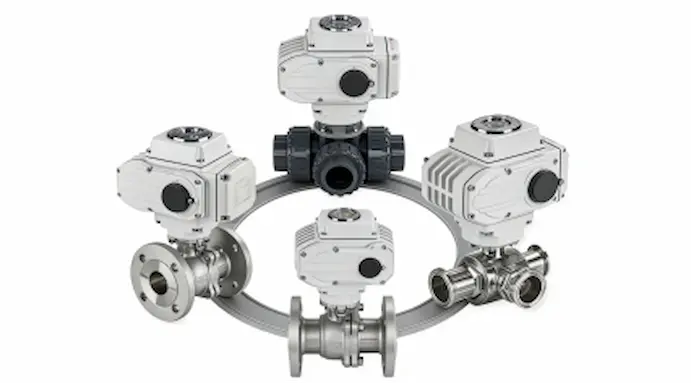
Electric Actuated Ball Valves
Preferred where precise positioning and energy efficiency are required.
Smart Actuated Valves
Integrated feedback, positioners, and sensors enable predictive maintenance and diagnostics.
These options form the backbone of modern valve automation systems.
Case Studies from Real-World Applications
Case 1: Oil & Gas Processing Facility
A facility upgraded manual valves to pneumatic actuated ball valves.
Results:
-
40% faster response time
-
Improved emergency shut-off capability
-
Reduced operator exposure
Case 2: Food & Beverage Automation Line
Electric automated ball valves were installed for precise flow control.
Results:
-
Improved batch consistency
-
Reduced product waste
-
Easier system integration
Data-Driven Performance Comparison
Manual vs Actuated Ball Valves
| Feature | Manual Ball Valve | Actuated Ball Valve |
|---|---|---|
| Response time | Slow | Instant |
| Automation compatibility | Limited | Full |
| Safety level | Moderate | High |
| Control accuracy | Operator-dependent | Highly consistent |
This data clearly shows why ball valve automation solutions are replacing manual control.
Scientific and Engineering Perspective
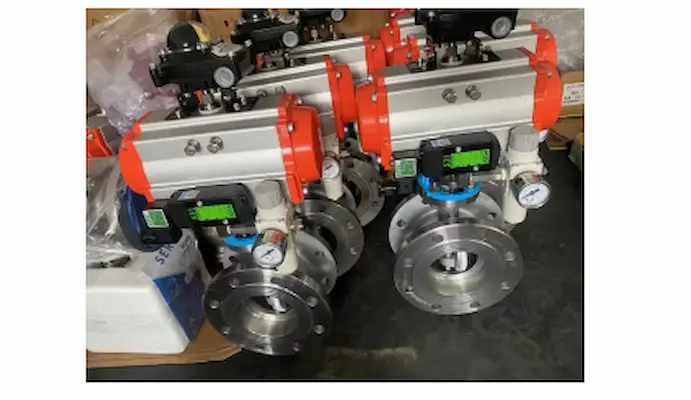
Actuated valves reduce variability by eliminating human influence. Consistent torque output, controlled stroke time, and repeatable positioning improve process stability—critical for industries operating under tight tolerances.
Market Trends and Industry Insight
-
Rapid growth in industrial automation valves demand
-
Increased use of smart valve diagnostics
-
Strong shift toward energy-efficient electric actuators
-
Higher adoption in water treatment and renewable energy sectors
Automation is no longer optional—it’s the new standard.
Selection and Usage Recommendations
-
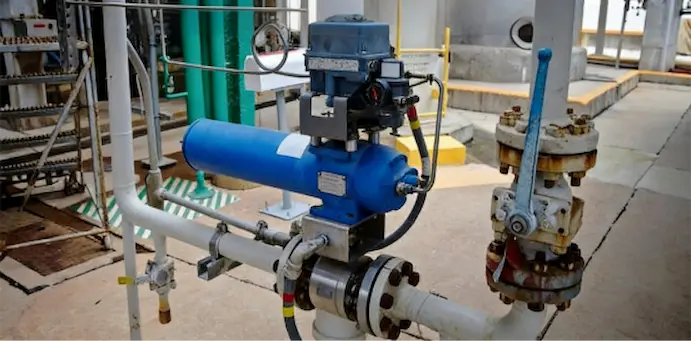
Match actuator type to application environment
-
Verify torque requirements and safety margins
-
Choose corrosion-resistant materials for aggressive media
-
Consider lifecycle cost, not just initial purchase
Summary and Call to Action
Process automation thrives on precision and reliability—and actuated ball valves deliver both. They reduce risk, increase efficiency, and unlock the full potential of modern control systems.
At Vcore Valve, we engineer automation-ready ball valves that keep your processes moving—smoothly and safely.
👉 Talk to Vcore Valve today to upgrade your automation strategy.
FAQs
What is an actuated ball valve?
A ball valve operated by a pneumatic or electric actuator instead of manual force.
Where are actuated ball valves commonly used?
Oil & gas, chemical processing, water treatment, power generation, and manufacturing.
Are actuated ball valves suitable for on/off control?
Yes, they excel at rapid and reliable shut-off.
Can actuated ball valves be used for modulating control?
With proper actuators and positioners, yes.
Do actuated valves require more maintenance?
No—automation often reduces wear and human error.
Does Vcore Valve supply complete actuated packages?
Yes, including valves, actuators, and accessories.
References
-
ISO 5211 – Actuator Mounting Interfaces
-
ASME B16.34 – Valve Design and Ratings
-
API 6D – Pipeline Valve Standards
-
Valve Manufacturers Association (VMA) – Automation Resources
-
International Society of Automation (ISA) – Process Control Guidelines
-
Engineering Toolbox – Valve Automation Principles