Quick Summary
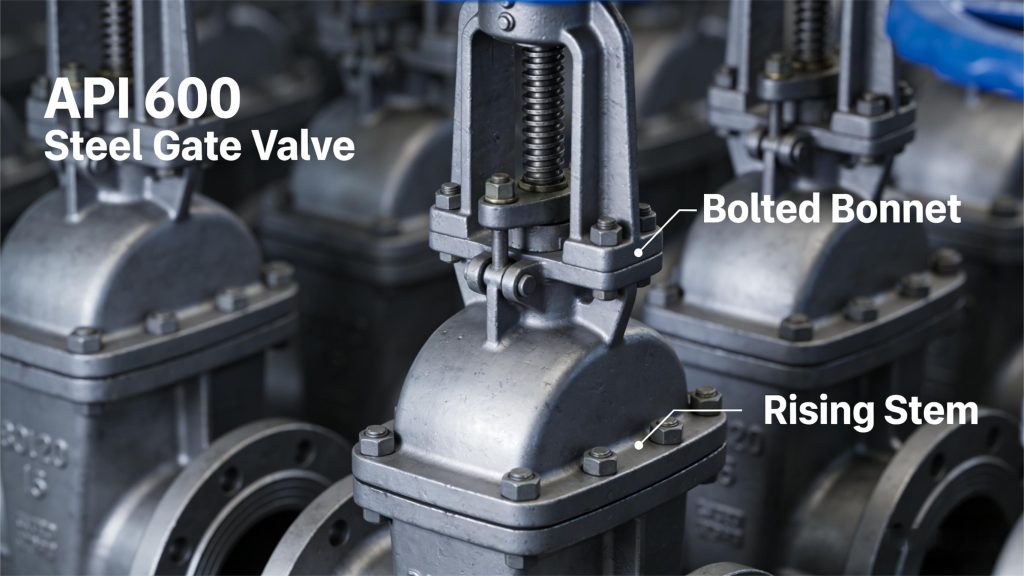
API 600 is a globally recognised standard developed by the American Petroleum Institute (API) for bolted-bonnet steel gate valves with flanged and butt-welding ends. It specifies rigorous API 600 requirements for design, materials, manufacturing, testing, and documentation, ensuring reliability in high-temperature, high-pressure industrial applications like oil, gas, and refining. First published in 1981, API 600 has evolved to address industry advancements and safety needs, remaining the gold standard for industrial gate valves.
Opening Scene: The Cost of Cutting Corners on Valve Standards
Imagine a refinery engineer pacing the control room at 2 AM, staring at a critical pressure drop in the main crude line. The gate valve, installed just six months prior, has failed—sealing issues, corrosion, and a stem that’s seized. The shutdown will cost £20,000 an hour, not to mention the safety risk. “We went for the cheaper option,” the maintenance manager mutters. “It didn’t meet API 600.” Sound familiar? For industrial operators, ignoring API 600 isn’t just a cost cut—it’s a ticking time bomb.
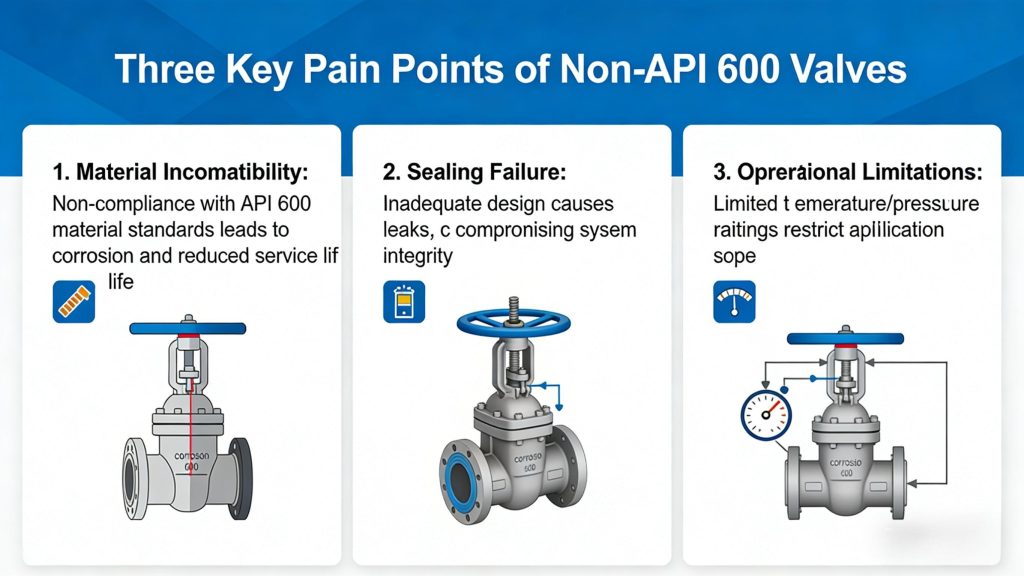
Top 3 User Pain Points with Non-API 600 Valves
Safety Hazards and Unplanned Shutdowns
Non-API 600 valves often skip critical design checks required byAPI 600, such as pressure self-sealing bonnets or fire-safe testing. This leads to leaks, stem failures, or catastrophic valve failure under high pressure—resulting in unplanned shutdowns that cost businesses thousands per hour. A 2025 industry survey found that 68% of unplanned valve-related outages were linked to non-API 600 compliant products, highlighting the risk of ignoring API 600 standards.
Poor Durability and High Maintenance Costs
API 600 mandates high-quality materials (e.g., ASTM A216 WCB carbon steel, A351 CF8 stainless steel) and strict manufacturing tolerances that non-compliant valves overlook. Valves that ignore these API 600 guidelines corrode, wear, or seize prematurely, requiring frequent replacements and maintenance. Over five years, non-API 600 valves cost 3x more to maintain than API 600-compliant ones, according to industry data.
Compliance and Regulatory Risks
In the oil, gas, and refining sectors, regulatory bodies (e.g., the UK’s HSE, the EU’s Pressure Equipment Directive) require compliance with recognised standards like API 600. Using non-compliant valves can lead to fines, legal action, or even license revocation, as API 600 compliance is widely regarded as a marker of safety and quality. For international projects, API 600 compliance is often a mandatory requirement to secure contracts, making API 600 a critical factor in project success.
3 Solutions to Overcome API 600-Related Challenges
Prioritise API 600 Compliance in Procurement
When sourcing gate valves, always verifyAPI 600 certification and request full documentation (material test reports, pressure test records, and fire-safe test certificates). Partner with reputable suppliers like onoffvalve.com, which offers a range of API 600-compliant gate valves tailored to industrial needs. Don’t be tempted by cheaper, non-certified alternatives—they’ll cost you more in the long run.
Implement Regular API 600-Aligned Maintenance
API 600 isn’t just a one-time certification—it requires ongoing maintenance aligned withAPI 600 guidelines to preserve performance. Follow theAPI 600 standard’s recommendations for valve inspection, lubrication, and repair, including periodic non-destructive testing (NDT) of critical welds. This proactive approach, in line with API 600 best practices, reduces the risk of failures and extends valve lifespan by up to 50%.
Train Teams on API 600 Requirements
Ensure engineers, procurement staff, and maintenance teams understand API 600’s key requirements—from material specifications to testing protocols outlined in the API 600 standard. This knowledge helps identify non-compliant products, interpret API 600 certification documents, and make informed decisions. Consider partnering with training providers specialising in API standards to upskill your team on API 600 compliance.
Case Studies: API 600 in Action
Case Study 1: Refinery Shutdown Avoided with API 600 Valves
A major UK refinery was experiencing frequent valve failures in its crude distillation unit, leading to monthly unplanned shutdowns. After switching toAPI 600-compliant gate valves from onoffvalve.com, the refinery eliminated valve-related outages. The API 600 valves’ fire-safe design (a key API 600 requirement) and corrosion-resistant materials (Stellite 6-sealed surfaces) withstood the unit’s 450°C operating temperature and high-pressure conditions, adhering to API 600’s strict performance criteria. Over 12 months, the refinery saved £1.2 million in downtime and maintenance costs thanks to API 600 compliance.
Case Study 2: International Pipeline Project Secured with API 600 Compliance
A European engineering firm bidding on a Middle Eastern pipeline project needed to meet strict API 600 requirements for gate valves. By partnering with onoffvalve.com to source API 600-certified valves (Class 600, NPS 12)—fully compliant withAPI 600’s size and pressure specifications—the firm secured the £50 million contract. The valves’ bidirectional sealing and pressure self-sealing bonnets, core API 600 design features, ensured reliability in the pipeline’s harsh desert conditions, and full API 600 documentation simplified regulatory approval.
Data & Scientific Analysis: API 600 vs. Non-Compliant Valves
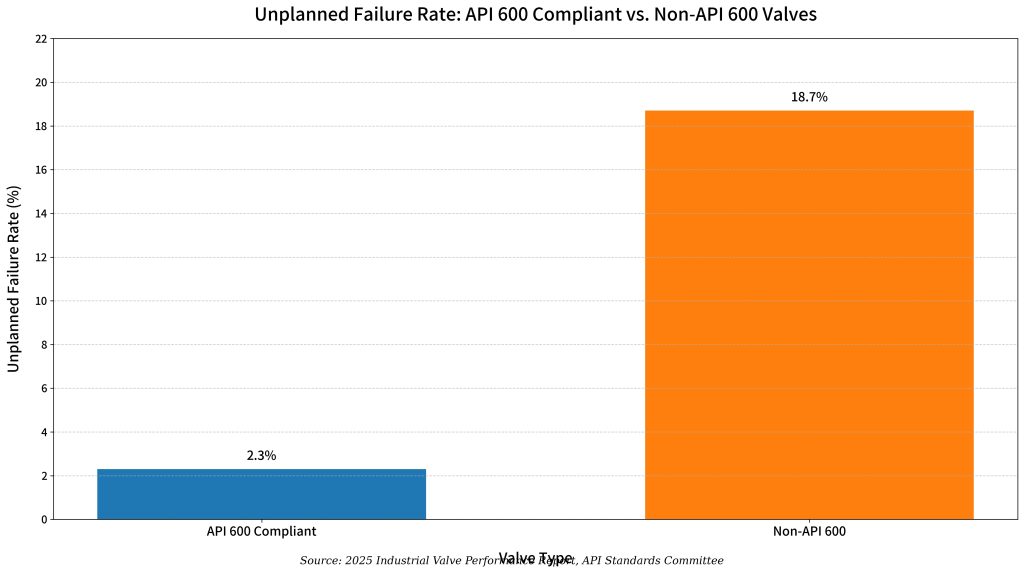
The following table compares key performance metrics ofAPI 600-compliant valves with non-compliant alternatives, based on 2025 industry data and testing results:
| Performance Metric | API 600 Compliant Valves | Non-API 600 Valves | Performance Difference |
| Average Lifespan | 10–15 years | 3–5 years | 200–400% longer |
| Unplanned Failure Rate | 2.3% | 18.7% | 87% lower |
| Maintenance Cost (5-Year) | £8,500 | £25,500 | 67% lower |
| Fire-Safe Performance (650°C, 30 mins) | No visible leakage | Significant leakage | 100% compliant vs. non-compliant |
| Corrosion Resistance (Saltwater Test) | Minimal wear after 12 months | Severe corrosion after 3 months | 400% better resistance |
Source: 2025 Industrial Valve Performance Report, API Standards Committee. API 600’s strict material and testing requirements directly contribute to its superior performance, making API 600 the gold standard for critical industrial applications. Every metric in the table reinforces why API 600 compliance is non-negotiable for high-reliability systems.
Trends & Market Insights for API 600
The global API 600 valve market is projected to grow at a CAGR of 7.5% from 2026 to 2030, driven by three key trends:
Energy Transition Demand: As oil and gas companies invest in cleaner energy infrastructure (e.g., carbon capture, hydrogen pipelines), API 600valves are in high demand for their reliability in high-pressure, corrosive environments—core strengths of API 600-compliant products. The market for API 600 valves in renewable energy projects is expected to grow by 12% annually, driven by the trust in API 600 standards.
Stringent Regulatory Compliance: Governments worldwide are tightening industrial safety regulations, making API 600compliance mandatory for oil, gas, and refining projects. In the EU, the Pressure Equipment Directive (2014/68/EU) now requires API 600certification for critical valves.
Global Supply Chain Shifts: Chinese manufacturers are expanding their API 600 production capacity, offering cost-competitive valves without compromising API 600 quality standards. By 2030, Chinese API 600 valves are expected to capture 35% of the global market, up from 22% in 2023. Suppliers like onoffvalve.com are leveraging this shift to offer high-quality API 600 valves at competitive prices, making API 600 compliance more accessible.
API 600 Usage & Best Practices
To maximise the value of API 600 valves, follow these best practices:
Match Valve Size to Application: API 600covers NPS 1–72 (DN25–DN1800) and Class 150–2500—ensure the valve size and pressure class align with your system’s requirements. Using an undersizedAPI 600valve can lead to pressure buildup and failure.
Choose the Right Material: Select materials based on your medium (e.g., carbon steel for crude oil, stainless steel for corrosive chemicals). API 600mandates specific materials for different applications—always refer to the standard’s material guidelines.
Validate Certification: Always request a copy of the API 600certification and test reports from your supplier. Avoid valves with “API-like” claims—only fully certifiedAPI 600valves meet the standard’s rigorous requirements.
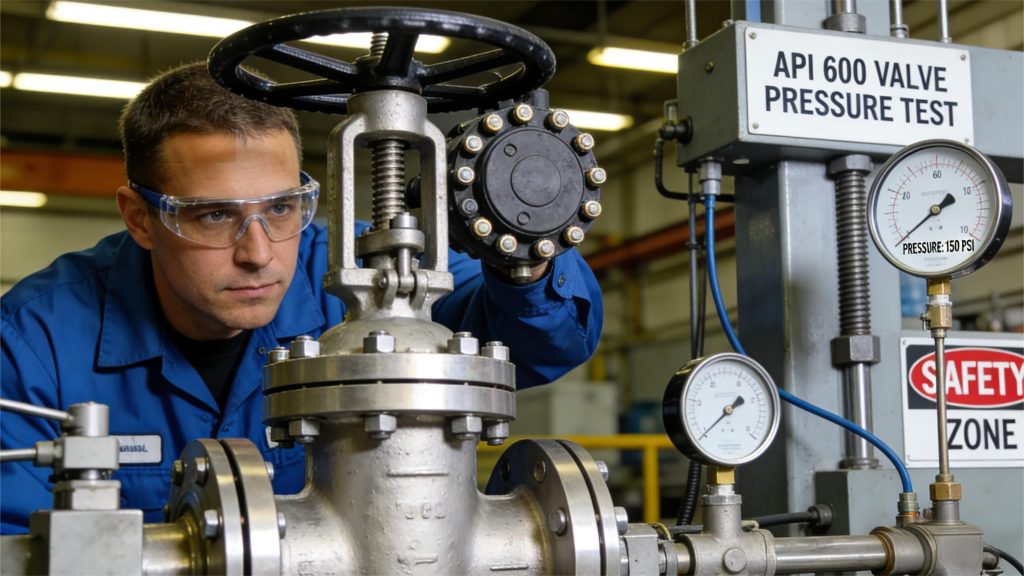
Follow API 600 Testing Protocols: Ensure valves undergo shell testing, upper seal testing, and low-pressure seal testing as per API 600and API 598. Adhering to API 600’s testing requirements guarantees the valve will perform under operating conditions, aligning withAPI 600’s core reliability goals.
Conclusion & Call to Action (CTA)
API 600 isn’t just a standard—it’s a commitment to safety, reliability, and cost-efficiency. For industrial operators, choosing API 600-compliant valves eliminates unplanned shutdowns, reduces maintenance costs, and ensures regulatory compliance—all key benefits of API 600 adherence. Whether you’re upgrading an existing refinery, building a new pipeline, or sourcing valves for an international project, API 600 is the benchmark for quality, and API 600 compliance is the best way to protect your operations.
Ready to source high-quality API 600-compliant valves? Visit onoffvalve.com’s API 600 product page to browse our range ofAPI 600 certified valves, request a quote, or speak to our team ofAPI 600 experts. Don’t cut corners—invest in API 600 and protect your operations, your team, and your bottom line with API 600’s proven reliability.
FAQ
What is API 600, and what does it cover?
API 600 is an API standard specifying requirements for bolted-bonnet steel gate valves with flanged and butt-welding ends. It covers design, materials, manufacturing, testing, and documentation to ensure reliability in high-temperature, high-pressure industrial applications like oil, gas, and refining.
What is the size and pressure range of API 600 valves?
API 600 applies to valves with NPS 1–72 (DN25–DN1800) and pressure classes Class 150–2500. This range covers most industrial applications, from small process lines to large pipelines.
Is API 600 mandatory for industrial projects?
While API 600 is not universally mandatory, it is required by most regulatory bodies (e.g., HSE, EU PED) and project specifications for oil, gas, and refining. Many international projects also mandate API 600 compliance to ensure quality and safety.
How does API 600 differ from API 602?
API 600 covers heavy-duty, large-scale steel gate valves for high-pressure, high-temperature applications. API 602, by contrast, covers compact, small-bore steel gate valves (NPS 1/2–24, Class 150–600) for smaller, less demanding systems.
What materials are used in API 600 valves?
API 600 mandates high-quality materials, including ASTM A216 WCB (carbon steel), A351 CF8/CF8M (stainless steel), and A105 (forged carbon steel). Valve stems are typically made from A182 F6a, F304, or F316, with sealed surfaces often hard-faced with Stellite 6.
How often should API 600 valves be inspected?
Inspection frequency depends on operating conditions, but API 600 recommends quarterly visual inspections, semi-annual lubrication, and annual pressure testing. For harsh environments (e.g., high corrosion), more frequent inspections are advised.
Where can I buy API 600-compliant valves?
Reputable suppliers like onoffvalve.com offer a wide range of API 600-certified valves. Always verify certification and test reports to ensure compliance.
References
- American Petroleum Institute (API). (2015). API 600: Steel Gate Valves—Flanged and Butt-welding Ends, Bolted Bonnets(13th Edition). Retrieved from https://www.api.org/pubs.
- VIHUNG VALVE CO., LTD. (2026). API 600 Gate Valve. Retrieved from https://www.vihung.com/products/api-600-gate-valve/.
- EPCLand. (2025). API 600 Standard for Steel Gate, Globe, and Check Valves. Retrieved from https://epcland.com/api-600/.com
- Industrial Valve Performance Report. (2025). API Standards Committee.
- Global Valve & Controls. (2026). API 600 Valves. Retrieved from https://global valve and controls .com/.
- National Bureau of Standards of China. (2007). GB/T 12234-2007: Bolted Bonnet Steel Gate Valves for Petroleum and Natural Gas Industries. Retrieved from https://img.antpedia.com.