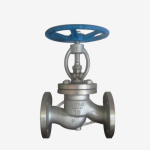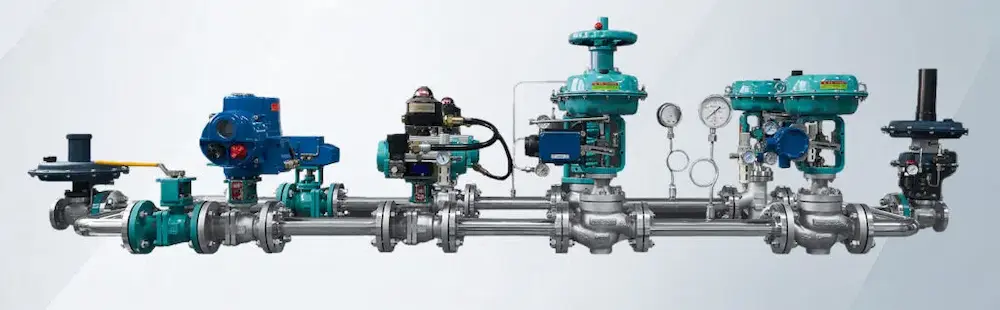
Choosing an electric valve actuator is not simply a matter of buying a motorized device that can open and close a valve. In real industrial projects, the wrong actuator model can cause incomplete valve closure, motor overheating, control signal mismatch, water ingress, excessive torque damage, short service life, and costly commissioning delays.
For many B2B buyers, the challenge is not a lack of options. The challenge is that there are too many actuator models and brands on the market. Some are designed for heavy-duty oil and gas applications. Some are suitable for HVAC systems. Some are compact and cost-effective for OEM equipment. Some are intelligent actuators with diagnostics, fieldbus communication, and advanced control functions. Others are basic on-off actuators for simple valve automation.
This guide explains how to choose electric valve actuator models and brands from a practical industrial buyer’s perspective. Instead of ranking brands only by reputation, it focuses on the factors that actually determine whether the actuator will work reliably on your valve: torque, valve type, duty cycle, voltage, control mode, enclosure rating, mounting interface, operating environment, maintenance access, and total project risk.
What Is an Electric Valve Actuator?
An electric valve actuator is a device that uses an electric motor and gear mechanism to operate a valve. It converts electrical energy into mechanical movement, allowing a valve to open, close, or move to a specific intermediate position.
Electric actuators are commonly used with:
- Ball valves
- Butterfly valves
- Gate valves
- Globe valves
- Plug valves
- Dampers
- Special process valves
In a manual valve, an operator turns a handwheel or lever. In an automated valve, the electric actuator receives a signal from a control panel, PLC, building management system, or remote control unit. The actuator then drives the valve to the required position.
Depending on the application, an electric actuator may be used for simple open-close control, modulating flow control, remote operation, safety shutdown, process automation, or equipment integration.
Why Electric Actuator Selection Matters in Valve Projects
In many projects, buyers spend a lot of time selecting the valve body material, pressure rating, and connection type, but they treat the actuator as an accessory. This is a common mistake. The actuator is the component that makes the automated valve work in the real system.
A well-selected electric actuator can improve operating consistency, reduce manual labor, support remote control, and help integrate the valve into a larger automation system. A poorly selected actuator can create problems that are more expensive than the actuator itself.
Common consequences of poor actuator selection include:
- The actuator cannot generate enough torque to open or close the valve.
- The valve gets stuck in a partially open position.
- The motor overheats because the duty cycle is too low for frequent operation.
- The actuator enclosure is not suitable for outdoor, humid, dusty, or corrosive environments.
- The control signal does not match the PLC or control panel.
- The mounting flange or drive connection does not match the valve.
- The actuator closes too fast and may create pressure shock in sensitive piping systems.
- The brand has limited local service or spare parts support.
For industrial valve buyers, actuator selection should be treated as part of system engineering, not only procurement.
Main Types of Electric Valve Actuators
Quarter-Turn Electric Actuator
A quarter-turn electric actuator rotates approximately 90 degrees. It is commonly used with ball valves, butterfly valves, plug valves, and some dampers. This type is widely used in water treatment, HVAC, chemical dosing, compressed air systems, irrigation, and general industrial pipelines.
Quarter-turn actuators are often selected when the valve only needs to rotate between open and closed positions. They may also be used for modulating control when the actuator supports proportional positioning. For example, an electric three way ball valve uses an electric actuator to switch or redirect flow between different ports, making it suitable for automated flow routing applications.
Multi-Turn Electric Actuator
A multi-turn electric actuator rotates multiple turns and is typically used for valves that require several revolutions to open or close. Gate valves and some globe valves often require multi-turn operation.
Multi-turn actuators are usually larger and more complex than quarter-turn actuators. They are common in waterworks, power plants, oil and gas facilities, and large industrial pipeline systems.
Linear Electric Actuator
A linear electric actuator creates straight-line motion instead of rotary motion. It is used for valves that require linear stem movement, such as certain globe valves and control valves.
Intelligent Electric Actuator
An intelligent actuator includes advanced control electronics, diagnostics, communication interfaces, data logging, position feedback, torque monitoring, and sometimes non-intrusive setup. These actuators are often used in large industrial plants where maintenance planning, remote monitoring, and system integration are important.
Key Parameters Buyers Must Confirm Before Choosing a Model
Before comparing electric actuator brands, buyers should first confirm the technical requirements. A famous brand will still fail if the model is undersized, incorrectly controlled, or installed in the wrong environment.
| Parameter | Why It Matters | Buyer Recommendation |
|---|---|---|
| Valve Type | Different valves require different motion types. | Use quarter-turn for ball and butterfly valves; use multi-turn for gate valves; verify globe valve requirements. |
| Torque Requirement | Insufficient torque can prevent full opening or closing. | Confirm valve breakaway torque and add a suitable safety margin. |
| Voltage | Incorrect voltage can damage the actuator or prevent operation. | Confirm AC/DC voltage, phase, and site power supply. |
| Control Mode | On-off and modulating actuators serve different functions. | Match control type with PLC, BMS, or control panel requirements. |
| Duty Cycle | Frequent operation can overheat a low-duty actuator. | Use modulating or higher-duty models for frequent positioning. |
| Enclosure Protection | Dust, rain, washdown, and corrosion affect service life. | Check IP rating, NEMA rating, and corrosion protection. |
| Mounting Standard | Incorrect mounting causes installation failure. | Confirm ISO 5211 flange, drive size, and stem connection. |
| Operating Environment | Temperature, humidity, vibration, and hazardous areas affect reliability. | Select suitable housing, seals, coating, and certification level. |
| Fail-Safe Requirement | Some systems need a safety position during power loss. | Consider battery backup, spring return, or system-level safety design. |
On-Off vs Modulating Electric Actuators
One of the first decisions is whether the valve needs simple open-close control or proportional position control.
On-Off Electric Actuator
An on-off actuator moves the valve between fully open and fully closed positions. It is suitable for isolation, switching, filling, draining, basic flow routing, and simple automated shutoff.
Typical applications include:
- Automated ball valve shutoff
- Butterfly valve open-close control
- Tank filling and draining systems
- Water treatment line switching
- Simple HVAC zone isolation
On-off actuators are usually more economical than modulating actuators. However, they are not suitable when the system needs precise flow regulation.
Modulating Electric Actuator
A modulating actuator moves the valve to intermediate positions based on a control signal. Common control signals include 4-20 mA, 0-10 V, or digital communication depending on the control system.
Modulating actuators are used when the valve needs to regulate flow, pressure, temperature, or process conditions. They are common in HVAC control, chemical dosing, process automation, and control loops.
Buyers should not use a basic on-off actuator for modulating service. Frequent start-stop operation can shorten actuator life if the duty cycle is not designed for that workload.
Quarter-Turn vs Multi-Turn Electric Actuators
Another major decision is whether the valve requires quarter-turn or multi-turn movement.
| Actuator Type | Movement | Common Valve Types | Typical Applications | Buyer Risk |
|---|---|---|---|---|
| Quarter-Turn Electric Actuator | About 90 degrees | Ball valves, butterfly valves, plug valves | Water treatment, HVAC, chemical systems, general pipelines | Undersized torque may fail to close valve fully. |
| Multi-Turn Electric Actuator | Multiple revolutions | Gate valves, some globe valves | Waterworks, power plants, oil and gas, large pipelines | Wrong speed, thrust, or stem compatibility can cause installation issues. |
| Linear Electric Actuator | Straight-line motion | Globe valves, control valves | Flow regulation and process control | Stroke, thrust, and control accuracy must be matched carefully. |
How to Match Electric Actuators with Different Valve Types
Electric Actuator for Ball Valves
Ball valves usually require quarter-turn actuators. The key parameter is breakaway torque, which is the torque required to start moving the ball from the seated position. Soft-seated ball valves may need higher torque after long periods without operation, especially under pressure or with sticky media.
For B2B buyers, it is safer to confirm the valve torque with the valve manufacturer rather than estimate from valve size alone. A DN50 ball valve from one manufacturer may not have the same torque as a DN50 ball valve from another manufacturer. Buyers who want to understand automated ball valve applications can also review this guide on electric ball valves, especially for chemical industry and automated fluid control scenarios.
For applications that require one inlet to switch between different outlets, or automated flow direction control between three ports, a product such as an electric three way ball valve may be more suitable than a standard 2-way electric ball valve.
Electric Actuator for Butterfly Valves
Butterfly valves also use quarter-turn actuators. The actuator must overcome disc torque, seat friction, fluid pressure, and dynamic flow forces. In large butterfly valves, torque selection becomes especially important.
For HVAC and water systems, buyers should also check whether the actuator closing speed could create pressure shock. In some systems, a slower operating time is preferred. For pipeline systems that require compact installation, flange connection, and compensation for pipe movement, an electric-actuated flange type telescopic butterfly valve can be considered as a practical automated flow control option.
Electric Actuator for Gate Valves
Gate valves typically require multi-turn actuators. Buyers must confirm torque, thrust, stem type, number of turns, operating speed, and limit/torque seating requirements.
Gate valve actuator selection is usually more technical than ball valve actuator selection because stem movement and seating method directly affect operation.
For gate, globe and other linear-stem valves, actuator selection must include the required stem force rather than torque alone. See our valve stem thrust calculation guide
Electric Actuator for Globe Valves
Globe valves may require linear actuators or multi-turn actuators depending on the valve design. For control applications, positioning accuracy and control signal compatibility are important.
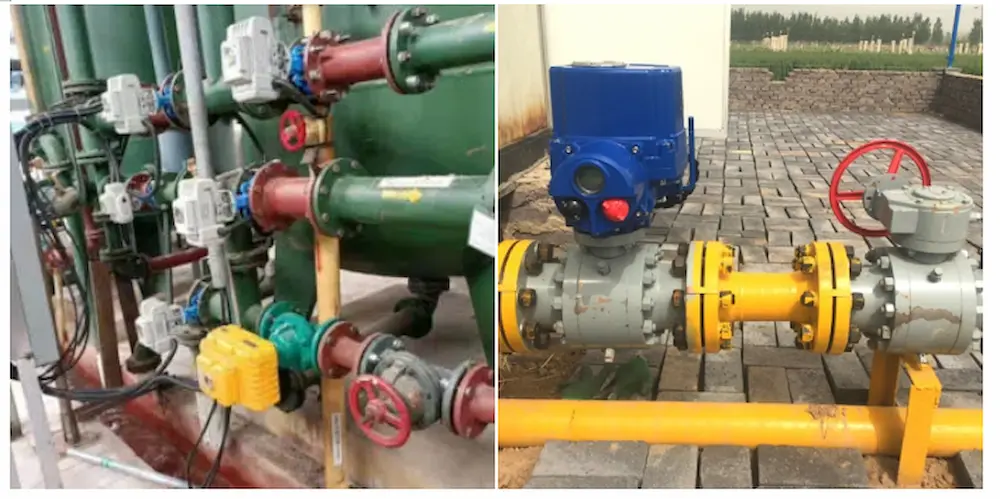
Electric Valve Actuator Brand Comparison
There is no single best electric valve actuator brand for every project. The right brand depends on application severity, budget, project location, service expectation, certification requirements, control complexity, and delivery time.
The following comparison gives a practical positioning guide for B2B buyers.
| Brand Type | Representative Brands | Typical Strengths | Best-Fit Applications | Buyer Consideration |
|---|---|---|---|---|
| Premium Industrial Brands | Rotork, AUMA, Bernard Controls, Flowserve Limitorque, Emerson Bettis | Strong engineering history, advanced controls, diagnostics, heavy-duty options | Oil and gas, power, waterworks, chemical plants, large infrastructure | Higher cost, longer lead time, stronger project documentation |
| HVAC and Building Automation Brands | Belimo, Siemens | Strong HVAC control ecosystem, damper and hydronic control experience | Commercial buildings, HVAC systems, hydronic control, energy management | Not always suitable for heavy industrial valve duty |
| Industrial Mid-Range Brands | Bray and similar industrial actuator suppliers | Good balance of industrial performance, compact design, and cost | Butterfly valves, ball valves, general industrial automation | Confirm torque range, enclosure rating, and local support |
| OEM and Cost-Effective Factory Brands | Regional manufacturers and private-label suppliers | Competitive price, flexible customization, shorter customization path | OEM equipment, distributors, standard water treatment and light industrial systems | Must verify testing, torque margin, electronics quality, and after-sales support |
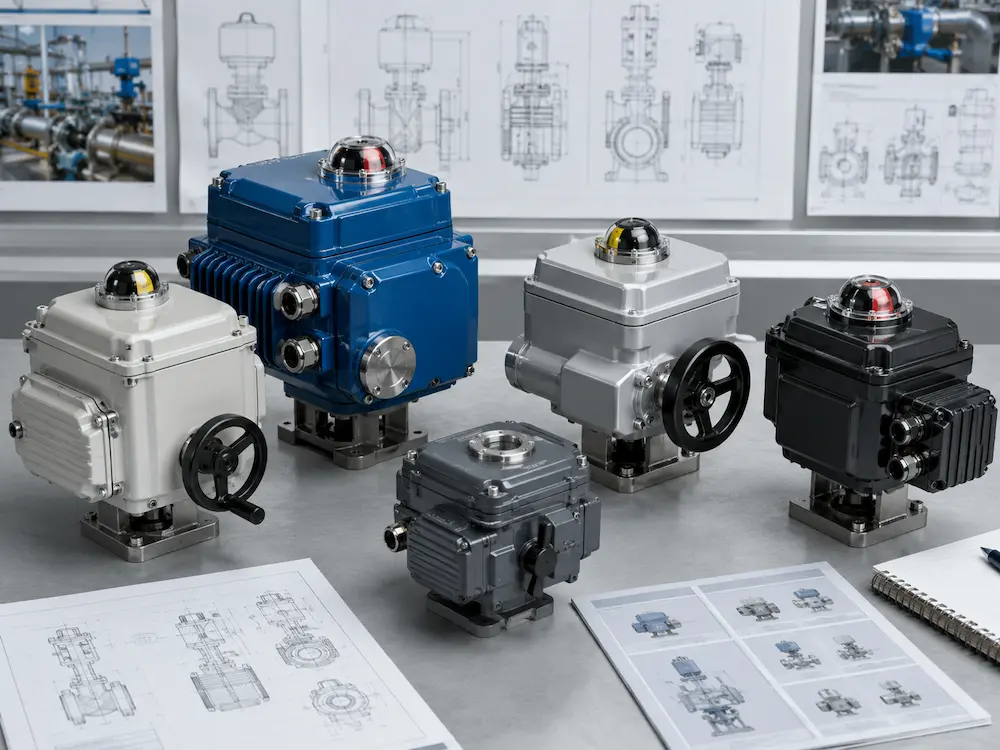
How to Think About Major Electric Actuator Brands
Rotork
Rotork is widely recognized in industrial flow control and valve actuation. Buyers often consider Rotork for demanding applications where reliability, intelligent control, diagnostics, and global service support are important. It is commonly evaluated for oil and gas, water, power, and process industries.
For procurement teams, Rotork is usually a strong candidate when the project requires premium actuator reliability and engineering documentation. The tradeoff is typically higher purchasing cost compared with generic actuator brands.
AUMA
AUMA is a major electric actuator brand with strong positioning in multi-turn and part-turn actuation for industrial valves. It is often considered for waterworks, power plants, industrial plants, and infrastructure projects.
AUMA is especially relevant when buyers need a broad range of actuator configurations, control options, and project-oriented documentation. For buyers selecting gate valve or large butterfly valve automation, AUMA is often included in the evaluation list.
Bernard Controls
Bernard Controls is known for electric actuators used in demanding industrial and infrastructure applications. Its product ranges cover quarter-turn and multi-turn applications, including weatherproof and intelligent control options.
Buyers may consider Bernard Controls when the project requires robust electric actuation, advanced control versions, or a strong industrial brand alternative to other premium suppliers.
Flowserve Limitorque
Flowserve Limitorque actuators are commonly associated with industrial valve automation in power, oil and gas, water, and process industries. Buyers may consider this brand when non-intrusive setup, diagnostics, and heavy industrial reliability are important.
Emerson Bettis
Bettis, under Emerson, covers electric, pneumatic, and hydraulic actuation solutions. For electric actuation, buyers may consider Bettis where industrial reliability, final control integration, and demanding process applications are important.
Bray
Bray electric actuators are often used for quarter-turn valve automation, especially with butterfly valves and ball valves. Bray can be a practical choice where buyers want an industrial actuator with a balance of performance, compact design, and application coverage.
Belimo
Belimo is strongly associated with HVAC actuators, damper actuators, and building automation applications. It is often a strong option for commercial HVAC projects, air control, hydronic control, and building energy systems.
However, buyers should not automatically apply HVAC actuator logic to heavy industrial valve applications. A building actuator and a process valve actuator may have very different torque, enclosure, duty, and environmental requirements.
Siemens
Siemens offers valves and actuators for HVAC and building technologies, including hydronic control and damper applications. It is often evaluated where the actuator must integrate into a building automation ecosystem.
For industrial process valves, buyers should confirm whether the selected Siemens actuator model is intended for that duty rather than assuming all actuator products are suitable for every valve type.
Premium International Brand or OEM Factory Brand?
Many buyers ask whether they should choose a premium international brand or a cost-effective OEM actuator. The answer depends on risk level.
A premium brand is often better when:
- The project is high-value or mission-critical.
- The actuator is installed in a remote or hard-to-maintain location.
- The process involves high pressure, hazardous media, or strict safety requirements.
- The end user requires recognized international brands.
- Documentation, diagnostics, and long-term service are more important than lowest price.
A cost-effective OEM actuator may be suitable when:
- The application is standard water, air, HVAC, irrigation, or light industrial service.
- The valve size and torque requirement are moderate.
- The buyer needs competitive pricing for bulk orders.
- The supplier can provide stable quality, testing, and technical support.
- The actuator is used in OEM equipment where customization is needed.
The decision should not be “famous brand versus cheap brand.” A better decision framework is “project risk versus actuator capability.”
Application-Based Brand Selection
| Application | Recommended Brand Direction | Key Selection Factors |
|---|---|---|
| Oil and Gas | Premium industrial brands | Explosion protection, diagnostics, torque margin, safety position, service network |
| Power Plant | Premium industrial brands | High reliability, multi-turn capability, documentation, control integration |
| Water Treatment | Premium or mid-range industrial brands | IP protection, corrosion resistance, torque margin, maintenance access |
| HVAC | HVAC-focused brands or reliable OEM options | Control signal, compact size, energy use, integration with BMS |
| Chemical Processing | Industrial brands with suitable enclosure and control options | Corrosion protection, safety requirements, duty cycle, hazardous area requirements |
| OEM Equipment | OEM-friendly factory brands or selected mid-range brands | Customization, compact design, stable supply, cost control |
| Irrigation and Agriculture | Cost-effective standard electric actuators | Weather resistance, voltage, simple operation, price-performance balance |
Common Buyer Mistakes When Choosing Electric Valve Actuators
Mistake 1: Selecting by Valve Size Only
Valve size alone is not enough. Two valves with the same nominal size can have different torque requirements depending on valve design, seat material, pressure, temperature, and medium. Always confirm actual valve torque.
Mistake 2: Ignoring Breakaway Torque
The highest torque is often required when the valve starts moving from the seated position. If the actuator is sized only for running torque, it may fail during startup.
Mistake 3: Using an On-Off Actuator for Modulating Service
A basic on-off actuator may not be designed for frequent positioning. Using it in a control loop can cause overheating, gear wear, unstable control, and short service life.
Mistake 4: Choosing the Wrong Enclosure Rating
Indoor, outdoor, washdown, dusty, marine, and corrosive environments require different enclosure protection. A low-cost actuator may fail quickly if water or dust enters the housing.
Mistake 5: Forgetting Mounting Compatibility
The actuator must match the valve mounting flange and drive connection. For quarter-turn industrial valves, ISO 5211 mounting is commonly used, but buyers must still confirm flange size, bolt pattern, stem shape, and coupling dimensions.
Mistake 6: Not Checking Control Signal Compatibility
An actuator may be 24 V DC, 110 V AC, 220 V AC, or three-phase. It may support on-off, floating, 4-20 mA, 0-10 V, relay feedback, or fieldbus communication. The selected model must match the site control system.
Mistake 7: Buying a Brand Without Local Support
A premium brand is valuable only if spare parts, technical service, and documentation are accessible. In some markets, a mid-range brand with better local support may be more practical than a premium brand with long service lead times.
Technical Specification Checklist for Buyers
Before ordering an electric valve actuator, buyers should prepare a clear specification sheet. This reduces misunderstanding between the buyer, valve manufacturer, actuator supplier, and installer.
- Valve type
- Valve size
- Valve pressure rating
- Valve torque requirement
- Required safety margin
- Quarter-turn, multi-turn, or linear operation
- Open-close or modulating control
- Required operating time
- Voltage and phase
- Control signal
- Feedback signal
- Duty cycle
- Manual override requirement
- Fail-safe requirement
- IP or NEMA enclosure rating
- Ambient temperature range
- Indoor, outdoor, corrosive, or hazardous location
- Mounting flange and drive connection
- Communication protocol if required
- Certificates and documentation
When buyers are not sure how to convert these parameters into a specific actuator model, Vcore Valve can help review the working conditions and recommend a suitable electric actuator configuration. This is especially useful for distributors, OEM equipment manufacturers, water treatment projects, HVAC systems, and industrial buyers who need a balance between reliable operation and reasonable procurement cost.
Compliance, Mounting, and Protection Ratings
ISO 5211 Mounting
For quarter-turn valves, ISO 5211 is an important mounting reference because it defines requirements for attaching part-turn actuators to industrial valves. Buyers should still confirm the actual flange size, bolt circle, stem shape, adapter dimensions, and torque transmission capacity before ordering.
ISO 5211 defines only part of the actuator-to-valve interface. For flange size, drive dimensions, bracket design, coupling fit and alignment checks, review our ISO 5211 actuated valve mounting guide
IP Protection Rating
IP ratings describe the protection of electrical enclosures against dust and water ingress. The IEC ingress protection rating system is commonly used to evaluate how well electrical and electronic enclosures resist dust and liquids. For outdoor, humid, dusty, or washdown applications, buyers should not assume that a basic indoor actuator is suitable. The installation environment should guide the required protection level.
NEMA Enclosure Rating
In North American projects, NEMA enclosure types may be requested. These ratings are especially relevant for outdoor use, corrosion exposure, hose-directed water, dust, and industrial environments.
Explosion-Proof or Hazardous Area Requirements
For oil, gas, chemical, solvent, or hazardous area applications, buyers may need explosion-proof or certified actuators. This should be confirmed early because hazardous-area models can have different costs, lead times, and documentation requirements.
Market Trends in Electric Valve Actuators
More Smart Actuation
Industrial buyers are increasingly interested in intelligent actuators with diagnostics, position feedback, communication capability, and predictive maintenance features. This is especially important for large plants where unplanned downtime is costly.
Growth of Building Automation
In HVAC and building systems, electric actuators are increasingly integrated with smart building management systems. Control accuracy, energy efficiency, and communication compatibility are becoming stronger buying factors.
Higher Demand for Compact OEM Solutions
OEM equipment manufacturers often need compact, cost-effective, and customizable actuators. This creates demand for actuator suppliers that can offer flexible voltage, control signals, mounting kits, and private-label options.
More Attention to Total Cost of Ownership
Buyers are moving beyond the lowest unit price. They increasingly evaluate installation time, commissioning risk, maintenance cost, spare parts availability, and service response.
Final Buying Recommendations
The best electric valve actuator is not always the most famous brand or the lowest-priced model. The best choice is the actuator that matches the valve, working conditions, control system, installation environment, and project risk level.
For critical industrial plants, premium brands such as Rotork, AUMA, Bernard Controls, Flowserve Limitorque, and Emerson Bettis are often worth evaluating because of their engineering depth, documentation, and industrial reliability. For HVAC and building automation, brands such as Belimo and Siemens may be more suitable because their product ecosystems are strongly aligned with building control applications. For general industrial, water treatment, OEM, and cost-sensitive projects, a reliable mid-range or factory OEM actuator may provide a better price-performance balance if the supplier can verify torque, testing, enclosure protection, and after-sales support.
Before placing an order, buyers should confirm the valve torque, actuator type, control mode, voltage, duty cycle, mounting standard, enclosure protection, operating environment, and documentation requirements. A clear technical specification can prevent most actuator selection failures.
If your project requires a cost-effective electric valve actuator with dependable quality, Vcore Valve can help you match a suitable actuator based on real working conditions. Share your valve type, valve size, torque requirement, voltage, control signal, working medium, pressure, temperature, operation frequency, and installation environment, and we can help recommend a practical actuator configuration for your application. This helps buyers avoid overspending on unnecessary specifications while reducing the risk of choosing an undersized or incompatible actuator.
For B2B sourcing, the right question is not simply “Which electric actuator brand is best?” The better question is: “Which actuator model is correctly sized, correctly controlled, correctly protected, and commercially suitable for this valve project?”
FAQ
1. What is the most important factor when choosing an electric valve actuator?
The most important factor is matching the actuator torque and motion type to the valve. Buyers should confirm whether the valve needs quarter-turn, multi-turn, or linear movement, then verify breakaway torque, running torque, safety margin, control mode, voltage, duty cycle, and enclosure protection before selecting a model or brand.
2. Which electric valve actuator brand is best?
There is no single best electric valve actuator brand for every application. Rotork, AUMA, Bernard Controls, Flowserve Limitorque, and Emerson Bettis are often considered for demanding industrial projects. Belimo and Siemens are strong in HVAC and building automation. For standard OEM or cost-sensitive projects, a reliable factory brand may be suitable if torque, testing, protection rating, and support are verified.
3. What is the difference between an on-off and modulating electric actuator?
An on-off electric actuator moves the valve between fully open and fully closed positions. A modulating electric actuator can move the valve to intermediate positions based on a control signal such as 4-20 mA or 0-10 V. Modulating actuators are used for flow, pressure, or temperature control, while on-off actuators are mainly used for isolation and switching.
4. How much torque should an electric actuator have?
The required torque depends on the valve type, size, seat material, pressure, temperature, medium, and operating condition. Buyers should ask the valve manufacturer for breakaway torque and apply a suitable safety margin. Selecting torque based only on valve size is risky because valves of the same size can have different torque requirements.
5. What documents should I ask for before buying an electric valve actuator?
Before buying an electric valve actuator, buyers should ask for a technical datasheet, wiring diagram, torque output data, duty cycle information, enclosure rating, mounting dimensions, control signal details, manual override information, test report, certificate if required, and installation manual. For actuator-valve assemblies, a complete valve automation drawing is also recommended.