
Product Introduction
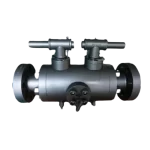
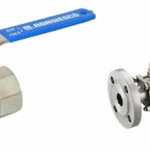
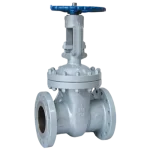
Our Full Port Ball Valve, also known as a full bore ball valve, is designed to deliver maximum flow capacity, minimal pressure drop, and dependable shut-off in industrial pipeline systems. The internal bore diameter of the ball matches the pipe’s internal diameter, ensuring an unobstructed flow path when the valve is fully open.
At Vcore Valve, full port ball valves are engineered for applications where flow efficiency and operational reliability are critical. These valves are widely applied in oil and gas pipelines, chemical processing units, water transmission networks, and power generation facilities, where system downtime or flow restriction is unacceptable.
What Makes a Full Port Ball Valve Different
Compared with reduced port ball valves, a full port design offers:
-
No internal flow restriction
-
Lower pressure loss
-
Reduced turbulence and erosion
-
Compatibility with pipeline pigging
-
Improved system efficiency
This makes full port ball valves the preferred choice for long-distance pipelines and high-flow systems.
Structural Design & Engineering
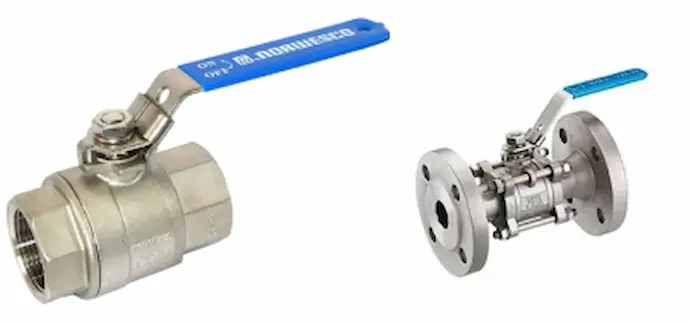
The valve features a straight-through internal geometry, combined with a precision-machined spherical ball and reinforced seat structure. When fully open, the ball cavity aligns perfectly with the pipeline, eliminating dead zones and flow disturbance.
The stem is designed with an anti-blowout structure, ensuring safety under pressure and compliance with international valve standards.
Materials & Construction Options
To meet different service conditions, Vcore Valve offers multiple material configurations:
-
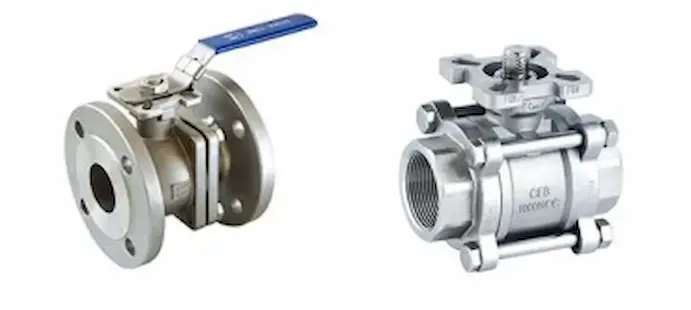
Body: Carbon steel, stainless steel, alloy steel
-
Ball: Stainless steel or coated carbon steel
-
Seat: PTFE, reinforced PTFE, PEEK, or metal-to-metal
-
Stem: Stainless steel with corrosion-resistant finish
This flexibility allows the valve to perform reliably across a wide range of pressures, temperatures, and media.
Sealing & Shut-Off Performance
The sealing system is designed to achieve tight shut-off, even after repeated operation. Soft-seat versions provide bubble-tight sealing for general service, while metal-seated options are suitable for high-temperature or abrasive media.
Fire-safe designs compliant with API 607 / API 6FA are available upon request.
Operation & Automation Compatibility
The full port ball valve supports multiple operation methods:
-
Manual lever operation
-
Gear-operated handwheel
-
Pneumatic actuator
-
Electric actuator
This makes the valve suitable for both manual control and fully automated pipeline systems.
Technical Specifications
| Parameter | Specification |
|---|---|
| Valve Type | Full Port Ball Valve |
| Bore Type | Full Bore |
| Size Range | 1/2″ – 24″ (DN15 – DN600) |
| Pressure Class | Class 150 / 300 / 600 |
| Body Material | Carbon Steel, Stainless Steel |
| Seat Material | PTFE, RPTFE, PEEK, Metal Seat |
| Connection Type | Flanged, Threaded, Butt Weld |
| Standards | API 6D, API 608, ISO 17292 |
| Media | Water, Oil, Gas, Steam, Chemicals |

Typical Applications
-
Oil & gas transmission pipelines
-
Chemical and petrochemical plants
-
Municipal water supply systems
-
Power plant auxiliary systems
-
Industrial process pipelines
The valve is designed primarily for on/off isolation, not throttling service.
Quality Control & Testing
Each full port ball valve is subjected to:
-
Dimensional inspection
-
Shell pressure test
-
Seat leakage test
-
Operational torque check
This ensures consistent quality and reliable performance in real working conditions.
Installation, Maintenance, and Lifecycle Advantages
Installing a Vcore Valve Full Port Ball Valve is straightforward, whether in new pipelines or replacement projects. The valve’s modular design allows for easy alignment with flanged, threaded, or welded connections, minimizing installation time and reducing labor costs. Its compact yet robust structure also simplifies handling during transport and on-site positioning, even for larger diameters up to 24 inches.
Maintenance requirements are minimal due to the durable materials and high-precision engineering. The reinforced ball and seats resist wear, corrosion, and chemical attack, ensuring long-term bubble-tight sealing. For automated or hard-to-reach systems, our valves support actuator integration, which allows remote operation, reduces human intervention, and increases safety during high-pressure operations.
From a lifecycle perspective, choosing a full port ball valve from Vcore Valve provides significant cost advantages over reduced port or traditional gate valves. The combination of low-pressure loss, minimal maintenance, high durability, and flexible operation options extends the service life of the valve and the entire pipeline system, making it a reliable solution for industrial projects where downtime is costly and reliability is paramount.
This focus on installation convenience, ease of maintenance, and lifecycle efficiency reinforces why Vcore Valve full port ball valves are trusted across oil & gas, petrochemical, water, and power infrastructure projects worldwide. By investing in high-quality materials, precise engineering, and international compliance, customers gain a valve that not only performs optimally but also reduces long-term operational risks and costs.
Why Choose Vcore Valve
Vcore Valve focuses on delivering industrial-grade reliability and long-term value. Our full port ball valves are engineered with practical design logic, strict quality control, and compatibility with international standards, helping customers reduce operational risk and maintenance cost over the entire service life.
FAQ
1. What is the key difference between a full port ball valve and a reduced port ball valve?
2. Can the full port ball valve be used for throttling purposes?
3. What material options are available for the valve body and seats, and how to choose them?
- Valve body: Carbon steel, stainless steel, and alloy steel are offered.
- Seats: PTFE/RPTFE (soft seats) offer bubble-tight sealing for low-to-medium temperature, non-abrasive media (e.g., water, gas); PEEK seats are more heat-resistant and durable for harsh service conditions; metal-to-metal seats are designed for high-temperature, high-pressure, or abrasive media (e.g., steam, solid-containing fluids). Selection should be based on the pipeline’s media type, temperature, and pressure.
4. What operation methods are supported, and how to select the right one?
- Manual lever operation
- Gear-operated handwheel
- Pneumatic actuator
- Electric actuator
5. Does the valve comply with international standards, and what testing is conducted before delivery?
- Dimensional inspection (to verify compliance with design specifications);
- Shell pressure test (to check the valve body’s pressure resistance);
- Seat leakage test (to ensure bubble-tight sealing);
- Operational torque check (to confirm smooth operation).
6. What is the size range and pressure class of the valve, and is it suitable for my pipeline?
- Size range: 1/2″ – 24″ (DN15 – DN600), covering most industrial pipeline specifications from small to large diameters.
- Pressure class: Class 150 / 300 / 600, suitable for low, medium, and high-pressure pipeline systems.