

Product Overview
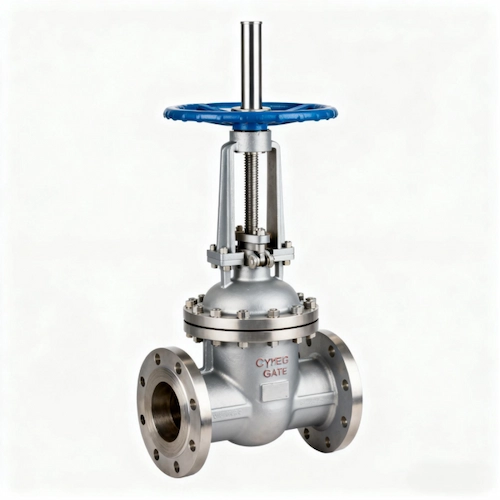
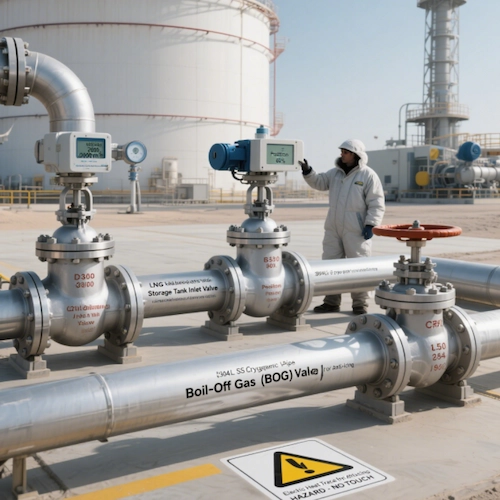
Operating at temperatures as low as -196C requires a specialized valve design to handle thermal contraction and ensure safety. Vcore Valve offers a premium Cryogenic Gate Valve series engineered for the most demanding applications in LNG terminals, air separation units, and liquid nitrogen storage. By utilizing extended bonnets and advanced materials, every Vcore Cryogenic Gate Valve prevents the stem packing from freezing and maintains a bubble tight seal under extreme thermal cycling.
Core Engineering Features
Thermal Barrier Technology
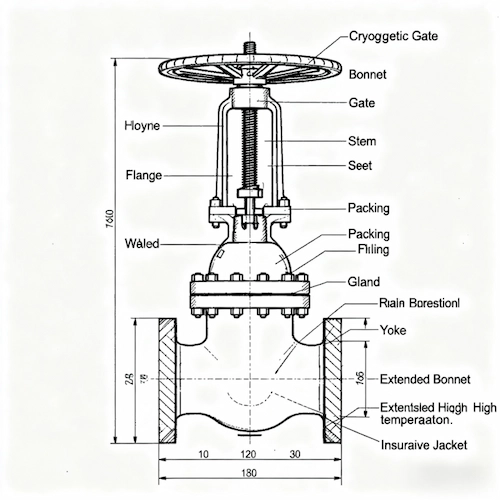
The extended bonnet is a critical safety component of the Vcore Cryogenic Gate Valve designed according to BS 6364. It creates a gas column that insulates the stem packing from the cryogenic liquid. This ensures that the packing remains at ambient temperature, preserving its elasticity and preventing dangerous external leakage.
Anti Galling Seating Surfaces
At sub-zero temperatures, standard stainless steel surfaces can easily seize or gall. To solve this, Vcore Valve hard faces the seating areas of each Cryogenic Gate Valve with Stellite 6 cobalt based alloy. This material provides exceptional red hardness and a low coefficient of friction, allowing the wedge to operate smoothly without sticking even after prolonged periods in the closed position.
Pressure Equalization System
Liquefied gases expand significantly when they vaporize. If liquid becomes trapped in the valve cavity, the resulting pressure spike can cause catastrophic body failure. Our Cryogenic Gate Valve design features an upstream pressure relief hole in the wedge to automatically equalize pressure and ensure system safety.
Technical Specifications
| Category | Technical Detail |
| Brand | Vcore Valve |
| Valve Type | Cryogenic Gate Valve |
| Design Standard | API 600, API 603, BS 6364, ISO 28921 |
| Working Temperature | -196C to +120C |
| Pressure Ratings | Class 150, 300, 600, 900, 1500, 2500 |
| Size Range | 2 Inch to 48 Inch (DN50 to DN1200) |
| Body Materials | ASTM A351 CF8, CF8M, CF3, CF3M |
| Trim Materials | Stellite 6 Hard Faced Seats and Wedge |
| End Connections | Flanged RF/RTJ, Butt Weld BW |
| Operation | Handwheel, Gear, Electric, or Pneumatic Actuator |
| Testing Standards | API 598, BS 6364 (Cryogenic Helium Testing) |
Quality Control and Testing
Every Vcore Cryogenic Gate Valve undergoes a rigorous verification process. We perform shell and seat hydrostatic tests at room temperature, followed by low temperature type testing. In the cryogenic test, the Cryogenic Gate Valve is submerged in liquid nitrogen and tested with helium gas to detect even the smallest leakage paths, ensuring compliance with Rate A leakage requirements.
Installation and Maintenance Best Practices
To ensure the long term reliability of your Cryogenic Gate Valve, proper installation is critical:
Orientation and Placement
These valves must be installed with the stem in a vertical upward position. This allows the gas column to form correctly in the extended bonnet. Horizontal installation can lead to liquid entering the packing box, causing immediate failure of the Cryogenic Gate Valve seal.
Cool Down Procedure
Before full operation, the Vcore Cryogenic Gate Valve should undergo a controlled cool down process. Rapid thermal shock can cause uneven contraction of internal components, which may affect the long term sealing performance.
Cleaning for Oxygen Service
For Liquid Oxygen (LOX) applications, every Cryogenic Gate Valve must be completely free of oil and grease. Even a tiny amount of hydrocarbon residue can cause a fire or explosion in the presence of high concentration oxygen.
FAQs
What is the function of the drip plate on the Vcore Cryogenic Gate Valve?
The drip plate prevents atmospheric moisture from condensing and running down the bonnet into the insulation or onto the valve stem. This prevents ice build up that could damage the packing or hinder the operation of the Cryogenic Gate Valve.
Why is helium used for cryogenic leak testing instead of water?
At -196C, water would freeze instantly. Helium is used for Cryogenic Gate Valve testing because it remains a gas at extreme low temperatures and has a very small molecular size, making it the most effective medium for identifying potential microscopic leak paths.
How does the Stellite 6 coating improve Cryogenic Gate Valve life?
Stellite 6 is a cobalt chromium tungsten alloy that maintains its mechanical properties at extreme cold. It provides a hard, wear resistant surface that prevents the metal to metal seizing common in stainless steel valves, significantly extending the service life of the Cryogenic Gate Valve in high cycle LNG applications.
What are the specific installation requirements for a Vcore Cryogenic Gate Valve?
These valves must be installed with the stem in a vertical upward position to maintain the protective gas column. If the Cryogenic Gate Valve is tilted or installed horizontally, liquid can reach the packing, causing it to freeze and leak.
Can Vcore Valve provide units for Oxygen service?
Yes, each Cryogenic Gate Valve can undergo specialized degreasing and cleaning procedures to remove all hydrocarbons. We provide full documentation for oxygen cleaned valves intended for LOX service to ensure zero risk of combustion.