
Spring-Loaded Safety Valve
Product Overview
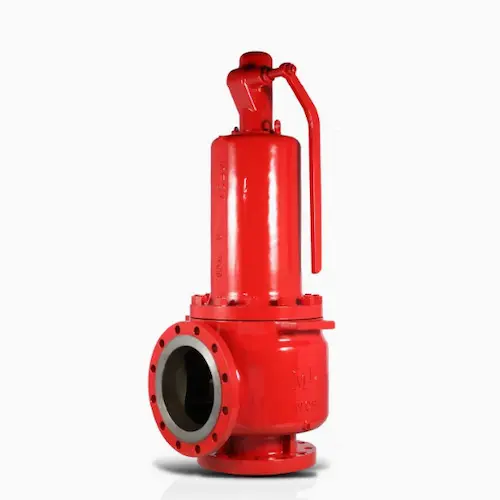
At Vcore Valve , we understand the critical need for pressure relief in various industrial applications. Our Spring-Loaded Safety Valve is designed to protect your systems from overpressure conditions by providing reliable, automatic pressure relief. This safety valve is essential for preventing damage to equipment, maintaining system efficiency, and ensuring the safety of your operations.
The Spring-Loaded Safety Valve operates using a spring mechanism to control the opening and closing of the valve based on system pressure. When the pressure exceeds the set limit, the valve opens to release the excess pressure and then closes once the pressure returns to normal. This makes it a key component in a wide range of industries, including oil and gas, power generation, chemical processing, water treatment, and HVAC systems.

Why Choose Our Spring-Loaded Safety Valve?
-
Precise Pressure Control: The spring-loaded mechanism allows for adjustable pressure settings, ensuring that the valve opens precisely at the required pressure. This ensures accurate and reliable pressure relief across a wide range of applications.
-
Durable Construction: Made from high-quality materials such as stainless steel, carbon steel, and cast iron, our spring-loaded safety valve is built to withstand harsh environments and high-pressure conditions. Its corrosion-resistant properties ensure long-lasting reliability.
-
Fast and Efficient Relief: The spring-loaded safety valve is designed to respond quickly to overpressure situations, opening immediately to release excess pressure and then closing once the pressure returns to normal, ensuring continuous safe operation.
-
Wide Application Range: Whether you’re working in a power plant, chemical facility, or water treatment plant, our spring-loaded safety valve provides fast and efficient pressure relief, protecting your systems from damage due to overpressure.
-
Low Maintenance: With its simple design and robust construction, the spring-loaded safety valve requires minimal maintenance, making it a cost-effective solution for long-term use.
Product Specifications
| Feature | Specification |
|---|---|
| Material | Stainless Steel, Carbon Steel, Cast Iron (Custom materials available) |
| Size Range | 1 inch to 12 inches (Custom sizes available) |
| Pressure Rating | PN16, PN25 (Custom ratings available) |
| Temperature Range | -20°C to 300°C |
| Spring Type | Adjustable Spring Tension |
| Connection Type | Flanged, Threaded, Welded |
| Set Pressure | Adjustable (Customizable to system requirements) |
| Discharge Capacity | High Flow (Customized for specific needs) |
| Application | Oil & Gas, Power Generation, Chemical Processing, Water Treatment, HVAC |
| End Connection | Male/Female Thread, Flanged, Welded |
Key Benefits of Choosing Our Spring-Loaded Safety Valve
-
Automatic Pressure Relief: The spring-loaded mechanism automatically opens and closes the valve when the system pressure exceeds the set limit, preventing overpressure damage and maintaining system safety.
-
Durable and Corrosion-Resistant: Our valve is built with high-quality materials like stainless steel and cast iron, ensuring it can withstand demanding conditions and resist corrosion for long-term performance.
-
Adjustable Pressure Settings: The valve features an adjustable spring tension, allowing for precise control over the pressure at which it opens. This flexibility makes it suitable for a variety of systems and pressure requirements.
-
Fast Response Time: Designed for rapid opening and closing, the spring-loaded safety valve ensures quick pressure relief, preventing system damage and minimizing the risk of operational downtime.
-
Low Maintenance: With fewer moving parts and a robust design, the spring-loaded safety valve requires minimal maintenance, reducing operational costs and enhancing system reliability.


Ideal Applications
The Spring-Loaded Safety Valve is an essential component in industries where pressure control is critical for operational safety and efficiency. Here are some of the ideal applications:
-
Power Generation: In power plants, the valve helps prevent overpressure in steam boilers and pressure vessels, ensuring safe operation and preventing equipment damage from excess pressure.
-
Oil & Gas: In oil and gas pipelines, the valve protects pumps, compressors, and other equipment by releasing excess pressure and preventing pipeline rupture or failure due to overpressure.
-
Chemical Processing: In chemical plants, overpressure can lead to dangerous conditions or damage to equipment. The spring-loaded safety valve provides reliable pressure relief in reactors, storage tanks, and pipelines, maintaining safe operational conditions.
-
Water Treatment: The valve helps prevent overpressure in water treatment systems, protecting filtration units, pumps, and pipes from damage caused by excessive pressure.
-
HVAC Systems: In heating, ventilation, and air conditioning systems, the spring-loaded safety valve ensures safe pressure relief in compressors, pumps, and heat exchangers, maintaining optimal performance and preventing system failure.
Installation Guidelines
-
Correct Flow Direction: Ensure the valve is installed according to the indicated flow direction, with the valve body aligned to release pressure safely and effectively.
-
Adjust Pressure Settings: The spring-loaded safety valve features adjustable spring tension. Set the tension to the required pressure for your system to ensure that the valve opens at the correct pressure threshold.
-
Secure Connections: Choose the correct connection type (flanged, threaded, or welded) based on your system’s design. Ensure all connections are securely tightened to prevent leaks and ensure proper operation.
-
System Testing: After installation, test the valve under normal system conditions to verify that it opens and closes properly and provides the correct pressure relief.
Maintenance Tips
-
Routine Inspections: Regularly check the valve for any signs of wear or corrosion, particularly the spring tension and seals. Ensure that the valve operates smoothly and that it opens and closes at the correct pressure.
-
Spring Adjustment: Periodically check the spring tension and adjust it if necessary to ensure that the valve operates at the desired pressure. Over time, springs can lose their tension and need recalibration.
-
Cleaning: Keep the valve clean and free of debris to ensure it operates efficiently. This is especially important in systems that carry fluids with suspended particles or chemicals.
-
Seal and Part Replacements: If the valve begins to leak or doesn’t seal properly, replace the seals or internal components as needed. Regular maintenance will extend the life of the valve and keep the system running smoothly.