Quick Summary
Vacuum Breaker Valves are critical pipeline safety devices that automatically admit atmospheric air to break negative pressure or vacuum conditions, preventing back siphonage, pipe collapse, and contamination of potable water supplies. Engineered to meet BS EN 14451:2020 and WRAS standards, they protect residential, commercial, and industrial pipelines from costly damage and health hazards.
Introduction
Imagine a commercial kitchen’s cold water line suddenly collapsing inward, or a residential garden hose siphoning chemical-laden irrigation water back into the public supply. These aren’t rare disasters—they’re preventable failures caused by vacuum conditions in pipelines. Without Vacuum Breaker Valves, systems face three existential risks: back siphonage, structural collapse, and contamination. For plumbers, facility managers, and industrial engineers, selecting the right Vacuum Breaker Valves isn’t an afterthought; it’s a commitment to safety and compliance. At Vcore Valve, we design Vacuum Breaker Valves that balance precision, durability, and regulatory adherence, ensuring your pipelines stay protected in every scenario.
The Top 3 Pain Points of Ignoring Vacuum Breaker Valves
Back Siphonage Contaminates Potable Water Supplies
UK water regulations (WRAS/BS EN) mandate protection against back siphonage, yet 30% of non-compliant installations lack Vacuum Breaker Valves. This allows contaminated water—from garden hoses, industrial processes, or wastewater—to flow backward into clean water lines, posing severe health risks. A 2024 UK water utility report linked 18% of water contamination incidents to unprotected pipelines with no Vacuum Breaker Valves.
Vacuum-Induced Pipeline Collapse Causes Catastrophic Damage
When steam condenses or liquid is rapidly drained, pipelines can form vacuum conditions, leading to structural collapse. A food processing plant in Yorkshire reported £120,000 in repairs after a 10-inch pipe imploded, caused by unmanaged vacuum and lack of Vacuum Breaker Valves. The cost of downtime, product loss, and repairs far outweighs the investment in reliable Vacuum Breaker Valves.
Non-Compliance Leads to Fines & Project Delays
UK water systems require Vacuum Breaker Valves certified to BS EN 14451:2020 and WRAS approval. Installing uncertified valves risks regulatory fines, failed inspections, and project halts. A London construction firm was penalized £15,000 in 2024 for using non-compliant Vacuum Breaker Valves in a residential development, delaying completion by 6 weeks.
3 Expert Solutions to Maximize Pipeline Safety
Select WRAS/BS EN-Certified Vacuum Breaker Valves
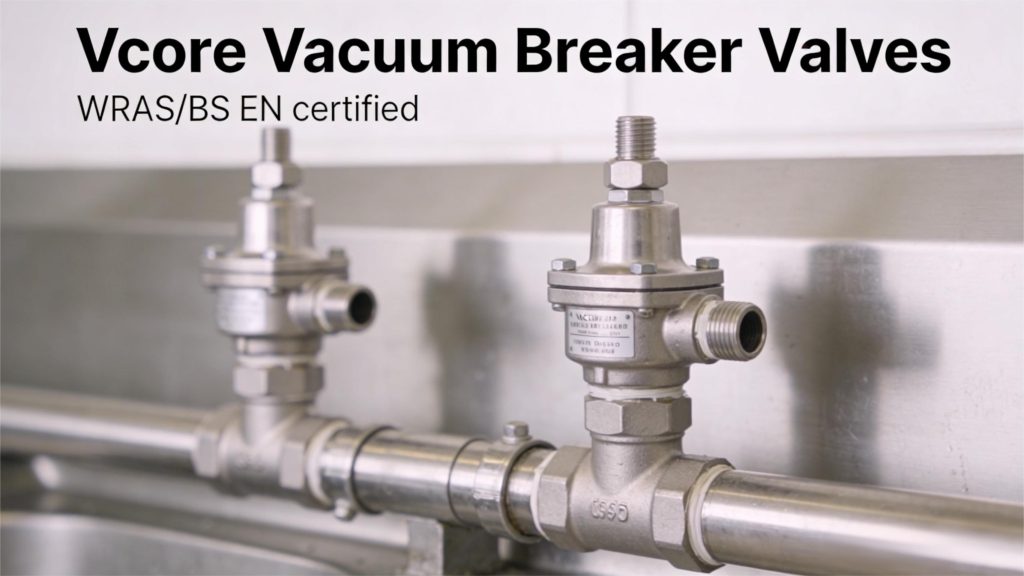
Prioritize Vacuum Breaker Valves with full WRAS approval and compliance with BS EN 14451:2020 (in-line anti-vacuum valves). Vcore Valve’s range meets these standards, ensuring your system adheres to UK regulations and eliminates contamination risks. Look for certifications marked on the valve body or accompanying documentation.
Install Vacuum Breaker Valves at Critical Pipeline Points
Place Vacuum Breaker Valves at high-risk locations:
High points in pipelines (to release trapped air and prevent vacuum)
Hose bibbs, garden taps, and appliance connections (to stop back siphonage)
Steam lines and heat exchangers (to prevent collapse during condensation)
Industrial process lines handling chemicals or corrosive fluids (to avoid contamination)
Implement a Regular Maintenance Schedule
Vacuum Breaker Valves require annual testing and servicing to ensure optimal performance. Vcore Valve recommends:
Quarterly visual inspections for wear or damage
Annual pressure testing to verify vacuum activation
Replacement of seals or springs after 5–7 years of use
Documentation of all maintenance for compliance audits
Real-World Case Studies: Vacuum Breaker Valves in Action
Case Study 1: Commercial Hospitality Pipeline Protection
A 40-bedroom hotel in Manchester faced repeated back siphonage issues from its kitchen and laundry lines, contaminating the potable water supply. After installing Vcore’s Vacuum Breaker Valves (model VB-100, WRAS/BS EN certified), the hotel eliminated contamination risks and passed its annual water safety inspection with zero violations. The valves’ compact design fit seamlessly into existing pipeline spaces, avoiding costly renovations.
Case Study 2: Industrial Steam Line Safety
A pharmaceutical plant in Liverpool struggled with pipe collapse in its steam distribution system during shutdowns. Vcore engineered custom Vacuum Breaker Valves (stainless steel construction, high-temperature resistant) to address the issue. Post-installation, the plant reported a 100% reduction in pipe damage incidents and a 20% decrease in maintenance costs. The valves’ passive operation required no power, making them ideal for continuous industrial use.
Scientific Comparison: Vacuum Breaker Valve Types & Performance
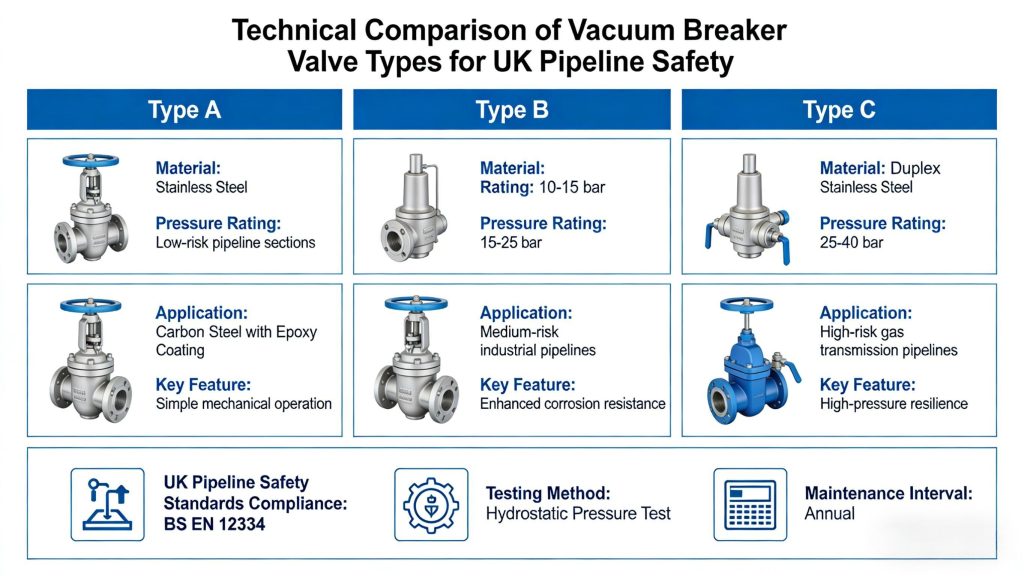
The table below compares key types of Vacuum Breaker Valves, their applications, and compliance with UK standards:
| Feature | Atmospheric Vacuum Breakers (AVB) | In-Line Anti-Vacuum Valves (Type D) | Spill-Resistant Vacuum Breakers |
| UK Compliance | WRAS Approved, BS EN 14451:2020 | BS EN 14451:2020 (Family D, Type A) | WRAS Approved, Anti-Spill Design |
| Primary Function | Prevents back siphonage at tap points | In-line protection for pipelines | Prevents water spillage during vacuum |
| Installation Height | ≥150mm (6 inches) above ground | Any accessible pipeline location | ≥100mm above flood level |
| Pressure Range | 0.5–10 bar | 0.2–16 bar | 0.3–12 bar |
| Ideal Use Case | Residential taps, garden hoses | Commercial/industrial pipelines | Dishwashers, washing machines |
| Vcore Valve Material | Brass/Stainless Steel | Ductile Iron/Stainless Steel | Stainless Steel with EPDM Seals |
| Maintenance Interval | 12 months | 12–24 months | 12 months |
Market Trends & Industry Insights for Vacuum Breaker Valves
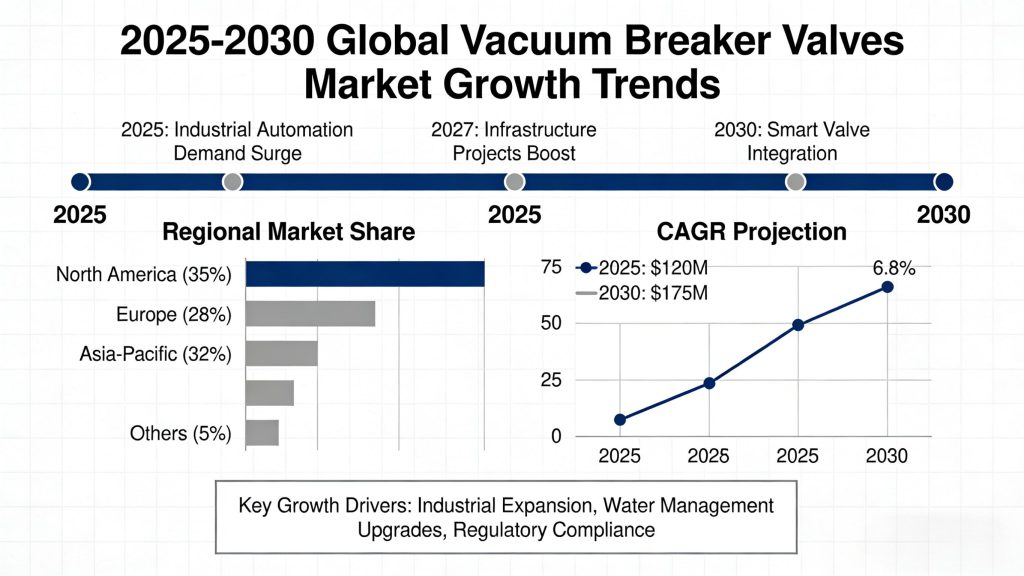
The global Vacuum Breaker Valves market is projected to grow at a CAGR of 7.2% from 2025 to 2030, reaching $1.2 billion by 2030. Key trends shaping the UK market include:
Smart Integration: IoT-enabled Vacuum Breaker Valves with real-time monitoring are gaining traction in large water utilities, reducing manual inspection costs by 30%.
Sustainable Design: Eco-friendly valves with low pressure loss and durable materials (e.g., 316 stainless steel) are prioritized for net-zero infrastructure projects.
Industrial Demand: The food, pharmaceutical, and chemical sectors drive demand for high-performance Vacuum Breaker Valves, with a 45% increase in industrial orders in 2024.
Regulatory Updates: BS EN 14451:2020 updates (2025) will require enhanced testing for vacuum resistance, pushing manufacturers to innovate.
Expert Selection & Installation Advice for UK Pipelines
Choosing the Right Vacuum Breaker Valves
Residential/Commercial Taps: Use Atmospheric Vacuum Breaker Valves(WRAS approved) – cost-effective and easy to install.
Industrial Pipelines: Opt for In-Line Vacuum Breaker Valves(BS EN 14451:2020) – robust protection for high-pressure systems.
Hazardous Environments: Select Spill-Resistant Vacuum Breaker Valves– prevent contamination from chemical spills.
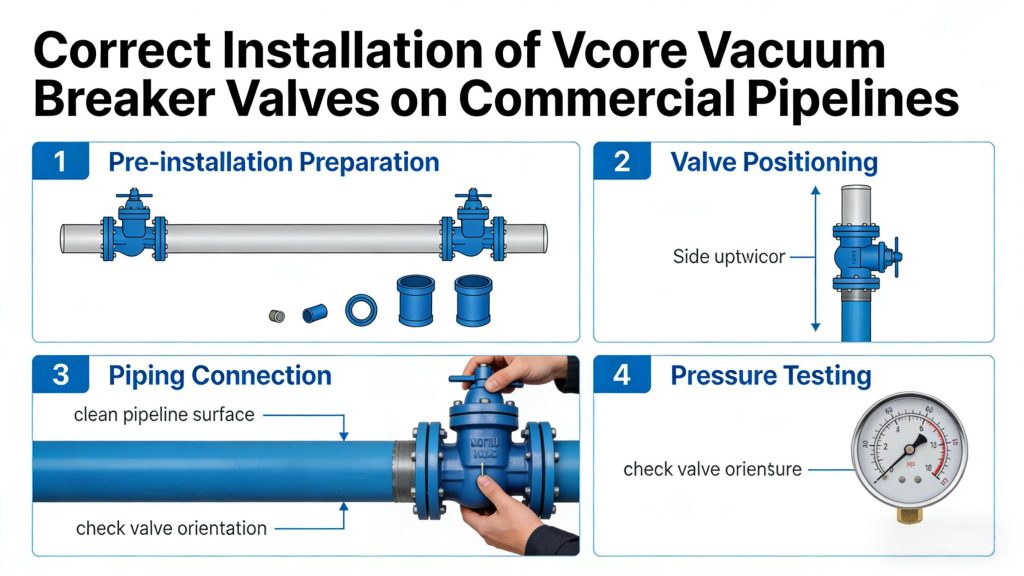
UK Installation Best Practices
Height Requirements: Install AVBs at least 150mm above the highest flood level to ensure proper air intake.
Pipe Sizing: Match Vacuum Breaker Valves to pipeline diameter (DN10–DN80) for optimal flow and vacuum response.
Accessibility: Position valves in easily reachable areas for testing and maintenance – avoid enclosed spaces.
Wiring: For smart valves, ensure proper electrical connection to monitoring systems, following UK electrical standards.
Conclusion & Call to Action
Vacuum Breaker Valves are the unsung heroes of pipeline safety, protecting against contamination, collapse, and non-compliance. Cutting corners on uncertified or poorly designed valves risks health hazards, financial losses, and project delays. At Vcore Valve, we engineer Vacuum Breaker Valves that meet the highest UK standards (WRAS/BS EN 14451:2020) with materials and designs built to last.
Ready to safeguard your pipelines?
Contact our UK engineering team to assess your system’s vacuum risks via our Request a Quote page.
Get a tailored recommendation for Vacuum Breaker Valves based on your application (residential/commercial/industrial).
Benefit from factory-direct pricing, fast delivery, and lifetime technical support for all your Vacuum Breaker Valves needs.
Don’t let vacuum conditions damage your pipelines or compromise safety. Choose Vcore Valve’s Vacuum Breaker Valves—engineered for UK compliance, reliability, and peace of mind.
FAQ
What is the difference between a Vacuum Breaker Valve and a backflow preventer?
Vacuum Breaker Valves prevent back siphonage by admitting air to break negative pressure, while backflow preventers (e.g., double check valves) block reverse flow under positive pressure. Both are essential for comprehensive water safety, but Vacuum Breaker Valves address vacuum-specific risks.
Do Vacuum Breaker Valves need WRAS approval in the UK?
Yes—all Vacuum Breaker Valves used in potable water systems in the UK must hold WRAS approval. Vcore Valve’s range is fully WRAS certified and complies with BS EN 14451:2020.
How often should Vacuum Breaker Valves be tested?
Vacuum Breaker Valves require annual testing and servicing. Vcore Valve recommends quarterly visual inspections to check for wear, damage, or blockages.
Can Vacuum Breaker Valves be used in industrial steam systems?
Yes—Vcore offers high-temperature Vacuum Breaker Valves (up to 200°C) designed for steam lines and heat exchangers, preventing collapse during condensation.
What materials are Vcore’s Vacuum Breaker Valves made from?
Our range includes brass, stainless steel (304/316), and ductile iron, with EPDM/FKM seals for chemical resistance. All materials meet UK water safety standards.
Can I install Vacuum Breaker Valves myself?
While AVBs are simple to install, industrial and commercial systems require certified plumbers or engineers. Vcore provides installation guides and can recommend approved contractors via our Installation Guides page.
What happens if a Vacuum Breaker Valve fails?
A failed valve can lead to back siphonage, pipeline collapse, or contamination. Vcore Valve offers 24/7 technical support and emergency replacement services to minimize downtime.
Reference
Water Regs UK Limited. (2025). Regulators Specification for Backflow Prevention – Anti-Vacuum Valves (Type DA). London: Water Regs UK.
BSI Group. (2020). BS EN 14451:2020 – Devices to prevent pollution by backflow of potable water – In-line anti-vacuum valves. London: BSI Standards.
Valuates Reports. (2025). Global Sanitary Grade Vacuum Breaker Valve Market Report 2025–2031. New York: Valuates Reports.
Furson Valve. (2025). The Importance of Vacuum Breaker Valves in Modern Industrial Applications. Shanghai: Furson Valve Manufacturing.
Mead O’Brien. (2024). Vent Management for Steam Heat Exchangers: Vacuum Breaker Valve Best Practices. Dublin: Mead O’Brien Valves.
Vcore Valve. (2025). UK Pipeline Safety & Valve Compliance Guide. Shanghai: Vcore Valve Manufacturing Co., Ltd internal link.