Quick Overview
Understanding valve HS codes is essential for companies involved in the global trade of industrial valves. HS codes determine tariffs, customs clearance requirements, and trade documentation. Whether exporting ball valves, gate valves, or globe valves, selecting the correct HS code for valves helps avoid delays, penalties, and unexpected duties in international shipments.
A Common Scenario in Valve Export
Imagine this situation.
A buyer orders a container of industrial valves. The products are manufactured, packed, and shipped on schedule. However, once the shipment arrives at customs, it gets delayed.
Why?
Because the HS code for valves listed on the documents does not match the product description.
The result?
-
Customs inspection
-
Additional paperwork
-
Possible tariff adjustments
For valve exporters and importers, understanding valve HS codes is not just paperwork — it is a critical part of international trade compliance.
At Vcore Valve, we help global buyers avoid these problems by ensuring correct valve customs classification and export documentation.
User Pain Points
1. Incorrect HS Code Leading to Customs Delays
Many buyers assume all valves share the same industrial valve HS code. In reality, HS classification depends on the valve type and application. Incorrect classification may cause shipments to be held at customs.
2. Unexpected Tariffs and Import Duties
Using the wrong valve tariff code may result in higher import duties. In some cases, the tariff difference can significantly affect project costs.
3. Confusing Classification for Different Valve Types
Different valves such as ball valves, gate valves, and globe valves may fall under similar but distinct HS codes. Without proper understanding, it becomes difficult to classify products correctly in export documents.
Solutions for Correct Valve HS Code Classification
1. Understand the HS Code Structure
The Harmonized System (HS) is a global classification system used by customs authorities worldwide. Most industrial valves fall under Chapter 84, which covers mechanical appliances and industrial equipment.
The commonly used base code for valves is:
8481 — Taps, cocks, valves and similar appliances
2. Identify Valve Type Before Classification
Different valve types may fall under specific subcategories within the valve HS code classification.
Examples include:
-
Flow control valves
-
Safety valves
-
Pressure-reducing valves
-
Check valves
Identifying the correct product category ensures accurate customs documentation.
3. Work With Experienced Valve Manufacturers
Professional valve suppliers such as Vcore Valve usually provide complete export documentation, including the correct HS code for industrial valves, product descriptions, and compliance certificates.
This greatly simplifies the valve import export process.
Case Study: Avoiding Customs Delays Through Correct HS Classification
A European engineering contractor once imported a shipment of pipeline valves. The valves were initially declared under a generic mechanical parts HS code.
During customs inspection, authorities reclassified the products under HS code 8481 for valves.
The consequences included:
-
Additional import duty adjustments
-
Clearance delays of several days
-
Extra documentation requirements
In subsequent shipments, the company worked with a valve manufacturer that provided accurate valve HS code documentation, which significantly improved customs clearance speed.
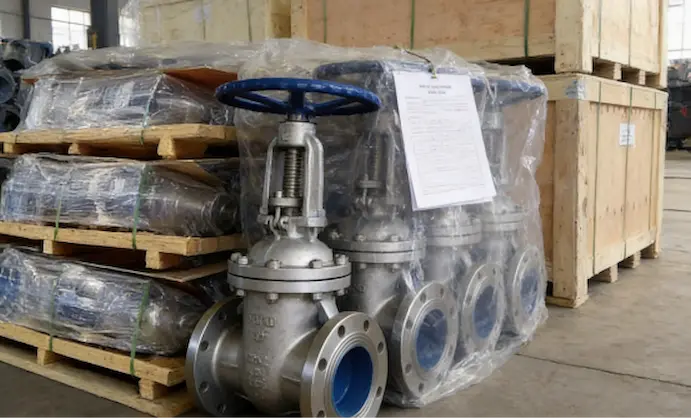
Data Analysis: Common Valve HS Code Classification
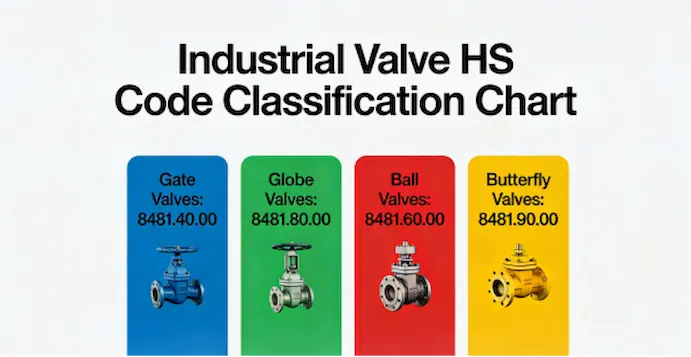
Below is a simplified overview of typical HS code categories for industrial valves.
| Valve Type | Typical HS Code Category | Description | Common Applications |
|---|---|---|---|
| Ball Valve | 8481.60 | Valves for flow control | Oil & gas pipelines |
| Gate Valve | 8481.40 | Industrial shut-off valves | Water, oil pipelines |
| Globe Valve | 8481.80 | Flow regulation valves | Steam and chemical systems |
| Check Valve | 8481.30 | Non-return valves | Pump protection systems |
| Safety Valve | 8481.40 | Pressure relief valves | Boilers and pressure vessels |
Although many valves fall under HS code 8481, subcategories may vary depending on valve function and customs rules in each country.
Market Trends in Global Valve Trade
As international infrastructure projects expand, the global trade of industrial valves continues to grow.
Key industry trends include:
-
Increased demand for pipeline valves in energy projects
-
Rising exports from Asian valve manufacturers
-
Stricter customs compliance and documentation
-
Greater use of digital customs systems
Because of these changes, correct HS code valve classification is becoming even more important for exporters and buyers.
Companies that maintain accurate documentation experience faster customs clearance and smoother international transactions.
Practical Tips for Choosing the Correct Valve HS Code
When exporting or importing valves, consider the following recommendations:
Verify Product Function
Customs authorities classify products based on function. Clearly identify whether the valve is used for flow control, pressure regulation, or safety protection.
Provide Detailed Product Descriptions
Export documents should include:
-
Valve type
-
Material
-
Pressure rating
-
Application
This information helps customs officers confirm the correct valve HS code classification.
Conclusion
Understanding valve HS codes is essential for companies involved in international valve trade. Correct HS classification ensures smoother customs clearance, accurate tariff calculations, and compliant export documentation.
Whether you are importing pipeline valves, exporting industrial ball valves, or managing large infrastructure projects, proper valve customs classification can save both time and cost.
At Vcore Valve, we support global customers not only with high-quality industrial valves but also with reliable export documentation and trade guidance.
FAQs
What is the HS code for industrial valves?
Most industrial valves fall under HS code 8481, which covers taps, cocks, valves, and similar flow control devices used in pipelines and machinery.
Do different valve types have different HS codes?
Yes. While many valves fall under 8481, subcategories vary depending on valve function, such as check valves, safety valves, or pressure-reducing valves.
Why is the correct HS code important for valve exports?
Using the correct valve HS code ensures accurate tariff calculation, faster customs clearance, and compliance with international trade regulations.
Can the same valve have different HS codes in different countries?
The first six digits of the HS code are globally standardised, but some countries add additional digits for national tariff classification.
Who determines the HS code for exported valves?
Exporters typically declare the HS code, but the final classification authority belongs to the customs agency of the importing country.
How can valve buyers confirm the correct HS code?
Buyers can consult customs databases, trade authorities, or work with experienced valve suppliers like Vcore Valve.
Reference
World Customs Organization – Harmonized System Overview
https://www.wcoomd.org
International Trade Centre – Trade Map
https://www.trademap.org
U.S. International Trade Commission – HTS Database
https://hts.usitc.gov