Quick Summary
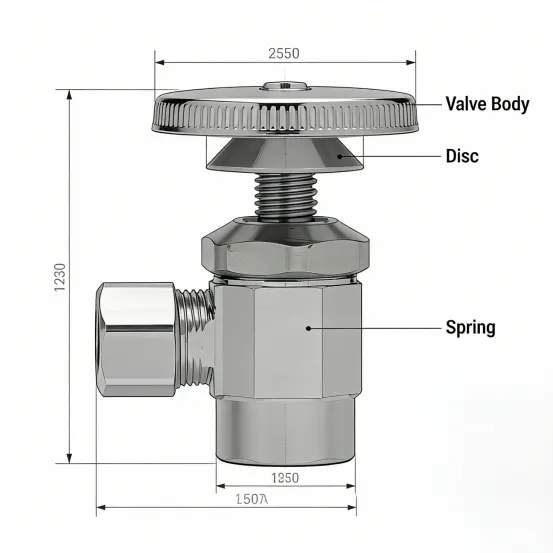
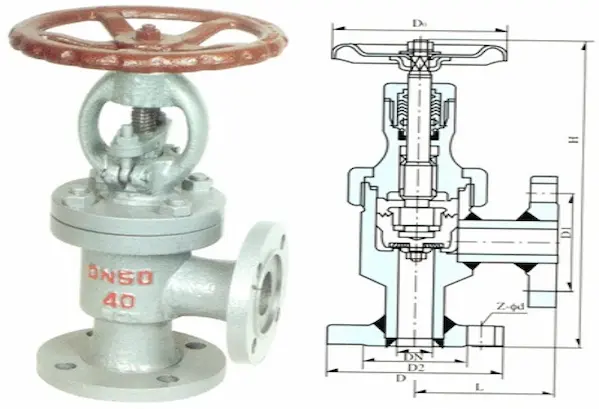
An angle stop valve is a compact 90-degree fixture shutoff valve commonly installed under sinks, toilets and appliances. Correct selection should consider pipe material, connection type, valve body material, potable-water approval, pressure rating, installation method and maintenance access.
🏠 Scenario — When You Need an Angle Stop Valve
You’re renovating a bathroom. You remove a basin, only to find rusted supply lines. You want to replace the faucet — but you don’t want to shut off water to the entire house. That’s when you thank your past self for installing a reliable angle stop valve. With a fixture shutoff valve installed under the sink or toilet, the water supply to that fixture can be isolated without shutting down the entire building. Quarter-turn models operate quickly, while multi-turn models require several turns to close.
Or picture a tenant calling in the middle of the night for a leaking toilet. A robust angle valve under the cistern saves you from a midnight whole-house shutdown — and angry neighbours.
⚠️ Common Pain Points
Confusion over valve types and materials
With options like compression, sweat (soldered), PEX, push-fit, and various metals/plastics, it’s easy to pick the wrong valve type — leading to leaks or premature failure.
Poor sealing or frequent leaks under pressure or corrosion
Low-quality or unsuitable valves may leak, deform, crack or fail prematurely when the material, pressure rating, temperature range, connection type or water chemistry does not match the application.
Inconvenient maintenance and difficult installation
Some valves require soldering, specialised tools or precise pipe alignment, making changes or repairs costly and time-consuming — annoying for homeowners, costly for maintenance teams.
🛠️ Solutions & Recommendations
Solution A — Choose valve type based on application
-
For standard residential sinks, toilets, or small fixtures: compression angle stop valves or PEX-compatible valves — easy to install, no soldering needed.
-
For reliable long-term performance in more demanding environments: brass or stainless steel valves with corrosion-resistant design.
-
Avoid cheap plastic valves except perhaps in low-risk, temporary installations.
Solution B — Ensure proper installation and regular maintenance
-
Use the correct pipe type (copper, PEX, CPVC) as specified; match valve to pipe material.
-
After installation, always test by shutting on/off, and check for drips. Inspect periodically — especially in mineral-rich water areas.
-
For soldered valves (sweat type), ensure professional soldering to avoid cold joints or leaks.
Solution C — Hold quality & longevity over upfront cost
-
Invest in higher-quality brass or stainless valves. Though costlier initially than plastic or economy valves, their leak-proof sealing and durability save maintenance and replacement fees down the line.
-
Use valves from reputable suppliers (such as Vcore Valve) who supply to both residential and industrial applications.
📚 Types, Materials & Where Each Fits
| Valve Type | Best Use | Weaknesses / Cautions |
|---|---|---|
| Compression angle valve | Retrofit under sinks or toilets on compatible copper tube | Ferrule and nut must be correctly seated; avoid overtightening |
| Sweat / soldered angle valve | Permanent copper pipe installation | Requires correct soldering skill and heat control |
| PEX-compatible angle valve | PEX plumbing systems | Confirm crimp, expansion, compression or push-fit connection compatibility |
| Push-fit angle valve | Fast installation or repair where approved | Must confirm pipe insertion depth, pipe condition and code approval |
| Threaded angle valve | Threaded pipe or adapter connection | Confirm thread type, sealant and tightening torque |
🔧 Installation & Usage Tips
-
Always turn off the main water supply before removing or replacing an angle valve, and drain the line fully.
-
For compression valves: ensure the ferrule and nut are properly seated; do not overtighten.
-
For soldered valves: ensure clean copper, correct solder application, and proper cooling to avoid cold joints or weak seals.
-
After installation, turn the water back on slowly, check thoroughly for leaks at the inlet/outlet and around the body.
-
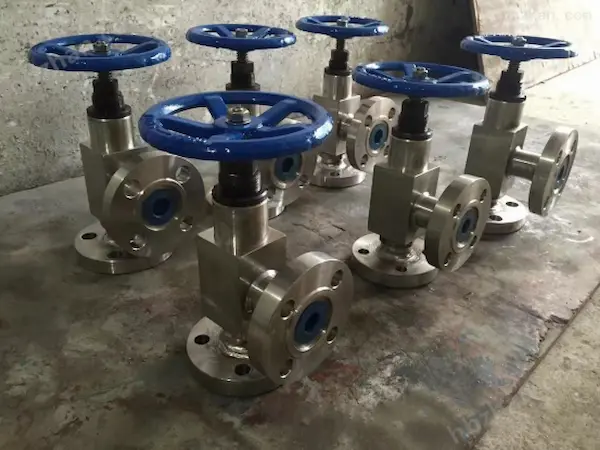
Exercise the valve periodically — open and close fully — to avoid seizing, especially in infrequently used fixtures.
🧰 Typical Replacement Scenarios
Example 1: Retrofit in an older flat
In older bathrooms or kitchens, an angle stop valve may need replacement when it leaks at the stem, cannot fully shut off water, shows corrosion, or becomes too stiff to operate. Brass or lead-free brass compression valves are common retrofit options when compatible with the existing pipe.
Example 2: PEX-based plumbing in a modern apartment
In PEX plumbing systems, a PEX-compatible angle valve may reduce installation work when the connection method is approved for the tubing system and local code.
🔎 Why Get Your Valves from Vcore Valve
At Vcore Valve, we supply a comprehensive range of angle stop valves, compression valves, PEX valves, brass and stainless stop valves, designed for both residential and commercial applications. With strict quality control and durable materials, we ensure leak-resistant sealing, corrosion resistance and long service life. Feel free to view our full product range on our About Us page.
Conclusion
Choosing the correct angle stop valve helps improve fixture isolation, maintenance convenience and leakage control. The right model should match the pipe material, connection type, water quality, pressure rating and approval requirements.
👉 Contact Vcore Valve today for professional advice, quality valves and customised solutions for your project — and ensure every fixture in your building has the right valve to do the job.
❓FAQ
Q1: What is an angle stop valve used for?
A: It’s a 90-degree shut-off valve located under fixtures like sinks or toilets, enabling you to isolate water supply to that fixture without shutting off the entire house water system.
Q2: What types of angle stop valves are there?
A: Common types include compression, sweat (soldered), PEX-compatible, and push-fit valves, each suited for different pipe materials and installation scenarios.
Q3: Which material is best for long-term reliability?
A: Brass or stainless-steel valves are ideal due to corrosion resistance, durability and stable sealing — especially in hard water or frequent-use environments.
Q4: Is soldering required for all angle valves?
A: No. Compression and PEX-compatible valves do not require soldering; push-fit valves are even easier. Only “sweat” angle valves need soldering.
Q5: How do I know when to replace an angle stop valve?
A: Watch for leaks, corrosion, stiffness when turning, or deformation of components. If sealing fails or the valve feels unstable — replace it promptly.
📄 References
-
What Is an Angle Stop Valve? – Fox Plumbing Heating & AC guide.
-
Angle valves tutorial & types – Plumberstar.
-
Valve connection and maintenance guidance – Professional plumbing resources.