Quick Overview
A valve spring is a crucial mechanical component used in many valve mechanisms to ensure proper closing force, stability, and reliable operation. In industrial valves, valve springs help maintain sealing performance, control movement of internal components, and prevent vibration-related failures. Understanding valve spring types, functions, and selection criteria helps engineers choose the correct spring design for durability, pressure resistance, and operational safety in demanding industrial environments.
A Typical Engineering Scenario
Imagine a maintenance engineer inspecting a control valve inside a refinery pipeline.
The valve opens correctly, but after several cycles it begins closing slowly and loses sealing reliability.
The cause is not the actuator, nor the valve seat.
The real culprit is a fatigued valve spring that has gradually lost its elasticity after millions of operating cycles.
Although small in size, industrial valve springs directly affect valve response, sealing integrity, and system stability. Poor spring selection or fatigue failure can result in leakage, vibration, or unreliable valve operation.
Understanding how valve springs work and how to select them correctly is essential for long-term valve performance.
Common Problems Engineers Encounter
Spring Fatigue and Loss of Elasticity
Valve springs operate under constant compression and relaxation cycles. Over time, fatigue can reduce spring force, causing valves to close improperly or lose sealing pressure.
Incorrect Spring Rate
If the spring rate is too low, the valve may not close quickly enough. If it is too high, excessive stress can damage internal valve components.
Vibration and Resonance Issues
In dynamic systems, improperly designed springs may experience harmonic vibration, which can shorten fatigue life and cause unstable valve operation.
Practical Solutions for Reliable Valve Spring Performance
Select the Correct Spring Type
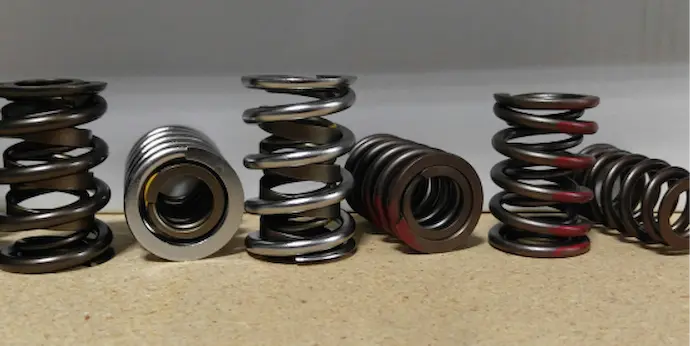
Different applications require different valve spring designs such as single coil, dual coil, or conical springs.
Use High-Quality Spring Materials
High-strength alloys such as chromium-silicon (SiCr) or chromium-vanadium (CrV) steels improve fatigue resistance and durability in demanding applications.
Implement Proper Installation and Inspection
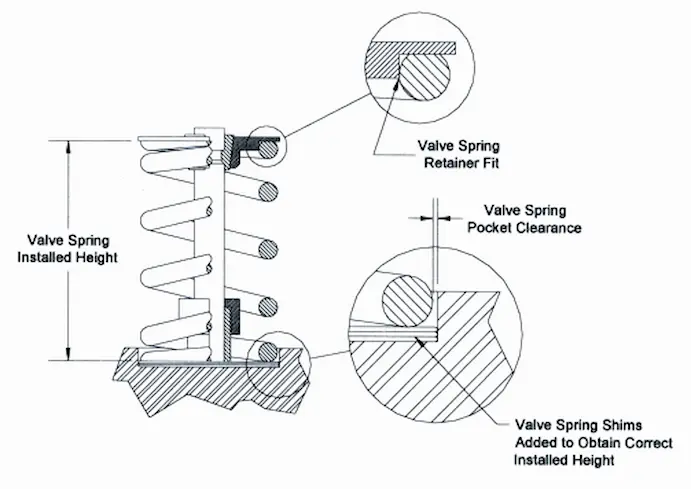
Correct installation height, preload settings, and periodic inspection help ensure springs maintain their intended mechanical properties throughout their service life.
What Is a Valve Spring and Why It Matters
A valve spring is typically a helical compression spring installed around or near the valve stem. Its primary function is to apply force that returns the valve to its closed position after actuation.
Key functions include:
-
maintaining proper valve seating pressure
-
preventing valve bounce or oscillation
-
controlling valve movement speed
-
stabilising valve operation under dynamic loads
Without a properly designed industrial valve spring, valve timing, sealing performance, and system reliability can all be compromised.
Types of Valve Springs
Single Coil Valve Springs
A single coil spring is the simplest spring configuration.
Characteristics:
-
single helical coil design
-
cost-effective and simple
-
suitable for moderate loads
These springs are commonly used in low-stress or standard valve mechanisms.
Dual (Nested) Valve Springs
Dual springs consist of an inner and outer spring working together.
Advantages:
-
higher spring force
-
improved resistance to vibration
-
redundancy if one spring fails
This configuration is often used in high-performance or heavy-duty valve systems.
Beehive Valve Springs
Beehive springs feature a tapered shape that reduces mass near the top of the spring.
Benefits include:
-
improved stability
-
reduced vibration
-
higher operating speeds
These designs help improve valve control and reduce mechanical stress.
Conical Valve Springs
Conical springs gradually taper from base to top.
Advantages:
-
natural vibration damping
-
improved fatigue resistance
-
better load distribution
Conical designs are commonly used in advanced valve mechanisms where dynamic stability is critical.
Valve Spring Materials and Manufacturing
Material selection significantly affects the durability of industrial valve springs.
Common materials include:
-
chromium-silicon steel (SiCr)
-
chromium-vanadium steel (CrV)
-
high-carbon spring steel alloys
These alloys provide high yield strength and excellent fatigue resistance under repeated loading cycles.
Manufacturing processes typically include:
-
precision wire forming
-
heat treatment (quenching and tempering)
-
surface strengthening processes such as shot peening
Surface treatments can significantly increase fatigue life and prevent micro-cracks that may cause spring failure.
Case Study: Spring Failure in an Industrial Control Valve
A chemical processing facility experienced recurring valve leakage in a pressure control system.
Inspection revealed that the control valve spring had gradually lost its preload force due to fatigue.
The plant implemented two improvements:
-
replacing the original spring with a high-strength SiCr alloy spring
-
adjusting installation height to match design specifications
After the upgrade, the valve maintained consistent closing force and the leakage problem disappeared.
Case Study: Improving Valve Stability with Dual Springs
In a high-flow pipeline, rapid valve actuation caused oscillations inside a control valve.
Engineers replaced the single spring mechanism with a dual spring system.
The results included:
-
improved vibration damping
-
smoother valve movement
-
longer component lifespan
Data / Scientific Analysis
| Spring Design | Load Capacity | Fatigue Resistance | Typical Application |
|---|---|---|---|
| Single coil spring | Moderate | Moderate | Standard valve mechanisms |
| Dual (nested) spring | High | High | Heavy-duty valve systems |
| Beehive spring | Moderate | High | High-speed mechanical systems |
| Conical spring | High | Very high | Precision valve assemblies |
Engineering tests show that springs produced from high-strength spring steels with surface treatments can achieve fatigue lives exceeding tens of millions of cycles.
Industry Trends in Valve Spring Engineering
Modern valve engineering increasingly focuses on durability, fatigue resistance, and vibration control.
Emerging trends include:
Advanced Alloy Materials
New alloy formulations improve thermal stability and fatigue resistance in high-temperature environments.
Surface Strengthening Technologies
Processes such as shot peening and nitriding improve fatigue life and resistance to micro-crack formation.
Precision Spring Design
Modern computer simulations allow engineers to optimise spring geometry and avoid resonance under dynamic loads.
Manufacturers such as Vcore Valve incorporate these engineering advances when designing components for high-performance industrial valves.
Practical Selection Tips
Choosing the correct valve spring involves several engineering considerations.
Evaluate Required Spring Force
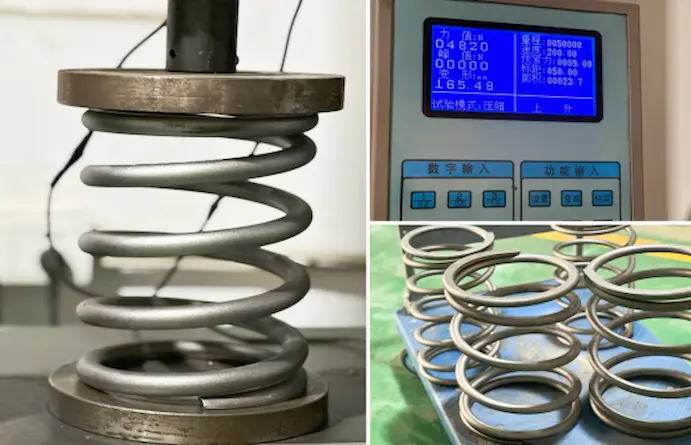
The spring must provide sufficient force to close the valve reliably without overstressing internal components.
Check Installation Height
Spring preload and installation height directly affect operating performance and fatigue life.
Consider Operating Temperature
High temperatures can reduce spring strength, so materials and heat treatments must match the operating environment.
Conclusion
Although often overlooked, valve springs play a vital role in the reliability and performance of mechanical and industrial valve systems. Their ability to maintain proper sealing force, control valve movement, and resist fatigue makes them essential components in many applications.
By understanding valve spring types, materials, and selection principles, engineers can significantly improve valve performance and prevent premature failures.
At Vcore Valve, our engineering approach emphasises precision component design, advanced materials, and strict quality control to ensure every valve component—including springs—delivers long-term reliability in demanding industrial environments.
FAQs
What is the function of a valve spring?
A valve spring provides the force needed to return a valve to its closed position and maintain proper sealing pressure.
What materials are valve springs made from?
Most valve springs are manufactured from high-strength steels such as chromium-silicon or chromium-vanadium alloys due to their excellent fatigue resistance.
Why do valve springs fail?
Common causes include fatigue, overheating, improper installation, and excessive stress.
How do engineers select the correct valve spring?
Engineers evaluate spring rate, installation height, material strength, and operating temperature conditions.
What is spring rate in a valve spring?
Spring rate refers to the amount of force required to compress the spring by a certain distance.
How long do valve springs last?
High-quality valve springs can withstand millions of operating cycles when properly designed and maintained.
Reference
Valve Spring Guide: Types, Functions and Selection Tips
https://www.tangovalve.com/valve-spring-guide-types-functions-and-selection-tips/
Valve Spring Basics and Design Principles
https://www.fobwp.com/valve-spring-guide/