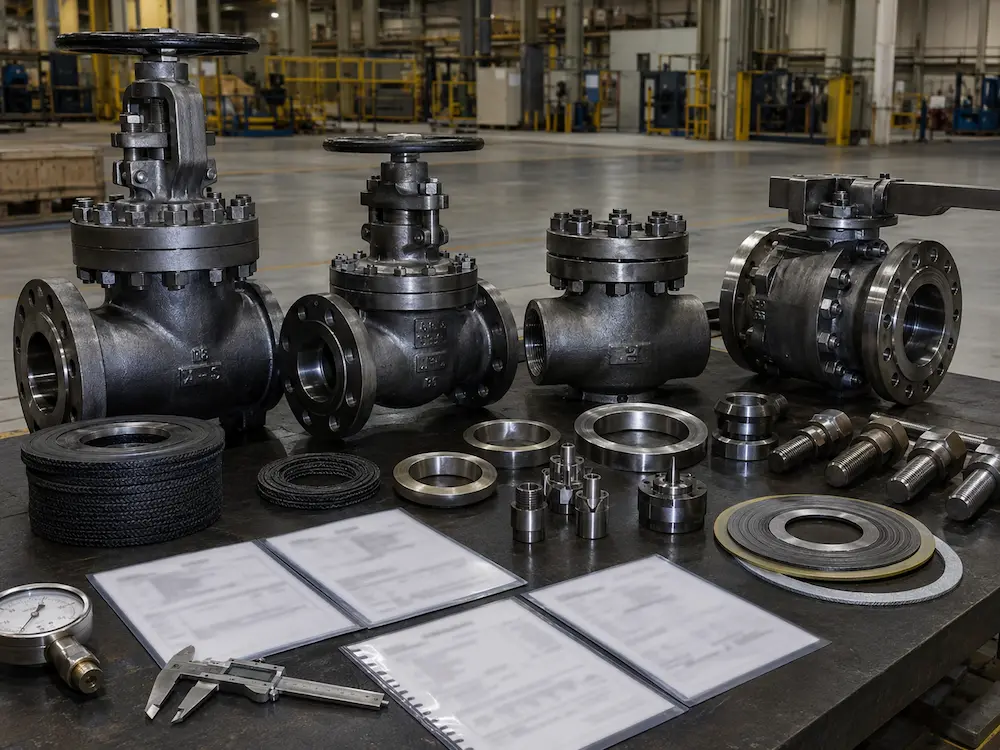
High temperature high pressure valves are used in steam pipelines, boiler systems, power plants, refinery units, petrochemical process lines, thermal oil systems, high-pressure gas lines and other severe industrial services where ordinary utility valves are not suitable.
In these applications, valve selection cannot rely only on size and pressure class. A Class 600 valve, for example, may not be suitable if the actual temperature, body material, seat material, gasket, packing or pressure-temperature rating does not match the working condition. The whole valve configuration must be selected as one pressure and sealing system.
This guide explains how industrial buyers should select high temperature and high pressure valves by valve type, material, trim, seat, packing, gasket, steam condition, pressure-temperature rating and quotation requirements.
For broader material selection, read our Valve Material Selection Guide. For power plant and steam pipeline applications, review our Power & Steam Valve Solutions.
What Are High Temperature High Pressure Valves?
High temperature high pressure valves are industrial valves designed for applications where elevated temperature, high pressure, pressure differential, thermal cycling, fluid erosion or process severity exceeds the capability of standard low-pressure utility valves.
These valves may be used for on-off isolation, flow regulation, backflow prevention, pressure control, steam throttling, thermal oil service or severe process control. The final valve design depends on the medium, temperature, pressure, operation frequency and project specification.
Common high temperature high pressure valve applications include:
- Superheated steam pipelines
- Saturated steam systems
- Boiler feedwater and boiler auxiliary systems
- Power plant main steam and auxiliary steam lines
- Refinery high-temperature process lines
- Petrochemical thermal process systems
- Thermal oil and heat transfer systems
- High-pressure gas and oil service
- High-pressure chemical pipelines
- Severe service control valve applications
Why Standard Valves May Fail in High Temperature High Pressure Service
High temperature and high pressure service creates additional stress on the valve body, bonnet, seat, stem, gasket, packing, bolting and actuator. A valve that works well in normal water or low-pressure air service may fail quickly in steam, refinery or power plant applications.
Common failure risks include:
- Seat leakage caused by thermal expansion or seat wear
- Packing leakage caused by high temperature or stem movement
- Gasket failure caused by pressure and thermal cycling
- Body or bonnet material stress at elevated temperature
- Trim erosion caused by steam velocity or pressure drop
- Cavitation or flashing in control service
- High operating torque in metal seated valves
- Incorrect actuator selection due to temperature and torque changes
- Bolting relaxation under high-temperature service
- Premature failure caused by using soft seats beyond their temperature limit
For this reason, buyers should review the full valve assembly, not only the valve body material.
Valve Types for High Temperature and High Pressure Service
| Valve Type | Main Function | Typical High-Temperature / High-Pressure Use | Key Selection Point |
|---|---|---|---|
| Gate Valve | On-off isolation | Main steam, refinery, high-pressure pipelines | Body material, wedge design, seat hardfacing, packing and bolting |
| Globe Valve | Shutoff and moderate regulation | Steam, thermal oil, process control, high-pressure utility lines | Trim material, seat erosion, pressure drop and graphite packing |
| Check Valve | Backflow prevention | Boiler feedwater, pump discharge, steam and process lines | Disc impact, spring material, seat wear and water hammer risk |
| Ball Valve | Fast on-off isolation | High-pressure oil, gas, steam, thermal oil and chemical service | Seat material, cavity relief, fire-safe design and operating torque |
| Control Valve | Flow, pressure or temperature control | Superheated steam, feedwater, refinery and process control | Trim design, cavitation, flashing, noise, erosion and actuator protection |
| Bellows Globe Valve | External leakage reduction | Steam, thermal oil, hazardous or leakage-sensitive service | Bellows material, pressure-temperature rating and backup packing |
For high-pressure isolation, review our High Pressure Ball Valve. For steam shutoff or moderate regulation, review our Steam Globe Valve. For process regulation, review our Control Valve Solutions. For external leakage-sensitive service, review our Bellows Globe Valve.
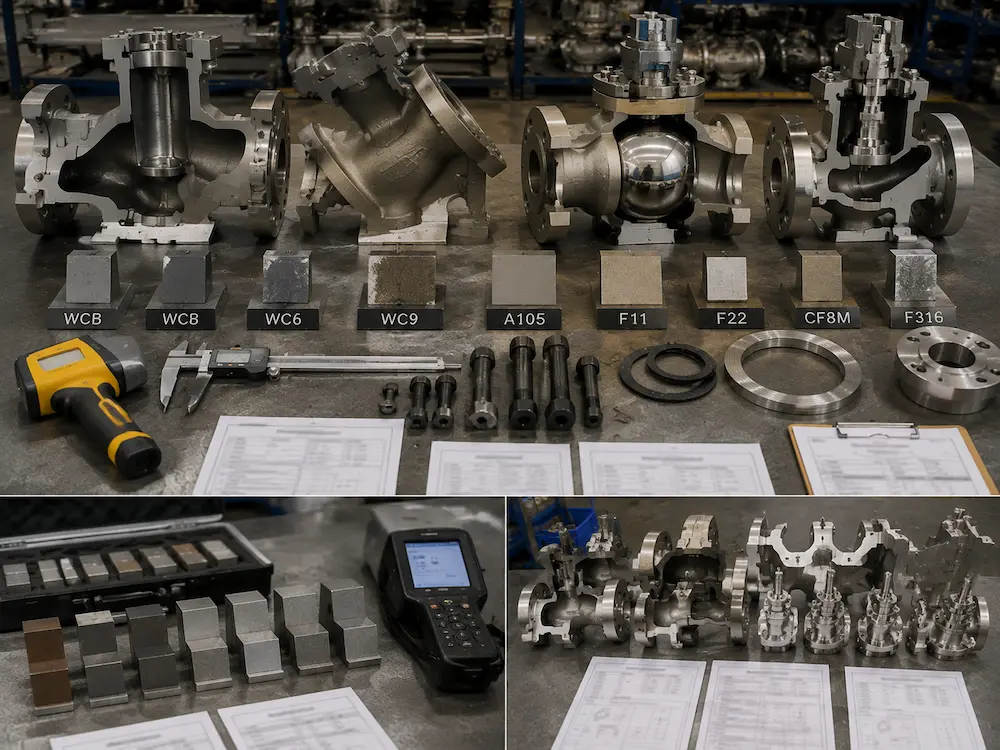
High Temperature Valve Material Selection
Body material is one of the most important decisions for high temperature high pressure valves. However, the correct material depends on the actual design temperature, pressure class, medium, corrosion condition, valve construction and project standard.
| Material | Material Family | Typical Use | Buyer Notes |
|---|---|---|---|
| WCB | Cast carbon steel | General pressure service | Common for industrial valves, but must be checked for temperature limit and project requirements |
| A105 | Forged carbon steel | Forged high-pressure valves | Common for forged valves where low-temperature or high-alloy performance is not required |
| WC6 | Cast alloy steel | Elevated-temperature steam, refinery and power service | Used when carbon steel is not enough for high-temperature performance |
| WC9 | Cast alloy steel | Higher-temperature steam, refinery and power service | Reviewed when stronger high-temperature alloy performance is required |
| F11 | Forged alloy steel | Forged elevated-temperature valves | Forged alloy steel option for steam, refinery and thermal process applications |
| F22 | Forged alloy steel | Forged higher-temperature valves | Reviewed for more demanding high-temperature forged valve service |
| CF8 / F304 | Cast / forged 304-type stainless steel | General stainless service | Suitable for many clean or mildly corrosive services, but not severe chloride service |
| CF8M / F316 | Cast / forged 316-type stainless steel | Chemical, chloride and more corrosive service | Better corrosion resistance than 304-type stainless steel in many applications |
| Inconel / Monel / Special Alloy | Nickel alloy / special alloy | Severe temperature or corrosion service | Selected only after medium, temperature, corrosion and documentation review |
For cast alloy steel material comparison, read our WC6 vs WC9 Valve Material Guide.
Valve Trim and Hardfacing for High Temperature Service
Trim material is critical because the trim is directly exposed to flow, pressure drop, erosion, throttling and sealing wear. In high-temperature steam or process service, the trim may fail earlier than the body if the wrong material is selected.
High-temperature trim may include:
- Stem
- Disc
- Wedge
- Seat ring
- Plug
- Control valve cage
- Ball surface
- Check valve disc or spring
- Hardfaced sealing surface
Common trim and surface options include:
- 13Cr stainless steel trim for general industrial service
- 304 / 316 stainless steel trim for corrosion-resistant service
- Stellite hardfacing for steam erosion, wear and high-temperature sealing surfaces
- Monel, Inconel or special alloy trim for severe corrosion or high-temperature conditions
- Hardfaced seat rings for globe valves, gate valves and severe shutoff service
- Special control valve trim for cavitation, flashing or high-pressure drop service
For internal part material selection, read our Valve Trim Materials Guide.
Seat Selection for High Temperature High Pressure Valves
Seat material determines shutoff performance, leakage class, temperature capability, torque and service life. For high temperature high pressure valves, seat selection is often more important than buyers expect.
| Seat Type | Typical Use | Main Advantage | Main Caution |
|---|---|---|---|
| PTFE Seat | Clean, moderate-temperature service | Low friction and good shutoff | Not suitable for many high-temperature steam or severe services |
| RPTFE Seat | Higher pressure than standard PTFE in suitable service | Better strength than standard PTFE | Temperature and medium limits must still be checked |
| PEEK / PPL Seat | Higher-temperature ball valve applications | Better temperature capability than many soft seats | Cost and chemical compatibility must be reviewed |
| Metal Seat | Steam, thermal oil, abrasive or severe high-temperature service | High temperature and wear resistance | Higher torque and leakage class must be confirmed |
| Stellite Hardfaced Seat | Steam erosion, throttling and severe shutoff service | Improved wear and high-temperature durability | Requires correct machining, lapping and inspection |
For high-temperature ball valve sealing, read our Soft Seat vs Metal Seat Ball Valve and PTFE vs PEEK Ball Valve Seal.
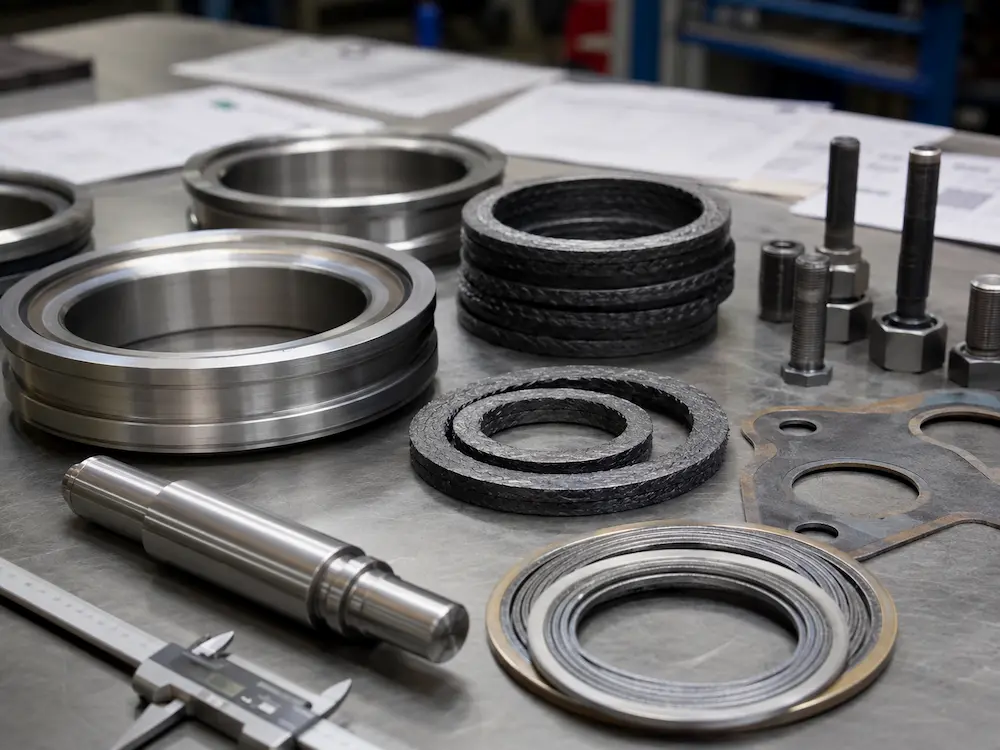
Packing and Gasket Selection
Packing and gasket materials are often the weak points in high-temperature high-pressure valves. A suitable body material cannot prevent leakage if the packing or gasket cannot handle the actual pressure and temperature.
Common high-temperature sealing options include:
- Flexible graphite packing for steam and high-temperature service
- Low-emission graphite packing for fugitive emission control
- Spiral wound gasket for many flanged high-pressure applications
- Graphite gasket for high-temperature bonnet sealing
- Metal gasket or RTJ gasket for selected high-pressure flange systems
- Backup packing in bellows-sealed globe valves
Buyer checks:
- Is the packing suitable for the design temperature?
- Is the gasket suitable for pressure and thermal cycling?
- Is low-emission packing required?
- Is the bonnet gasket compatible with the medium?
- Is the flange gasket selected according to the flange standard?
- Is the bolting material suitable for temperature?
Pressure-Temperature Rating: Why Pressure Class Alone Is Not Enough
Many buyers ask for Class 150, Class 300, Class 600, Class 900, Class 1500 or Class 2500 valves. Pressure class is important, but it does not define the final allowable pressure at high temperature.
As temperature increases, the allowable pressure of the valve material may decrease. Therefore, buyers must check the pressure-temperature rating according to valve standard, body material, flange standard and design condition.
Buyers should confirm:
- Nominal pressure class
- Design pressure
- Design temperature
- Operating pressure
- Operating temperature
- Maximum differential pressure
- Pressure-temperature rating table
- Material group and valve standard
- Flange rating and end connection
- Gasket and bolting suitability
A high pressure class does not automatically mean the valve is suitable for every high-temperature condition. Pressure rating, body material, gasket, bolting and sealing design must be checked together.
How to Select Valves for Steam Service
Steam service is one of the most common high-temperature high-pressure valve applications. Steam systems may include saturated steam, superheated steam, main steam, auxiliary steam, boiler feedwater, condensate and turbine auxiliary lines.
For steam valve selection, buyers should confirm:
- Saturated steam or superheated steam
- Steam pressure
- Steam temperature
- Main steam or auxiliary steam service
- Whether throttling is required
- Whether thermal cycling is frequent
- Whether condensate or two-phase flow is present
- Whether the valve is used for isolation, regulation or backflow prevention
- Required leakage class
- Whether graphite packing or metal seat is required
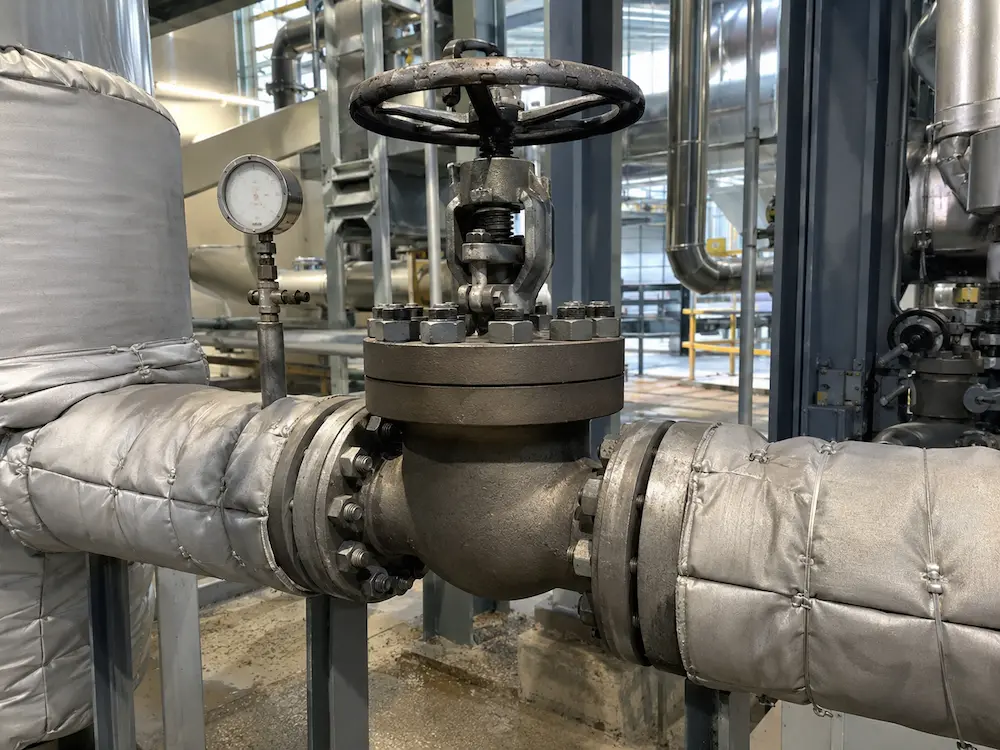
Steam valve type selection:
| Steam Application | Recommended Valve Type | Selection Focus |
|---|---|---|
| Main steam isolation | Gate valve or high-performance shutoff valve | Alloy steel body, hardfaced seat, graphite packing and pressure-temperature rating |
| Steam regulation | Globe valve or control valve | Trim erosion, pressure drop, seat leakage and actuator sizing |
| Boiler feedwater | Globe valve, check valve or control valve | Pressure, temperature, cavitation and trim material |
| Condensate line | Globe valve, check valve or ball valve | Water hammer, backflow prevention and corrosion risk |
| Steam control | Control valve | Superheated steam, pressure drop, noise, erosion and actuator protection |
For application-based steam valve selection, review our Power & Steam Valve Solutions.
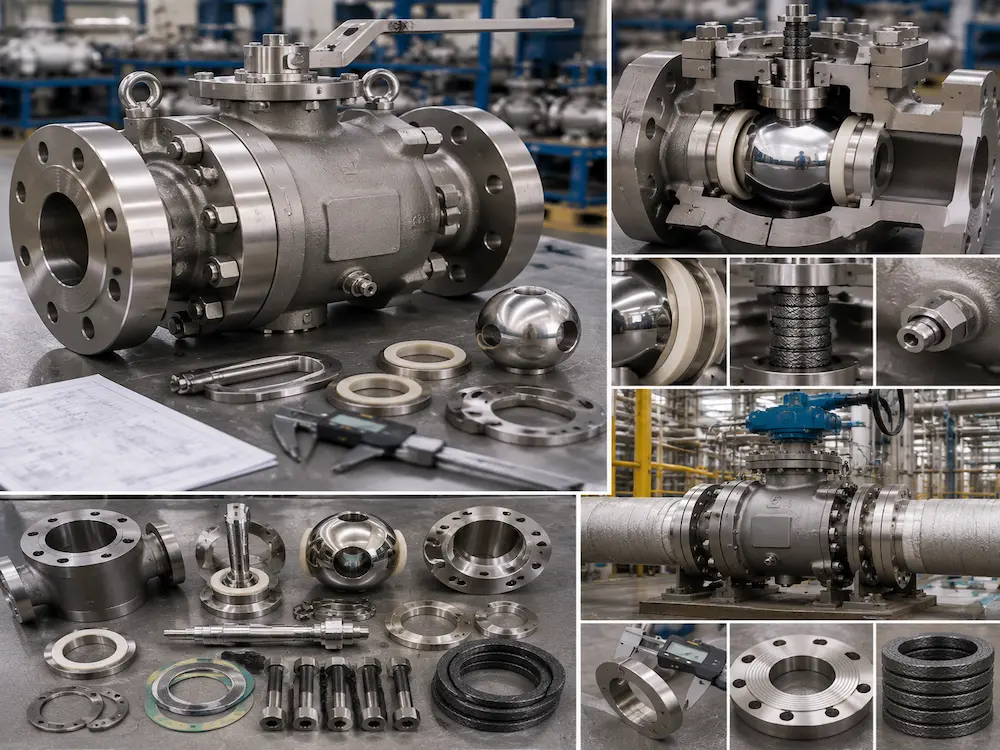
High Pressure Ball Valves in High Temperature Service
Ball valves are commonly selected for fast on-off isolation in high-pressure pipelines. However, high-temperature service requires special attention to seat material, stem sealing, cavity pressure relief and fire-safe design.
For high-temperature high-pressure ball valves, check:
- Floating or trunnion-mounted design
- Soft seat or metal seat
- PTFE, RPTFE, PEEK, PPL or metal seat compatibility
- Cavity pressure relief requirement
- Fire-safe design requirement
- Anti-static design requirement
- Stem packing temperature limit
- Operating torque at temperature
- Actuator sizing margin
- End connection: flanged, welded, threaded or socket weld
For high-pressure isolation requirements, review our High Pressure Ball Valve.
Control Valves for High Temperature and High Pressure Service
Control valves in high-temperature high-pressure service require more detailed engineering review than simple isolation valves. The valve trim may experience continuous pressure drop, high velocity, cavitation, flashing, erosion, vibration and noise.
Control valve selection should include:
- Flow rate and control range
- Maximum pressure differential
- Inlet and outlet pressure
- Operating temperature
- Valve Cv requirement
- Trim material and trim style
- Anti-cavitation or low-noise trim if required
- Actuator type and fail position
- Positioner and instrument air requirement
- High-temperature extension bonnet if required
For steam and process flow regulation, review our Control Valve Solutions.
High Temperature High Pressure Valve Applications
Power Plants
Power plants require valves for steam pipelines, boiler systems, feedwater, condensate, turbine auxiliary systems and high-temperature process lines. Material selection, sealing design, pressure-temperature rating and documentation are critical.
Refineries
Refinery valves may handle hot hydrocarbons, process gas, steam, thermal oil and high-pressure utility systems. Alloy steel bodies, hardfaced trim, graphite packing and suitable gaskets are often reviewed.
Petrochemical Plants
Petrochemical service may involve high temperature, corrosive fluids, thermal cycling and strict process control. Valve material must match both temperature and chemical compatibility.
Steam Distribution Systems
Steam distribution valves require correct seat design, packing, gasket and body material. Globe valves, gate valves, check valves and control valves are commonly used.
Thermal Oil Systems
Thermal oil valves require temperature-resistant sealing materials and careful review of leakage risk, fire safety, packing and gasket performance.
High-Pressure Oil and Gas Pipelines
High-pressure oil and gas service may require forged steel, API 6D design, fire-safe construction, anti-static design, cavity pressure relief and project documentation.
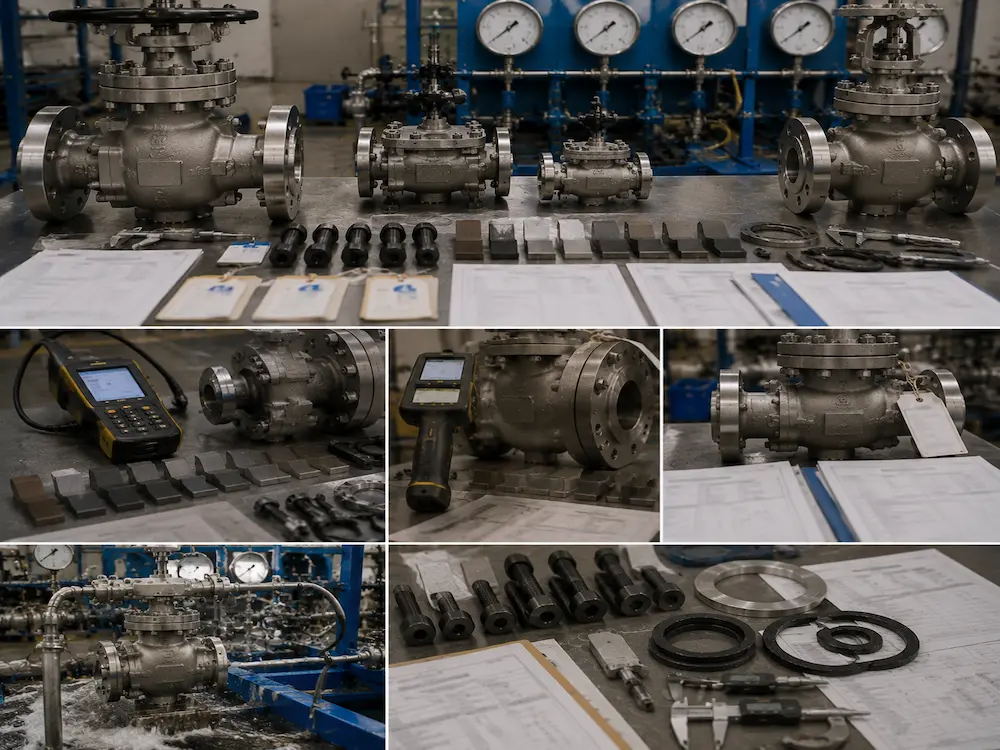
Testing and Documentation Requirements
High temperature high pressure valves are often supplied for project-based applications where testing and documentation are as important as the valve itself.
Common inspection and documentation items include:
- Material Test Certificate / MTC
- Heat number traceability
- Chemical composition and mechanical properties
- PMI inspection for stainless steel, alloy steel or special alloy materials
- Hydrostatic shell test
- Seat leakage test
- High-pressure closure test if required
- Low-emission test if required
- Fire-safe certificate if applicable
- NACE requirement if sour service applies
- Third-party inspection if required
- Final inspection report
- Drawing and datasheet approval
For documentation details, read our Valve Certificates and Quality Documents Guide.
Common Mistakes When Selecting High Temperature High Pressure Valves
Mistake 1: Selecting Only by Pressure Class
Pressure class alone is not enough. The valve must be checked against actual design pressure, design temperature and pressure-temperature rating.
Mistake 2: Ignoring Seat Temperature Limits
Soft seats may not be suitable for many high-temperature steam, thermal oil or severe process applications. PEEK, PPL, metal seat or hardfaced seat may be required.
Mistake 3: Using the Wrong Packing Material
PTFE packing may not be suitable for high-temperature service. Graphite packing is commonly reviewed for steam and high-temperature applications.
Mistake 4: Ignoring Trim Erosion
Steam throttling, high velocity and high pressure drop can damage trim surfaces. Globe valves and control valves require careful trim review.
Mistake 5: Treating Ball Valves as Universal High-Temperature Valves
Ball valves can be used in selected high-temperature service, but seat material, cavity relief, fire-safe design and operating torque must be checked.
Mistake 6: Ignoring Thermal Cycling
Frequent heating and cooling can affect gasket sealing, bolting preload, packing performance and actuator operation.
Mistake 7: Not Confirming MTC and Testing Documents
For high-temperature high-pressure projects, material certificate, pressure test report, PMI and third-party inspection requirements should be confirmed before production.
Buyer RFQ Checklist for High Temperature High Pressure Valves
Before requesting a quotation, buyers should provide enough working condition data. This reduces wrong selection, repeated communication and quotation errors.
| Required Information | Example / Notes |
|---|---|
| Valve type | Gate, globe, check, ball, control valve, bellows globe valve |
| Valve size | NPS / DN size |
| Pressure class | Class 150 / 300 / 600 / 900 / 1500 / 2500 or PN rating |
| Design pressure | Required for pressure-temperature rating review |
| Design temperature | Required for material, seat, gasket and packing selection |
| Operating pressure and temperature | Normal working condition |
| Medium | Steam, thermal oil, hydrocarbon, gas, chemical, water, etc. |
| Steam type | Saturated steam, superheated steam, condensate, feedwater |
| Body material | WCB, WC6, WC9, A105, F11, F22, CF8M, F316 or project material |
| Trim material | 13Cr, SS304, SS316, Stellite, hardfaced trim or special alloy |
| Seat material | PTFE, RPTFE, PEEK, PPL, metal seat, hardfaced seat |
| Packing and gasket | Graphite packing, spiral wound gasket, RTJ gasket, project-specific sealing |
| End connection | Flanged, butt weld, socket weld, threaded, RTJ flange |
| Operation method | Manual, gear operator, pneumatic actuator, electric actuator |
| Testing requirements | Shell test, seat test, leakage class, fire-safe, low-emission, third-party inspection |
| Documentation | MTC, PMI, test report, drawing, datasheet, certificate requirements |
Related Technical Resources
- Valve Material Selection Guide — main guide for valve body, trim, seat, seal, gasket and bolting material selection.
- WC6 vs WC9 Valve Material — cast alloy steel material comparison for high-temperature steam, refinery and power service.
- Power & Steam Valve Solutions — application-based valve selection for steam pipelines, boiler systems and power generation units.
- High Pressure Ball Valve — product page for high-pressure isolation in oil, gas, hydraulic, steam, thermal oil and industrial pipeline systems.
- Steam Globe Valve — product page for steam, thermal oil and temperature-controlled service.
- Control Valve Solutions — solution page for precise pressure and flow regulation in process systems.
- Soft Seat vs Metal Seat Ball Valve — explains seat selection for soft seated and metal seated ball valves.
- PTFE vs PEEK Ball Valve Seal — explains ball valve seal material selection for temperature and pressure service.
- Power Plant Valve Project Engineering Review— a pre-award project example involving one high-temperature pneumatic control valve
and five parallel slide gate valves for a U.S. cogeneration facility.
Final Recommendations for Industrial Buyers
High temperature high pressure valves should be selected as a complete engineering system. Body material, pressure class, seat material, trim, packing, gasket, bolting, actuator and documentation must all match the actual service condition.
For steam and power plant service, alloy steel materials, graphite packing, metal seats, hardfaced trim and suitable gaskets are often reviewed. For high-pressure oil, gas and thermal process service, forged construction, cavity relief, fire-safe design, seat material and pressure-temperature rating must be confirmed carefully.
If you need help selecting high temperature high pressure valves for steam, power plant, refinery, petrochemical, thermal oil, oil and gas or severe industrial service, Vcore Valve can review your medium, pressure, temperature, valve type, material configuration and documentation requirements.
FAQ
1. What are high temperature high pressure valves?
High temperature high pressure valves are industrial valves used in services where elevated temperature, high pressure, pressure differential, thermal cycling or severe fluid conditions exceed the capability of ordinary utility valves.
2. What valve materials are used for high temperature service?
Common materials include WCB, WC6, WC9, A105, F11, F22, CF8, CF8M, F304, F316 and special alloys depending on temperature, pressure, corrosion condition and project specification.
3. Can ball valves be used for high temperature service?
Ball valves can be used in selected high-temperature service, but seat material, cavity pressure relief, fire-safe design, stem packing, operating torque and actuator sizing must be checked carefully.
4. Which valve is suitable for steam throttling?
Globe valves and control valves are commonly reviewed for steam throttling because their trim design allows better flow regulation than ordinary on-off valves. Trim erosion, pressure drop and seat leakage must be checked.
5. What packing is commonly used for high-temperature valves?
Flexible graphite packing is commonly reviewed for high-temperature steam and thermal process valves because it can handle higher temperatures than many soft packing materials.
6. Why is pressure-temperature rating important?
Pressure-temperature rating is important because allowable pressure changes with temperature and material. A valve pressure class alone does not guarantee suitability at high temperature.
7. What documents should buyers request for high temperature high pressure valves?
Buyers may request material certificates, heat number traceability, PMI, hydrostatic test reports, seat leakage test reports, fire-safe certificates, low-emission test reports, drawings, datasheets and third-party inspection documents depending on project requirements.