Valve material selection is one of the most important decisions in industrial valve purchasing. A valve with the correct size and pressure class can still fail if the body material, trim material, seat material, or seal material is not suitable for the medium, pressure, temperature, or corrosion environment.
Industrial valves are used in water treatment, wastewater, chemical processing, oil and gas, power plants, steam systems, slurry service, mining, marine systems, HVAC, food processing, and general industrial pipelines. Each service has different material requirements. A carbon steel valve may work well in oil or steam service, but it may not be suitable for seawater or strong acid. An EPDM seat may be suitable for water, but not for many oils and hydrocarbons.
This guide explains how to choose valve body materials, trim materials, seat materials, seal materials, and related components for different industrial services. Buyers can also review Vcore Valve’s industrial valve product range for ball valves, gate valves, globe valves, butterfly valves, check valves, control valves, and lined valves.
Why Valve Material Selection Matters
Valve materials directly affect pressure performance, corrosion resistance, temperature capability, leakage performance, maintenance life, and project safety. A wrong material choice may cause corrosion, cracking, seat swelling, leakage, erosion, stem seizure, gasket failure, or early valve replacement.
For B2B buyers, material selection should not be based only on price. The correct material depends on the actual service condition, including medium composition, concentration, temperature, pressure, flow velocity, solids content, chloride level, acidity, alkalinity, and required documentation.
Valve material selection affects:
- Pressure-containing strength
- Corrosion resistance
- Temperature resistance
- Seat leakage performance
- Stem and trim durability
- Resistance to abrasion or erosion
- Maintenance frequency
- Project approval and material traceability
Main Valve Material Areas Buyers Should Check
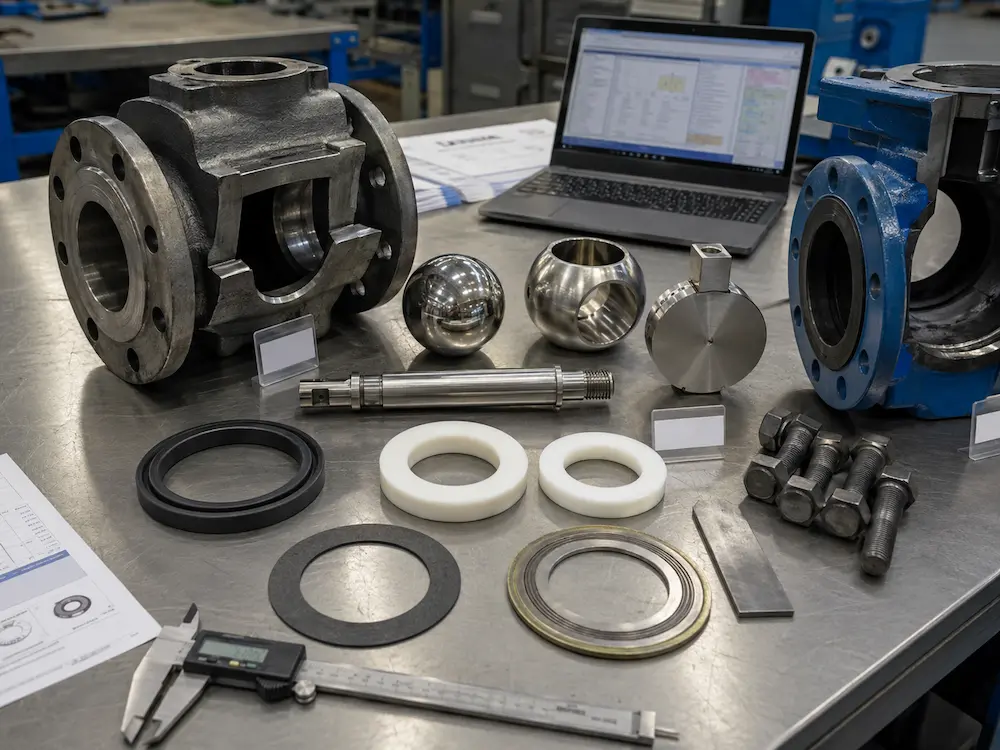
A complete valve material review should not only check the valve body. The body, bonnet, disc, ball, stem, seat, seal, gasket, spring, bolting, and lining may all contact the medium or carry mechanical load.
| Valve Part | Material Importance | Buyer Notes |
|---|---|---|
| Body / Bonnet | Pressure-containing parts | Must match pressure, temperature, corrosion risk, and standard |
| Ball / Disc / Plug / Gate | Main closure element | Directly exposed to medium; corrosion and wear resistance are important |
| Stem | Transfers operating torque or movement | Must resist corrosion, bending, torque load, and galling |
| Seat | Main sealing interface | Determines leakage, temperature range, chemical compatibility, and torque |
| Seals / O-rings | Prevent leakage around stem and body joints | Elastomer or PTFE compatibility must be checked |
| Gasket | Seals body, bonnet, and flange joints | Must match pressure, temperature, medium, and flange type |
| Bolting | Maintains pressure joint strength | Must match pressure class, temperature, corrosion environment, and standard |
| Spring | Used in check valves and relief components | Spring material is critical in corrosive, seawater, and high-cycle service |
Common Valve Body Materials
Cast Iron
Cast iron is commonly used in low-pressure water, HVAC, drainage, and general utility systems. It is economical and widely available, but it has limited pressure, impact, and corrosion resistance compared with ductile iron, carbon steel, or stainless steel.
Cast iron valves are not normally selected for severe industrial service, high pressure, strong corrosion, thermal shock, or critical oil and gas applications.
Ductile Iron
Ductile iron has better strength and toughness than gray cast iron. It is widely used in water treatment, wastewater, fire protection, HVAC, irrigation, and utility pipelines.
Ductile iron butterfly valves, check valves, and gate valves are common in water systems. For corrosive or abrasive water, coating, lining, disc material, and seat material should be reviewed carefully.
Carbon Steel WCB
WCB is one of the most common carbon steel cast valve materials for industrial service. It is used in oil, gas, steam, water, power, petrochemical, and general process systems where corrosion is not severe.
WCB valves are often selected for medium-to-high pressure service, but they may require coating, corrosion allowance, or different materials when used in corrosive media, low-temperature service, or chloride-rich environments.
Low-Temperature Carbon Steel LCB
LCB is commonly used when low-temperature toughness is required. It is often considered for low-temperature oil, gas, LPG, and process applications where standard WCB may not be suitable.
Buyers should confirm the required minimum design temperature, impact test requirements, and project material specification before choosing LCB.
Stainless Steel CF8 and CF8M
CF8 is a cast stainless steel material broadly comparable to 304 stainless steel. CF8M is a cast stainless steel material broadly comparable to 316 stainless steel and contains molybdenum for better corrosion resistance in many environments.
CF8M is often preferred over CF8 for chemical processing, seawater exposure, chloride-containing water, and more corrosive service. However, CF8M is not a universal solution for all acids, chlorides, or severe chemical media.
Forged Stainless Steel F304 and F316
F304 and F316 are common forged stainless steel materials. They are often used in forged steel valves, high-pressure small-size valves, instrumentation valves, and process service requiring better material integrity.
F316 generally provides better corrosion resistance than F304 in chloride-containing and chemical environments, but the final selection should always consider actual medium concentration and temperature.
Alloy Steel WC6 and WC9
WC6 and WC9 are alloy steel cast materials commonly used in high-temperature service, especially steam, power plant, refinery, and thermal process applications.
WC6 is often used for moderate high-temperature service, while WC9 is selected for higher temperature ranges depending on design and standard requirements. Buyers should confirm temperature, pressure, creep resistance, and applicable material standard.
Duplex and Super Duplex Stainless Steel
Duplex stainless steel offers higher strength and better resistance to chloride stress corrosion cracking than many austenitic stainless steels. It is often selected for seawater, offshore, desalination, marine, and chloride-rich chemical service.
Super duplex stainless steel is used in more severe chloride and corrosion conditions. These materials are more expensive, but they may reduce failure risk in harsh service where 316 stainless steel is not enough.
Bronze and Brass
Bronze and brass valves are commonly used in water, marine, small utility, and selected HVAC applications. Bronze has better corrosion resistance than brass in many marine and water services, but the exact alloy and local regulations should be checked.
For industrial projects, bronze or brass is usually selected for specific service conditions rather than general heavy-duty process applications.
Lined Valve Materials
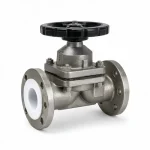
Lined valves use a base body material such as ductile iron, carbon steel, or cast steel, with an internal lining such as PTFE, PFA, rubber, or other lining materials. The lining protects the valve body from corrosive or abrasive media.
Lined valves are common in chemical processing, acid and alkali pipelines, slurry systems, wastewater, and corrosive services. Buyers can also review Vcore Valve’s rubber lined valve range for corrosive and abrasive applications.
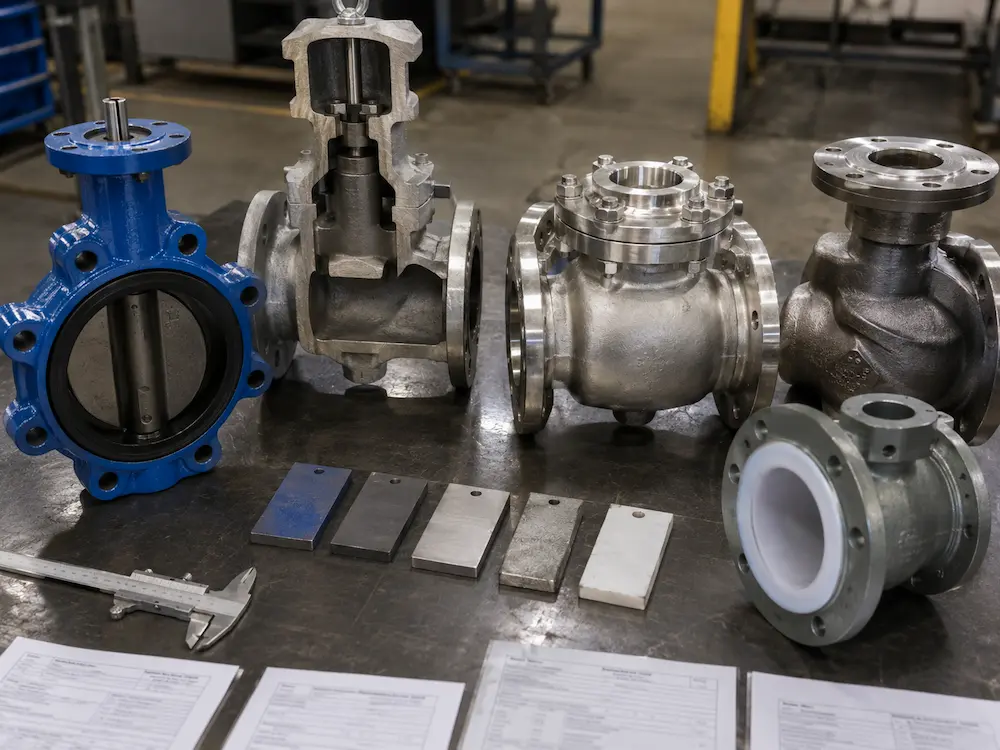
Valve Body Material Comparison Table
| Material | Typical Use | Main Strength | Main Limitation |
|---|---|---|---|
| Cast Iron | Low-pressure water, HVAC, drainage | Economical | Limited pressure, impact, and severe-service capability |
| Ductile Iron | Water treatment, wastewater, fire protection | Better toughness than cast iron | Needs coating or lining in corrosive service |
| WCB Carbon Steel | Oil, gas, steam, power, general industry | Strong and widely used | Not ideal for strong corrosion or low-temperature service without review |
| LCB Low-Temperature Carbon Steel | Low-temperature oil, gas, LPG, process service | Better low-temperature toughness | More specific application requirement |
| CF8 Stainless Steel | Water, mild chemical, clean process service | General stainless corrosion resistance | Less corrosion-resistant than CF8M in many chloride services |
| CF8M Stainless Steel | Chemical, seawater exposure, chloride-containing water | Better corrosion resistance than CF8 in many services | Not suitable for all severe acids or high-chloride conditions |
| WC6 / WC9 Alloy Steel | High-temperature steam and power service | High-temperature strength | Requires careful temperature and standard review |
| Duplex / Super Duplex | Seawater, offshore, desalination, chloride service | High chloride corrosion resistance and strength | Higher cost and stricter manufacturing control |
| PTFE / Rubber Lined | Chemical, acid, alkali, slurry, corrosive water | Protects body from media contact | Lining temperature, pressure, vacuum, and mechanical limits must be checked |
Valve Trim Material Selection
Valve trim usually refers to internal parts that contact the medium and control flow or sealing. Depending on valve type, trim may include the stem, seat, disc, ball, plug, gate, seat ring, bushing, spring, or guide parts.
Trim material may be more important than body material in some applications. For example, a carbon steel body with stainless steel trim may be suitable for some water or oil services. But in corrosive chemical service, all wetted parts must be reviewed, not only the body.
Common trim material considerations:
- Corrosion resistance against the medium
- Hardness and wear resistance
- Galling resistance between stem and bushing
- Seat sealing compatibility
- Temperature resistance
- Impact and erosion resistance
- Compatibility with coating, lining, or hardfacing
Valve Seat Material Selection
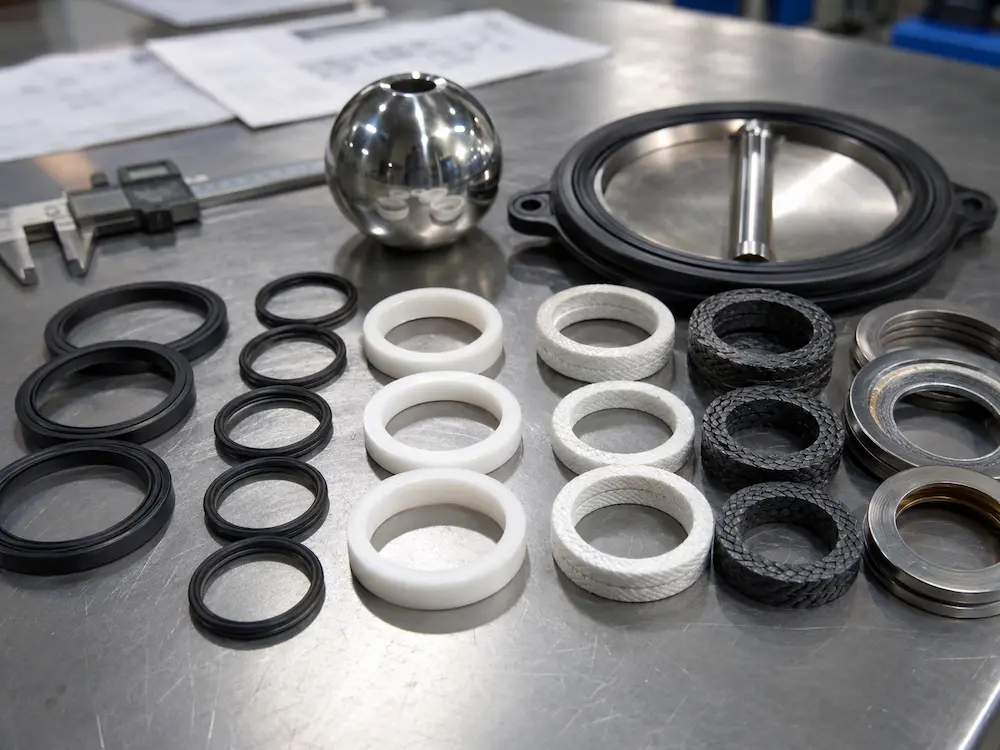
The valve seat is the main sealing interface. Seat material selection affects leakage performance, operating torque, temperature range, chemical compatibility, pressure rating, and service life.
| Seat Material | Common Use | Important Buyer Notes |
|---|---|---|
| EPDM | Water, wastewater, cooling water, selected chemicals | Good for many water-based services; not suitable for many oils and hydrocarbons |
| NBR | Oil-water mixtures, oily wastewater, utility service | Better oil resistance than EPDM; temperature and chemical limits must be checked |
| FKM | Oils, fuels, selected chemicals, higher temperature elastomer service | Good chemical resistance in selected services but not universal for all media |
| PTFE | Chemical service, corrosive media, low-friction sealing | Strong chemical resistance but pressure, temperature, and deformation limits matter |
| PPL / Reinforced PTFE | Higher temperature ball valve seats and selected process services | Better temperature resistance than standard PTFE in some applications |
| Metal Seat | Steam, high temperature, abrasive or severe service | Used where soft seats are not suitable; leakage class and machining quality are important |
| Graphite | High-temperature sealing and packing | Common in steam, fire-safe, and high-temperature services |
Material Selection by Medium
Water and Wastewater
For clean water, cooling water, and general water service, ductile iron, carbon steel, stainless steel, EPDM seats, and coated or lined structures are common. For wastewater, solids, corrosion, and coating durability should be reviewed carefully.
Butterfly valves, check valves, gate valves, and rubber lined valves are common in water systems. For butterfly valve selection, buyers can also review Vcore Valve’s butterfly valve category.
Oil and Gas
Oil and gas service often uses carbon steel, stainless steel, alloy steel, and special trim materials depending on pressure, temperature, sour service, fire-safe requirement, and project standard.
Soft seat materials should be selected carefully. EPDM is generally not suitable for many oil and hydrocarbon services. NBR, FKM, PTFE, metal seats, or special materials may be required depending on the exact medium.
Chemical Processing
Chemical service requires careful material compatibility review. Stainless steel, CF8M, PTFE lining, PFA lining, rubber lining, alloy materials, and special seat materials may be needed depending on chemical concentration, temperature, and pressure.
For chemical applications, buyers can read our guide on industrial valves for chemical processing.
Steam and High Temperature
Steam and high-temperature service often requires carbon steel, alloy steel such as WC6 or WC9, stainless steel trim, graphite packing, spiral wound gaskets, and metal seats. Rubber seats are generally not suitable for high-temperature steam.
Buyers should confirm design temperature, pressure class, gasket material, packing material, bolting material, and applicable standard before ordering.
Seawater and Chloride Service
Seawater and chloride-rich environments can cause serious corrosion. 316 stainless steel may be better than 304 in many chloride-containing services, but severe seawater applications may require duplex, super duplex, bronze, special coatings, or non-metallic lining.
Spring materials, bolting, trim, and external coating should also be reviewed. A stainless body alone does not guarantee full corrosion resistance if internal springs or bolts are unsuitable.
Slurry and Abrasive Media
Slurry service requires abrasion resistance. Natural rubber, polyurethane, ceramic lining, hardfaced metal, and abrasion-resistant alloys may be considered depending on particle size, velocity, concentration, and pressure.
For slurry and corrosive-abrasive service, buyers may review rubber lined valves where body protection and resilient lining are required.
Material Selection by Valve Type
Ball Valves
Ball valve material selection should review body material, ball material, stem material, seat material, and seal material. Stainless steel ball valves, PTFE seats, reinforced PTFE seats, graphite packing, and metal seated designs may be selected for different pressure, temperature, and media conditions.
Buyers can compare available options in Vcore Valve’s ball valve category.
Butterfly Valves
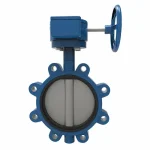
Butterfly valve material selection depends heavily on seat and disc material. EPDM, NBR, PTFE, natural rubber, metal seats, stainless steel discs, coated ductile iron discs, and duplex discs may be used depending on medium and temperature.
Check Valves
Check valve material selection should review body, disc, plate, spring, hinge pin, seat, gasket, and bolting. For spring-assisted, dual plate, and nozzle check valves, spring material is especially important.
For check valve types and selection, read our industrial check valves selection guide.
Gate Valves and Globe Valves
Gate valves and globe valves often use carbon steel, stainless steel, alloy steel, bronze, or lined materials depending on pressure and medium. Globe valves used for throttling may require stronger trim material because flow velocity and erosion risk can be higher near the seat and plug.
Rubber Lined and PTFE Lined Valves
Lined valves are selected when the base metal body cannot directly contact the medium. Rubber lined valves are often used for wastewater, slurry, seawater, and selected corrosive-abrasive media. PTFE lined valves are often used for acids, alkalis, and corrosive chemicals.
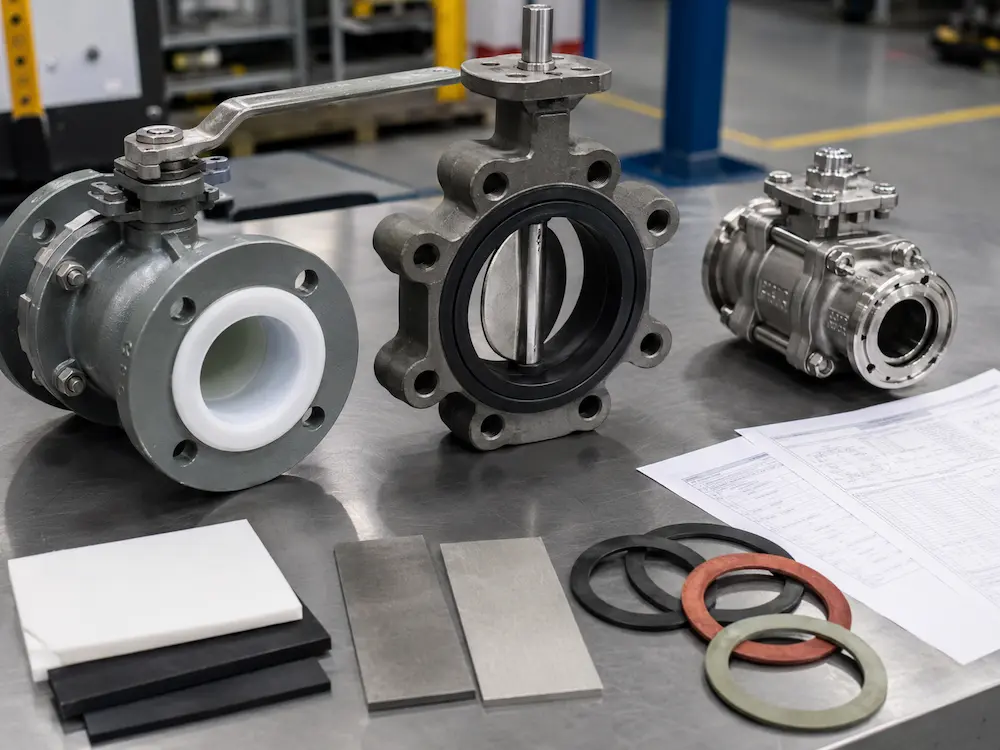
Common Material Selection Mistakes
Mistake 1: Selecting Only by Body Material
The body material is important, but the seat, seal, gasket, stem, trim, spring, and bolting may also fail if they are not suitable for the medium.
Mistake 2: Using EPDM for Oil Service
EPDM is common in water service, but it is generally not suitable for many oils and hydrocarbons. NBR, FKM, PTFE, or metal seats may be more suitable depending on the exact medium.
Mistake 3: Assuming 316 Stainless Steel Solves All Corrosion
316 stainless steel has better corrosion resistance than 304 in many applications, but it may still fail in severe chloride, strong acid, or high-temperature chemical service.
Mistake 4: Ignoring Temperature Limits
Soft seats, rubber liners, PTFE seats, gaskets, and packing materials all have temperature limits. High-temperature steam or oil may require metal seats, graphite packing, and alloy steel materials.
Mistake 5: Ignoring Abrasion
Corrosion resistance and abrasion resistance are not the same. A material suitable for chemical corrosion may still wear quickly in slurry or abrasive service.
Mistake 6: Not Requesting Material Certificates
For project valves, stainless steel valves, alloy valves, or critical service, buyers should confirm whether material certificates or MTC documents are required before ordering.
For documentation details, read our guide on valve certificates and quality documents.
Information Buyers Should Provide Before Material Selection
- Valve type and size
- Medium name and chemical composition
- Concentration if chemical service
- Operating pressure and design pressure
- Operating temperature and maximum temperature
- Flow rate and whether solids are present
- Corrosion risk, chloride level, pH value, or abrasion risk if known
- Required body material
- Required trim material
- Required seat and seal material
- Connection standard and pressure class
- Required test standard and material certificate
- Quantity and project documentation requirements
Final Recommendations for Industrial Buyers
Valve material selection should be based on real working conditions, not only on standard stock availability. The same valve type may require different materials for water, steam, oil, gas, chemical, slurry, seawater, and high-temperature service.
For general water service, ductile iron, carbon steel, stainless steel, EPDM, and rubber lined designs may be suitable. For oil and gas, carbon steel, stainless steel, alloy steel, graphite packing, and compatible soft or metal seats may be needed. For chemical service, PTFE, rubber lining, stainless steel, CF8M, duplex, or special alloys may be required. For steam and high temperature, alloy steel, metal seats, and graphite sealing materials are often more suitable.
If you need help selecting valve body, trim, seat, seal, gasket, or lining materials for water treatment, chemical processing, oil and gas, power plant, slurry, seawater, HVAC, or industrial process service, Vcore Valve can review your working conditions and recommend a suitable valve material configuration.
For industrial sourcing, the key question is not only “What material is this valve?” The better question is: “Are the body, trim, seat, seal, gasket, bolting, and documentation all suitable for this exact medium, pressure, temperature, and project requirement?”
FAQ
1. What is the most common valve body material?
Common valve body materials include ductile iron, carbon steel WCB, stainless steel CF8 or CF8M, low-temperature carbon steel LCB, alloy steel WC6 or WC9, duplex stainless steel, bronze, and lined body materials.
2. What is the difference between WCB and LCB valve material?
WCB is a common carbon steel cast valve material for general industrial service. LCB is a low-temperature carbon steel material used where better low-temperature toughness is required.
3. What is the difference between CF8 and CF8M valve material?
CF8 is broadly comparable to cast 304 stainless steel. CF8M is broadly comparable to cast 316 stainless steel and usually provides better corrosion resistance in many chloride-containing and chemical services.
4. Which valve seat material is best for water service?
EPDM is commonly used for water, wastewater, cooling water, and utility water service. However, final selection should still consider temperature, chemical additives, pressure, and application requirements.
5. Which valve material is best for chemical service?
Chemical service may require stainless steel, CF8M, PTFE lining, PFA lining, rubber lining, duplex, or special alloy materials depending on chemical type, concentration, pressure, and temperature.