Quick Summary
BS 5351 Ball Valves and API 608 define two leading global standards for industrial ball valve design, manufacturing, and compliance. Rooted in British and American engineering principles, respectively, each standard caters to distinct regional industry needs, pressure ratings, and application scenarios. This guide breaks down their core differences, helping industrial buyers select the right valve standard for oil, gas, chemical, and water treatment projects.
The Standard Stalemate
Imagine standing in a petrochemical plant’s procurement office, staring at two valve specifications: one marked BS 5351 Ball Valves, the other API 608. Your project is a cross-border pipeline linking a North Sea gas field to a European refinery, and the wrong choice could mean costly compliance issues, operational failures, or delayed deliveries. You’re not alone—thousands of industrial engineers face this exact dilemma every year. The divide between British and American valve standards isn’t just about geography; it’s about design philosophy, performance criteria, and real-world application. In this guide, we’ll cut through the jargon and help you pick the perfect standard for your project, no guesswork required.
The Top 3 User Pain Points When Choosing Valve Standards
Pain Point 1: Compliance Confusion Across Regional Markets
Many global projects require valves to meet both European and North American regulations, but BS 5351 Ball Valves and API 608 have conflicting compliance benchmarks. Using the wrong standard can lead to rejected shipments, failed audits, and costly rework—especially for cross-border oil and gas pipelines.
Pain Point 2: Mismatched Performance for Operating Conditions
BS 5351 and API 608 are engineered for different pressure, temperature, and media requirements. A valve built to API 608 may underperform in the high-pressure, low-temperature conditions common in UK offshore projects, while BS 5351 Ball Valves may not align with the material standards for US chemical plants.
Pain Point 3: Sourcing & Supply Chain Risks
Not all valve manufacturers produce both standards to the same quality. Choosing a supplier without expertise in BS 5351 Ball Valves can result in subpar craftsmanship, while API 608 specialists may lack the precision for British standard tolerances. This creates supply chain bottlenecks and project delays.
3 Solutions to Master BS 5351 vs API 608 Selection
Solution 1: Map Your Project’s Regional Compliance Requirements First
Start by identifying the primary market for your project. If operating in the UK, EU, or Middle Eastern markets that follow British engineering norms, BS 5351 Ball Valves are the compliant choice. For North American, Canadian or Latin American projects, API 608 is the industry standard. For cross-border projects, opt for a dual-certified valve from a specialist like Vcore Valve’s custom ball valve range .
Solution 2: Match the Standard to Your Operating Conditions
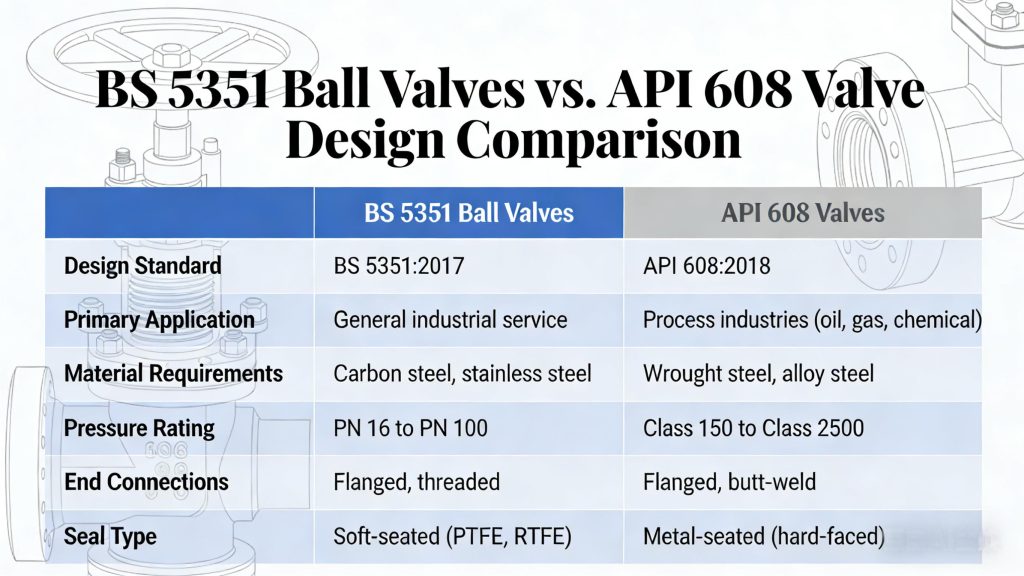
Use a performance checklist to align the standard with your plant’s pressure, temperature, and media. BS 5351 Ball Valves excel in PN 16–PN 40 pressure ratings and cryogenic conditions, while API 608 is optimized for Class 150–Class 600 ratings and high-temperature hydrocarbon applications. Always cross-reference with your pipeline’s fluid properties and environmental conditions.
Solution 3: Partner with a Manufacturer Expert in Both Standards
Avoid supply chain risks by working with a valve manufacturer with proven expertise in both BS 5351 Ball Valves and API 608. Look for certifications like ISO 9001, CE, and API https://www.api.org/standards to ensure quality. Vcore Valve, with 20+ years of global valve manufacturing experience, produces both standards to strict international quality controls—eliminating sourcing headaches.
Case Study: A North Sea Petrochemical Project’s Standard Success
A major UK-based petrochemical firm was tasked with building a North Sea gas pipeline linking offshore platforms to a Scottish refinery. The project required valves that met UK offshore compliance, high-pressure performance, and could integrate with existing European pipeline systems. The team initially considered API 608 valves for their wide availability, but quickly realized they lacked the cryogenic performance required for North Sea conditions.
They chose BS 5351 Ball Valves from Vcore Valve, custom-engineered to PN 40 pressure ratings and anti-corrosion coatings for saltwater exposure. The valves were dual-tested to both BS 5351 and ISO 15848 leakage standards, ensuring compliance with UK offshore regulations. The result? Zero operational failures in 2 years, on-time project delivery, and a 15% reduction in maintenance costs compared to the client’s previous API 608-based system. The project’s success solidified BS 5351 Ball Valves as the go-to standard for UK offshore energy projects.
Data Analysis: BS 5351 Ball Valves vs API 608 – Key Technical Differences
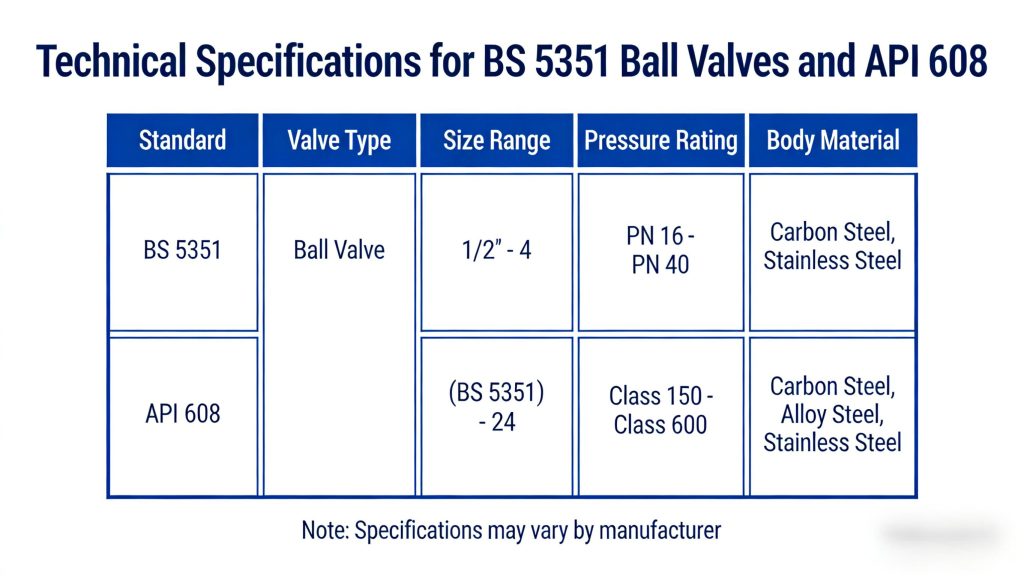
| Technical Aspect | BS 5351 Ball Valves | API 608 |
| Origination | British Standard (BSI) | American Petroleum Institute |
| Pressure Rating | PN 10, PN 16, PN 25, PN 40 | Class 150, Class 300, Class 600 |
| End Connections | Flanged (BS 4504), Screwed (BS 21) | Flanged (ASME B16.5), Butt Weld (ASME B16.25) |
| Design Temperature | -20°C to +200°C (standard) | -29°C to +425°C (standard) |
| Valve Sizes | DN 15 to DN 300 | NPS ½ to NPS 24 |
| Primary Materials | Carbon Steel (BS EN 10210), Stainless Steel (BS EN 10216) | Carbon Steel (ASTM A216 WCB), Stainless Steel (ASTM A351 CF8M) |
| Leakage Standard | BS EN 12266-1 | API 598 |
| Primary Applications | UK/EU oil/gas, water treatment, municipal engineering | North American petrochemical, power generation, oil & gas |
Market & Industry Trends: The Future of Valve Standards
The global industrial valve market is shifting toward harmonized standards, with both BSI and API working to align key specifications for cross-border projects. However, BS 5351 Ball Valves remain the dominant standard in the UK, EU, and Commonwealth nations, driven by strict offshore and municipal engineering regulations. API 608 continues to lead in North America, with growing adoption in Asia Pacific’s US-invested petrochemical projects.
A key trend is the rise of dual-certified valves—products built to both BS 5351 Ball Valves and API 608 standards. Manufacturers like Vcore Valve are investing in R&D to create these hybrid valves, addressing the compliance needs of global projects. Another trend is the integration of smart technology: both standards are evolving to include requirements for digital actuation and remote monitoring, aligning with the Industry 4.0 shift in oil, gas, and chemical industries.
Sustainability is also shaping standard development. BS 5351 Ball Valves now include stricter leakage controls to meet EU carbon reduction targets, while API 608 has updated material standards to prioritize eco-friendly, recyclable alloys. For buyers, this means choosing a standard isn’t just about compliance—it’s about aligning with your company’s sustainability goals.
Usage & Selection Advice: When to Choose BS 5351 Ball Valves vs API 608
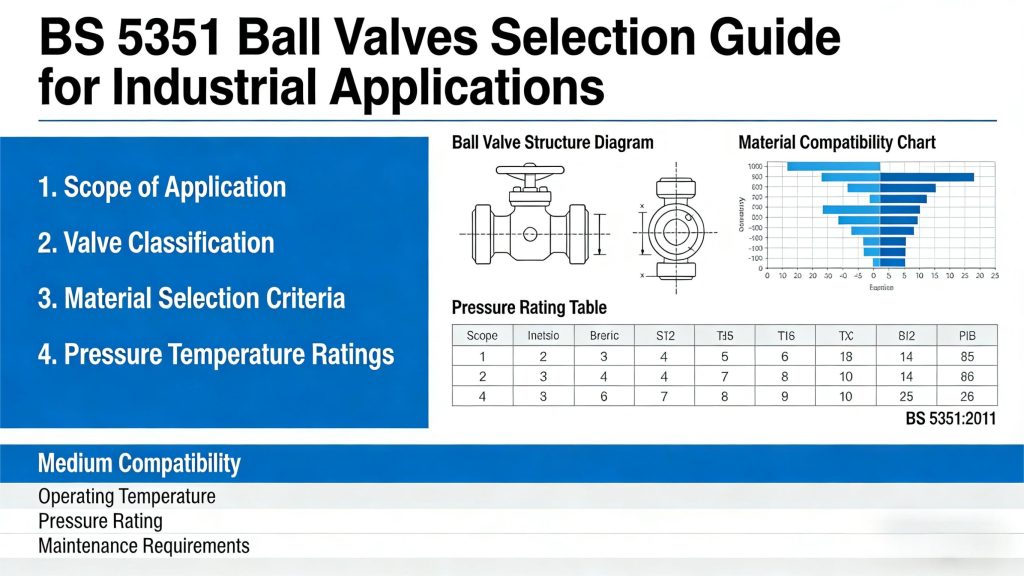
Choose BS 5351 Ball Valves If:
- Your project is based in the UK, EU, or Middle Eastern markets, following British standards
- You need valves for PN 16–PN 40 pressure ratings (common in water treatment and UK offshore)
- Your operating conditions involve cryogenic temperatures (-20°C to 0°C)
- Compliance with BS EN 12266-1 leakage standards is mandatory
Choose API 608 If:
- Your project is in North America, Canada, or Latin America
- You require Class 300–Class 600 pressure ratings for high-temperature hydrocarbons
- Your valve design needs butt-weld end connections (ASME B16.25)
- API 598 testing and certification are required by your client or regulator
Pro Tip:
For global projects, always ask your manufacturer for BS 5351 Ball Valves with API 608 compatibility—or vice versa. Vcore Valve’s OEM/ODM valve service can customize valves to meet both standards, ensuring compliance across all regional markets.
Conclusion & Call to Action
BS 5351 Ball Valves and API 608 are both exceptional standards—they just serve different masters. British standards prioritize precision for European operating conditions and regional compliance, while American standards focus on high-temperature performance for North American hydrocarbon projects. The key to success is matching the standard to your project’s geography, operating conditions and compliance needs.
Ready to source high-quality BS 5351 Ball Valves or API 608 valves for your next project? Vcore Valve is your trusted global partner, with 20+ years of expertise in manufacturing precision industrial valves to both standards. Our 3-step process makes it easy:
Share your valve requirements (size, pressure, material, application)
Get a detailed quote and technical specification within 24 hours
Approve and receive factory-direct, certified valves with global shipping
Start your valve project today and let Vcore Valve’s engineering team design the perfect standard-compliant valve for your project—no compliance confusion, no supply chain risks, just reliable performance.
FAQ: BS 5351 Ball Valves vs API 608
Q1: Can BS 5351 Ball Valves be used in North American projects?
A1: BS 5351 Ball Valves can be used in North American projects only if they meet additional API 608 compatibility requirements and are approved by the project’s regulatory body. For most US/Canadian projects, API 608 is the mandatory standard.
Q2: What is the main material difference between BS 5351 and API 608 valves?
A2: BS 5351 Ball Valves use European material standards (BS EN 10210/10216), while API 608 uses American ASTM standards (A216 WCB, A351 CF8M). The materials offer similar performance but differ in certification and regional availability.
Q3: Are BS 5351 Ball Valves more expensive than API 608 valves?
A3: Pricing is comparable—BS 5351 Ball Valves may have a slight premium in North America due to lower availability, while API 608 valves may cost more in the EU for the same reason. Dual-certified valves are typically 10–15% more expensive but eliminate cross-border compliance risks.
Q4: Do BS 5351 Ball Valves meet ISO international standards?
A4: Yes—BS 5351 Ball Valves are aligned with key ISO standards (ISO 9001, ISO 15848) for quality and leakage control, making them compatible with global ISO-compliant projects.
Q5: Can Vcore Valve customize BS 5351 Ball Valves to API 608 specifications?
A5: Absolutely. Vcore Valve’s OEM/ODM service specializes in customizing BS 5351 Ball Valves with API 608-compatible features (e.g., ASME flanges, ASTM materials) for cross-border projects. All custom valves are fully tested and certified to both standards.
Q6: What testing standards apply to BS 5351 Ball Valves?
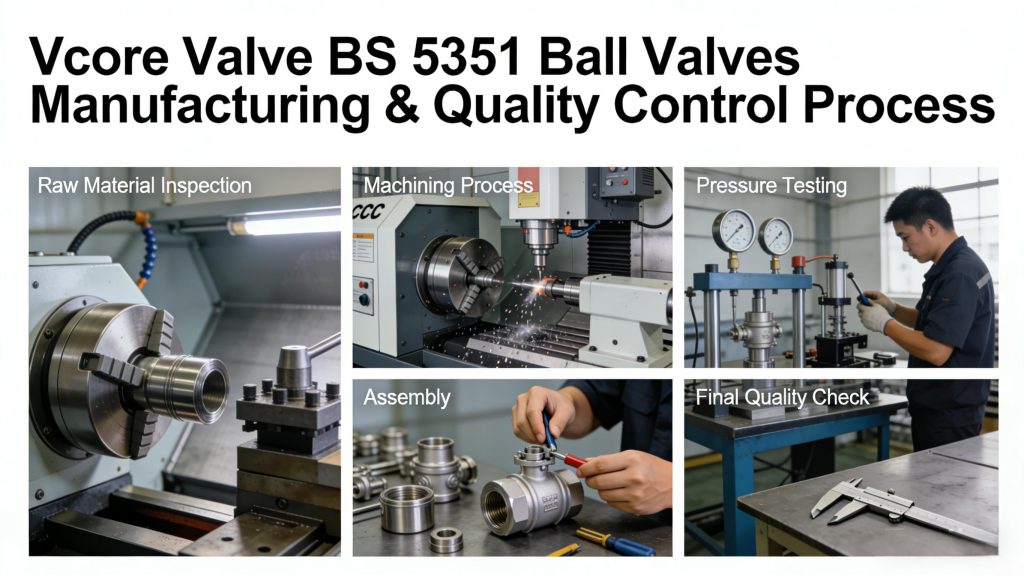
A6: BS 5351 Ball Valves undergo hydrostatic pressure testing to BS EN 12266-1 and dimensional verification to BS 4504. Vcore Valve adds additional functional operation testing and anti-corrosion coating checks for all industrial valves.
Q7: Which standard is better for water treatment projects?
A7: BS 5351 Ball Valves are the preferred standard for UK/EU water treatment projects, as they align with municipal engineering regulations and PN pressure ratings common in water pipelines. API 608 is used for water treatment projects in North America.
Reference Sources
British Standards Institution (BSI). (2025). BS 5351: Specification for ball valves for industrial applications. London: BSI Publishing.
American Petroleum Institute (API). (2024). API 608: Ball Valves, Flanged and Butt-Welded Ends, Reduced Bore. Washington, D.C.: API Standards.
Vcore Valve. (2025). Industrial Valve Manufacturing & Compliance Guide. https://www.onoffvalve.com/resource-center
International Organization for Standardization (ISO). (2024). ISO 15848: Industrial valves – Measurement of fugitive emissions. Geneva: ISO.
European Committee for Standardization (CEN). (2025). BS EN 12266-1: Industrial valves – Pressure testing of valves. Brussels: CEN Publishing.