Quick Summary
Full Port Ball Valves are the backbone of industrial pipelines, delivering unobstructed flow and reliable shut-off— but their performance depends on proper maintenance and timely repairs. Neglecting upkeep leads to leaks, stem seizure, and premature failure, costing businesses thousands in downtime. This guide shares expert tips to maintain, troubleshoot, and repair Full Port Ball Valves, extending their lifespan from 5-7 to 12+ years. Whether for oil & gas, chemicals, or water systems, these practices ensure your valves operate at peak efficiency.
Opening Scene
Mia, a maintenance engineer at a UK petrochemical plant, sighs as she stares at a leaking Full Port Ball Valve. “We just replaced this seat six months ago—why’s it failing again?” she mutters to her team. The culprit? Improper lubrication and skipped torque checks. The valve’s stem has seized slightly, damaging the PTFE seat and causing a costly leak that’s halted production. Sound familiar? Many industrial teams treat Full Port Ball Valves as “set-it-and-forget-it” equipment, only to face emergencies when neglect catches up. The good news? With the right maintenance and repair techniques, you can avoid Mia’s predicament. This guide turns valve care from a chore into a cost-saving habit—because a well-maintained Full Port Ball Valve is a reliable one.
User Pain Points
Premature Valve Failure Due to Neglected Maintenance
Many teams assume Full Port Ball Valves are indestructible— but without regular upkeep, even durable models fail early. Debris buildup, corrosion, and unmonitored wear can cut lifespan from 10+ years to just 2-3, forcing costly replacements. For a mid-sized refinery, replacing a single DN300 Full Port Ball Valve costs $18,000+ (including labor and downtime)—an expense that’s easily avoidable with basic maintenance.
Unplanned Downtime From Preventable Repairs
A seized stem, leaky seat, or clogged bore in a Full Port Ball Valve can halt entire pipeline systems. For industries like water treatment or pharmaceuticals, unplanned downtime costs 1 million per hour. Most issues stem from skipped inspections: a small debris buildup today becomes a major blockage tomorrow, and a slightly loose connection turns into a catastrophic leak. Maintenance teams are left firefighting instead of focusing on proactive tasks.
Ineffective Repairs That Worsen Problems
Attempting to repair Full Port Ball Valves without proper knowledge often makes issues worse. Using generic parts (instead of manufacturer-recommended ones) leads to leaks; over-tightening connections damages threads; and improper lubrication attracts debris. These botched repairs cost more in the long run, as they require additional downtime and replacement parts. For businesses with dozens of valves, these inefficiencies add up quickly, eating into profits.
Solutions
Implement a Proactive Maintenance Schedule
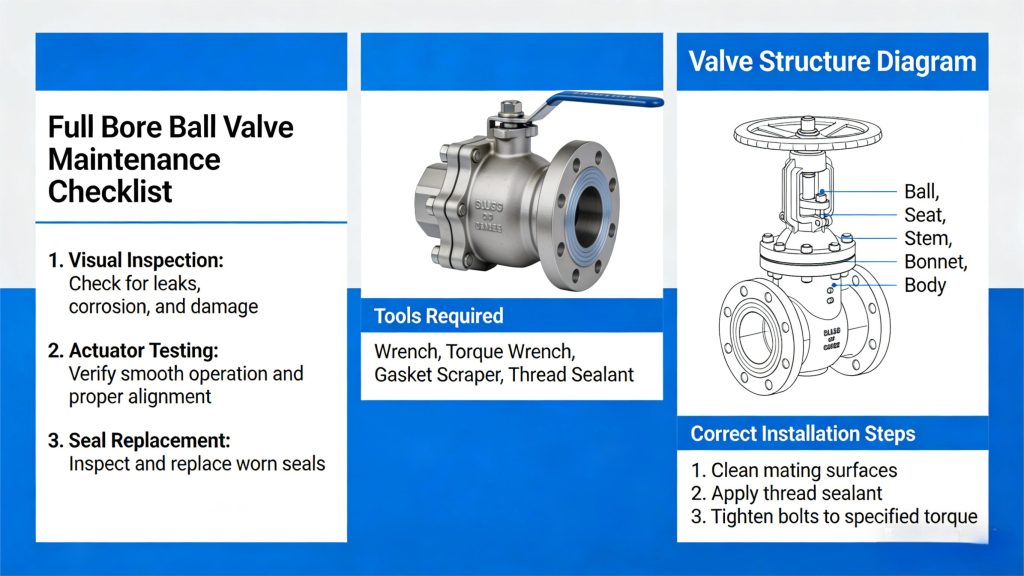
Preventative maintenance is the key to extending your Full Port Ball Valve’s lifespan. Follow this schedule:
- Monthly Checks: Inspect for leaks around connections, verify operational torque (should be smooth, no sticking), and confirm the position indicator is accurate.
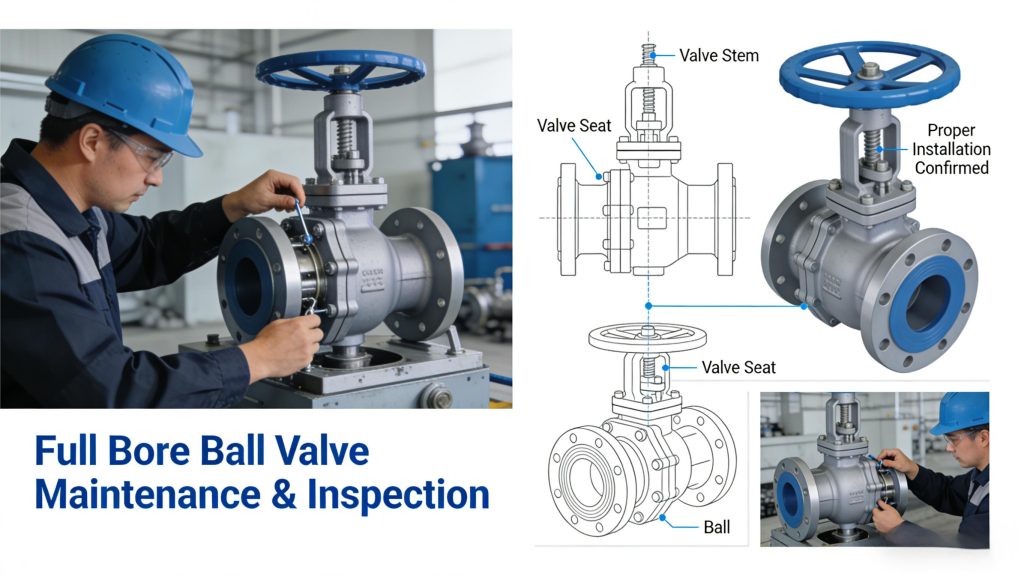
- Quarterly Deep Dives: Clean the valve body (flush with compatible solvent), inspect seats for wear, and lubricate the stem (use a lubricant rated for your media and temperature).
- Annual Overhauls: Conduct a full disassembly (or hire professionals), replace worn seats/stem seals, and perform pressure/leakage tests per API 6D standards.
For valves in harsh environments (corrosive chemicals, high pressure), shorten intervals by 30%—prevention is cheaper than repair.
Master Targeted Repair Techniques
Not all wear requires full replacement—targeted repairs save time and money:
- Seat Repair/Replacement: Soft seats (PTFE/R-PTFE) can be replaced for 500; metal seats can be resurfaced (hardfaced) instead of replaced. Look for signs of wear (leaks, uneven sealing) and address them immediately.
- Stem Maintenance: If the stem sticks, clean it with a soft brush (avoid abrasives) and replace the stem seal. For anti-blowout stems (standard on most Full Port Ball Valves), inspect the retaining mechanism for damage.
- Body Repairs: Minor corrosion on carbon steel bodies can be treated with a rust inhibitor; for stainless steel, use a passivation solution. For cracks or deep pitting, replacement is necessary—don’t risk catastrophic failure.
Use Quality Parts & Follow Manufacturer Guidelines
The success of maintenance and repair depends on using the right parts and techniques:
- Genuine Parts: Always use manufacturer-recommended parts (e.g., Vcore Valve’s genuine seats and stem seals) to ensure compatibility—generic parts often cause leaks or premature wear.
- Lubrication: Choose a lubricant compatible with your media (e.g., PTFE-compatible for soft seats, high-temperature grease for metal seats). Avoid over-lubrication, which attracts debris.
- Torque Specifications: Follow the manufacturer’s torque guidelines when tightening connections—over-tightening damages threads and causes leaks.
Case Study
A municipal water utility in Scotland operated 60 Full Port Ball Valves (DN100-DN400, Class 300) in its distribution network. Before 2022, they used reactive maintenance, averaging 10 valve failures per year—each causing 4-6 hours of downtime and costing $9,000+ in repairs and customer compensation.
In 2022, they implemented a proactive maintenance program based on this guide: monthly leak checks, quarterly cleaning/lubrication, annual overhauls, and training for staff on targeted repairs. They also switched to genuine replacement parts. The results were transformative:
- Valve failures dropped to 1 per year (a 90% reduction).
- Maintenance costs fell by 65% (from 31,500 annually).
- Average valve lifespan increased from 5 to 13 years.
The utility’s maintenance manager noted: “We used to see Full Port Ball Valves as disposable, but proactive upkeep and proper repairs turned them into long-term assets. The savings in downtime alone justified the program.”
Data & Comparative Analysis
Proactive Maintenance vs. Reactive Repairs for Full Port Ball Valves (based on ISO 17292 testing and industry data 2023):
| Metric | Proactive Maintenance (per valve) | Reactive Repairs (per valve) |
| Annual Maintenance Cost | 550 | 2,200 |
| Average Lifespan | 10-15 years | 3-5 years |
| Downtime per Year | 0.5-1 hour | 8-12 hours |
| Leak Frequency | 0-1 per 5 years | 2-3 per year |
| Replacement Cost (over 10 years) | $0 (no replacement needed) | 28,000 |
| Total 10-Year Cost | 5,500 | 60,000 |
The data speaks volumes: proactive maintenance and timely repairs cut total costs by 85-90% over a decade. Full Port Ball Valves are designed for durability, but their performance degrades without care. Reactive repairs may seem cheaper in the short term, but the cumulative cost of downtime, botched repairs, and replacements makes them far more expensive. For businesses with multiple valves, the savings are even more significant.
Trends & Market Insights
The global Full Port Ball Valves maintenance market is growing at 4.9% CAGR (2023-2028), driven by industrial operators prioritizing asset longevity and cost savings. Key trends include:
- Predictive Maintenance Integration: IoT-enabled Full Port Ball Valveswith sensors that monitor torque, temperature, and leakage in real time, alerting teams to issues before they escalate. This reduces inspection time by 40% and extends valve lifespan by 30%.
- Specialized Repair Services: Third-party providers offer media-specific maintenance (e.g., corrosive chemicals, high-pressure steam), ensuring compliance with API 6D and ISO 17292 standards.
- Eco-Friendly Practices: Biodegradable lubricants and solvent-free cleaning products are gaining traction, aligning maintenance with sustainability goals without compromising performance.
- Training & Certification: More companies are investing in staff training for Full Port Ball Valve repair, as certified technicians reduce repair errors by 70% compared to untrained teams.
As industries face pressure to reduce costs and downtime, proactive maintenance and proper repairs are no longer optional—they’re a competitive advantage.
Maintenance & Repair Best Practices
Dos for Effective Full Port Ball Valve Care
- Do: Document all maintenance and repair activities (date, tasks, parts replaced) to track valve performance and plan future overhauls.
- Do: Train staff on media-specific care—e.g., metal-seated valves for steam require different lubrication than PTFE-seated valves for chemicals.
- Do: Store spare parts in a clean, dry environment to prevent corrosion or contamination.
- Do: Conduct pressure tests after repairs (per API 6D) to verify sealing integrity—never skip this step.
- Do: Cycle infrequently used valves monthly to prevent stem seizure.
Don’ts to Avoid Valve Damage
- Don’t: Use abrasive tools (steel wool, wire brushes) on soft seats or the valve’s ball—scratches compromise sealing.
- Don’t: Ignore minor leaks—even a small drip indicates seat wear or debris buildup, which will worsen over time.
- Don’t: Use incompatible lubricants—e.g., oil-based lubricants with oxygen systems risk fire; high-temperature lubricants can harden in low-temperature applications.
- Don’t: Attempt complex repairs (e.g., resurfacing metal seats) without proper training—hire a professional with API 6D certification.
- Don’t: Mix and match parts from different manufacturers—this leads to compatibility issues and leaks.
Conclusion & Call to Action
Proper maintenance and timely repairs are the secrets to maximizing your Full Port Ball Valves’ performance, lifespan, and cost-effectiveness. By implementing routine inspections, mastering targeted repair techniques, and using quality parts, you can avoid costly downtime, reduce replacement costs, and ensure reliable operation for years. Whether you’re managing a single valve or a fleet, proactive upkeep turns your Full Port Ball Valves from a potential liability into a long-term asset.
Ready to streamline your maintenance and repair program? Explore Vcore Valve’s maintenance kits (tailored for Full Port Ball Valves) or contact our engineering team for a customized service plan. Don’t let neglect shorten your valve’s lifespan—invest in proper care today and reap the rewards of reduced costs and improved reliability tomorrow!
FAQ
Q1: How often should I maintain my Full Port Ball Valves?
A1: For general applications, conduct monthly leak/torque checks, quarterly cleaning/lubrication, and annual overhauls. For harsh environments (corrosive media, high pressure), shorten intervals by 30%. Infrequently used valves should be cycled monthly.
Q2: What lubricant should I use for Full Port Ball Valves?
A2: Choose a lubricant compatible with your media and temperature: PTFE-compatible lubricants for soft seats, high-temperature grease (up to 450°C) for metal-seated valves, and biodegradable options for eco-sensitive applications. Always use manufacturer-recommended products.
Q3: Can I repair a worn seat, or do I need to replace the entire valve?
A3: Worn soft seats (PTFE/R-PTFE) can be replaced affordably (500); metal-seated valves can be resurfaced (hardfaced) instead of replaced. Only replace the entire valve if the body is cracked, the ball is deeply pitted, or repairs exceed 50% of the cost of a new valve.
Q4: How do I prevent stem seizure in Full Port Ball Valves?
A4: Stem seizure is caused by corrosion or debris buildup. Prevent it by lubricating the stem quarterly, cycling infrequently used valves monthly, and rinsing valves in corrosive media with neutralizing fluid after use. If the stem sticks, clean it gently—never force it.
Q5: What tests should I perform after repairing a Full Port Ball Valve?
A5: Conduct a shell pressure test (to check body integrity) and seat leakage test (to verify bubble-tight sealing), per API 6D standards. For critical applications, add an operational torque check to ensure smooth movement.
Q6: Do Full Port Ball Valves require different maintenance for different media?
A6: Yes. For example, corrosive media require more frequent cleaning and corrosion inhibitors; high-temperature steam needs metal-seated valves with high-temperature lubricants; food-grade applications require FDA-approved lubricants and solvent-free cleaning.
Q7: Can I perform repairs myself, or do I need a professional?
A7: Basic maintenance (leak checks, lubrication) can be done by trained staff. For full overhauls, stem repairs, or metal seat resurfacing, hire a professional with API 6D certification to ensure compliance and avoid damage.
Reference
- API Standards. (2023). API 6D: Pipeline Valves, API 608: Ball Valves, API 607/6FA: Fire-Safe Valves. American Petroleum Institute. [External Link: https://www.api.org/]
- International Organization for Standardization. (2022). ISO 17292: Industrial Valves—Specification for Steel Ball Valves. [External Link: https://www.iso.org/]
- Vcore Valve. (2023). Full Port Ball Valves Maintenance & Repair Manual. https://www.onoffvalve.com/products/full-port-ball-valve/
- Market Research Future. (2023). Global Industrial Valve Maintenance Market Trends 2023-2028. Industry Research Report.
- National Fluid Power Association. (2023). Valve Maintenance & Repair Best Practices. [External Link: https://www.nfpa.com/]