Quick Overview
Thermal binding in gate valves is a critical issue in high-temperature piping systems, particularly in power plants, oil refineries, and chemical processing facilities. When temperature changes cause uneven expansion between the valve body and gate disc, the valve can become stuck or impossible to operate. Understanding how to prevent thermal binding in gate valves helps engineers improve safety, reduce maintenance costs, and maintain reliable isolation performance in demanding industrial environments.
A Typical Engineering Scenario
Imagine a maintenance engineer preparing to isolate a high-temperature steam line using a gate valve.
The valve had been closed several hours earlier while the system was still hot.
Now, when the operator attempts to reopen the valve, the handwheel refuses to turn.
After investigation, the issue is identified as thermal binding in the gate valve.
This situation occurs more often than many engineers expect, especially in high-temperature valve applications where thermal expansion is unavoidable.
Understanding the mechanisms behind thermal binding in industrial gate valves is the first step toward preventing operational failures.
Common Problems Engineers Face
Valves Become Stuck After Cooling
When the pipeline cools after shutdown, uneven thermal contraction can trap the gate between the seats. This is one of the most common signs of thermal binding in gate valves.
Excessive Operating Torque
Operators may experience unusually high torque when trying to reopen the valve, increasing the risk of actuator damage or stem failure.
Safety Risks in Critical Systems
In power generation and petrochemical plants, a valve that cannot be opened due to thermal binding may prevent proper system isolation during emergency procedures.
Practical Solutions to Prevent Thermal Binding
Slightly Back Off the Valve After Closing
One widely used practice is to close the valve fully and then reopen it slightly by a small amount. This method reduces seat compression and allows space for thermal expansion.
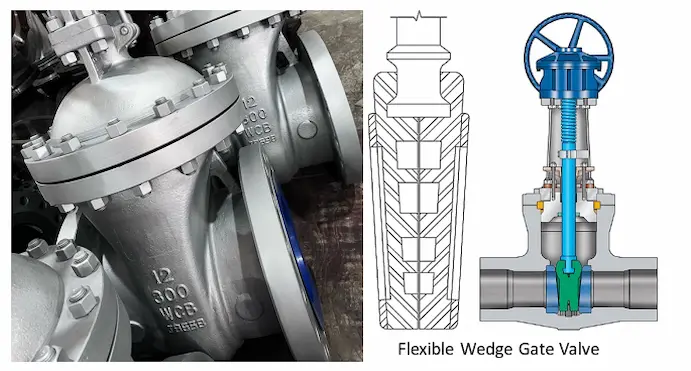
Use Flexible Wedge Gate Valves
A flexible wedge gate valve is designed to accommodate thermal expansion and pressure changes. The flexible disc reduces the risk of binding compared with rigid wedge designs.
Apply Proper Valve Design and Installation Practices
Correct valve selection and installation are essential. Engineers should consider operating temperature, pressure changes, and thermal expansion when specifying industrial gate valves.
What Causes Thermal Binding in Gate Valves
Thermal binding occurs when temperature changes cause different components of the valve to expand or contract at different rates.
The most common causes include:
-
rapid temperature changes in the pipeline
-
high pressure combined with high temperature
-
rigid wedge gate valve designs
-
excessive seat compression during closing
In high-temperature applications such as steam pipelines, these factors can combine to create severe gate valve thermal binding problems.
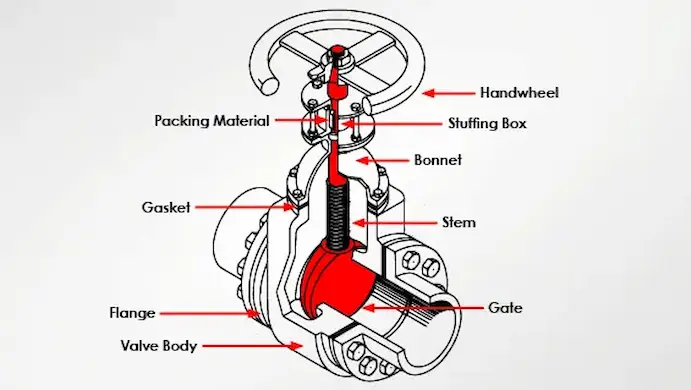
Types of Gate Valves Less Prone to Thermal Binding
Flexible Wedge Gate Valves
Flexible wedge valves include a small cut or groove in the wedge, allowing slight deformation under thermal stress.
Benefits include:
-
better adaptability to temperature changes
-
improved sealing performance
-
reduced risk of thermal binding
Split Wedge Gate Valves
Split wedge designs use two independent discs that can move slightly relative to each other.
Advantages:
-
improved seat alignment
-
reduced thermal stress on the wedge
Parallel Slide Gate Valves
Parallel slide valves use spring-loaded discs rather than wedge geometry, making them less sensitive to thermal expansion.
Case Study: Thermal Binding in a Steam Isolation Valve
A power generation facility installed a high-temperature gate valve in a main steam line operating at 540°C.
After routine shutdown, operators discovered the valve could not be reopened.
Inspection showed that thermal contraction caused the wedge to become tightly wedged between the seats.
Engineers implemented two changes:
-
replaced the rigid wedge valve with a flexible wedge gate valve
-
introduced a standard procedure to slightly back off the valve after closing
After these modifications, the facility reported zero thermal binding incidents over the following five years.
Data / Scientific Analysis
The following table compares common gate valve designs and their susceptibility to thermal binding.
| Gate Valve Type | Thermal Binding Risk | Temperature Adaptability | Typical Applications |
|---|---|---|---|
| Rigid wedge gate valve | High | Low | Basic isolation services |
| Flexible wedge gate valve | Medium | High | Steam and thermal systems |
| Split wedge gate valve | Low | High | High-temperature pipelines |
| Parallel slide gate valve | Very low | Very high | Power plants and critical isolation |
This comparison highlights why flexible wedge gate valves and parallel slide valves are commonly used in high-temperature systems.
Industry Trends in Valve Engineering
Modern industrial facilities are increasingly focused on improving valve reliability in high-temperature environments.
Several technological developments are shaping the future of gate valve design:
-
advanced alloy materials for thermal stability
-
improved seat design for temperature tolerance
-
computational flow and stress simulation
-
predictive maintenance using valve monitoring systems
Manufacturers such as Vcore Valve are developing high-performance gate valves specifically engineered to minimise issues such as thermal binding and seat distortion.
Practical Tips for Engineers
Selecting the right valve and operating procedure is essential for preventing thermal binding.
Evaluate Operating Temperature Range
Always consider maximum and minimum system temperatures when specifying industrial gate valves.
Choose the Correct Valve Type
Flexible wedge or parallel slide designs are usually more suitable for high-temperature service.
Implement Proper Operating Procedures
Operators should follow standard procedures such as slightly backing off the valve after closing in high-temperature systems.
Conclusion
Thermal binding in gate valves can cause serious operational problems in high-temperature industrial systems. Fortunately, the issue can be effectively prevented through proper valve selection, installation practices, and operating procedures.
By using flexible wedge gate valves, implementing correct closing techniques, and selecting valves designed for thermal environments, engineers can significantly reduce the risk of valve seizure.
At Vcore Valve, we design high-performance industrial gate valves engineered to deliver reliable isolation performance even under extreme temperature conditions.
FAQs
What is thermal binding in gate valves?
Thermal binding occurs when temperature changes cause uneven expansion or contraction in valve components, preventing the gate from moving.
Why do gate valves experience thermal binding?
The problem usually occurs when a valve is closed at high temperature and then the system cools, trapping the gate tightly between the seats.
Which gate valve design reduces thermal binding?
Flexible wedge gate valves and parallel slide gate valves are commonly used to reduce the risk of thermal binding.
Can thermal binding damage valves?
Yes. Attempting to force open a thermally bound valve can damage the stem, actuator, or seat surfaces.
How do operators prevent thermal binding?
A common technique is to close the valve fully and then slightly reopen it to allow room for thermal expansion.
Is thermal binding common in steam systems?
Yes. High-temperature steam pipelines are among the most common environments where thermal binding occurs.
Reference
Valve Engineering Handbook – Flow Control Fundamentals
https://www.sciencedirect.com
Engineering Toolbox – Thermal Expansion Principles
https://www.engineeringtoolbox.com