Quick Overview
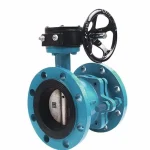
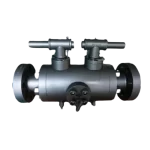
Industrial valve manufacturing is a controlled engineering process that includes material selection, casting or forging, machining, surface treatment, assembly, inspection, pressure testing, and documentation. Each step affects valve reliability, sealing performance, pressure integrity, corrosion resistance, and compliance with the applicable project or valve standard.
A Typical Engineering Conversation
A project engineer once asked a valve supplier:
“Your valves meet the specification, but how do you manufacture them?”
The answer matters more than many buyers realise.
Two valves may look identical externally, yet their internal quality can differ dramatically depending on manufacturing processes, material traceability, machining precision, and testing procedures.
A capable valve supplier should provide a transparent manufacturing and inspection process, including raw material verification, machining control, assembly inspection, pressure testing, traceability records, and final documentation before shipment.
Common Challenges Buyers Face
Inconsistent Valve Quality
When manufacturing processes lack strict quality control, valves may suffer from internal defects, poor sealing performance, or premature failure.
Unclear Manufacturing Standards
Many suppliers list valve types but fail to explain their manufacturing methods, testing procedures, or compliance with standards, making supplier evaluation difficult.
Hidden Defects in Valve Components
Without proper inspection, defects formed during casting or forging can remain inside the valve body, leading to potential leakage or structural weakness.
Recommended Solutions When Evaluating Valve Manufacturers
Understand the Full Manufacturing Workflow
A reliable supplier should clearly explain the industrial valve manufacturing process, including casting, machining, assembly, and testing.
Verify Material Traceability
Material certificates and inspection records ensure the valve body and trim components meet specifications for pressure, temperature, and corrosion resistance.
Confirm Testing Standards
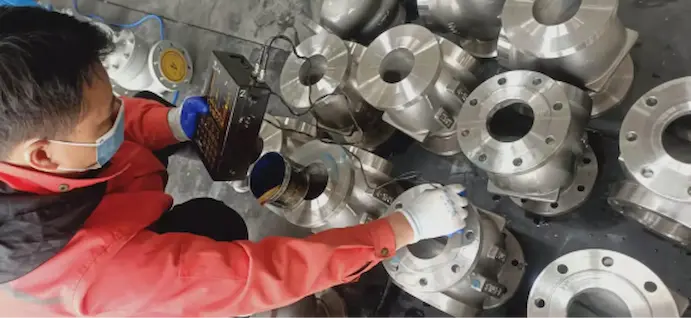
High-quality valves undergo strict tests such as hydrostatic pressure testing, leakage testing, and functional performance verification before shipment.
What Materials Are Used in Industrial Valve Manufacturing
Material selection is one of the most critical aspects of industrial valve production.
Valve material selection should be based on medium, pressure, temperature, corrosion mechanism, chloride level, pH, H₂S/CO₂ content, solids, erosion risk, pressure class, applicable standard, and project documentation. Common options include cast iron, ductile iron, carbon steel, stainless steel, alloy steel, duplex stainless steel, nickel alloys, bronze, rubber-lined structures, and fluoropolymer-lined materials.
Step-by-Step Industrial Valve Manufacturing Process
Valve Design and Engineering
The process begins with engineering design.
Engineers analyse the application requirements including:
-
pressure class
-
temperature range
-
flow media
-
connection type
Using CAD modelling software, the valve design is developed and verified before manufacturing begins.
Casting or Forging of Valve Components
The valve body and major components are typically produced through casting or forging.
Casting involves pouring molten metal into a mould to create complex shapes, while forging compresses heated metal to produce stronger parts with improved grain structure.
Each method offers different advantages:
-
casting allows complex geometries
-
forging delivers superior mechanical strength
CNC Machining and Precision Processing
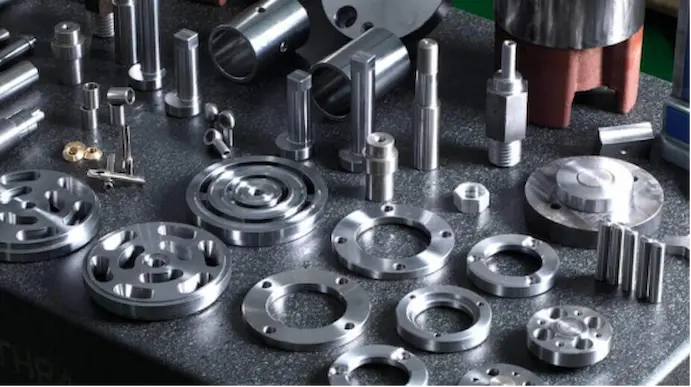
Once the raw valve body is formed, it undergoes precision machining using CNC equipment.
Typical machining operations include:
-
turning
-
drilling
-
milling
-
grinding
These processes ensure tight tolerances for critical components such as the seat, stem, and sealing surfaces.
Surface Treatment and Finishing
To improve durability and corrosion resistance, valves may undergo surface treatments such as:
-
shot blasting
-
electroplating
-
thermal spray coating
-
epoxy painting
Surface finishing also enhances wear resistance and protects valves operating in harsh environments.
Valve Assembly
After machining and finishing, components are assembled by skilled technicians.
Key components assembled include:
-
valve body
-
bonnet
-
stem
-
disc or ball
-
seat rings
-
sealing elements
Proper torque control and alignment are essential during this stage to ensure smooth valve operation.
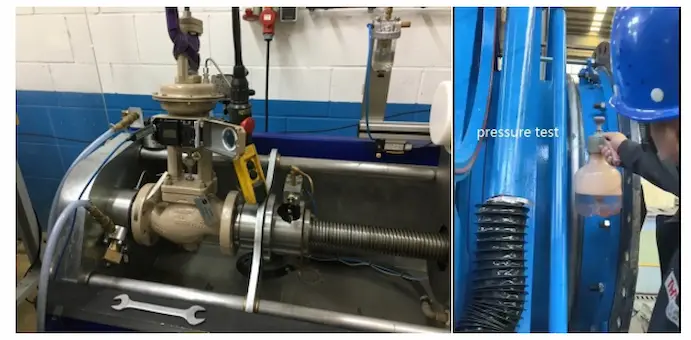
Pressure Testing and Quality Inspection
Before shipment, every valve must pass rigorous testing.
Typical tests include:
-
Hydrostatic pressure test
-
Seat leakage test
-
Functional operation test
-
Dimensional inspection
Hydrostatic testing verifies the valve’s ability to withstand pressures above its rated working pressure and ensures leak-tight performance.
Case Study: Improving Valve Reliability Through Manufacturing Control
A petrochemical facility experienced frequent leakage in pipeline isolation valves supplied by a low-cost manufacturer.
After investigation, engineers discovered two major problems:
-
poor machining tolerances
-
incomplete pressure testing
The facility replaced those valves with units produced under strict industrial valve manufacturing quality control.
The new valves were produced using:
-
certified raw materials
-
precision CNC machining
-
API-compliant pressure testing
As a result, the plant reduced valve-related maintenance incidents by more than 60%.
Data / Scientific Analysis
| Manufacturing Stage | Main Control Point | What Buyers Should Check |
|---|---|---|
| Material inspection | Chemical composition, mechanical properties, heat number | MTC / MTR, PMI, material grade, traceability |
| Casting / forging | Body integrity, grain structure, casting quality | Visual inspection, NDE if required, foundry record |
| Heat treatment | Mechanical properties and material stability | Heat treatment report where applicable |
| CNC machining | Seat area, stem bore, flange face, threads, tolerances | Dimensional report, machining inspection |
| Surface treatment | Corrosion protection, coating or lining quality | Coating thickness, adhesion, holiday test, visual check |
| Assembly | Seat, stem, packing, gasket, torque, alignment | Assembly inspection, torque control, cleanliness |
| Pressure testing | Shell integrity and seat leakage | API 598 / ISO 5208 / EN 12266-1 / project test report |
| Functional testing | Valve operation and actuator performance | Open/close test, torque, position feedback, actuator travel |
| Documentation | Traceability and compliance evidence | MTC, test report, CoC, drawing, ITP, packing list |
This structured workflow ensures that industrial valves meet international engineering standards and perform reliably in demanding applications.
Market Trends in Industrial Valve Manufacturing
The valve manufacturing industry is evolving rapidly with the integration of advanced technologies.
Key trends include:
Automation and Smart Manufacturing
Modern factories use automated CNC machines and robotic handling systems to improve production efficiency and precision.
Advanced Surface Coatings
Technologies such as HVOF coatings and plasma cladding significantly improve resistance to wear, corrosion, and high temperatures.
Digital Quality Control
Manufacturers increasingly use digital inspection tools and traceability systems to track materials, machining data, and test results.
These innovations allow companies like Vcore Valve to deliver consistent product quality and meet global market requirements.
Best Practices for Selecting Industrial Valves
When selecting valves for industrial projects, engineers should evaluate more than just price.
Important factors include:
Manufacturing Capability
Suppliers should demonstrate advanced facilities including foundry capability, CNC machining centres, and professional testing laboratories.
Certification and Compliance
Valves should comply with standards such as:
-
API
-
ISO
-
ASME
-
ANSI
Quality Assurance Systems
Reliable manufacturers implement strict quality control at every stage of production.
Conclusion
The industrial valve manufacturing process involves far more than simply shaping metal components. It is a highly engineered workflow combining material science, precision machining, assembly expertise, and rigorous testing.
From casting and forging to CNC machining and final pressure testing, every step determines the performance and reliability of the finished valve.
At Vcore Valve, we follow a comprehensive manufacturing system designed to deliver high-performance industrial valves for demanding applications worldwide.
Choosing a manufacturer with transparent production processes and strict quality control ensures long-term system reliability and safety.
FAQs
What is the first step in industrial valve manufacturing?
The process begins with engineering design and material selection based on pressure, temperature, and media requirements.
Why are casting and forging used in valve production?
Casting allows complex shapes, while forging provides stronger metal structure for high-pressure applications.
What tests are performed on industrial valves?
Common tests include hydrostatic pressure testing, seat leakage testing, and operational performance testing.
Why is CNC machining important in valve manufacturing?
CNC machining ensures precise tolerances for sealing surfaces and internal components.
How do manufacturers ensure valve quality?
Quality assurance involves raw material inspection, in-process inspection, and final pressure testing.
What industries rely on industrial valves?
Industrial valves are widely used in oil & gas, power generation, water treatment, chemical processing, and marine systems.
Reference
Valve Manufacturing Process Overview
https://valveindustriesindia.com/the-complete-guide-to-industrial-valve-manufacturing/
Manufacturing Process for Industrial Valves
https://aipvalve.com/manufacturing-process/