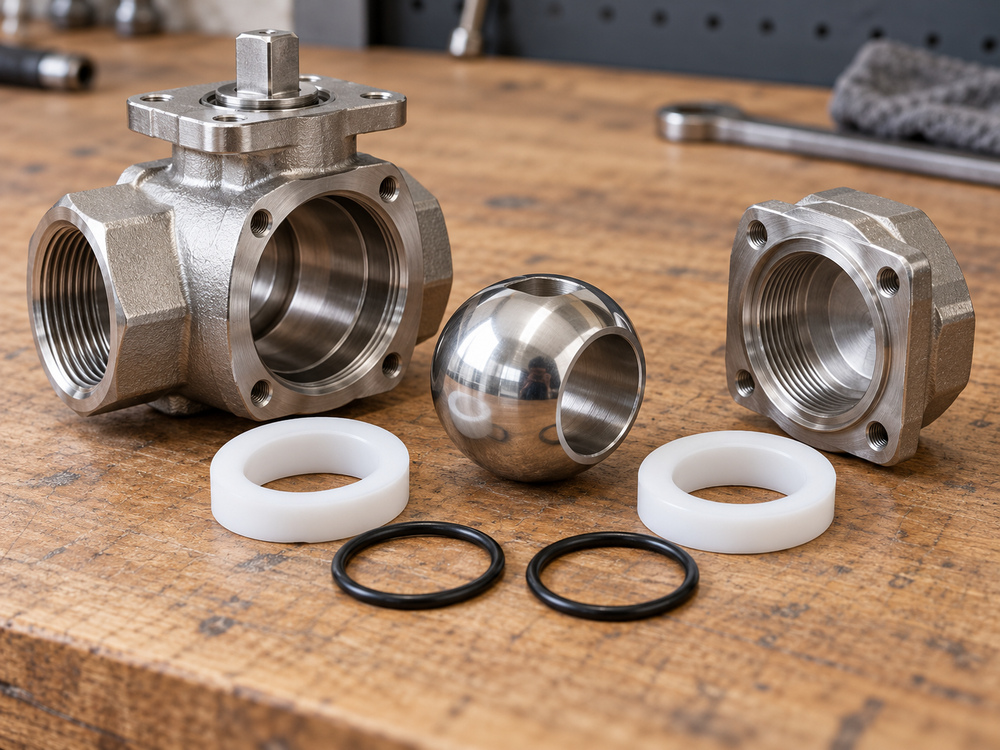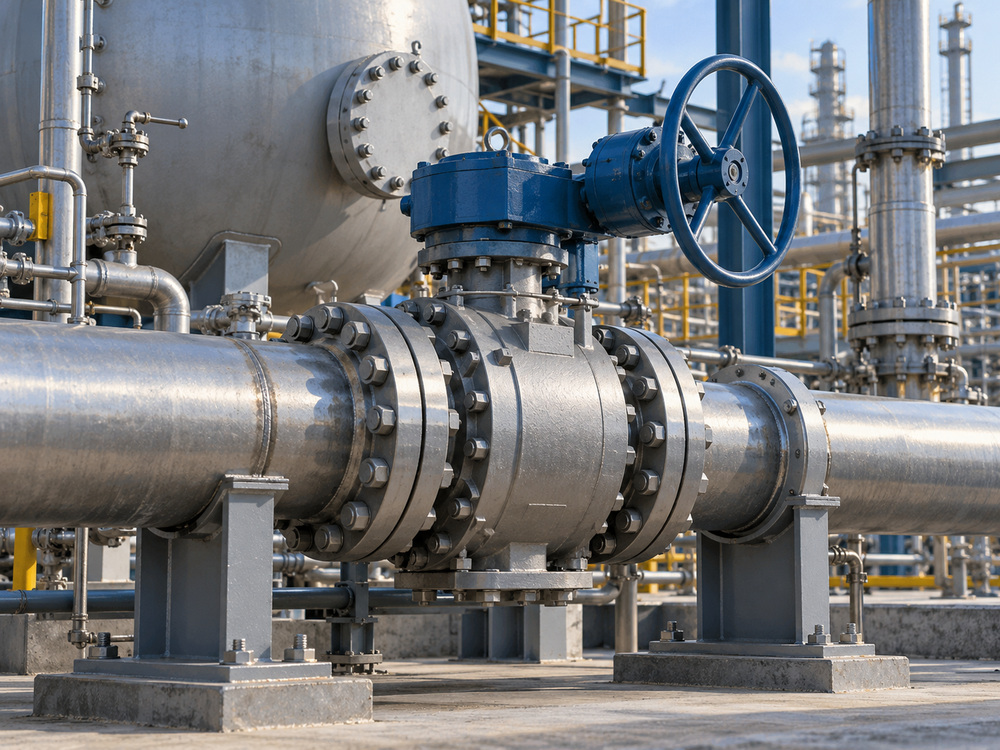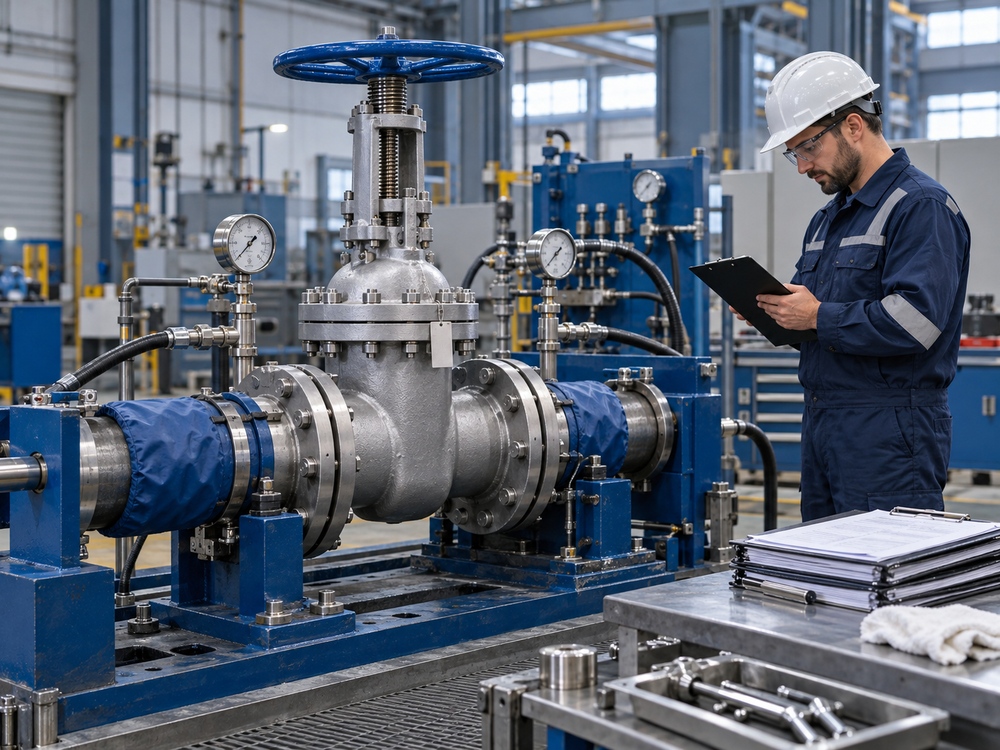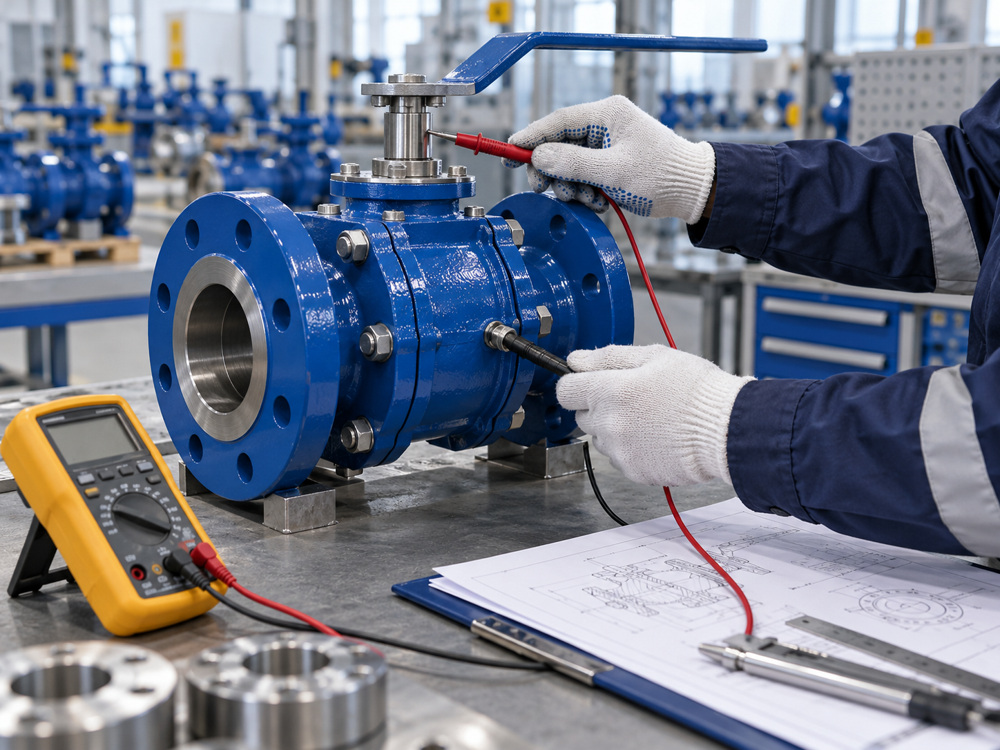
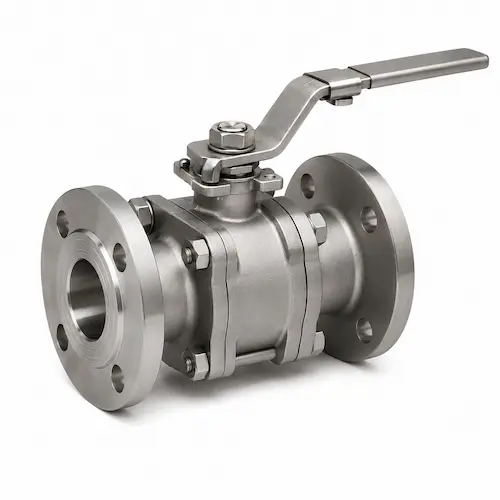
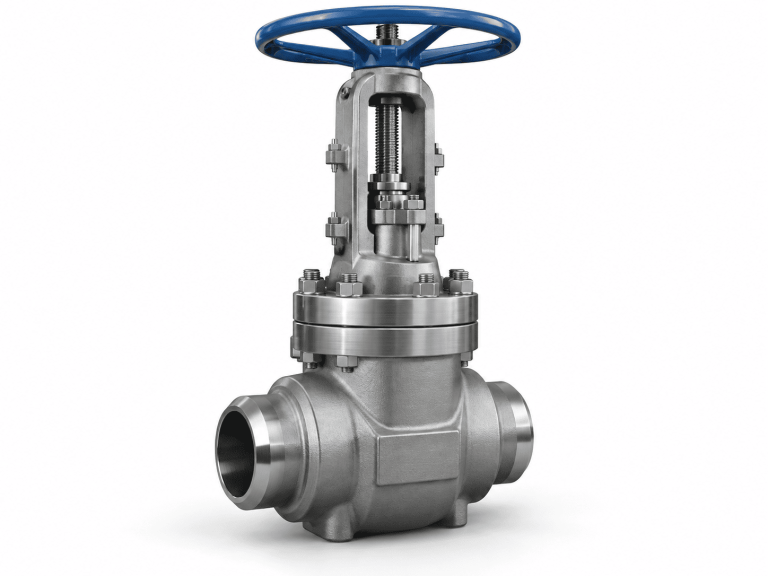
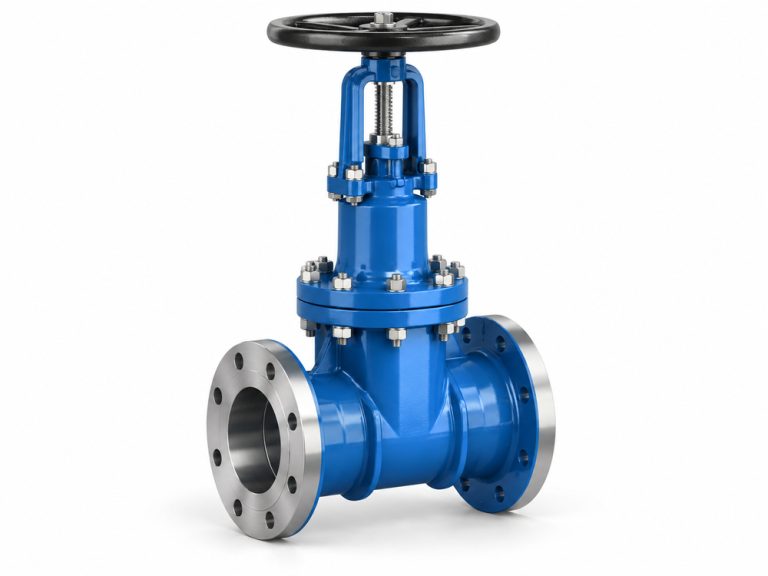
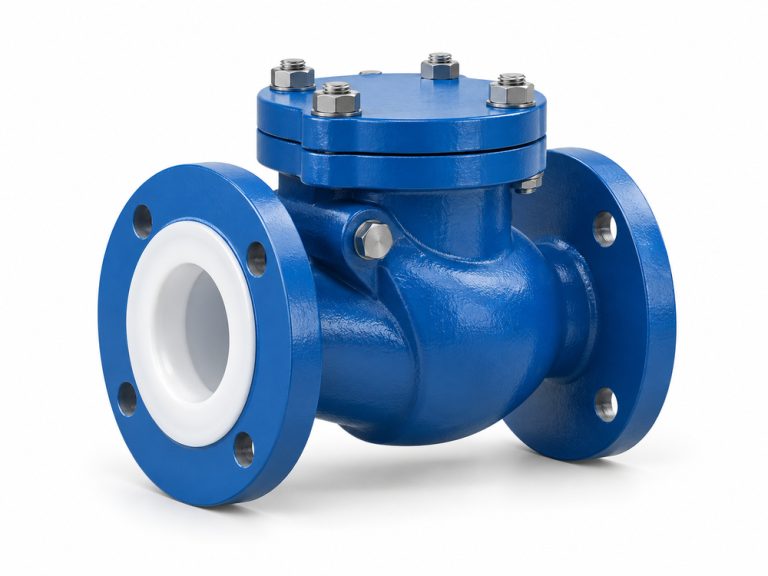
This page covers 316 stainless steel ball valve configurations rather than one fixed dimensional series. The valve may use cast CF8M, forged F316 or other approved 316-family stainless steel components, depending on body construction, connection type, pressure rating and manufacturing method. Final suitability must be confirmed from the actual medium, concentration, temperature, pressure and approved material specification.
Key Product Features
- 316-family stainless steel pressure-containing and wetted parts
- Cast CF8M or forged F316 body options according to valve construction
- Full-port or reduced-port flow passage
- Two-piece, three-piece, floating-ball or trunnion-mounted configurations
- Threaded, flanged, socket-weld or butt-weld end connections
- PTFE, RPTFE, PEEK, PPL or metal-seat options according to service
- Blowout-resistant stem construction available by selected design
- Manual, pneumatic or electric operation
- PMI, material certification and pressure testing available when specified
Product Configuration
| Configuration Item | Common Configuration | Optional Configuration |
|---|---|---|
| Body Construction | Two-piece or three-piece body | Floating-ball, trunnion-mounted or project-specific structure |
| Body Material | Cast CF8M or forged F316 | 316L, duplex stainless steel or higher alloy after technical review |
| Flow Passage | Full port | Reduced port |
| End Connection | Threaded or flanged | Socket weld, butt weld, clamp or custom connection |
| Seat | PTFE or RPTFE | PEEK, PPL, PCTFE or metal seat |
| Operation | Lever or gearbox | Pneumatic or electric actuator |
Understanding 316, CF8M and F316 Designations
The term “316 stainless steel ball valve” is often used as a general product description, but the exact material designation depends on how the valve component is manufactured. Cast, forged and wrought parts should not be identified with one interchangeable material code.
| Designation | Typical Product Form | Common Valve Use |
|---|---|---|
| 316 / 316L | Wrought stainless steel plate, bar, tube or machined components | Ball, stem, fasteners, fabricated parts and selected valve components |
| CF8M | Cast austenitic stainless steel | Cast valve bodies and end caps |
| F316 / F316L | Forged stainless steel | Forged valve bodies, end pieces and pressure-containing components |
The purchase specification should identify the required material standard and grade for each pressure-containing and wetted component. A general request for “316 valve” may not be sufficient when the project requires specific casting, forging, heat treatment, chemistry or mechanical-property documentation.
Technical Specifications
| Specification Item | Typical / Available Options |
|---|---|
| Product Type | 316 stainless steel ball valve |
| Primary Function | On-off isolation and emergency shutoff |
| Body Construction | Two-piece, three-piece, floating-ball or trunnion-mounted design |
| Size Range | According to selected threaded, flanged or welded product series |
| Pressure Rating | According to body construction, end connection, material and approved pressure-temperature rating |
| Body Material | CF8M, F316, F316L or approved project-specific stainless steel |
| Ball Material | 316 / 316L stainless steel or project-specified corrosion-resistant material |
| Stem Material | 316, 316L, 17-4PH or project-specified stainless steel |
| Seat Material | PTFE, RPTFE, PCTFE, PPL, PEEK or metal seat |
| Body Seal / Packing | PTFE, graphite, flexible graphite, FKM or approved sealing material |
| Port Design | Full port or reduced port |
| Connection | NPT, BSP, flanged, socket weld, butt weld, clamp or project-specific connection |
| Operation | Lever, gearbox, pneumatic actuator or electric actuator |
| Design Reference | API 608, ISO 17292, ASME B16.34 or approved project specification where applicable |
| Testing Reference | API 598, EN 12266 or approved inspection specification where applicable |
| Typical Media | Industrial water, compatible chemicals, food-process fluids, air, gas, oil and selected marine service |
Technical note: Do not publish fixed size, pressure or temperature limits until they have been confirmed from the actual product drawing and supplier datasheet. Different threaded, flanged, forged and cast valve series may have different allowable ratings.
316 Stainless Steel vs 304 Stainless Steel Ball Valve
Both 304 and 316 stainless steels are widely used in industrial valves. The important difference is not that one is “good” and the other is “bad,” but whether the material matches the actual corrosion mechanism and process conditions.
| Comparison Item | 304 Stainless Steel | 316 Stainless Steel |
|---|---|---|
| General Corrosion Resistance | Suitable for many clean-water, food, air and mild industrial services | Often selected for more demanding wet or chemically exposed environments |
| Molybdenum | Normally not intentionally alloyed with molybdenum | Contains molybdenum, improving resistance to some localized corrosion conditions |
| Chloride Exposure | Lower resistance to localized chloride attack | Better than 304 in many conditions, but still has chloride limits |
| Cost | Usually lower | Usually higher |
| Typical Selection | General water, air, food equipment and mild process service | Chemical process water, marine atmosphere and more corrosive industrial service |
For less aggressive service and lower material cost, compare our 304 Stainless Steel Ball Valve. The final choice should be based on actual corrosion data rather than material name alone.
Corrosion Resistance and Application Limits
316 stainless steel provides useful corrosion resistance in many industrial environments, but it is not corrosion-proof. Temperature, chloride concentration, oxygen content, deposits, crevices, flow velocity, pH and shutdown conditions can significantly change performance.
- Hot chloride solutions may cause pitting, crevice corrosion or stress corrosion cracking.
- Stagnant seawater or deposits around the seat and body cavity may create localized corrosion conditions.
- Concentrated acids or mixed chemical streams may require duplex, 6Mo, nickel alloy, titanium or lined construction.
- The body may be suitable while the seat, stem, packing or fasteners are not.
- 316 stainless steel does not automatically make the valve suitable for oxygen, chlorine, hydrogen or sour service.
- Metal compatibility should be reviewed together with pressure, temperature and cleaning chemicals.
For a broader material review, see our Anti-Corrosion Valve Materials for Chemical Processing guide.
Materials and Sealing Options
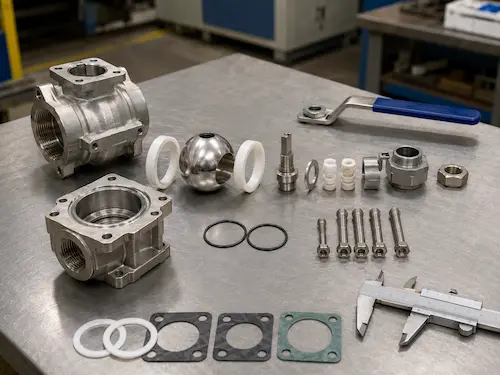
| Component | Common Options | Selection Consideration |
|---|---|---|
| Body | CF8M, F316 or F316L | Manufacturing method, pressure, corrosion and documentation requirements |
| Ball | 316 / 316L stainless steel | Surface finish, hardness, corrosion and seat compatibility |
| Stem | 316, 316L or 17-4PH | Torque, strength, corrosion and process compatibility |
| Seat | PTFE, RPTFE, PCTFE, PPL, PEEK or metal seat | Temperature, pressure, media, cycling frequency and leakage requirement |
| Packing | PTFE, graphite or low-emission packing | Temperature, fugitive-emission requirement and stem cycling |
| Body Seal | PTFE, graphite, FKM or project-specific seal | Chemical compatibility, fire-safe design and temperature |
| Fasteners | Stainless steel or project-specified alloy | External environment, galling risk, strength and corrosion |
 Typical Applications
 Typical Applications
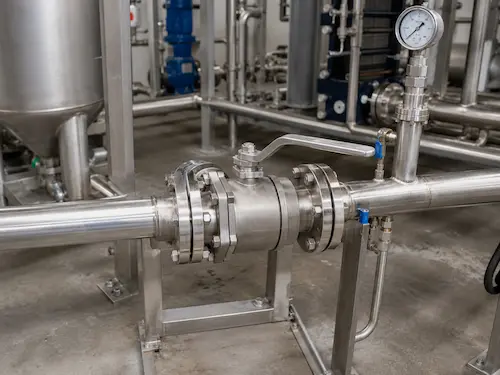
316 stainless steel ball valves are commonly considered where both shutoff performance and corrosion resistance are required:
- Chemical transfer and dosing lines with compatible media
- Industrial and process-water systems
- Food and beverage processing equipment
- Pharmaceutical and clean utility piping
- Marine atmosphere and selected seawater-related auxiliary service
- Wastewater containing compatible chemicals
- Compressed air and industrial gas systems
- Equipment isolation, drain and sampling lines
For chemical-system selection, review our Industrial Valves for Chemical Processing guide and Chemical Processing Valve Solutions page.
Connection and Body Options
| Valve Configuration | Main Advantage | Typical Use |
|---|---|---|
| Threaded 316 Ball Valve | Compact and easy to install | Small process, utility and equipment connections |
| Flanged 316 Ball Valve | Removable bolted pipeline connection | Medium and larger industrial pipelines |
| Three-Piece 316 Ball Valve | Center body can be serviced more easily | Maintenance-sensitive and cleaning-intensive systems |
| Socket-Weld 316 Ball Valve | Compact welded joint | Small-bore process piping |
| Butt-Weld 316 Ball Valve | Permanent high-integrity connection | Process pipelines where flange joints are not preferred |
| Actuated 316 Ball Valve | Remote and automated operation | Process sequencing, dosing, tank and utility automation |
For general flanged construction, compare our Flanged Ball Valve. Additional structures are available in the Ball Valve category.
Inspection and Documentation
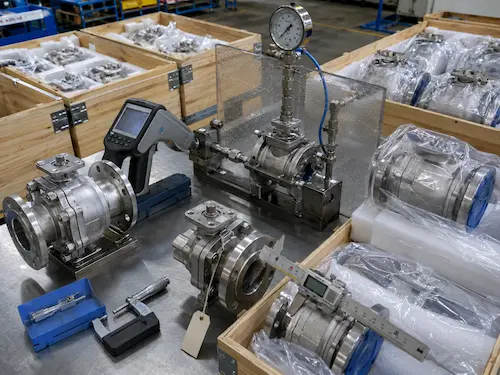
| Inspection / Document | Purpose |
|---|---|
| Material Test Certificate | Confirms the specified material grade and heat number. |
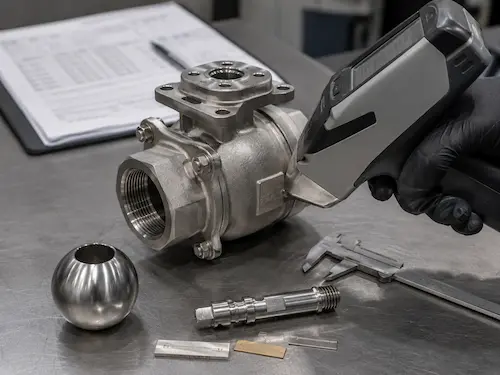
| Positive Material Identification | Verifies alloy chemistry when PMI is specified. |
| Dimensional Inspection | Checks connection dimensions, bore, end-to-end length and actuator interface. |
| Visual and Surface Inspection | Checks casting, forging, machining, ball finish and stainless steel surface condition. |
| Shell Pressure Test | Verifies the integrity of pressure-containing parts. |
| Seat Leakage Test | Confirms shutoff performance under the agreed test conditions. |
| Operation / Torque Test | Checks smooth movement and provides data for actuator sizing when required. |
| Cleanliness or Passivation Record | Provided when the selected service and purchase specification require it. |
Stainless steel valves should be protected from carbon-steel contamination during manufacturing, storage and transport. Finished valves can be supplied with port protectors, clean wrapping, foam separation and plywood export cases according to the selected product and cleanliness requirement.
Information Required for Valve Selection
- Valve size and quantity
- Body construction and connection type
- Design pressure, operating pressure and pressure class
- Design and operating temperature
- Medium name, composition, concentration and phase
- Chloride content, pH and cleaning chemicals where relevant
- Required body grade: CF8M, F316, F316L or other material
- Ball, stem, seat, seal, packing and fastener materials
- Full-port or reduced-port requirement
- Manual, pneumatic or electric operation
- PMI, passivation, NDE, material certification and test requirements
- Fire-safe, anti-static, low-emission or special-service requirements
FAQ
1. What is a 316 stainless steel ball valve used for?
A 316 stainless steel ball valve is used for on-off isolation in chemical, industrial water, food-processing, marine and other pipelines where improved corrosion resistance is required. Final suitability depends on the complete medium composition, pressure, temperature and sealing materials.
2. Is 316 stainless steel better than 304 for ball valves?
316 stainless steel generally provides better resistance than 304 in many wet and chloride-exposed environments because it contains molybdenum. However, 316 is not immune to pitting, crevice corrosion or stress corrosion cracking, especially in hot or concentrated chloride conditions.
3. What is the difference between CF8M and F316?
CF8M is commonly used for cast stainless steel valve bodies, while F316 is used for forged stainless steel components. They belong to the 316 stainless steel material family but refer to different product forms and manufacturing standards, so the correct grade should be specified for each valve component.
4. Can a 316 stainless steel ball valve be used for seawater?
316 stainless steel may be used in some marine and limited seawater-related applications, but it is not automatically suitable for continuous, warm, stagnant or high-chloride seawater service. Duplex, super duplex, titanium or higher-alloy materials may be required after corrosion review.
5. What information is needed for quotation?
For quotation, provide the valve size, connection, pressure, temperature, medium composition, required stainless steel grade, seat and seal materials, operation method, quantity and inspection documents. Chloride content and chemical concentration should also be provided for corrosive service.