Quick Overview
Magnetic Particle Inspection (MPI) is a powerful non-destructive testing (NDT) method used extensively in the valve industry to ensure the integrity of valve components. By detecting surface and near-surface discontinuities, MPI helps manufacturers like Vcore Valve deliver products that meet the highest standards of safety, performance, and reliability.
Introduction: Understanding the Importance of MPI in Valve Manufacturing
In industries where safety and performance are critical—such as oil and gas, petrochemical, and power generation—valves are among the most crucial components in controlling flow, pressure, and temperature. To guarantee their reliability, manufacturers rely on stringent quality assurance procedures. One such method, Magnetic Particle Inspection (MPI), is vital for detecting defects that could compromise the valve’s performance under pressure and extreme conditions.
User Pain Points
-
Hidden Defects in Valve Components
One of the biggest concerns in valve manufacturing is the potential for defects that are not visible to the naked eye. Cracks or fractures on the surface or near the surface can go undetected and lead to catastrophic failures in the field, endangering both safety and system efficiency. -
Difficulty in Ensuring Consistent Quality Control
Achieving uniform quality control across large-scale valve production can be challenging. Without effective inspection methods, manufacturers may struggle to ensure that each valve meets the required standards, leading to potential inconsistencies in performance and reliability. -
Inefficient or Time-Consuming Testing Methods
Traditional inspection techniques can be time-consuming and may not offer the level of sensitivity required to detect critical defects. As production timelines become shorter, there is increasing pressure to implement more efficient, reliable, and non-destructive testing methods that do not hinder the production flow.
Our Solutions
-
Magnetic Particle Inspection (MPI) for Precise Detection
MPI is a widely used non-destructive testing (NDT) technique for detecting surface and near-surface discontinuities in ferromagnetic materials. By applying a magnetic field to a valve component and then introducing magnetic particles, MPI reveals defects that may not be visible through conventional inspection methods. -
Fast, Efficient, and Cost-Effective Testing
Unlike other inspection techniques, MPI is fast and non-destructive, making it an ideal choice for high-volume manufacturing environments. It provides quick results, reducing the need for lengthy inspections while ensuring the highest standards of quality. -
Enhanced Valve Performance and Safety Assurance
By identifying flaws such as cracks, porosity, and inclusions early in the production process, MPI ensures that only defect-free valves make it to market. This results in increased performance, enhanced safety, and reduced downtime for customers using Vcore Valve products.
Case Study: Successful Application of MPI in Valve Manufacturing
Vcore Valve, a leading manufacturer of industrial valves, implements MPI as part of our rigorous quality control process. In one recent case, an oil and gas client experienced frequent valve failures due to undetected micro-cracks in the valve bodies, which led to costly downtime. After introducing MPI into the inspection process, we identified and eliminated these hidden defects, significantly improving the reliability and safety of the valves. As a result, our client reported a 30% reduction in operational disruptions, demonstrating the effectiveness of MPI in enhancing valve performance.
Data Analysis: How MPI Works
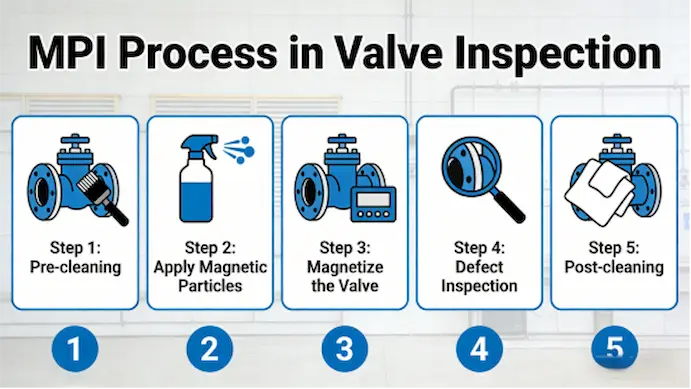
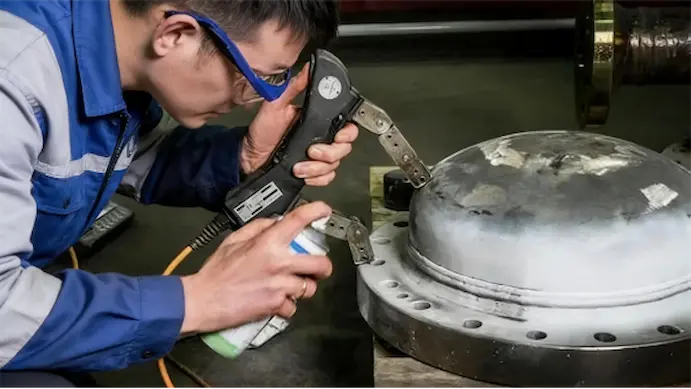
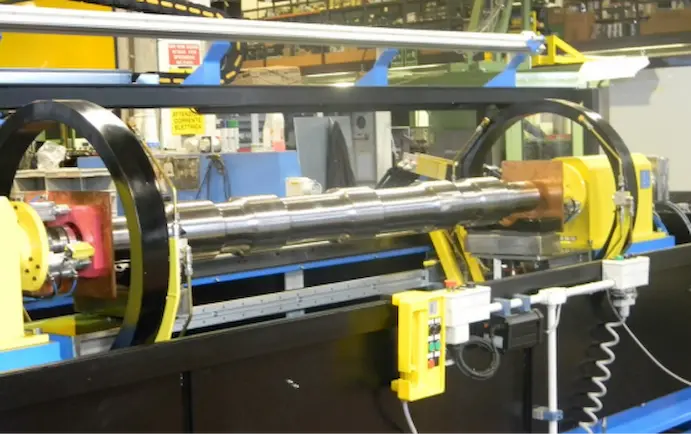
Magnetic Particle Inspection involves the use of magnetic fields to detect surface and subsurface defects in ferromagnetic materials. The process works by magnetising the valve component, applying magnetic particles, and then examining the component for visible signs of defects under UV or white light. Below is a detailed overview of the MPI process:
| Step | Description | Benefits |
|---|---|---|
| Magnetisation | The valve component is magnetised using either a permanent magnet or electromagnet. | Creates a magnetic field that helps reveal surface flaws. |
| Application of Particles | Magnetic particles are sprinkled onto the surface of the valve. | The particles align along defect lines, highlighting cracks. |
| Inspection | The surface of the valve is examined under a suitable light source, such as UV or white light. | Detects visible cracks, pores, and other surface defects. |
| Demagnetisation | The valve component is demagnetised after inspection to ensure safe handling and further use. | Prevents residual magnetism, which could interfere with future testing or operation. |
Industry Trends and Market Insights
As industries continue to demand higher standards for safety and performance, the need for advanced testing methods like MPI has increased. With the rise in automation and the focus on non-destructive testing (NDT), MPI is becoming a critical tool for valve manufacturers to ensure compliance with international standards such as ISO 9001 and API 6D. Additionally, growing environmental concerns and the shift towards sustainable practices are pushing the industry towards more reliable and long-lasting valve solutions.
Valve Styles and Usage Recommendations
MPI is particularly beneficial for valves used in critical applications where failure can result in significant economic or safety consequences. Here are some recommendations for using MPI in various valve types:
-
Ball Valves: MPI ensures the integrity of ball valves used in high-pressure systems, preventing unexpected leaks or failures.
-
Gate Valves: For gate valves used in the oil and gas sector, MPI helps identify defects that could impair their sealing performance under high-stress conditions.
-
Globe Valves: Ensures that globe valves, particularly those used in power plants, are free from cracks that could lead to temperature fluctuations or system inefficiencies.
Conclusion
Magnetic Particle Inspection (MPI) plays an essential role in ensuring the quality and reliability of Vcore Valve products. As a non-destructive testing method, MPI offers accurate, efficient, and cost-effective inspection, helping identify defects early in the production process. For industries where valve reliability is paramount, adopting MPI can make all the difference in ensuring top performance and safety. Choose Vcore Valve for your industrial valve needs and experience the peace of mind that comes with high-quality assurance.
FAQs
-
What is Magnetic Particle Inspection (MPI)?
MPI is a non-destructive testing (NDT) method used to detect surface and near-surface defects in ferromagnetic materials by applying a magnetic field and magnetic particles. -
Why is MPI important for valve manufacturing?
MPI helps detect hidden cracks, porosity, and other defects in valve components, ensuring that only safe, high-quality valves are delivered to the market. -
How does MPI compare to other inspection methods?
MPI is faster and more cost-effective than traditional methods like ultrasonic or X-ray testing, while also providing highly accurate results for surface defects. -
What types of valves benefit from MPI?
MPI is especially beneficial for valves used in critical applications such as ball, gate, and globe valves, where defects can lead to system failure or safety hazards. -
Is MPI a standard practice in the valve industry?
Yes, MPI is widely used in the valve industry as part of quality control and to comply with industry standards, ensuring that valves meet safety and performance requirements.
Reference:
-
Magnetic Particle Inspection Overview
-
Non-Destructive Testing for Valve Manufacturing
-
Introduction to Magnetic Particle Inspection (MPI)