
Brass Valves vs Bronze Valves: Key Differences
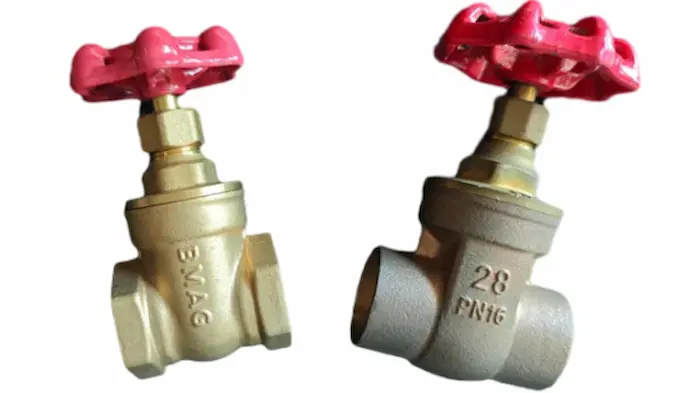
Compare brass and bronze valves by material composition, corrosion resistance, strength, cost, and typical applications. Brass valves are commonly selected for general water, air, and HVAC systems, while bronze valves offer better durability in seawater, marine, and more corrosive operating environments.
Non-Lubricated Plug Valve vs Lubricated Plug Valve: Which is Best for Your Application?
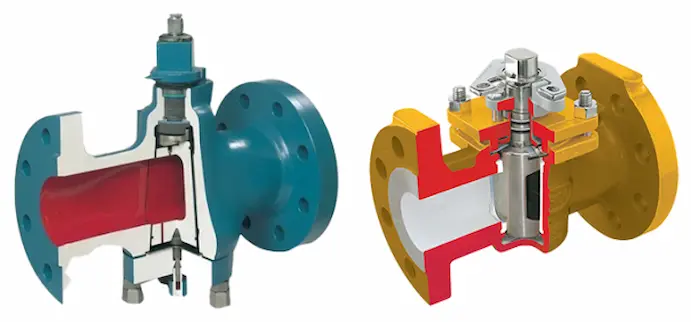
Compare non-lubricated and lubricated plug valves by sealing design, operating torque, pressure and temperature capability, maintenance, contamination risk, and application. Non-lubricated plug valves suit cleaner, low- to medium-pressure services where lubricant contamination is undesirable, while lubricated plug valves provide smoother operation and stronger sealing for demanding high-pressure and high-temperature industrial systems.
Single-Seated vs Double-Seated Control Valves: Which One is Right for Your System?
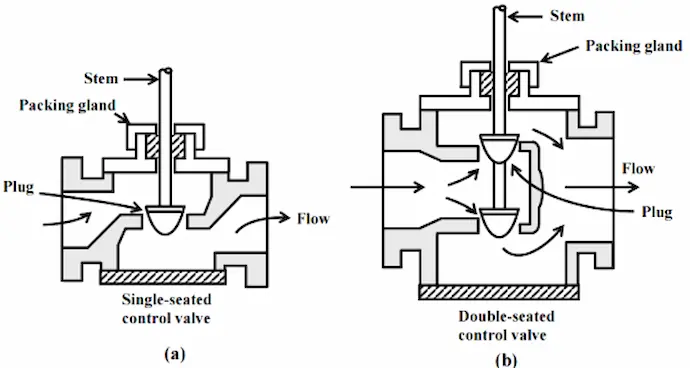
Compare single-seated and double-seated control valves by seat configuration, shutoff performance, pressure balancing, flow capacity, actuator requirements, maintenance, and application. Single-seated valves generally provide tighter shutoff and simpler maintenance, while double-seated valves handle higher flow rates and pressure differentials with lower actuator force.
What is the Difference Between Butterfly Valve and Butterfly Check Valve?
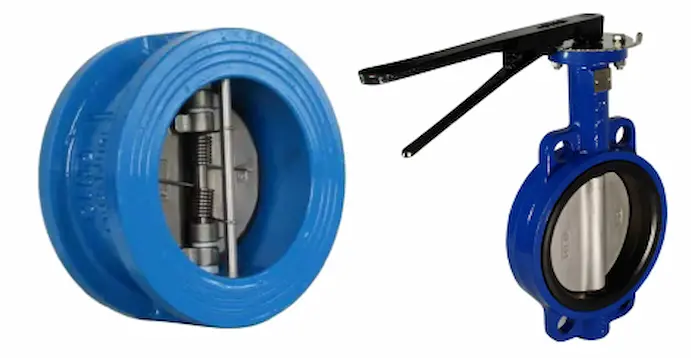
Compare butterfly valves and butterfly check valves by operating function, disc movement, flow direction, installation, maintenance, and application. Butterfly valves are manually or automatically operated for pipeline isolation and throttling, while butterfly check valves operate automatically to allow one-way flow and prevent reverse flow in water, cooling, HVAC, chemical, and industrial piping systems.
Flanged Valves vs. Screwed Valves: How to Choose the Right Valve for Your Application
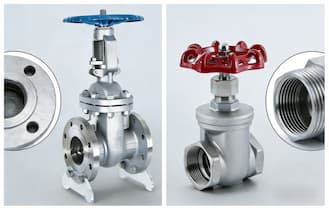
Compare flanged and screwed valves by connection type, pressure and temperature capability, sealing reliability, installation, maintenance, and cost. Flanged valves are better suited to large-diameter, high-pressure, high-temperature, corrosive, and frequently maintained industrial pipelines, while screwed valves provide a compact and economical solution for smaller, moderate-pressure water, air, HVAC, and general utility systems.
Plug Valve vs Ball Valve: Key Differences & Applications
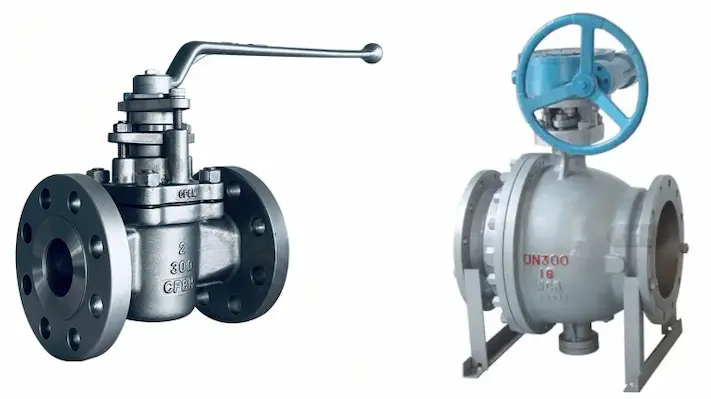
Compare plug valves and ball valves by closure design, sealing performance, pressure drop, operating torque, maintenance, and media compatibility. Ball valves provide tight shutoff, low flow resistance, and easy automation for water, oil, gas, and high-pressure pipelines, while plug valves are better suited to throttling, slurry, abrasive media, and corrosive heavy-duty services.
Gate Valve vs Butterfly Valve: Key Differences Explained
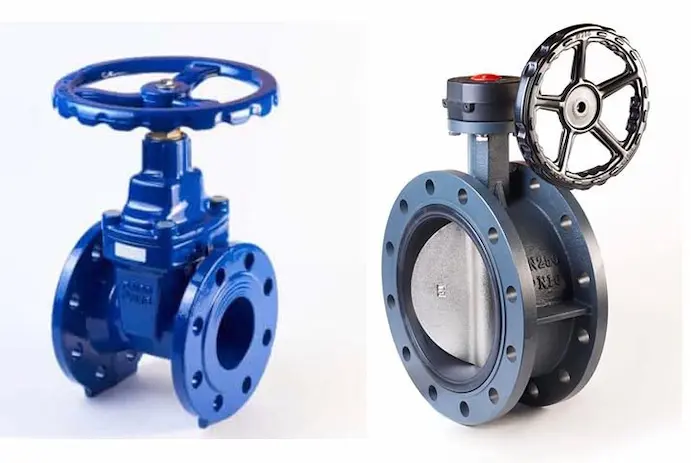
Compare gate valves and butterfly valves by operating mechanism, flow resistance, installation space, weight, cost, maintenance, and application. Gate valves provide full-bore flow and minimal pressure loss for high-pressure isolation and transmission pipelines, while butterfly valves offer compact construction, fast quarter-turn operation, easier automation, and economical control for water treatment, HVAC, cooling, and large-diameter piping systems.
Angle Valve vs Gate Valve: Differences & Applications
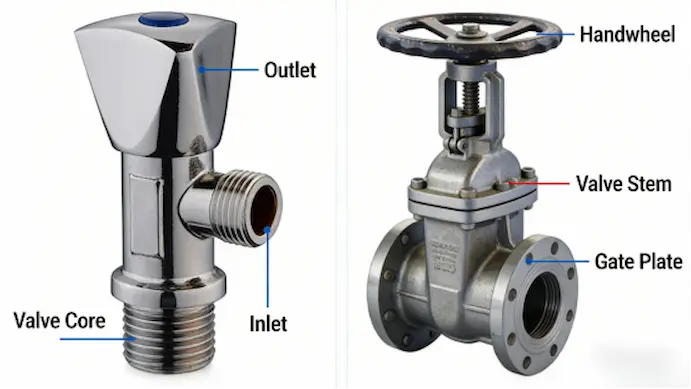
Compare angle valves and gate valves by flow path, installation space, pressure drop, operating frequency, and application. Angle valves redirect flow by 90 degrees and provide compact local shutoff for plumbing fixtures, branch lines, and confined spaces, while gate valves provide straight-through, low-resistance isolation for main water and industrial pipelines.
Globe Valves vs Gate Valves: Differences & Applications
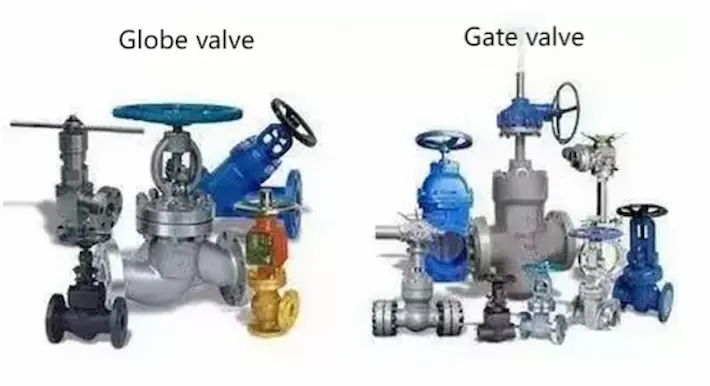
Compare globe valves and gate valves by flow path, throttling performance, pressure loss, operating frequency, sealing, and application. Globe valves provide accurate flow regulation and frequent operation for steam, fuel, and process-control lines, while gate valves offer straight-through flow and minimal pressure loss for full-open or full-closed isolation in water, fire-protection, and transmission pipelines.
Backflow Preventer vs Check Valve: Which One is Right for You?
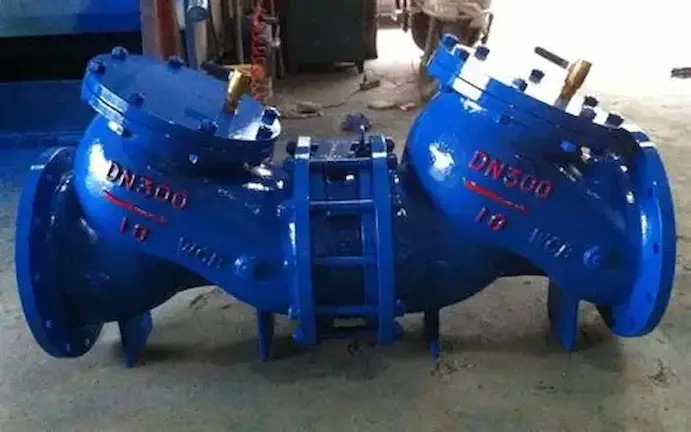
Compare backflow preventers and check valves by protection level, internal design, testing requirements, cost, and application. Backflow preventers use multiple protective components to safeguard potable water from backsiphonage and backpressure contamination, while check valves provide simpler one-way flow control for pumps, HVAC, fire protection, and general industrial pipelines.
Brass Ball Valve vs PVC Ball Valve: Engineersssing Insights for Modern Pipeline Systems
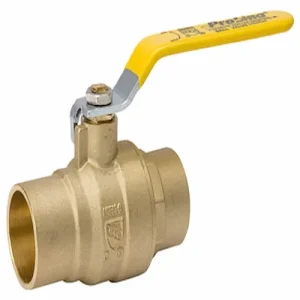
Compare brass and PVC ball valves by pressure and temperature capability, corrosion resistance, mechanical strength, weight, service life, and cost. Brass ball valves provide greater durability and sealing reliability for hot water, compressed air, HVAC, and pressure-cycling systems, while PVC ball valves offer lightweight, economical corrosion resistance for irrigation, swimming pools, water treatment, and compatible low-temperature chemical service.
Which Valve Should Never Be Used for Flow Control?
Quick Summary flow control. Many valves excel at shut-off or isolation but falter when precise fluid regulation is needed. This guide breaks down which valves to steer clear of for flow management, explains the risks of poor selection, and highlights the top performers to keep your process system running smoothly. Imagine you are tasked with […]