Quick Overview
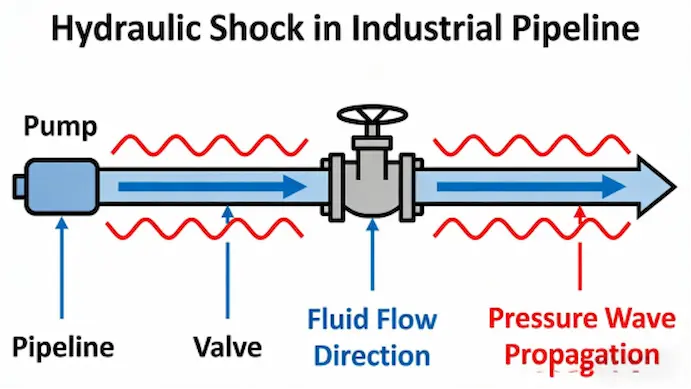
Water hammer, also known as hydraulic shock, is a pressure surge that occurs when flowing liquid suddenly stops or changes direction in a pipeline. This shockwave can travel through pipes at high speed, causing loud noises, vibrations, and even serious equipment damage. In industrial systems, water hammer in pipelines can damage valves, pumps, and pipe joints, making it essential to understand its causes and prevention strategies.
A Typical Plant Scenario
Picture an engineer standing near a large pipeline in a processing plant.
A valve closes suddenly.
Within seconds, a loud “bang” echoes through the piping system.
The pipes vibrate, supports shake, and operators quickly realise something is wrong.
This phenomenon is known as water hammer. It occurs when the momentum of flowing fluid is abruptly stopped, converting kinetic energy into a powerful pressure wave travelling through the pipe network.
In industrial facilities where pipelines transport large volumes of fluid, hydraulic shock in pipelines can generate pressure spikes far higher than normal operating pressure.
Understanding water hammer causes and solutions is essential for safe pipeline operation.
Common Problems Caused by Water Hammer
Pipe Damage and Structural Stress
Pressure surges created by water hammer in piping systems can exceed several times the system’s operating pressure. Over time this stress may cause pipe deformation, cracks, or complete rupture.
Valve and Pump Failure
Rapid pressure spikes can damage valve seats, stems, and pump components. Sensitive equipment such as flow meters and control valves can also fail when exposed to repeated shockwaves.
System Noise and Vibration
One of the most recognisable signs of hydraulic shock is the loud banging noise in pipes, often accompanied by vibration and pipe movement.
Practical Solutions to Prevent Water Hammer
Install Water Hammer Arrestors
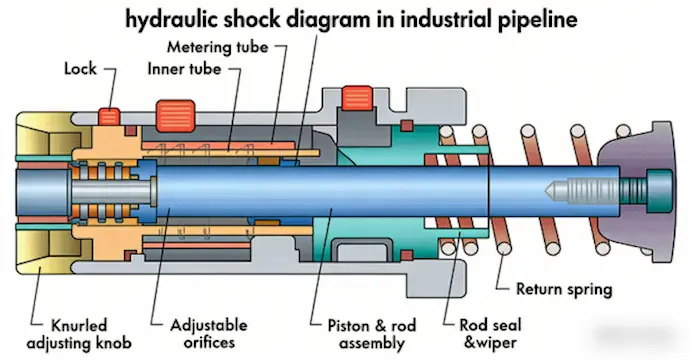
A water hammer arrestor absorbs pressure surges using a piston or air cushion. These devices reduce shockwaves before they travel through the pipeline.
Use Slow-Closing or Non-Slam Valves
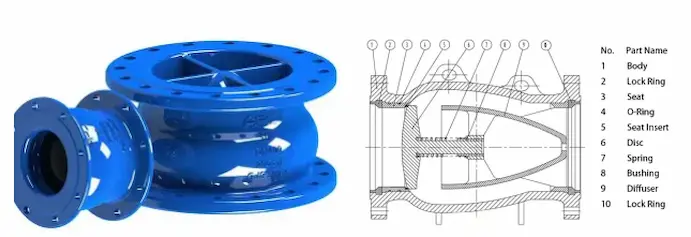
Certain valve designs close gradually to prevent sudden flow stoppage. Non-slam check valves and slow-closing actuated valves significantly reduce pressure spikes.
Control Pump Start and Stop Sequences
Gradual pump start-up and shutdown help avoid abrupt changes in fluid velocity, which are one of the primary causes of water hammer.
What Causes Water Hammer in Pipeline Systems
Sudden Valve Closure
One of the most common triggers occurs when a valve closes too quickly, abruptly stopping fluid flow and creating a pressure surge that travels through the pipe.
Pump Shutdown or Power Failure
When pumps suddenly stop, fluid momentum reverses direction and generates powerful pressure waves.
Air Pockets in Pipelines
Entrapped air inside pipelines can compress and expand unpredictably, amplifying water hammer effects.
High Flow Velocity
Systems operating with high fluid velocity have more kinetic energy, meaning sudden flow interruption produces stronger pressure shocks.
Case Study: Water Hammer in an Industrial Cooling System
An industrial facility experienced repeated pipe vibrations whenever cooling water pumps shut down.
Engineers identified water hammer in the pipeline system as the root cause.
The solution involved three modifications:
-
installing spring-assisted check valves
-
adding water hammer arrestors
-
implementing a controlled pump shutdown sequence
After these improvements, pressure fluctuations were significantly reduced and pipeline reliability improved.
Case Study: Valve Slam in a Steam Condensate Line
In a steam condensate system, a traditional swing check valve caused repeated hydraulic shock events.
Because the valve closed abruptly after flow reversal, it generated strong pressure spikes.
The plant replaced it with a silent spring-assisted check valve.
The result:
-
elimination of valve slam
-
reduced noise levels
-
extended equipment lifespan
source mike crowly
Data / Scientific Analysis
| Factor | Effect on Water Hammer | Engineering Impact |
|---|---|---|
| Rapid valve closure | Generates pressure shockwave | Damages valves and pipe joints |
| Sudden pump shutdown | Causes flow reversal | Creates large pressure spikes |
| Air pockets in pipeline | Amplifies pressure fluctuations | Increases system instability |
| High fluid velocity | Greater kinetic energy | Stronger hydraulic shock |
Fluid dynamics theory shows that when moving fluid suddenly stops, its kinetic energy transforms into a pressure wave travelling through the pipe at near sonic speed.
Industry Trends in Water Hammer Prevention
Industrial piping systems are increasingly designed with transient pressure control in mind.
Modern engineering practices include:
Smart Pump Control Systems
Variable frequency drives (VFDs) allow pumps to start and stop gradually, reducing pressure surges.
Advanced Valve Designs
Modern valves incorporate spring-assisted closure, damping mechanisms, and flow-control features to prevent sudden pressure spikes.
Digital Pressure Monitoring
Real-time monitoring systems allow engineers to detect pressure surges early and adjust operating parameters accordingly.
Manufacturers such as Vcore Valve are developing advanced industrial valve designs specifically engineered to minimise water hammer effects in high-flow pipeline systems.
Engineering Recommendations
Design Pipelines with Surge Protection
Engineers should integrate surge tanks, pressure relief valves, or air chambers into pipeline design.
Choose Appropriate Valve Technology
Certain valve types are more resistant to hydraulic shock, particularly non-slam check valves and slow-closing actuated valves.
Implement Regular System Maintenance
Routine inspections ensure that valves, pumps, and pipeline supports remain in proper condition.
Preventative maintenance also helps detect early signs of pressure surge damage.
Conclusion
Water hammer is one of the most common yet potentially destructive problems in pipeline systems. The sudden stoppage of fluid flow can generate powerful pressure waves that damage pipes, valves, and pumps.
Fortunately, the problem can be effectively prevented with proper engineering practices.
By using slow-closing valves, installing water hammer arrestors, and designing pipelines with surge protection, engineers can significantly reduce hydraulic shock risks.
At Vcore Valve, we design reliable industrial valves engineered to support stable pipeline operation and minimise pressure surge problems in demanding industrial environments.
FAQs
What is water hammer in a pipeline system?
Water hammer is a pressure surge caused when flowing liquid suddenly stops or changes direction inside a pipe.
Why does water hammer create loud banging sounds?
The shockwave generated by the pressure surge causes pipe vibration and noise, which produces the characteristic hammering sound.
Can water hammer damage industrial equipment?
Yes. Repeated pressure spikes can damage pipes, valves, pumps, and sensitive measurement instruments.
How do engineers prevent water hammer?
Common solutions include installing water hammer arrestors, using slow-closing valves, and controlling pump operation.
Which valves reduce water hammer risk?
Non-slam check valves and spring-assisted check valves are commonly used to minimise hydraulic shock.
Is water hammer common in industrial pipelines?
Yes. Systems with high flow velocity or rapid valve operation are particularly susceptible.
Reference
Water Hammer Causes and Solutions
https://www.silverinstruments.com/support/water-hammer-in-pipelines-causes-and-solutions.html
How to Prevent Water Hammer in Pipelines
https://www.tangovalve.com/how-to-prevent-water-hammer-in-pipelines/