Quick Overview
A double plate check valve, also known as a dual plate check valve, is a compact and efficient solution for preventing reverse flow in industrial piping systems. Its spring-assisted, centre-hinged design allows rapid closing, reduced water hammer, and lower pressure loss. This article explains how it works, where it performs best, and how to select the right configuration for long-term reliability.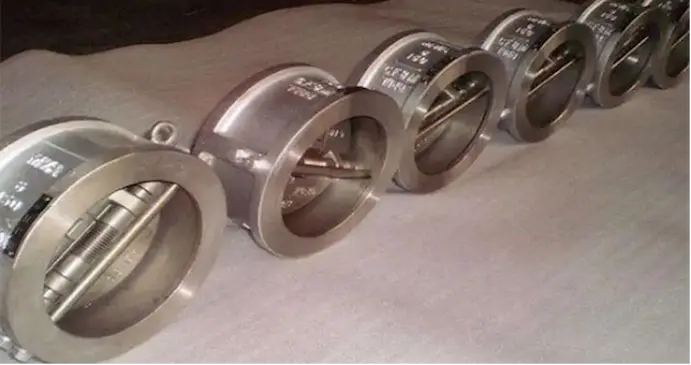
A Real-World Scenario: Why Backflow Is a Silent Killer
Imagine a centrifugal pump shutting down unexpectedly. For a split second, flow reverses. Without an effective check valve, that reverse surge can slam into the pump impeller, damage seals, or crack pipe supports.
This is exactly where a double plate check valve quietly does its job—fast, controlled, and without drama.
Common User Pain Points
Uncontrolled Backflow
Traditional swing check valves close slowly and rely on gravity, making them vulnerable to reverse flow during sudden shutdowns.
Water Hammer and Noise
Delayed disc closure creates pressure surges, leading to pipe vibration, noise, and long-term fatigue failure.
Limited Installation Space
Large face-to-face dimensions make conventional check valves difficult to install in compact skid systems.
Practical Solutions Offered by Double Plate Check Valves
Spring-Assisted Fast Closure
The built-in springs force the plates to close immediately when flow slows, minimising reverse velocity.
Compact Wafer Design
The wafer-style body fits between flanges, reducing weight, cost, and installation time.
Balanced Dual Disc Structure
Two smaller plates generate lower inertia, enabling smoother operation and reduced wear.
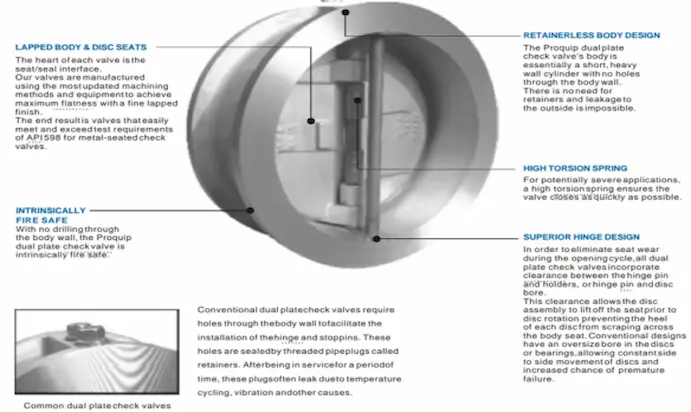
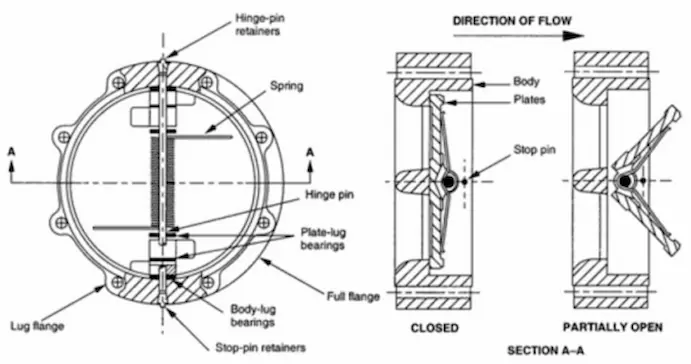
Working Principle of a Double Plate Check Valve
Flow Opening Phase
When forward flow pressure exceeds the spring force, the two plates rotate open around a central hinge pin. Flow passes symmetrically through the valve body.
Stable Flow Condition
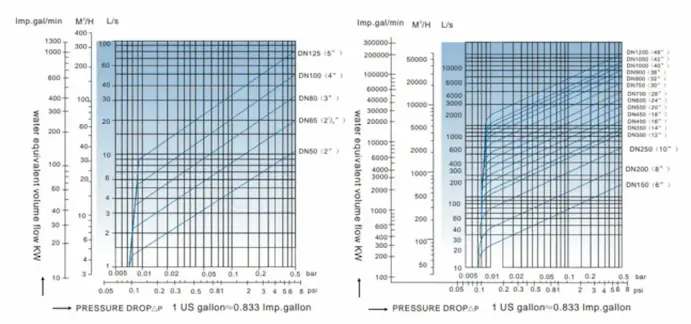
At full flow, the plates remain open with minimal obstruction, resulting in low pressure drop compared to swing check valves.
Reverse Flow Prevention
As flow decelerates, the springs initiate closure before reverse flow develops. The plates shut tightly against the seat, preventing backflow and water hammer.
This spring-driven action is the key difference between a double plate check valve and gravity-dependent designs.
Case Study: Pump Protection in an HVAC System
In a high-rise HVAC chilled water loop, a Vcore Valve double plate check valve replaced a noisy swing check valve.
Results after 12 months:
-
35% reduction in system noise
-
Zero recorded water hammer events
-
Improved pump seal life
The client also reported easier maintenance due to the valve’s wafer installation.
Engineering Data and Performance Comparison
| Feature | Double Plate Check Valve | Swing Check Valve |
|---|---|---|
| Closing speed | Very fast | Slow |
| Water hammer risk | Low | High |
| Installation length | Short | Long |
| Mounting orientation | Any | Horizontal preferred |
| Pressure loss | Low | Medium |
This explains why dual plate check valves are increasingly specified in modern systems.
Market Trends and Industry Adoption
-
Growing demand in HVAC, water treatment, and fire protection
-
Increased use in compact skid-mounted systems
-
Preference for stainless steel double plate check valves in corrosive environments
-
Shift away from swing check valves in pump discharge lines
Industry standards increasingly recognise fast-closing check valves as best practice for pump protection.
Selection and Usage Recommendations
-
Choose stainless steel for corrosive or hygienic applications
-
Select ductile iron for general water and HVAC services
-
Confirm spring material compatibility with temperature and media
-
Ensure correct flange standard (ANSI, DIN, JIS)
-
Install in pump discharge lines for optimal protection
Vcore Valve offers customised configurations to match real operating conditions, not just catalogue data.
Conclusion: A Small Valve That Prevents Big Problems
A double plate check valve may look simple, but its engineering impact is significant. Fast closure, compact size, and reliable backflow prevention make it one of the smartest upgrades for modern pipeline systems.
👉 Contact Vcore Valve to select the right dual plate check valve for your application and protect your system from hidden flow damage.
FAQ
What is a double plate check valve?
It is a compact check valve using two spring-loaded plates to prevent reverse flow quickly and efficiently.
How does a double plate check valve differ from a swing check valve?
It closes faster, reduces water hammer, and requires less installation space.
Can a double plate check valve be installed vertically?
Yes, it can be installed in both horizontal and vertical pipelines.
Is the pressure drop high in double plate check valves?
No, the streamlined dual-disc design offers low pressure loss.
What materials are available?
Common materials include ductile iron, carbon steel, and stainless steel.
Are double plate check valves suitable for pump outlets?
Yes, they are highly recommended for pump discharge protection.
Reference
-
Check valve fluid dynamics principles
-
HVAC pump protection standards
-
Industrial pipeline backflow prevention guidelines