Quick Summary
Ductile Iron vs PTFE is not a simple strength-versus-chemical-resistance decision. Ductile iron is commonly used as a strong, economical pressure-containing body material. PTFE is commonly used as a chemically resistant seat, lining, or sealing material. In many industrial valves, a practical solution combines a ductile iron body with PTFE seats or lining when pressure, temperature, and media conditions allow.
Ductile Iron vs PTFE: What Each Material Does
Ductile iron and PTFE serve different roles inside industrial valves. Ductile iron provides mechanical strength, pressure resistance, and cost-effective body construction. PTFE provides chemical resistance, low friction, and reliable sealing against many corrosive media. Comparing them as if they were interchangeable materials can lead to wrong valve selection.
For procurement teams, the practical question is how these materials work together in a valve body, seat, liner, gasket, or sealing system. The answer depends on working medium, pressure, temperature, corrosion risk, abrasion, operation frequency, and required service life.
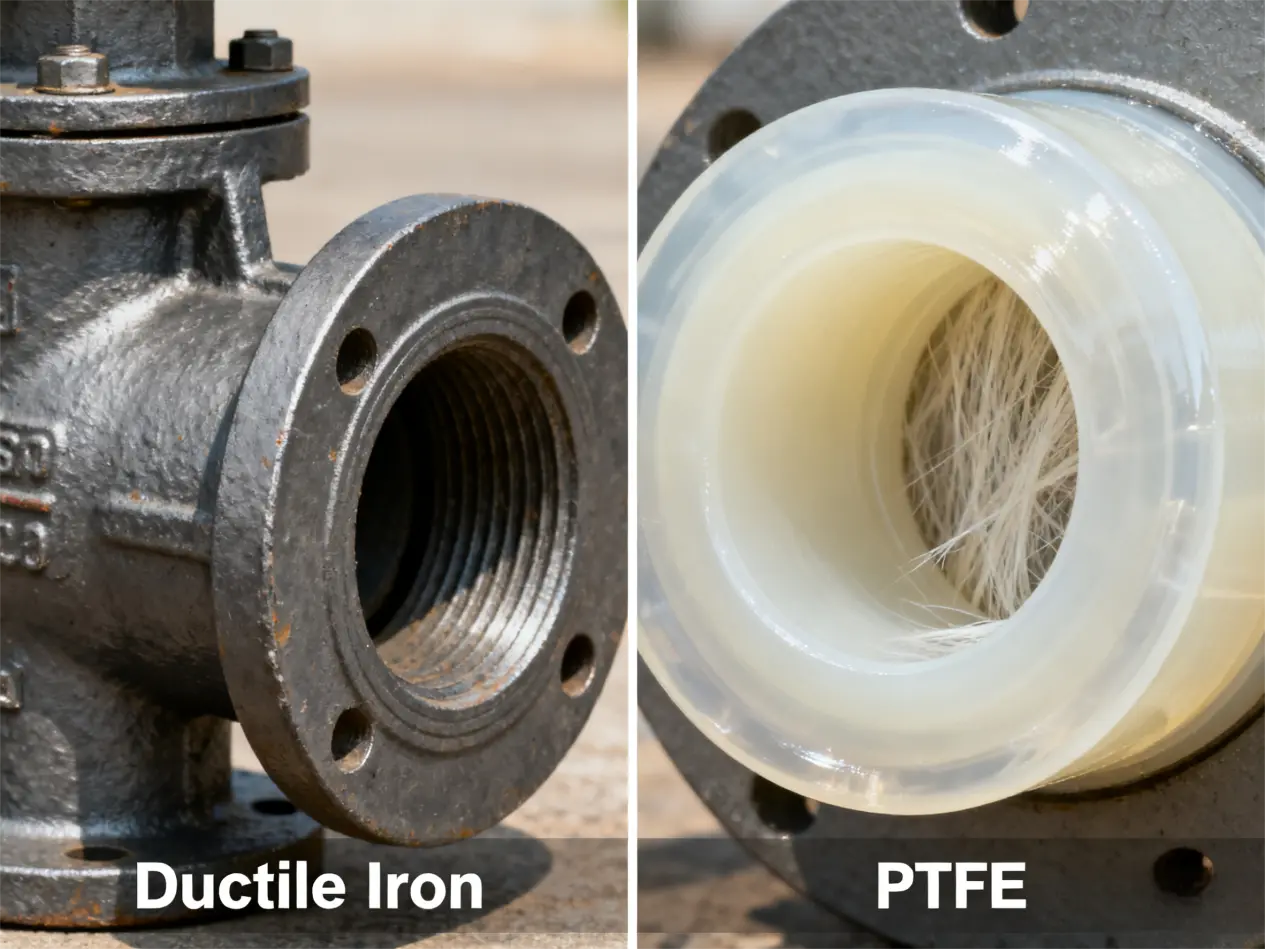
Ductile Iron in Industrial Valves
Ductile iron is an iron-carbon alloy treated to form nodular graphite. Compared with gray cast iron, it offers better toughness, impact resistance, and mechanical strength. It is widely used for valve bodies in water treatment, HVAC, municipal systems, fire protection, low-pressure utility service, and many general industrial pipelines.
Advantages of ductile iron
- Good mechanical strength for many medium- and low-pressure valve bodies.
- Cost-effective compared with many stainless steel or alloy materials.
- Suitable for large-size valves where body cost and weight matter.
- Common in butterfly valves, gate valves, check valves, and water-service valves.
Limitations of ductile iron
- Not the first choice for strong acid, strong alkali, or highly corrosive media without lining or coating.
- Temperature and pressure limits must follow the valve design and project standard.
- External coating and internal lining may be required in wastewater or corrosive environments.
PTFE in Industrial Valves
PTFE is a fluoropolymer known for chemical resistance, low friction, and non-stick behavior. In valves, PTFE is commonly used as a soft seat, gasket, packing component, or lining. It is especially useful when the medium can attack ordinary elastomers or when low operating torque is required.
Advantages of PTFE
- Excellent resistance to many acids, alkalis, and solvents.
- Low friction, which helps reduce operating torque in many valve designs.
- Useful for tight shutoff in ball valves, butterfly valves, plug valves, and lined valves.
- Good option for chemical processing when pressure and temperature remain within limits.
Limitations of PTFE
- Lower mechanical strength than metal body materials.
- Temperature and pressure limitations must be checked carefully.
- Can creep or deform under load if the valve design is not suitable.
- Not ideal for abrasive slurry without reviewing wear risk.
ductile iron vs PTFE Comparison Table
| Selection Factor | ductile iron | PTFE | Engineering Note |
|---|---|---|---|
| Main role | Valve body or pressure shell | Seat, seal, gasket, lining | They often work together, not against each other |
| Strength | High for many utility services | Low compared with metals | PTFE needs structural support |
| Chemical resistance | Limited without coating/lining | Excellent for many chemicals | Check concentration and temperature |
| Cost | Economical body material | Higher than basic elastomers | Use where chemical resistance matters |
| Typical use | Gate, butterfly, check, water valves | Seats, seals, linings in chemical valves | Application decides the combination |
| Risk | Corrosion if media is unsuitable | Creep, wear, or temperature limit | Review pressure, temperature, and media |
When to Choose ductile iron
Choose ductile iron when the service requires an economical and mechanically strong body material for water, HVAC, fire protection, municipal, wastewater, or general utility systems. It is often suitable when the medium is not highly corrosive or when the valve has an appropriate coating or lining.
Relevant product categories include butterfly valves, gate valves, and check valves.
When to Choose PTFE
Choose PTFE when the sealing or lining area must resist chemicals that could damage standard rubber or metal sealing surfaces. PTFE is common in soft-seated ball valves, lined butterfly valves, plug valves, and chemical-service valves. For corrosive media, PTFE may be more important to service life than the body material alone.
For related material decisions, review the valve material selection guide and valve trim materials guide.
Recommended Applications for Each Material
| Application | Recommended Material Logic | Reason |
|---|---|---|
| Municipal water | Ductile iron body with suitable coating | Good strength and cost control |
| Wastewater | Ductile iron with lining/coating, or corrosion-resistant design | Media quality can vary |
| Chemical transfer | PTFE seat/lining with compatible body | Chemical resistance is critical |
| HVAC chilled water | Ductile iron body with suitable seat | Common utility service |
| Acid/alkali service | PTFE lining or seat, verify body protection | Corrosion risk drives selection |
| Abrasive slurry | Review rubber lining, hard trim, or special design | PTFE may not solve abrasion alone |
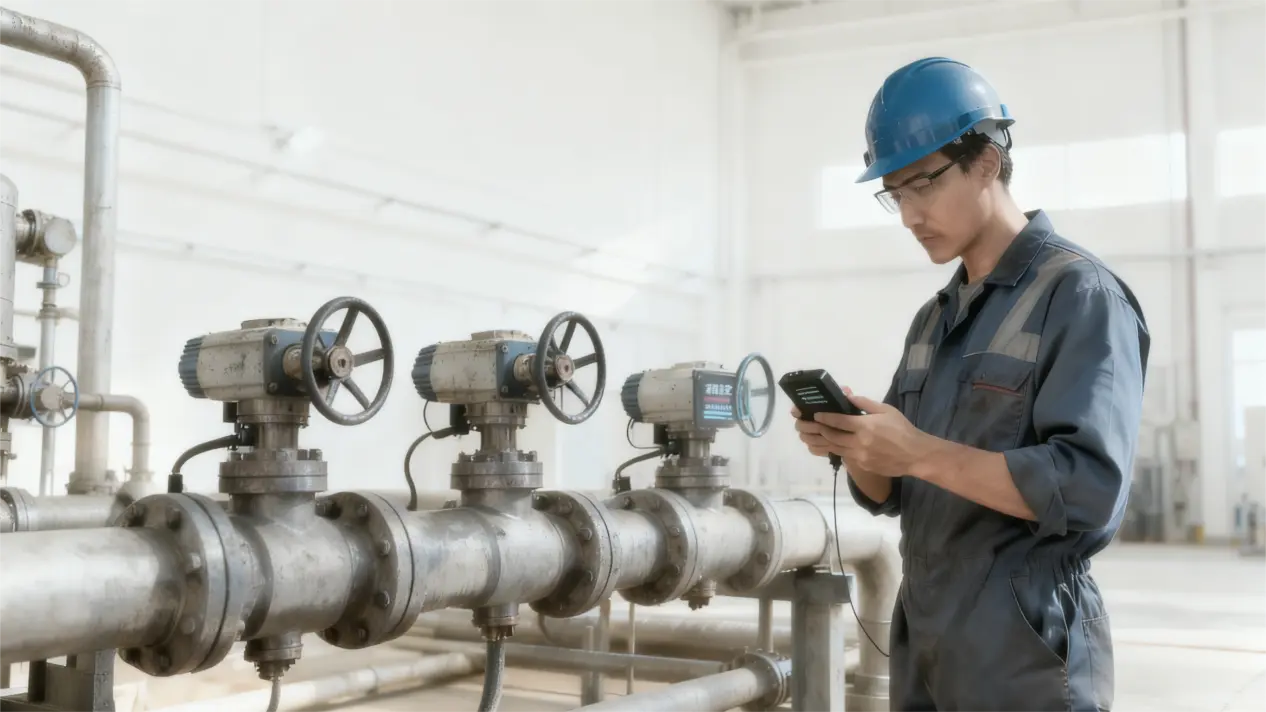
Common Selection Mistakes
- Choosing ductile iron for corrosive chemical service without lining or coating review.
- Assuming PTFE can replace a structural metal body material.
- Ignoring temperature and pressure limits of soft seats and linings.
- Selecting only by valve price instead of total service life and maintenance cost.
- Using decorative material claims without checking actual medium concentration.
For general standards research, the ISO standards catalogue can help buyers identify relevant material and valve standards before final project review.
Practical RFQ Review Checklist
Before requesting a quotation, buyers should define the pipeline duty in practical terms. Start with the medium name, concentration, pH range, operating temperature, design pressure, solids content, and cleaning method. Then confirm whether the valve will be installed indoors, outdoors, underground, near a coast, or inside a chemical processing area.
The next step is to define the valve function. Isolation service, throttling service, backflow prevention, emergency shutoff, and automated switching all place different demands on body strength, seat support, surface finish, actuator torque, and maintenance access. A material that is suitable for one valve type may be unsuitable in another structure.
Finally, review documentation requirements. Many industrial projects require drawings, material certificates, pressure test records, coating information, inspection reports, and spare-part lists. Providing this information early helps the supplier recommend a safer material combination and avoids repeated technical clarification during purchasing.
- Confirm the medium, concentration, temperature, pressure, and solids content.
- Define whether the valve is for isolation, control, backflow prevention, or automated switching.
- Check coating, lining, gasket, seat, and packing compatibility.
- Review installation space, maintenance access, and expected operation frequency.
- Request drawings, material certificates, pressure test reports, and spare-part recommendations when needed.
FAQ
Is ductile iron better than PTFE?
No. Ductile iron and PTFE serve different purposes. ductile iron is mainly a body material, while PTFE is mainly a seat, seal, gasket, or lining material.
Can ductile iron be used for chemical valves?
It can be used only when the medium is compatible or when the valve has suitable lining, coating, or protection. Strong corrosive media often require PTFE lining, stainless steel, or special alloys.
Why is PTFE used in valve seats?
PTFE offers chemical resistance, low friction, and tight sealing performance in many clean or corrosive services within its pressure and temperature limits.
What combination is recommended for corrosive water or chemical service?
The recommended combination depends on medium concentration, temperature, pressure, solids, and operation frequency. A lined body with PTFE seat or chemical-resistant trim may be required.
Final Recommendation
ductile iron vs PTFE should be evaluated by function. Use ductile iron when the valve needs economical strength and the medium is compatible. Use PTFE when chemical resistance and sealing performance are the main concerns. In many industrial valves, a recommended design combines a ductile iron body with PTFE seats, seals, or lining after pressure, temperature, and medium compatibility are confirmed.
RFQ Checklist for Ductile Iron vs PTFE Valve Selection
For a faster and more accurate quotation, share where the Ductile Iron vs PTFE decision appears in the valve: body, seat, liner, gasket, coating, or packing.
- Ductile Iron vs PTFE body and lining: confirm whether ductile iron is only the pressure-retaining shell or whether it is exposed to the process medium.
- Ductile Iron vs PTFE sealing parts: list PTFE seat, gasket, or packing requirements together with leakage class and operating temperature.
- Ductile Iron vs PTFE service conditions: provide fluid name, concentration, pressure, temperature, solids content, and operation frequency.
With these details, our engineering team can recommend a practical material package and prepare a valve quotation with fewer back-and-forth questions.