
Brass Valves vs Bronze Valves: Key Differences
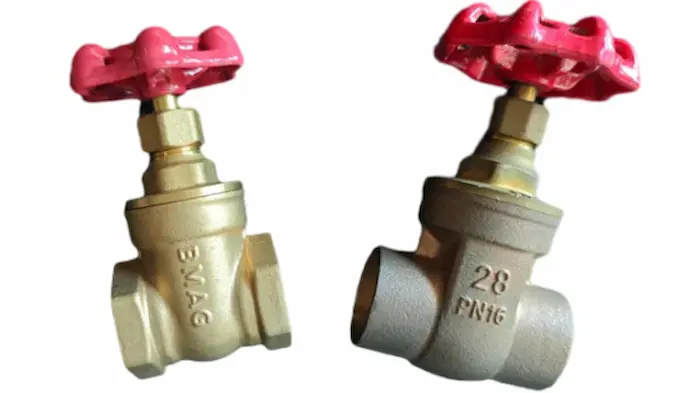
Compare brass and bronze valves by material composition, corrosion resistance, strength, cost, and typical applications. Brass valves are commonly selected for general water, air, and HVAC systems, while bronze valves offer better durability in seawater, marine, and more corrosive operating environments.
Understanding the Butterfly Valve Bolt Chart
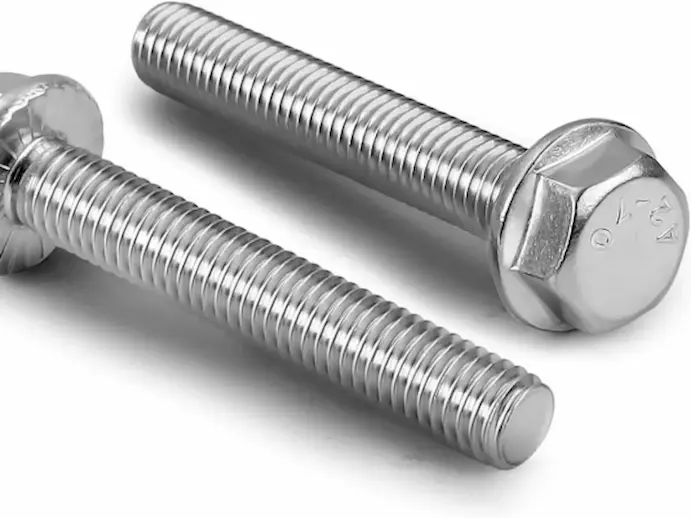
Learn how to read a butterfly valve bolt chart and select the correct bolt diameter, length, quantity, material, and tightening torque for different valve sizes and flange configurations. The guide explains how proper bolt selection, material compatibility, alignment, and controlled tightening help prevent flange leakage, gasket damage, valve-body distortion, and premature installation failure.
On/Off Valve vs Modulating Valve: Key Differences
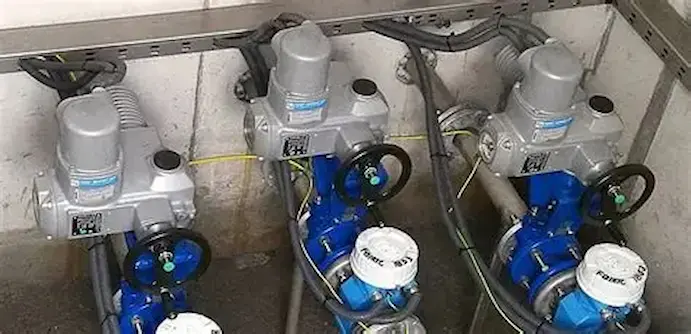
Compare on/off valves and modulating valves by control method, precision, actuator requirements, energy efficiency, cost, and application. On/off valves are suitable for simple fully open or fully closed isolation, while modulating valves provide continuous and precise flow regulation for HVAC, steam, chemical processing, temperature control, and automated process systems.
Tapping Valve vs Gate Valve: Key Differences and Applications
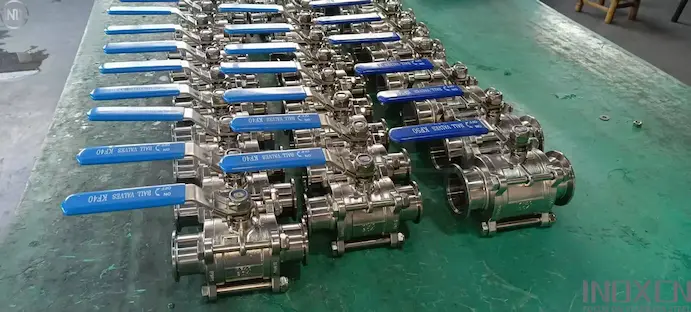
Compare tapping valves and gate valves by function, installation method, sealing requirements, maintenance, and application. Tapping valves are designed for adding branches or connection points to live pipelines without interrupting service, while gate valves are primarily used for full-flow isolation and shutoff in water, oil, gas, and industrial piping systems.
What Are Jacketed Valves? Applications and Benefits for Industrial Use
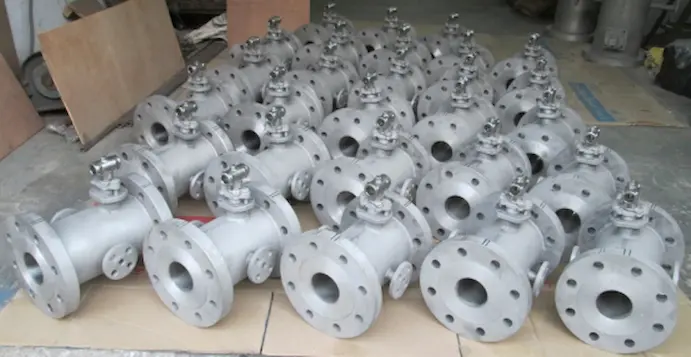
Learn how jacketed valves circulate steam, hot water, glycol, or another heat-transfer medium around the valve body to maintain process-fluid temperature and prevent solidification, crystallisation, and flow blockage. The guide explains their operating principle, key benefits, selection considerations, and applications in chemical processing, food production, pharmaceuticals, and other temperature-sensitive or high-viscosity services.
Long Pattern vs Short Pattern Ball Valve: Key Differences and Applications
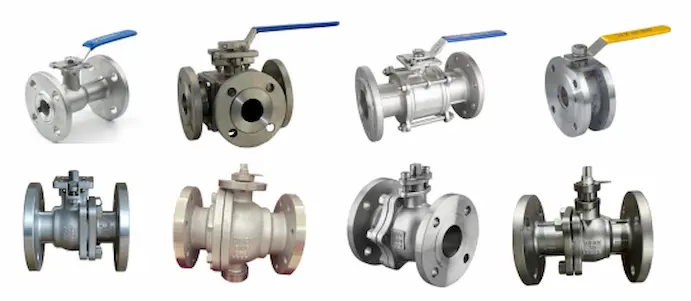
Compare long-pattern and short-pattern ball valves by face-to-face length, installation space, flow capacity, pressure suitability, cost, and application. Long-pattern valves offer a more robust body for demanding pipeline service, while short-pattern valves provide a compact, economical solution for space-limited water, HVAC, and general industrial systems.
Parallel Slide Gate Valves: A Complete Guide
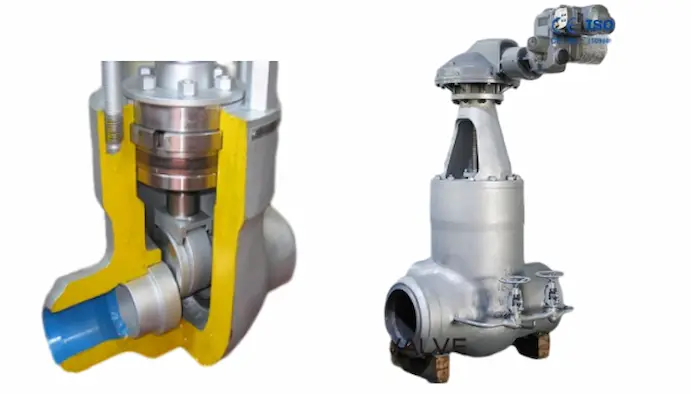
Learn how parallel slide gate valves use parallel discs, initial spring loading, and pipeline pressure to provide reliable isolation in high-pressure and high-temperature systems. The guide explains their working principle, low-flow-resistance design, resistance to thermal binding, key selection factors, and applications in steam, power generation, oil and gas, and industrial process pipelines.
Isolation Valves vs. Gate Valves: What Is the Difference?
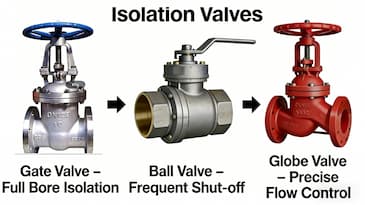
Compare isolation valves and gate valves by function, shut-off performance, flow resistance, operating frequency, maintenance, and application. Isolation valve is a broad category that includes gate, ball, butterfly, and globe valves, while gate valves are specifically designed for full-open or full-closed service with minimal pressure drop in large pipelines.
Ball Valves vs Gate Valves: Key Differences, Uses & Which to Choose
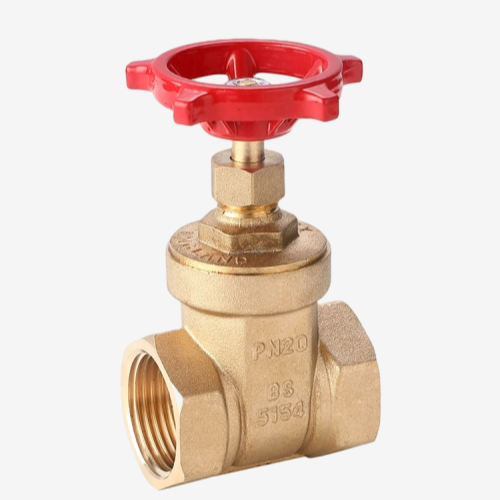
Quick Overview Ball valves and gate valves are two of the most widely used flow control valves in industrial, commercial, and residential settings. While both regulate fluid or gas flow, their designs, working mechanisms, and ideal applications differ drastically. A ball valve uses a rotating ball for quarter-turn operation, offering quick shut-offs and tight sealing, whereas a […]
Types of 3-Way Valves and Their Applications: A Complete Guide for Industrial Use
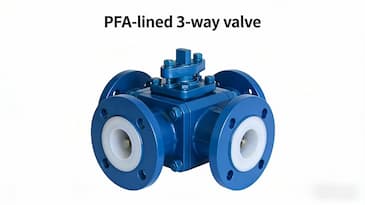
Quick Summary In this article, we will explore the different types of 3-way valves, their applications, and how they perform in various industrial environments. By understanding the key differences between these valves, you can make informed decisions about which is best suited for your operational needs. Whether you’re working in chemical processing, water treatment, or […]
High-Performance Industrial Valve Design and Manufacturing by Vcore Valve
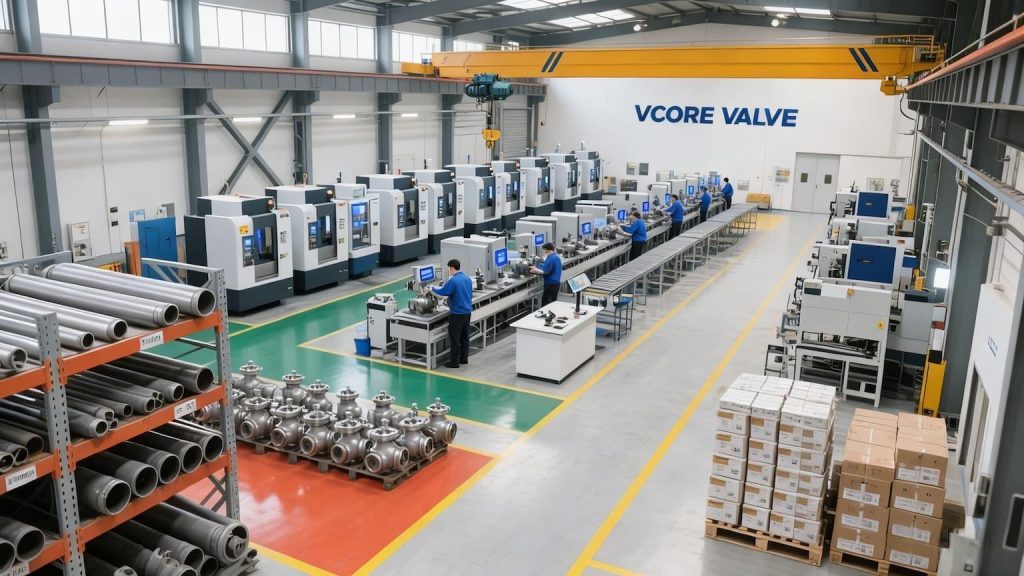
Learn how Vcore Valve supports industrial valve projects through custom valve design, material selection, manufacturing coordination, quality inspection, pressure testing, and application-based valve solutions. This page explains how high-performance ball valves, butterfly valves, gate valves, globe valves, check valves, control valves, and customized valve packages can be selected for oil and gas, chemical processing, water treatment, power generation, and demanding industrial pipeline systems.
What are the 3 types of butterfly valves?-wafer, lug, and double flange butterfly valves
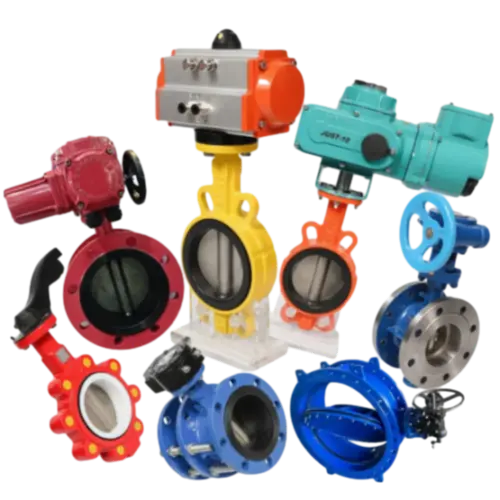
Quick Summary Butterfly valves are widely used for regulating flow in pipes. They come in three main types: wafer, lug, and double flange butterfly valves. Each type has unique features and applications depending on the system’s requirements. Understanding these differences will help you choose the right butterfly valve for your application. Imagine you’re designing a […]