Quick Overview
Resilient seated butterfly valves rely heavily on seat design for sealing performance, durability, and maintenance efficiency. This guide explains the three most common seat configurations—booted, molded, and cartridge seat butterfly valves—helping engineers and buyers select the optimal design for different industrial applications.
A Familiar Selection Dilemma
“All resilient seated butterfly valves look similar—until the seat fails.”
Seat design is often overlooked during valve selection, yet it directly determines leakage risk, service life, and replacement cost. Understanding seat construction is not optional—it is essential.
Common Pain Points When Choosing Butterfly Valve Seats
Confusing Terminology
Booted, molded, cartridge—many buyers are unclear about what actually changes inside the valve.
Unexpected Maintenance Costs
Some seat designs require full valve replacement instead of simple seat renewal.
Mismatch with Media or Pressure
An incorrect seat structure can fail prematurely under pressure, temperature, or chemical exposure.
Seat Design as the Real Solution
Seat Structure Defines Valve Performance
The resilient seated butterfly valve may share the same body and disc, but seat configuration changes everything.
Selection Must Match Application Reality
Not all pipelines need cartridge seats—but some absolutely do.
Engineering Over Marketing
A proper butterfly valve seat design decision saves far more than it costs.
Overview of Resilient Seated Butterfly Valve Seat Designs
Before comparing, it helps to define the three main designs:
-
Booted Seat Butterfly Valve
-
Molded Seat Butterfly Valve
-
Cartridge Seat Butterfly Valve
Each represents a different philosophy in sealing, assembly, and lifecycle management.
Booted Seat Butterfly Valve Design
Structural Characteristics
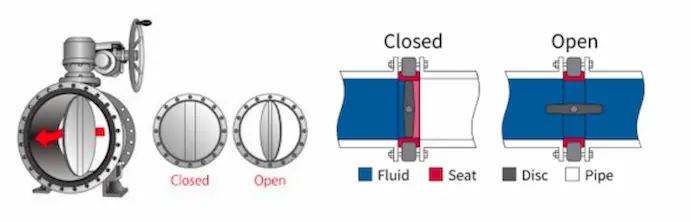
In a booted seat butterfly valve, the elastomer seat wraps around the valve body, covering the internal bore and flange sealing areas.
Advantages
-
Excellent bubble-tight sealing
-
Acts as both seat and flange gasket
-
Simple construction
Limitations
-
Booted or dovetail seats are generally removable, but they can be more sensitive to flange alignment, compression, and seat movement during installation.
-
Not ideal for frequent maintenance cycles
Booted designs are widely used in ductile iron butterfly valve applications for water systems.
Molded Seat Butterfly Valve Design
Structural Characteristics
The molded seat butterfly valve features an elastomer seat bonded or molded directly into the valve body.
Advantages
-
Strong seat retention
-
Good pressure resistance
-
Cost-effective manufacturing
Limitations
-
Seat is not replaceable
-
Entire valve may need replacement if seat fails
This design suits applications prioritising initial cost over long-term serviceability.
Cartridge Seat Butterfly Valve Design
Structural Characteristics
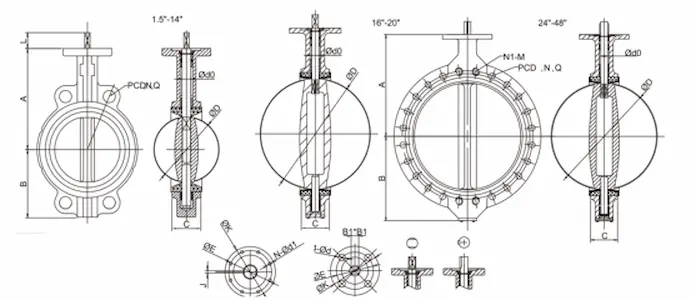
A cartridge seat butterfly valve uses a separate, removable seat ring, usually held in place by mechanical retention.
Advantages
-
Replaceable seat without replacing valve body
-
Ideal for aggressive or high-cycle applications
-
Reduced lifecycle cost
Limitations
-
Higher initial cost
-
Slightly more complex assembly
For industrial users, cartridge seats often provide the best long-term value.
Case Example: Choosing the Right Seat Design
Scenario 1: Municipal Water Network
-
Media: Clean water
-
Pressure: Low to medium
-
Priority: Cost control
Best choice: Booted or molded seat butterfly valve
Scenario 2: Industrial Process Line
-
Media: Treated fluids
-
Pressure: Medium
-
Priority: Maintenance efficiency
Best choice: Cartridge seat butterfly valve
These examples highlight why seat design selection must align with operating conditions.
Technical Comparison and Performance Analysis
| Feature | Booted Seat | Molded Seat | Cartridge Seat |
|---|---|---|---|
| Replaceable seat | No | No | Yes |
| Sealing performance | Excellent | Very good | Excellent |
| Maintenance cost | Medium | High | Low |
| Lifecycle value | Medium | Low | High |
| Industrial suitability | Medium | Medium | High |
From an engineering perspective, Cartridge seats can provide stable dimensions and convenient replacement, but lifecycle value depends on the operating conditions, maintenance strategy, replacement cost, and the complete valve design.
Seat terminology and construction vary among manufacturers. Buyers should review the valve cross-section, seat-retention method, replacement procedure, pressure rating, vacuum rating, and certified shutoff data for the specific model.
Manufacturing Perspective from Vcore Valve
As an experienced butterfly valve manufacturer, Vcore Valve designs all three seat configurations based on real application needs rather than one-size-fits-all solutions.
Our process focuses on:
-
Elastomer compatibility testing
-
Seat compression control
-
Disc-to-seat contact optimisation
-
Pressure and torque verification
This ensures every industrial butterfly valve delivers predictable performance.
Market Trends in Butterfly Valve Seat Design
Global demand is shifting toward:
-
Replaceable seat structures
-
Lower total cost of ownership
-
Longer maintenance intervals
As industries mature, butterfly valve seat selection guides are becoming essential procurement tools rather than optional references.
Practical Selection Recommendations
When choosing a resilient seated butterfly valve:
-
Choose booted seats for simple water services
-
Choose molded seats for cost-sensitive, low-risk systems
-
Choose cartridge seats for industrial, chemical, or high-cycle use
Seat design should always be specified—not assumed.
Conclusion
Understanding the differences between booted, molded, and cartridge seat butterfly valves empowers engineers to make better decisions that reduce downtime and long-term cost. At Vcore Valve, we support customers with transparent technical guidance and application-driven valve design.
👉 Contact Vcore Valve for expert assistance in selecting the right resilient seated butterfly valve for your system.
FAQs
What is a resilient seated butterfly valve?
It is a butterfly valve using an elastomer seat to achieve tight sealing.
Which seat design is easiest to maintain?
Cartridge seat butterfly valves offer the easiest seat replacement.
Are booted seats suitable for industrial use?
They can be, but are more common in water and HVAC systems.
Can molded seats be replaced?
No, molded seats are not designed for replacement.
Does seat design affect torque?
Yes, seat structure directly impacts operating torque.
How do I choose the right seat material?
Selection depends on media, temperature, and pressure conditions.
Reference
-
Valve World – Butterfly Valve Technology
-
ISO 5752 – Valve Face-to-Face Dimensions
-
Engineering Toolbox – Valve Seat Materials
-
AWWA Standards for Butterfly Valves
-
Industrial Flow Control Design Manuals