Quick Summary
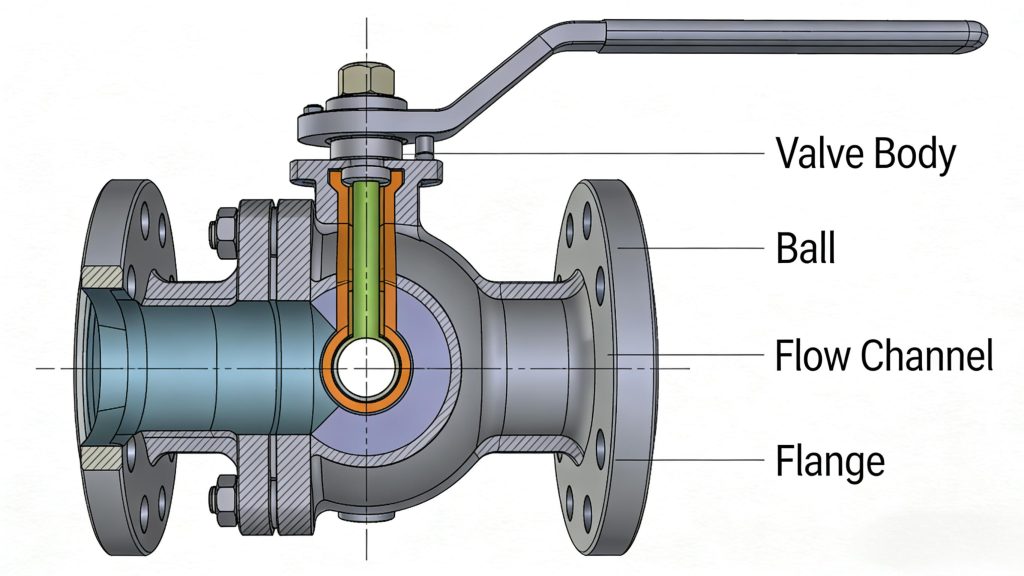
The Full Port Ball Valve (or full-bore ball valve) is an industrial essential engineered for unobstructed flow, minimal pressure loss, and dependable shut-off. With a bore matching pipeline diameters, it excels in oil & gas, chemical, water, and power systems, adhering to global standards like API 6D and ISO 17292 for long-lasting performance.
Opening Scene
Imagine a chemical plant operator staring at a pressure gauge spiking unexpectedly. Their reduced port valve is choking flow, causing turbulence that’s wearing down pipes and delaying production. “If only we had a valve that didn’t fight the fluid,” they mutter. Enter the Full Port Ball Valve—the unsung hero of smooth, efficient pipeline operations.
User Pain Points
Restricted Flow & High Pressure Drop
Reduced the port valve bottleneck flow, forcing systems to work harder. This wastes energy, increases operational costs, and risks equipment damage from excess pressure. For long-distance pipelines or high-flow processes, even a small restriction can lead to significant inefficiencies.
Erosion, Turbulence & Maintenance Headaches
Turbulent flow from mismatched bore sizes erodes valve seats and pipe interiors over time. Frequent leaks and wear mean costly downtime for repairs, especially in harsh media like chemicals or steam. Maintenance teams are stretched thin, troubleshooting avoidable issues.
Incompatibility with Pipeline Pigging
Many industrial pipelines require pigging (cleaning/inspection with a “pig” device) to maintain efficiency. Reduced port valves block pig passage, forcing costly bypass installations or halting operations entirely—an expensive and time-consuming hassle.
Solutions
Opt for a Full Port Design to Eliminate Flow Restrictions
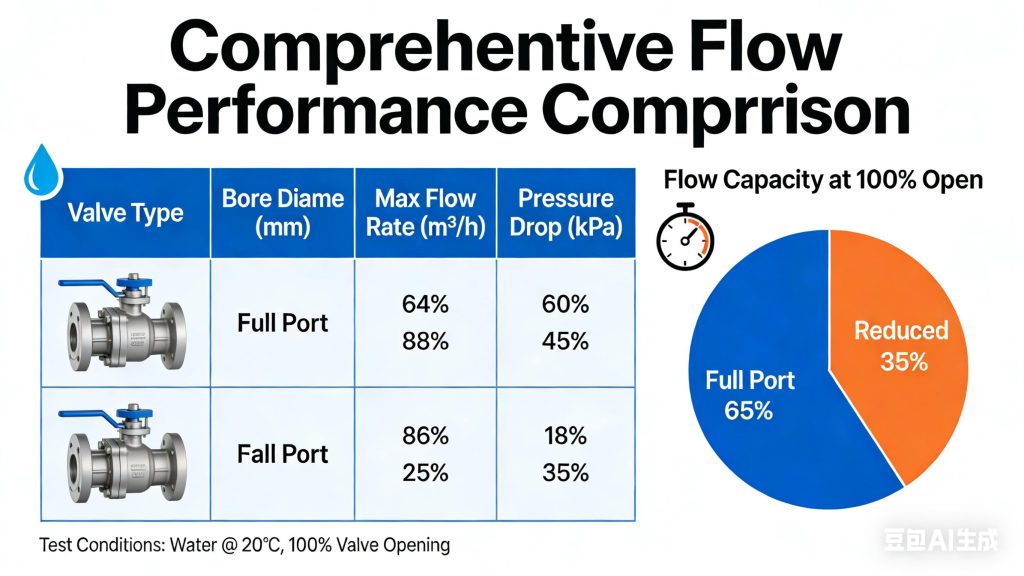
The Full Port Ball Valve’s bore matches the pipeline’s internal diameter, creating a straight-through flow path. When fully open, there’s zero obstruction, cutting pressure loss by up to 70% compared to reduced port alternatives. This translates to lower energy bills and smoother system performance.
Choose Durable Materials Tailored to Your Media
Select body materials (carbon steel, stainless steel, alloy steel) and seats (PTFE, PEEK, metal-to-metal) based on your application. For high-temperature steam, metal-seated valves resist wear; for corrosive chemicals, PTFE seats ensure bubble-tight sealing. This targeted approach reduces maintenance and extends valve lifespan.
Embrace Automation for Safety & Efficiency
Full Port Ball Valves support pneumatic or electric actuators, enabling remote operation. This is game-changing for hard-to-reach or high-pressure systems, minimizing human intervention and reducing safety risks. Automated valves also integrate seamlessly with smart pipeline management systems.
Case Study
A European oil company operating a 300km pipeline was struggling with frequent downtime due to reduced port valve failures. Turbulence caused erosion, leading to leaks and costly repairs. They switched to Vcore Valve’s Full Port Ball Valves (DN300, Class 600, carbon steel body, metal seats). Post-installation, pressure loss dropped by 65%, pigging became seamless, and maintenance costs fell by 40% in the first year. The valves have operated reliably for 5+ years, proving their worth in critical infrastructure.
Data & Comparative Analysis
| Feature | Full Port Ball Valve | Reduced Port Ball Valve |
| Bore Diameter | Matches pipeline ID | 60-80% of pipeline ID |
| Pressure Loss | Low (≤5 psi at full flow) | High (15-25 psi at full flow) |
| Turbulence | Minimal | Significant |
| Pigging Compatibility | Yes | No |
| Maintenance Frequency | Low (5-7 years between overhauls) | High (1-2 years) |
| Flow Efficiency | 95-100% | 60-75% |
| Data based on ISO 17292 testing and industry field data (2023) |
Trends & Market Insights
The global Full Port Ball Valve market is projected to grow at 5.2% CAGR (2023-2028), driven by rising demand for energy-efficient pipeline systems. Key trends include:
Increased adoption of fire-safe designs (API 607/6FA compliant) for oil & gas facilities.
Growth in smart valves with IoT integration for real-time monitoring.
Rising preference for stainless steel and alloy steel bodies in corrosive environments.
Expansion in water transmission projects, as municipalities prioritize leak-free infrastructure.
Usage & Installation Tips
Installation Best Practices
Align flanged connections carefully to avoid stress on the valve body.
For threaded models, use Teflon tape to ensure a tight seal without over-tightening.
Install in an accessible location for maintenance—leave 30cm of clearance around the valve.
Operational Dos & Don’ts
Do: Use manual levers for small valves (≤2”) and gear/actuators for larger sizes.
Don’t: Use for throttling—Full Port Ball Valvesare designed for on/off isolation.
Do: Conduct regular torque checks to ensure smooth operation.
Don’t: Expose soft-seat valves to temperatures exceeding 200°C (opt for PEEK/metal seats instead).
Conclusion & Call to Action
The Full Port Ball Valve isn’t just a valve—it’s a long-term investment in efficiency, reliability, and safety. Whether you’re upgrading an oil pipeline, optimizing a chemical process, or maintaining a water supply system, its unobstructed flow, durable design, and global compliance make it the smart choice.
Ready to eliminate flow restrictions and cut maintenance costs? Explore Vcore Valve’s range of Full Port Ball Valves (DN15-DN600, Class 150-600) or contact our engineering team for a customized quote. Don’t let outdated valves hold your system back—upgrade to the gold standard today!
FAQ
1. What is a Full Port Ball Valve, and how does it differ from a reduced port valve?
A Full Port Ball Valve has a bore diameter matching the pipeline’s internal diameter, enabling unobstructed flow, low pressure loss, and pigging compatibility. Reduced port valves have smaller bores, causing restrictions and turbulence.
2. Can Full Port Ball Valves be used in high-temperature applications?
Yes—metal-seated or PEEK-seated models handle temperatures up to 450°C, making them suitable for steam, hot oil, and high-temperature chemical processes.
3. Are Full Port Ball Valves compatible with pipeline pigging?
Absolutely—their full-bore design allows pigs to pass through unimpeded, eliminating the need for bypass systems during cleaning or inspection.
4. What standards do Full Port Ball Valves comply with?
Top-quality valves adhere to API 6D (pipeline valves), API 608 (ball valves), and ISO 17292 (industrial valves), ensuring interchangeability and reliability.
5. How often do Full Port Ball Valves require maintenance?
With durable materials and precision engineering, they typically need minimal maintenance—5-7 years between overhauls for most applications.
6. Can Full Port Ball Valves be automated?
Yes—they support pneumatic, electric, or hydraulic actuators, ideal for remote or high-pressure systems.
7. Are fire-safe options available?
Yes—fire-safe Full Port Ball Valves compliant with API 607/6FA maintain sealing integrity during fires, preventing media leakage.
Reference
API Standards. (2023). API 6D, API 608, API 607/6FA. American Petroleum Institute.
(2022). ISO 17292: Industrial Valves—Specification for Steel Ball Valves. International Organization for Standardization.
Vcore Valve. (2023). Full Port Ball Valve Technical Datasheet. https://www.onoffvalve.com/products/full-port-ball-valve/
Industry Research Report. (2023). Global Full Port Ball Valve Market Trends 2023-2028. Market Research Future.