Quick Overview
When it comes to filtration in industrial systems, Y strainers and basket strainers are two of the most common types of filters used to remove debris and particulate matter. Both serve similar functions, but each has distinct advantages depending on the application. This article compares the two, providing you with insights into which filter is best suited for your needs.
Opening Scenario
Imagine an industrial pipeline handling a mixture of liquids and solids. Over time, debris can accumulate and disrupt the flow, causing wear on downstream equipment. To ensure smooth operation, it’s crucial to install a strainer to filter out these particles. But should you opt for a Y strainer or a basket strainer? Each has its unique features, and understanding their differences will help you make the right decision.
Pain Points
Choosing between Y strainers and basket strainers can be challenging, especially if you’re unfamiliar with the key differences and the specific needs of your system. Here are the common pain points faced by operators:
1. Limited Space in Piping Systems
In tight or space-constrained piping systems, the shape and size of the strainer play a critical role in ensuring proper installation. Many systems are limited by available space, making the choice of filter even more important.
2. Maintenance and Cleaning Challenges
Both Y strainers and basket strainers require maintenance and periodic cleaning to maintain efficient performance. Depending on the application, cleaning can be time-consuming and require frequent downtime.
3. Performance and Filtration Efficiency
Choosing a filter that does not provide optimal filtration efficiency can lead to increased wear and tear on downstream equipment. This can result in operational disruptions and higher costs over time.
Solutions
To tackle these challenges, it’s important to understand the differences between Y strainers and basket strainers and how each is suited for particular applications.
1. Y Strainers: Compact and Efficient
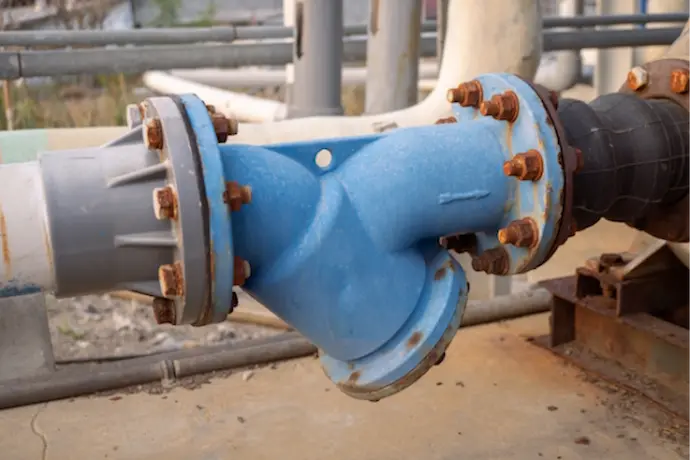
Y strainers are designed in a “Y” shape, making them compact and easy to fit into tight spaces. Their design allows for efficient filtration with minimal maintenance. Y strainers are ideal for applications where space is limited and regular cleaning is needed.
At Vcore Valve, we offer a wide range of Y strainers designed for compact installation in pipeline systems. Our Y strainers provide reliable performance with easy access for maintenance and cleaning.
2. Basket Strainers: High Capacity Filtration
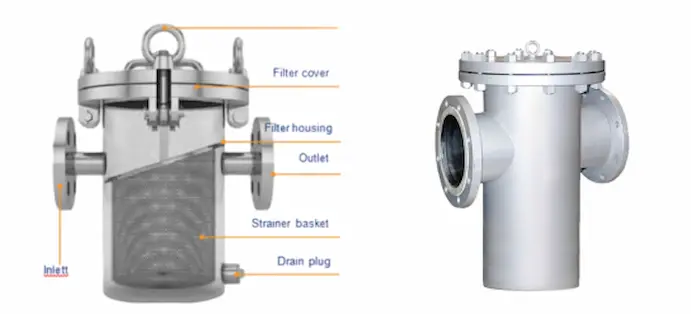
Basket strainers are larger and provide higher filtration capacity compared to Y strainers. They are best suited for applications where large volumes of liquids need to be filtered. The larger filtration area of a basket strainer allows it to filter out larger quantities of debris before requiring maintenance.
Vcore Valve offers basket strainers with different capacities to suit various industrial applications, from chemical processing to water treatment. Our basket strainers provide efficient filtration with easy-to-remove baskets for cleaning.
3. Choosing the Right Strainer for Your Application
When deciding between a Y strainer and a basket strainer, it’s important to consider your system’s needs:
-
For systems with limited space, Y strainers are ideal due to their compact design.
-
For larger systems with higher flow rates or significant debris, basket strainers are the preferred choice due to their larger filtration area.
At Vcore Valve, we provide both Y strainers and basket strainers, each tailored to meet the needs of your system and ensure efficient, reliable operation.
Case Study
A large chemical plant was experiencing frequent clogging in their pipelines due to debris accumulation, leading to system inefficiencies and increased downtime. By switching to basket strainers, the plant was able to improve filtration efficiency, significantly reducing the frequency of maintenance and ensuring continuous operation. The basket strainers captured larger volumes of debris, reducing the overall wear on downstream equipment.
Data Analysis
| Strainer Type | Filtration Capacity | Advantages | Best Use Case |
|---|---|---|---|
| Y Strainer | Low to Medium | Compact design, easy to clean, space-efficient | Smaller pipelines, space-constrained applications |
| Basket Strainer | High | Larger filtration area, high capacity | Large pipelines, high flow systems |
This table compares the key features of Y strainers and basket strainers, helping you decide which is better suited for your needs based on flow rate and system size.
Trends
1. Automation in Strainer Monitoring
With the rise of automation in industrial systems, more operators are turning to smart strainers equipped with sensors that provide real-time data on the filter’s condition. These sensors can detect when the filter is becoming clogged, allowing for proactive maintenance and reducing downtime.
2. Materials and Coatings for Enhanced Durability
The materials used in strainers are evolving to enhance their durability in harsh environments. Stainless steel and duplex alloys are becoming more common in both Y strainers and basket strainers to improve their resistance to corrosion and wear, especially in chemical processing and wastewater treatment.
3. Increase in Demand for High-Efficiency Filtration
As industries move toward more efficient and sustainable practices, there is a growing demand for high-efficiency strainers that can filter out smaller particles and reduce system downtime. Innovations in filter media are helping improve the filtration capacity of both Y strainers and basket strainers.
Usage Advice
When choosing between a Y strainer and a basket strainer, consider the following:
1. Evaluate System Size and Space
If your system has limited space for installation, opt for a Y strainer due to its compact design. However, if your system handles large volumes of fluid with significant debris, a basket strainer would be a better choice.
2. Consider Maintenance Needs
While Y strainers require more frequent cleaning, basket strainers can handle larger debris loads and require less frequent maintenance. Choose based on your system’s maintenance schedule and the amount of debris in the flow.
3. Consult with a Valve Specialist
Consulting with a valve specialist like Vcore Valve can help you determine the best strainer type for your application. Our team can assist you in selecting the right strainer and valve solutions for optimal performance.
Conclusion
Choosing the right strainer for your industrial system is crucial to maintaining operational efficiency and reducing downtime. Y strainers are compact and efficient, making them ideal for smaller pipelines or systems with limited space, while basket strainers provide high-capacity filtration for larger systems with heavy debris. Both types have their place in industrial filtration, and at Vcore Valve, we offer both options to suit a wide range of applications.
By selecting the appropriate strainer and ensuring proper maintenance, you can significantly extend the life of your system and reduce operational costs.
FAQs
1. What is the difference between a Y strainer and a basket strainer?
Y strainers are compact and best suited for systems with limited space, while basket strainers offer larger filtration capacity and are better for high-flow systems with larger debris.
2. How do I know which strainer to choose?
Consider factors like the size of your system, flow rate, and the amount of debris in the fluid. Y strainers are better for smaller systems, while basket strainers are ideal for larger systems.
3. Can Y strainers be used in high-flow systems?
Y strainers can be used in high-flow systems, but they are typically more effective in smaller applications with limited debris. For larger systems, basket strainers are recommended.
4. How often do strainers need to be cleaned?
The cleaning frequency depends on the type of strainer and the amount of debris in the system. Y strainers generally require more frequent cleaning than basket strainers.
5. Are there any maintenance tips for strainers?
Regular inspection and cleaning are essential for optimal performance. Check the strainer regularly for clogging and ensure that it is properly sealed to prevent leaks.
Reference
-
Valve Selection for Industrial Filtration – Valve World Magazine
-
High-Efficiency Filtration in Pipelines – Industrial Flow Control Journal
-
Choosing the Right Strainer for Your System – Process Engineering Solutions