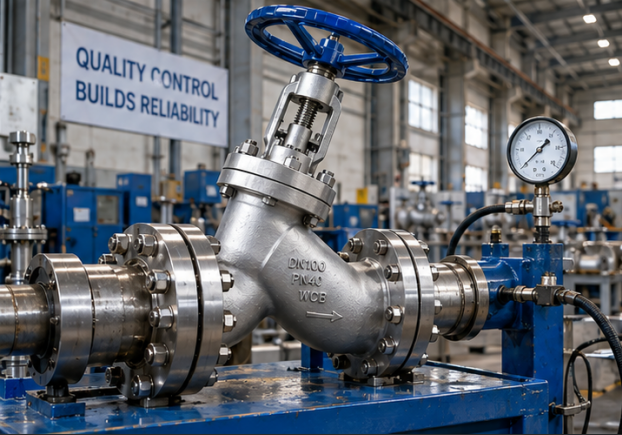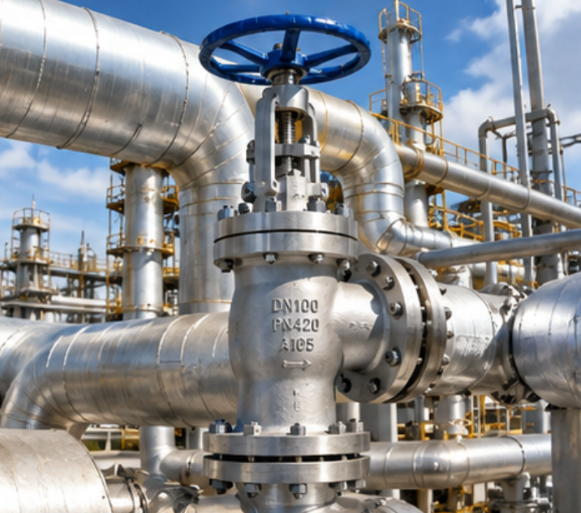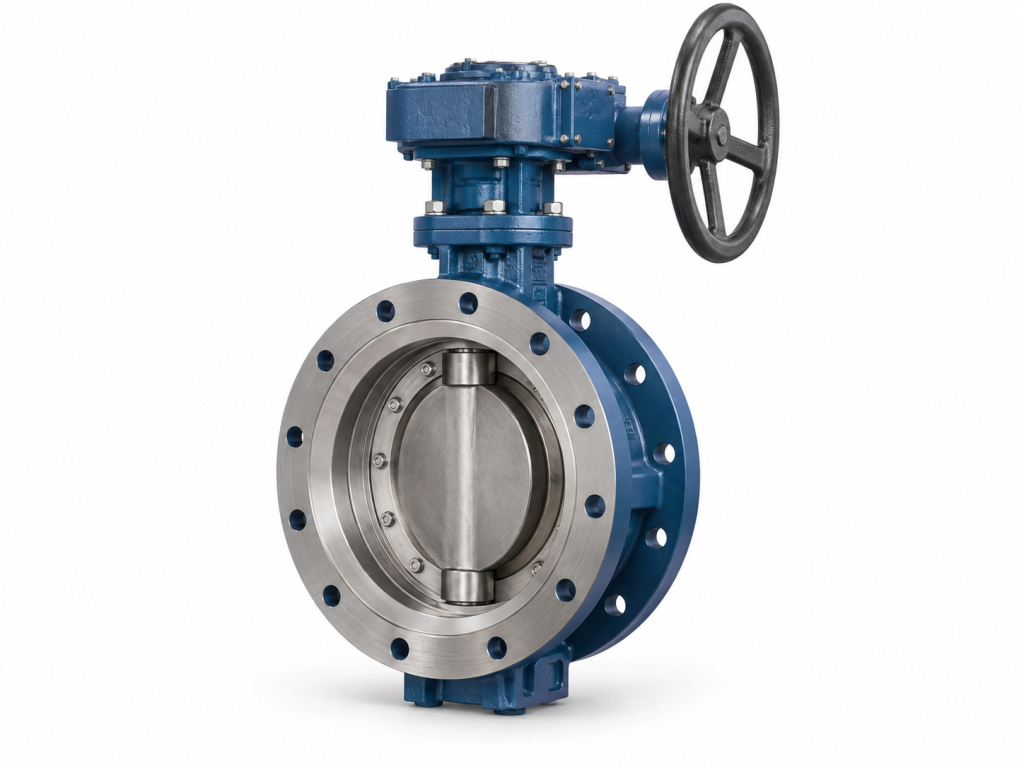
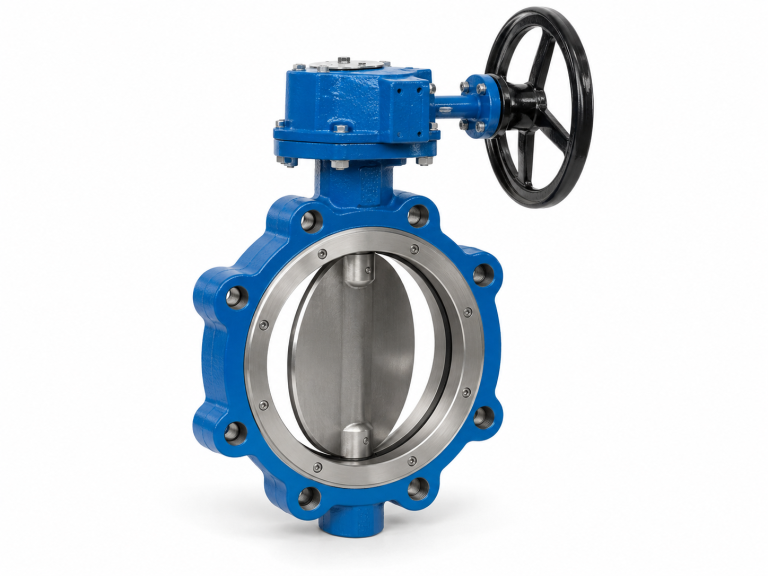
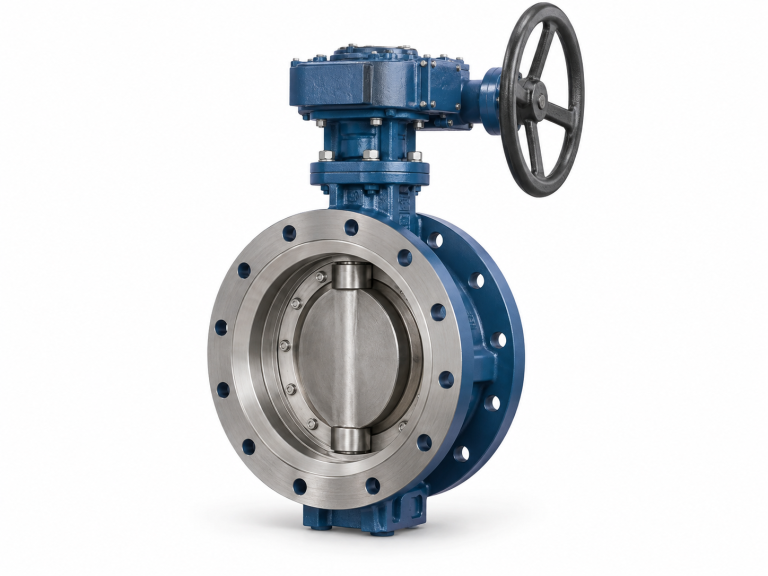
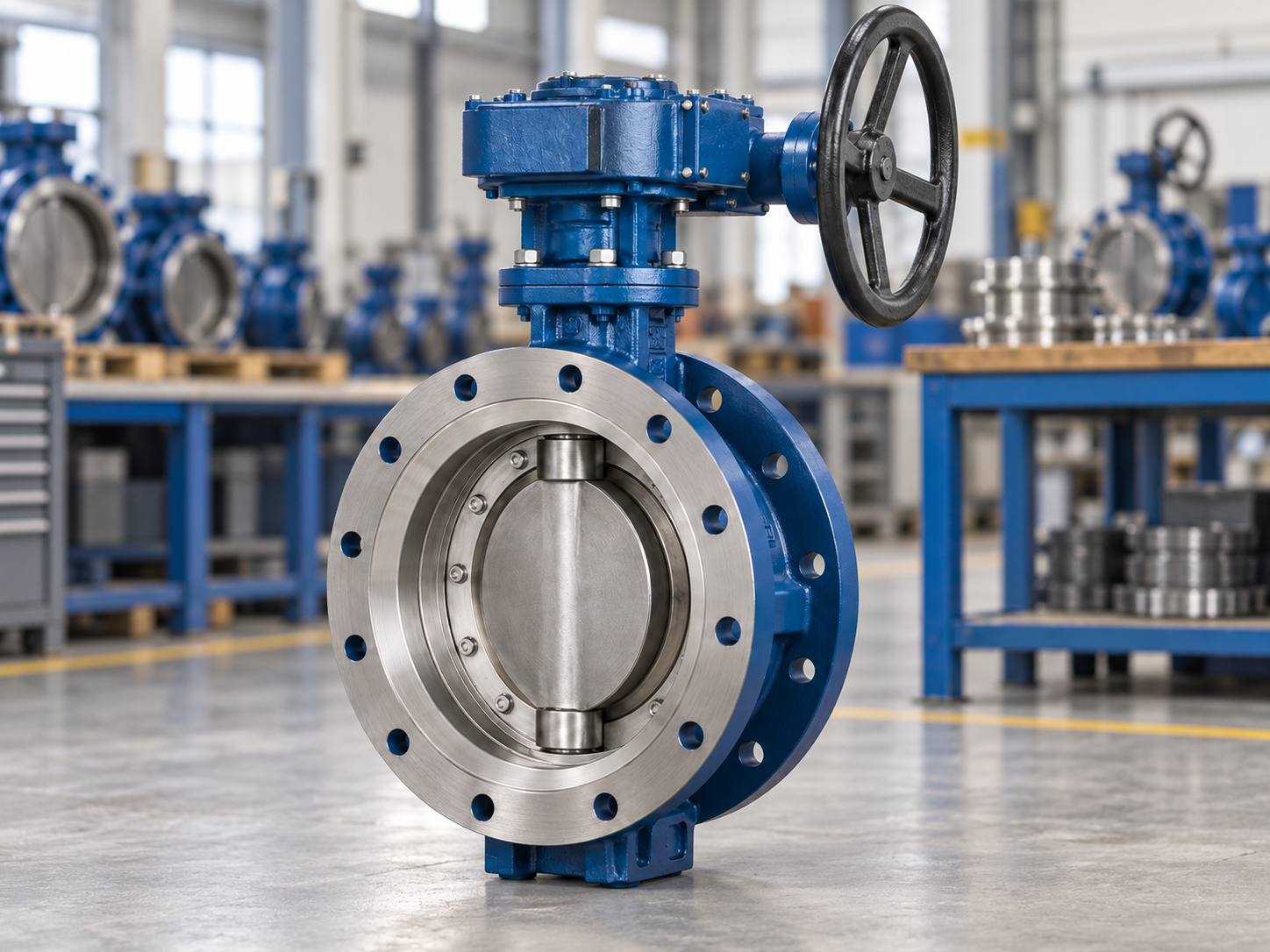
Triple offset butterfly valve for demanding isolation service where reduced seat rubbing, metal sealing and compact installation are important.
Triple Offset Butterfly Valve for Critical Industrial Isolation
A triple offset butterfly valve, also called a triple eccentric butterfly valve, is designed for severe isolation duties where compact valve construction must be combined with durable metal sealing. Unlike a concentric butterfly valve, the shaft and sealing geometry are deliberately offset so the disc seal moves away from the body seat during most of its travel.
This non-rubbing operating principle helps limit friction between the seat and seal ring. Final sealing is created as the disc reaches the closed position and closing torque loads the metal sealing pair. The design is therefore commonly considered for steam, hydrocarbon, oil and gas, refining, chemical processing, power generation and other demanding services where a soft seat may not be suitable.
Vcore Valve supplies triple offset butterfly valve configurations according to actual service conditions. Final valve size, pressure class, body style, materials, seat design, flange standard, actuator, leakage requirement, fire-safe qualification and fugitive-emission requirement should be confirmed before production rather than assumed from a generic product page.
Why Triple Offset Geometry Matters
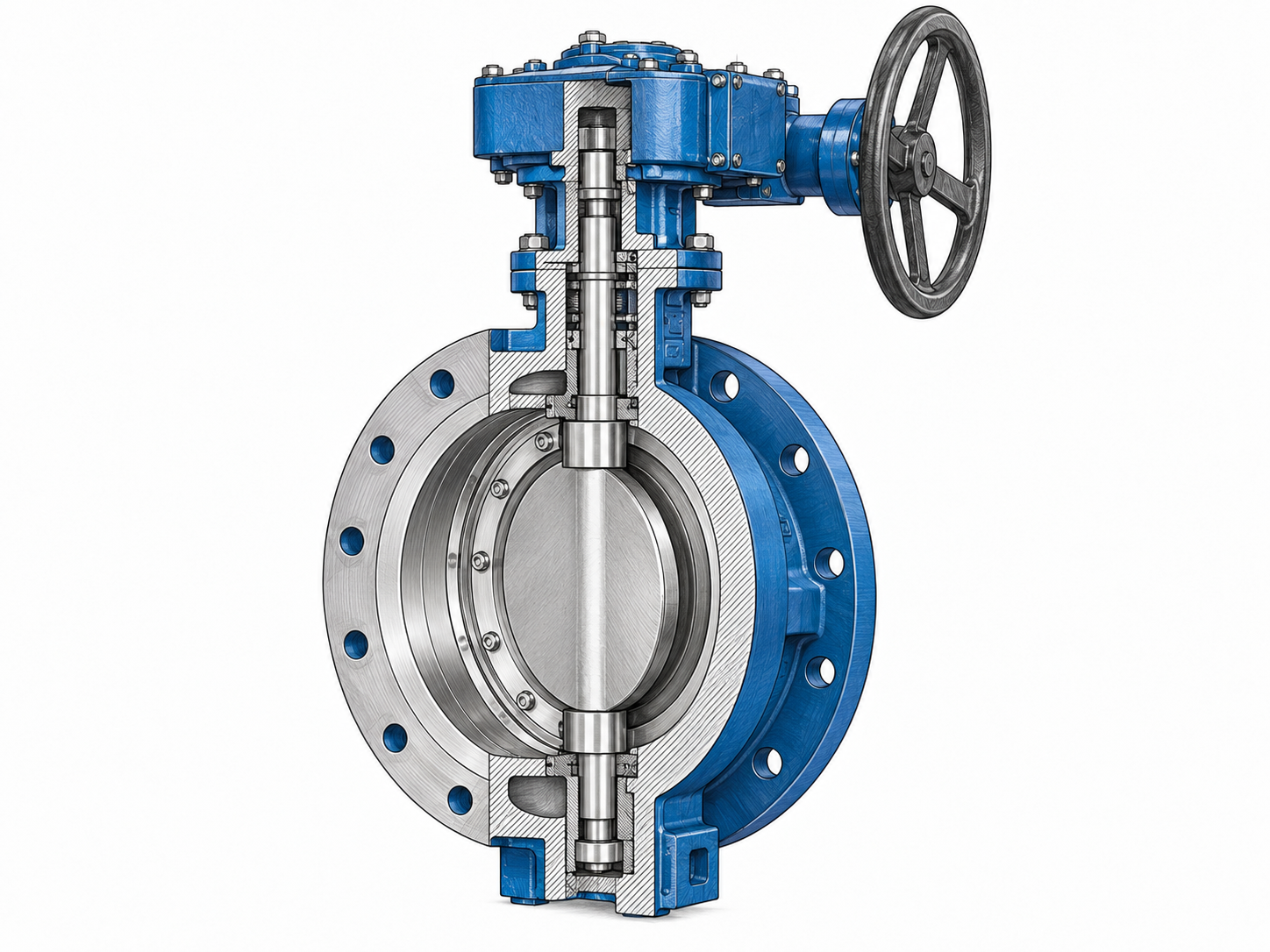
The three offsets are used to control how the disc seal approaches and leaves the body seat. The first two offsets move the shaft away from the center of the flow passage and away from the seat plane. The third offset is created by the angular geometry of the sealing cone.
Together, these offsets allow the sealing surfaces to separate rapidly as the valve opens and to make final contact only near the closed position. This differs from many resilient-seated butterfly valves, where the disc remains in contact with the seat through a larger portion of its travel.
Non-Rubbing Sealing Motion
Triple-offset geometry reduces continuous sliding contact between the sealing surfaces, helping limit seat wear during repeated operation.
Metal-Seated Isolation
Metal sealing configurations can be selected for elevated-temperature, critical isolation and other services where elastomeric seats may be unsuitable.
Quarter-Turn Operation
The 90-degree operating principle supports compact actuation and can reduce installation space compared with many linear-motion isolation valves.
Multiple Body Styles
Lug, wafer, double-flanged or other project-specific body arrangements can be reviewed according to line class, size and installation requirements.
Manual or Automated Operation
Gearbox, pneumatic, electric or hydraulic actuation can be selected according to required torque, cycle frequency, fail position and control philosophy.
Project-Specific Materials
Carbon steel, stainless steel and selected alloy materials can be reviewed according to corrosion, temperature, pressure and process media.
Technical Specifications
| Item | Vcore Configuration |
|---|---|
| Product Type | Triple Offset Butterfly Valve / Triple Eccentric Butterfly Valve |
| Valve Function | Quarter-turn isolation; throttling suitability to be confirmed for the selected design and service |
| Body Style | Wafer, lug, double flanged or project-specific configuration |
| Nominal Size | Project-specific; confirm DN / NPS with RFQ |
| Pressure Rating | PN or ASME Class according to approved valve design and project datasheet |
| Body Material | Carbon steel, stainless steel or project-specified alloy |
| Disc Material | Carbon steel, stainless steel or project-specified alloy / overlay |
| Shaft / Stem Material | Stainless steel or project-specified high-strength / corrosion-resistant alloy |
| Seat / Seal System | Metal-seated sealing system; laminated or solid seal configuration subject to selected design |
| Operation | Gear operated, pneumatic, electric or hydraulic actuator |
| Design Standard | API 609 and/or applicable project standard, subject to selected valve design |
| Pressure-Temperature Design | ASME B16.34 or applicable project standard where specified |
| Face-to-Face | API 609, ASME B16.10, EN 558 / ISO 5752 or approved project drawing as applicable |
| Flange Standard | ASME B16.5, ASME B16.47, EN 1092-1 or project-specified drilling as applicable |
| Testing | API 598, ISO 5208, EN 12266-1 or project-specified test standard as applicable |
| Fire-Safe Requirement | API 607 / ISO 10497 qualification to be confirmed when required by the purchase specification |
| Fugitive Emission Requirement | API 641 / ISO 15848 qualification or production testing to be confirmed when specified |
| Operating Temperature | Project-specific; confirm minimum / maximum operating and design temperature |
| Typical Media | Steam, hydrocarbons, oil, gas, compatible chemical fluids, utility fluids and project-specific process media |
How a Triple Offset Butterfly Valve Works
The valve disc rotates approximately 90 degrees between open and closed positions. During opening, the eccentric shaft and sealing-cone geometry cause the disc seal to lift away from the body seat quickly rather than scrape across it.
As the valve approaches the closed position, the seal ring and body seat come into controlled contact. Closing torque produces the seating force required by the selected metal-seated design. This torque-seated principle is one reason triple offset valves are often used for demanding shutoff service.
Correct actuator selection is important because the actuator or gearbox must provide the required seating torque in addition to overcoming bearing, packing and process loads.
Triple offset geometry is designed to separate the sealing surfaces during most of the disc travel and create controlled contact near final closure.
Body Style and End Connection Options
| Body Style | Typical Use | Buyer Check |
|---|---|---|
| Wafer | Compact installation between mating pipeline flanges. | Confirm flange standard, through-bolt arrangement, face-to-face dimension and installation clearance. |
| Lug | Compact flanged installation with body lugs around the valve perimeter. | Confirm lug drilling, bolting arrangement, pressure direction and whether dead-end service is required. |
| Double Flanged | Rigid pipeline installation, commonly considered for larger sizes or critical process lines. | Confirm flange drilling, face-to-face standard, pipe loads and support arrangement. |
| Special / Welded Configuration | Selected projects requiring a specific connection arrangement. | Final design must be reviewed against the piping class, welding requirement and approved drawing. |
Material and Seal Selection
Material selection must consider the complete pressure boundary and sealing system rather than the body material alone. Carbon steel may be suitable for many refinery, steam and general industrial duties, while stainless steel or special alloys may be required for corrosion, low-temperature or aggressive chemical service.
The disc, shaft, seat and seal ring should be reviewed together because the sealing pair is exposed to repeated mechanical loading and may also experience thermal cycling, corrosion and erosion. For additional background on internal material selection, see the Butterfly Valve Disc Material Selection Guide and Valve Trim Materials Selection Guide.
Actuation Options
| Operation | Typical Application | Selection Requirement |
|---|---|---|
| Gear Operated | Manual isolation where controlled seating torque is required. | Confirm operating torque, handwheel orientation and installation accessibility. |
| Pneumatic Actuator | Automated isolation, ESD or frequent operation. | Confirm air pressure, fail action, cycle time, accessories, control signal and required torque margin. |
| Electric Actuator | Remote operation where electric power and position control are preferred. | Confirm power supply, control signal, enclosure/IP requirement, opening time and seating torque. |
| Hydraulic Actuator | High-torque or specialized critical-service operation. | Confirm hydraulic pressure, fail-safe requirement, closing time and system interface. |
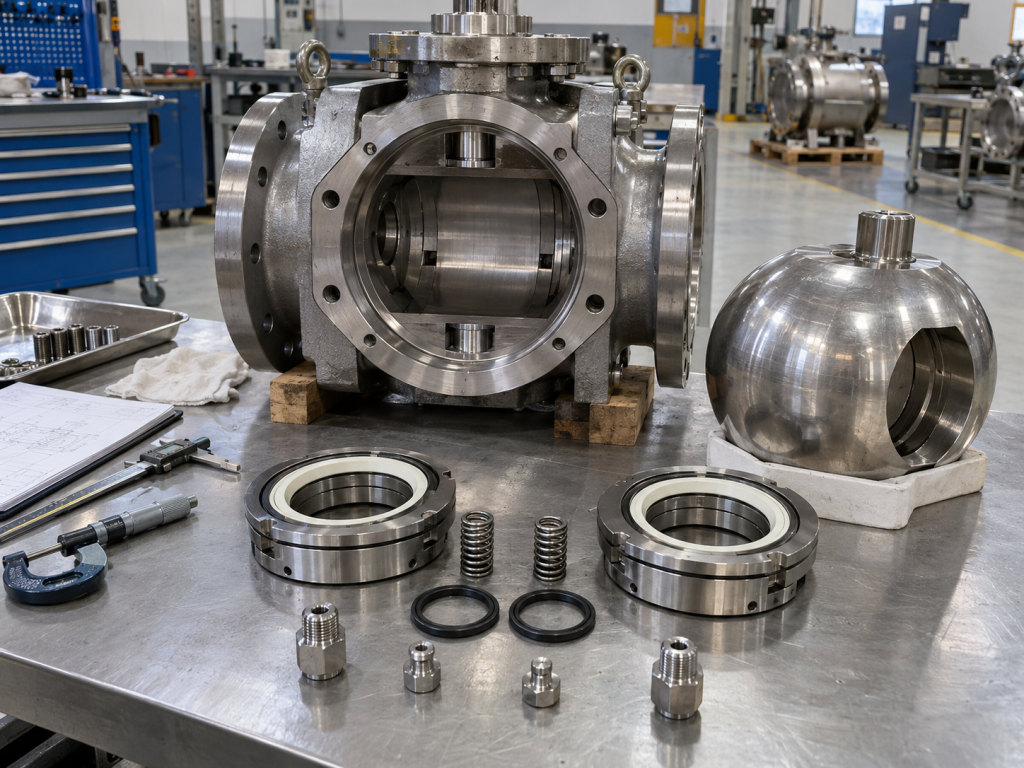
Inspection should verify the pressure boundary, disc and shaft alignment, sealing components, actuator interface and approved dimensions.
Typical Industrial Applications
Triple offset butterfly valves are generally selected where the service demands more than a conventional resilient-seated butterfly valve can provide.
- Oil & Gas: process isolation, hydrocarbon transfer and selected upstream or downstream services.
- Refining: hot hydrocarbon, utility and process isolation duties subject to project specification.
- Power Generation: steam-related systems, high-temperature utilities and plant isolation applications.
- Chemical Processing: compatible chemical media requiring metal-seated isolation and suitable corrosion-resistant materials.
- Steam Distribution: applications where temperature capability and durable sealing are important.
- Bulk Liquid Storage: tank farm and transfer-line isolation where compact quarter-turn operation is preferred.
- Low-Temperature / Cryogenic Projects: only with a valve configuration specifically engineered and qualified for the required minimum temperature.
Triple Offset vs. Double Offset vs. Concentric Butterfly Valve
| Design | Sealing Behavior | Typical Selection Direction |
|---|---|---|
| Concentric Butterfly Valve | Disc and seat remain in contact through a significant portion of travel. | Water, HVAC, utilities and general low-to-moderate temperature service where a compatible resilient seat is suitable. |
| Double Offset Butterfly Valve | Offset shaft geometry reduces seat rubbing compared with concentric designs. | Higher-performance isolation where reduced wear and improved pressure-temperature capability are required. |
| Triple Offset Butterfly Valve | Additional sealing-cone offset creates a non-rubbing metal-seat closing geometry. | Steam, hydrocarbon, power, refining and other demanding services requiring metal-seated critical isolation. |
For the complete Vcore product family, see our Industrial Butterfly Valve range.
Fire-Safe and Fugitive-Emission Requirements
Fire-safe and fugitive-emission requirements should be treated as separate qualification items. If the project requires API 607 or ISO 10497 fire-safe qualification, the purchaser should verify that the supplied design falls within the applicable qualification scope.
For volatile or hazardous-fluid service, API 641 or ISO 15848 may also be specified for quarter-turn valve fugitive emissions. These requirements should be confirmed during technical bid review rather than assumed from a packing material description. See our Valve Fugitive Emission Testing Guide for the difference between seat leakage, shell testing and fugitive-emission qualification.
Manufacturing, Inspection and Documentation
A triple offset butterfly valve requires accurate machining and assembly because shaft alignment, disc position, seat geometry and seal-ring condition directly influence sealing performance and operating torque. Inspection should therefore verify the selected design against the approved datasheet and drawing.
- Material verification and MTR review according to purchase requirements.
- Dimensional inspection of body, flange, face-to-face and actuator mounting interface.
- Disc, shaft, bearing and sealing component inspection.
- Assembly and full travel verification.
- Actuator / gearbox functional inspection when supplied as an assembled package.
- Shell and seat pressure testing according to the approved test standard.
- Fire-safe or fugitive-emission qualification document review when specified.
- Final marking, flange protection, documentation review and export packing.
For project inspection planning, see the Valve Factory Acceptance Test (FAT) Guide.
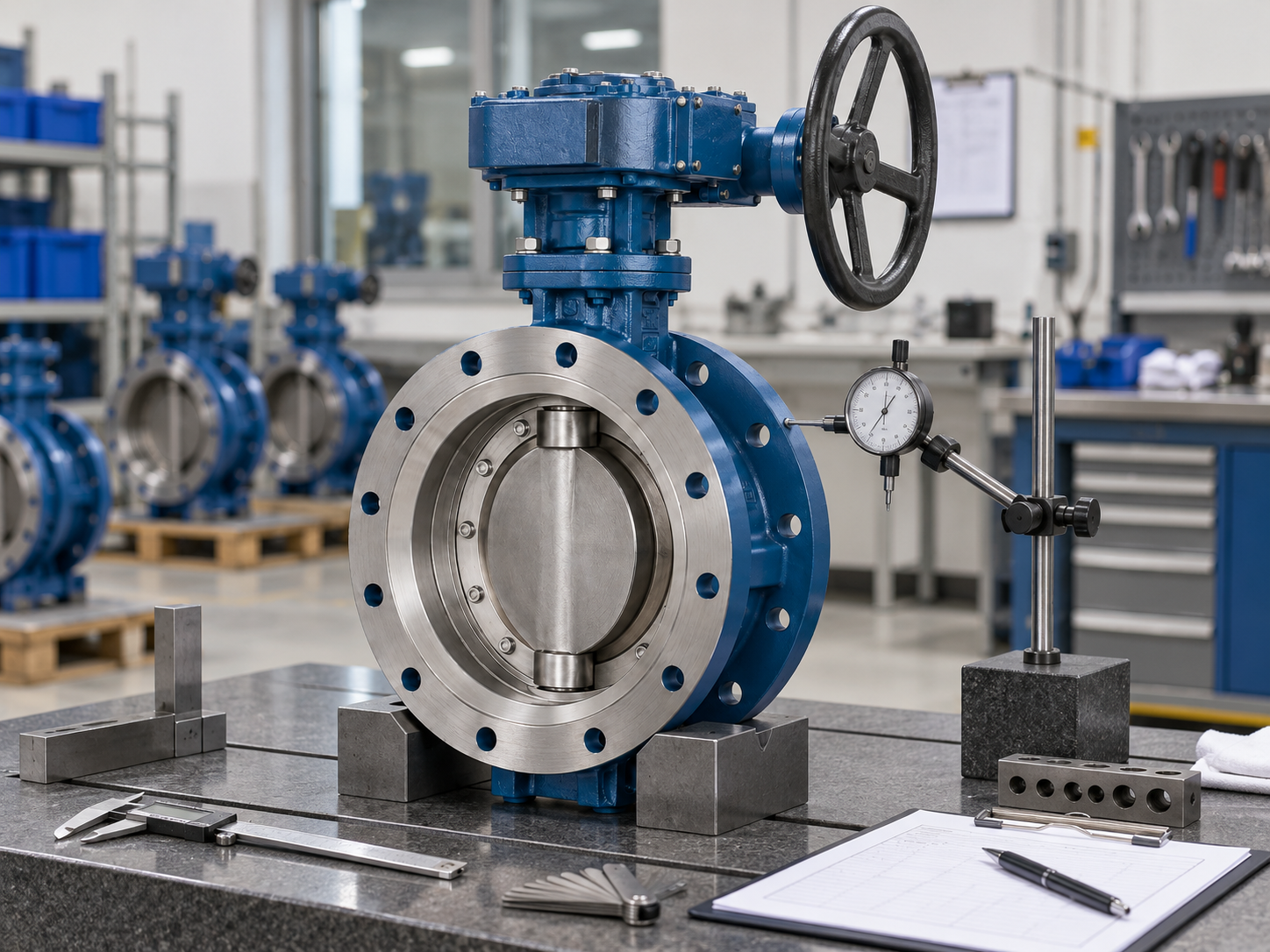
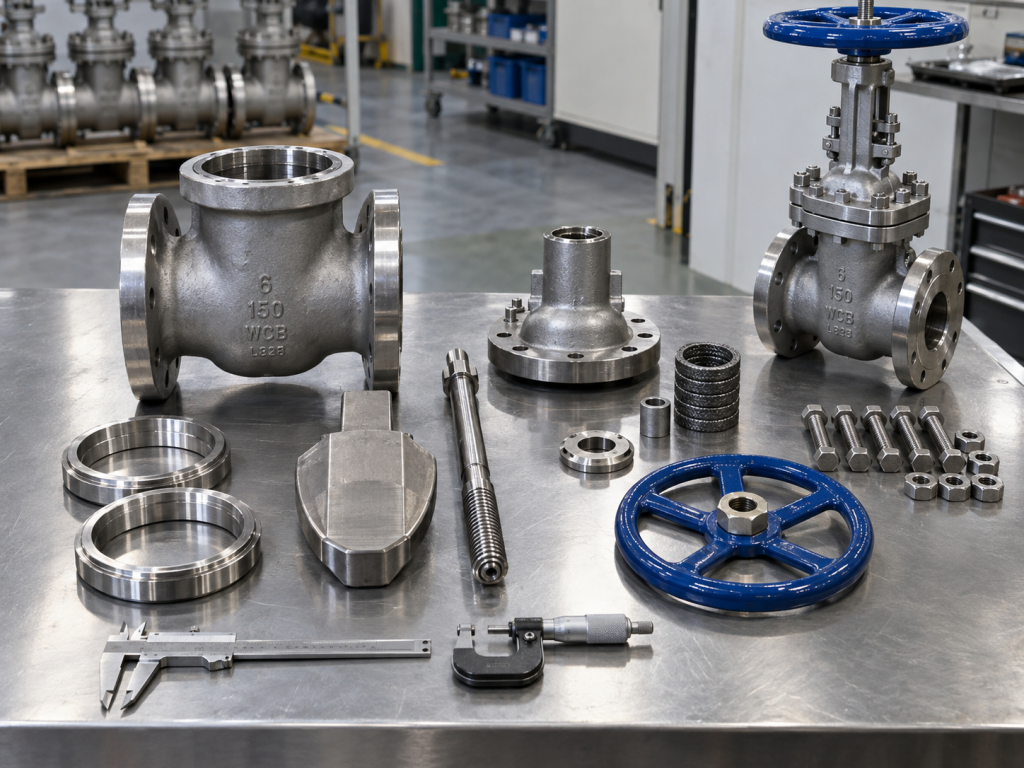
Final inspection and protected packing help preserve flange faces, sealing components and actuator alignment during storage and transport.
Why Choose Vcore Valve
- Project-based configuration instead of relying on one generic pressure, temperature or material range.
- Carbon steel, stainless steel and selected alloy options according to service requirements.
- Wafer, lug, double-flanged and project-specific body arrangements where applicable.
- Manual gearbox, pneumatic, electric and hydraulic actuation options.
- Support for datasheet review, GA drawing confirmation, inspection planning and technical documentation.
- Factory inspection and export packing for international industrial valve projects.
Information Required for Quotation
- Valve size: DN / NPS.
- Pressure class: PN or ASME Class.
- Working medium: steam, hydrocarbon, gas, oil, chemical fluid or other medium.
- Operating and design temperature: minimum and maximum values.
- Body style: wafer, lug, double flanged or other required connection.
- Flange standard: ASME, EN or project piping-class requirement.
- Body, disc and shaft materials: including corrosion or low-temperature requirement.
- Seat / seal requirement: laminated metal seal, solid seal or project-defined arrangement.
- Shutoff requirement: specify applicable leakage standard and acceptance level.
- Operation: gearbox, pneumatic, electric or hydraulic actuator.
- Fail position and control accessories: if automated.
- Fire-safe / fugitive-emission requirement: specify standard and qualification scope if required.
- Quantity and documentation: datasheet, GA drawing, MTR, ITP, test report, certificate and packing requirements.
Triple Offset Butterfly Valve FAQ
What is a triple offset butterfly valve?
It is a quarter-turn butterfly valve that uses three geometric offsets to reduce rubbing between the seat and seal ring. The third offset creates a conical sealing geometry that allows controlled metal-to-metal contact near final closure.
Why use a triple offset valve instead of a soft-seated butterfly valve?
Triple offset valves are generally selected for more demanding temperature, pressure or critical-isolation duties where a compatible soft seat may not be suitable. Final selection must still consider the actual pressure class, temperature, medium and leakage requirement.
Can a triple offset butterfly valve be bidirectional?
Bidirectional shutoff is available on some triple offset designs, but it should not be assumed for every valve. The required pressure direction and shutoff performance must be confirmed on the selected datasheet and approved drawing.
Which connection types are available?
Depending on valve design and project requirements, triple offset butterfly valves may be supplied in wafer, lug or double-flanged configurations. Special connection arrangements should be reviewed against the piping class and approved drawing.
Can triple offset butterfly valves be used for steam?
They are commonly considered for steam and other elevated-temperature services, but the final body material, seal system, pressure rating, packing and actuator must be selected for the actual design pressure and temperature.
Can Vcore supply pneumatic or electric triple offset butterfly valves?
Yes. Pneumatic, electric and hydraulic actuator packages can be reviewed according to valve torque, power or air supply, fail position, control signal, cycle time and project automation requirements.
What information is needed before quotation?
Provide valve size, pressure class, medium, operating and design temperature, body style, flange standard, materials, shutoff requirement, actuator type, quantity and any fire-safe, fugitive-emission, inspection or documentation requirements.
Need a Triple Offset Butterfly Valve for Your Project?
Send Vcore Valve your size, pressure class, medium, temperature, connection, materials, shutoff requirement, actuator, quantity and applicable project specification. We can review the duty and prepare a project-specific valve configuration for quotation.