Fugitive emissions are unintended releases of process fluid to the atmosphere through valve stem or shaft seals, packing systems, bonnet joints, body joints and other potential external leakage paths.
For oil and gas, refining, petrochemical, chemical and other services involving volatile or hazardous fluids, these emissions can affect environmental compliance, worker exposure, product loss and plant maintenance.
However, phrases such as “low-emission valve,” “ISO 15848 valve,” or “API 624 packing” are often used too loosely in valve quotations.
A technically complete requirement should identify the actual valve design, applicable fugitive-emission standard, qualification scope, test temperature, cycle requirement, sealing system, production acceptance requirement and documentation expected by the purchaser.
What Is Valve Fugitive Emission Testing?
Valve fugitive emission testing is used to evaluate external leakage from defined valve sealing locations under specified test conditions. The focus is different from shell pressure testing or seat leakage testing.
Depending on the applicable standard, the examination may focus on:
- Rising stem packing systems.
- Rising-rotating stem packing systems.
- Quarter-turn valve shaft or stem seals.
- Bonnet or body joints included within the standard scope.
- Leakage performance during mechanical cycling.
- Leakage performance during temperature cycling.
- Valve or packing qualification for a defined range of service conditions.
Fugitive emission testing does not prove that a valve will never leak in service. It demonstrates performance under the qualification or production test conditions defined by the applicable standard.
Fugitive Emissions vs Seat Leakage vs Shell Leakage
| Leakage Type | What It Evaluates | Typical Concern |
|---|---|---|
| Fugitive emission leakage | External leakage around stem, shaft, packing or specified body joints | Atmospheric emissions and external containment |
| Seat or closure leakage | Leakage through the closed valve seat or closure member | Shutoff performance between upstream and downstream |
| Shell leakage | Pressure-containing integrity of the valve body and pressure boundary | External pressure-boundary integrity |
A valve can pass its seat test and still have stem packing leakage. Likewise, passing a fugitive-emission qualification does not replace the required shell and seat pressure tests.
For the difference between shell and seat tests, see our Valve Pressure Test Methods guide.
Why Fugitive Emissions Commonly Occur Around Valve Stems
The stem or shaft area is one of the most demanding external sealing locations because it must contain process pressure while allowing movement.
- Packing material and construction.
- Stem or shaft surface finish.
- Stem straightness and alignment.
- Packing chamber dimensions.
- Gland loading.
- Mechanical and thermal cycling.
- Pressure cycling.
- Corrosion or contamination.
- Incorrect packing installation.
- Wear of stem, shaft or sealing components.
- Improper maintenance or excessive adjustment.
A low-emission packing material alone cannot compensate for a poor stem surface, incorrect packing chamber, unsuitable gland design or uncontrolled assembly.
ISO 15848-1: Valve Type Testing and Classification
ISO 15848-1 applies to fugitive-emission type testing of industrial isolating valves and control valves intended for service with volatile air pollutants or hazardous fluids within its defined scope.
The standard evaluates external leakage from the stem or shaft sealing system and specified body joints and provides a classification and qualification framework for valve type testing.
Important variables can include valve design, stem or shaft sealing arrangement, test fluid, temperature condition, mechanical endurance cycles, leakage performance and qualification range.
ISO 15848-1 should not be reduced to the statement “ISO 15848 certified.” Buyers should review the actual classification and qualification scope shown on the test report or certificate for the selected valve design.
Why Qualification Scope Matters
A fugitive-emission type test is performed on defined test valves and configurations. The resulting qualification is not automatically evidence that every valve of every size, pressure class, material, temperature range and packing design has been individually tested.
When reviewing qualification evidence, buyers should confirm that the supplied valve falls within the applicable qualified range according to the governing standard and project specification.
ISO 15848-2: Production Acceptance Testing
ISO 15848-2 addresses production acceptance testing for standard production valves where fugitive-emission requirements are specified.
- ISO 15848-1: Type testing and qualification framework.
- ISO 15848-2: Production acceptance testing.
A project may require type qualification evidence, production acceptance testing, or both, depending on the purchaser specification.
ISO 15848-2:2015 remains the published edition as of 2026, although ISO has started development of a future replacement edition. The contractually applicable edition should therefore be stated in the purchase documentation.
API 622: Packing Qualification Is Not Valve Qualification
API 622 addresses type testing of process valve packing for fugitive emissions. This is fundamentally different from testing a complete valve.
Packing performance can be an important part of a low-emission valve design, but a packing qualification alone does not prove that the assembled valve satisfies API 624, API 641 or ISO 15848 requirements.
The installed result is affected by the complete sealing system, including packing material, packing arrangement, stem condition, packing chamber geometry, gland arrangement, assembly procedure, valve movement and service temperature.
Therefore, “API 622 packing” and “API 624 valve” should never be treated as identical claims.
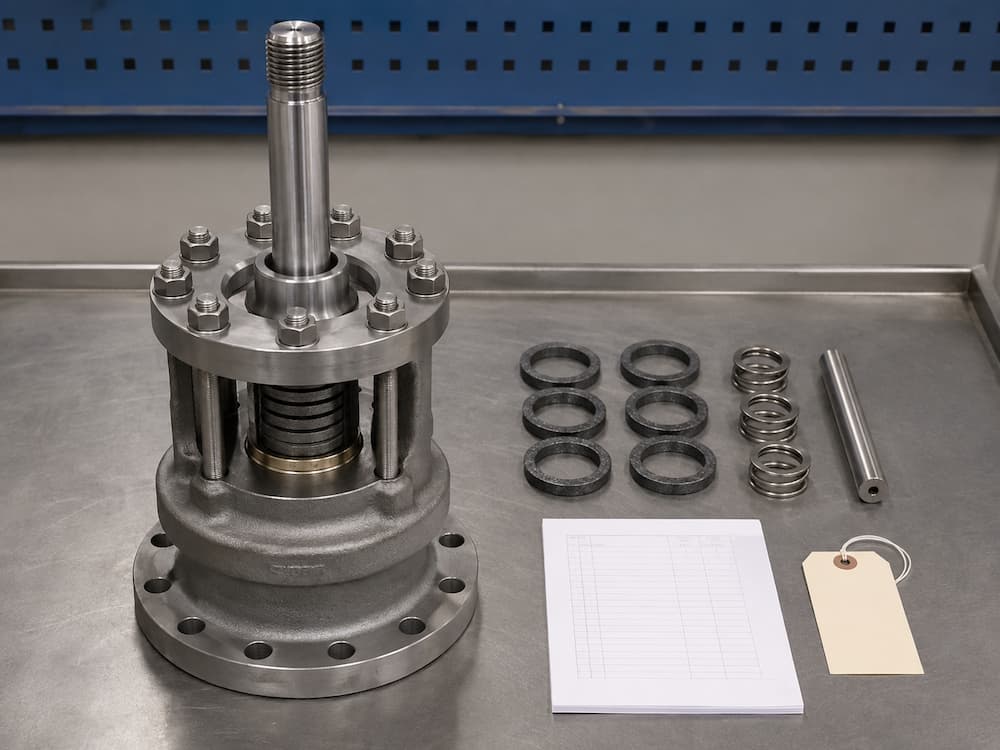
API 624: Rising Stem Valve Fugitive Emission Type Testing
API 624 is intended for fugitive-emission type testing of rising and rising-rotating stem valves equipped with graphite packing that meets the applicable API packing qualification requirement.
This makes API 624 especially relevant to selected gate valves, globe valves and other qualifying rising or rising-rotating stem designs within the standard scope.
What Buyers Should Check on API 624 Evidence
- Valve manufacturer and tested design.
- Applicable edition of API 624.
- Valve type and stem motion.
- Size and pressure-class qualification scope.
- Packing system used during qualification.
- Temperature qualification relevant to the project.
- Test report or certification source.
- Whether the supplied valve falls within the qualified design family.
Do not accept the phrase “API 624 available” without confirming which valve design and packing arrangement the test actually covers.
API 641: Quarter-Turn Valve Fugitive Emission Testing
API 641 addresses fugitive-emission type testing of quarter-turn valves.
This commonly relates to ball valves, butterfly valves, plug valves and other qualifying quarter-turn designs within the applicable standard scope.
Quarter-turn valves have different stem or shaft movement and sealing arrangements from rising-stem gate and globe valves. This is why API 641 and API 624 should not be treated as interchangeable standards.
API 641 was updated to a second edition in 2023. Purchase specifications should identify the required edition rather than relying on an old certificate without checking its applicability.
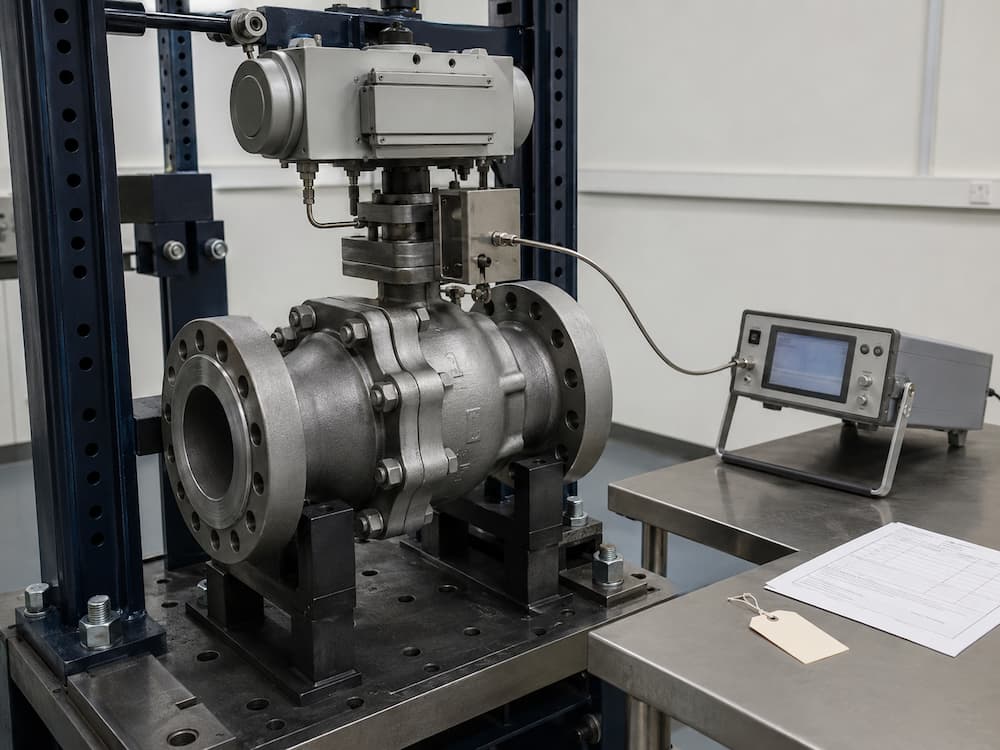
ISO 15848 vs API 622 vs API 624 vs API 641
| Standard | Main Purpose | Typical Scope |
|---|---|---|
| ISO 15848-1 | Type testing and fugitive-emission classification | Industrial isolating and control valves within its scope |
| ISO 15848-2 | Production acceptance testing | Production valves where fugitive-emission requirements are specified |
| API 622 | Process valve packing type testing | Packing qualification, not complete valve qualification |
| API 624 | Complete-valve fugitive-emission type testing | Qualifying rising and rising-rotating stem valves with graphite packing |
| API 641 | Complete-valve fugitive-emission type testing | Qualifying quarter-turn valves |
The correct standard should be selected by valve type, industry specification, purchaser requirement and project jurisdiction. Do not specify all standards automatically unless the project has a genuine reason to require them.
Low-Emission Packing Design
Low-emission valve performance depends on the complete packing system rather than a single material name.
- Graphite or other approved packing material where applicable.
- Packing ring geometry and arrangement.
- Stem or shaft finish.
- Stem hardness and corrosion condition.
- Packing chamber surface condition.
- Gland follower alignment.
- Live loading where specified.
- Correct packing compression.
- Assembly procedure and cleanliness.
What Is Live-Loaded Packing?
Live loading uses spring elements, commonly disc springs, to help maintain packing gland load as the packing experiences consolidation, thermal movement or wear.
Live loading can support emission control in a properly designed system, but it does not automatically make a valve compliant with ISO 15848, API 624 or API 641.
Bellows Seal Valves and Fugitive Emissions
Bellows seal globe valves use a metallic bellows as a primary barrier around the stem, with packing often retained as a secondary seal.
This design can be useful for leakage-sensitive, hazardous or high-temperature services, but buyers should avoid describing every bellows valve as automatically “zero emission.”
Bellows design, weld integrity, pressure-temperature capability, cycle life, backup packing and applicable test requirements still need to be reviewed.
For design and selection considerations, see our Bellows Seal Globe Valve Guide.
Temperature Cycling and High-Temperature Service
Temperature is critical to fugitive-emission performance because thermal expansion and contraction affect stems, packing, gland loading, bonnet joints and sealing materials.
A valve that performs well at ambient temperature may behave differently during repeated heating and cooling.
For high-temperature service, buyers should consider maximum design temperature, operating temperature, thermal cycling frequency, packing temperature capability, stem material, gland loading, bonnet gasket material and whether the fugitive-emission qualification covers the required temperature condition.
For broader high-temperature valve selection, see our High Temperature High Pressure Valves Guide.
Why “Zero Emission” Is Usually the Wrong Procurement Term
Industrial fugitive-emission standards define test procedures, leakage measurement and acceptance criteria. They should not be simplified into an absolute claim that a conventional packed valve will produce zero emissions throughout its entire service life.
Field performance can be affected by process fluid, pressure, temperature, mechanical cycle count, maintenance history, corrosion, piping loads, stem damage, gland adjustment and service conditions outside the qualified range.
A more defensible requirement is to specify the applicable fugitive-emission standard and required qualification or production acceptance basis.
Type Test Certificate vs Production Valve Test
A type test qualifies a defined valve design or design family according to the rules of the applicable standard. It is not necessarily an individual test of every supplied production valve.
A production acceptance test, when specified, applies to manufactured valves according to the relevant production testing procedure.
Buyers should therefore identify whether the order requires type-test qualification evidence only, production acceptance testing, purchaser witness, third-party review or specific final dossier records.
How Fugitive Emission Requirements Fit Into the ITP
If fugitive-emission requirements are important to the project, they should be identified in the ITP before valve production is completed.
- Review of applicable low-emission standard.
- Review of valve type-test qualification.
- Verification of packing material and configuration.
- Stem or shaft material and surface-condition checks where specified.
- Production acceptance testing where required.
- Purchaser or third-party witness points.
- Review of fugitive-emission test reports.
- Final documentation verification.
For Hold, Witness, Review and Surveillance points, see our Valve Inspection and Test Plan (ITP).
Is Fugitive Emission Testing Part of FAT?
It may be reviewed during FAT, but the actual fugitive-emission qualification may have been completed previously as a type test.
During FAT or document review, the purchaser may verify the applicable qualification certificate, test report, valve design covered by the qualification, packing system, production acceptance results where specified and material or valve traceability.
If actual production fugitive-emission testing must be witnessed, that requirement should be agreed before the FAT schedule is finalized.
See our Industrial Valve Factory Acceptance Test guide for the wider project inspection process.
What Documentation Should Buyers Request?
- Applicable ISO or API fugitive-emission type-test certificate.
- Qualification test report or approved summary where contractually required.
- Valve model and design identification.
- Packing manufacturer and packing type where required.
- Qualification temperature range.
- Qualified valve size and pressure-class range.
- Production acceptance test report where required.
- Material certificates.
- Valve pressure test report.
- Approved datasheet and drawing.
- ITP and inspection release records.
- Third-party witness or review records where specified.
A generic packing datasheet or API 622 packing report should not be submitted as the only proof of complete-valve API 624 or API 641 qualification.
For project dossier planning, see Valve Certificates and Quality Documents.
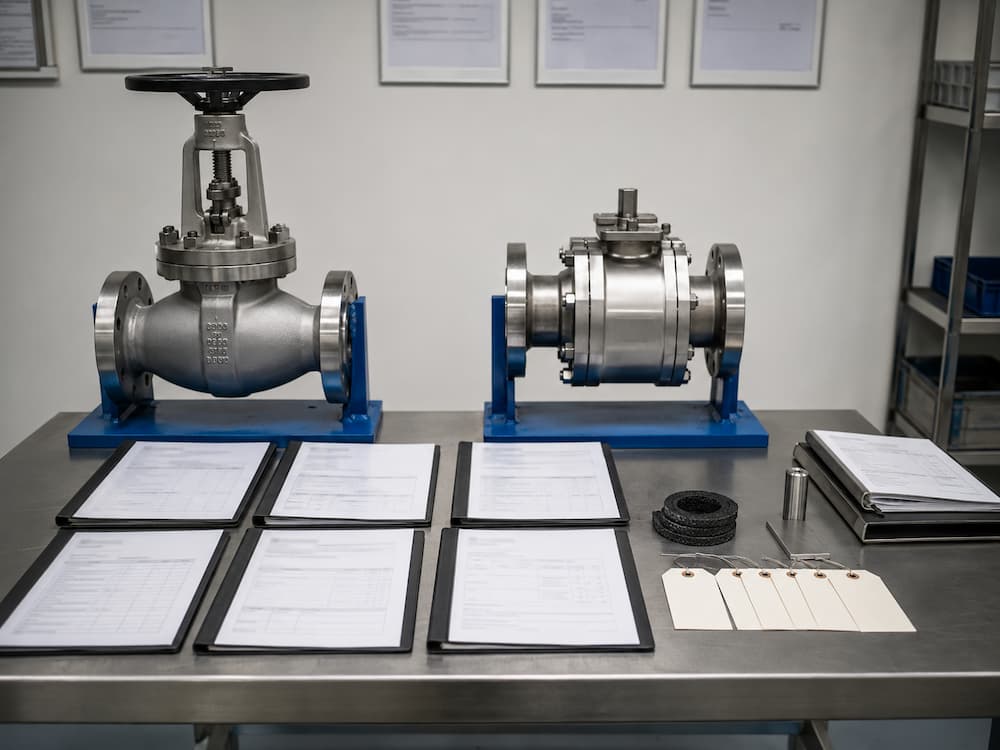
Common Fugitive Emission Procurement Mistakes
1. Writing Only “Low-Emission Valve Required”
This does not define the standard, valve type, qualification scope or production acceptance requirement.
2. Treating API 622 and API 624 as the Same Thing
API 622 addresses packing qualification. API 624 addresses complete rising-stem valve type testing within its scope.
3. Specifying API 624 for a Quarter-Turn Ball Valve
Quarter-turn valves are addressed by API 641 when that API fugitive-emission standard is required.
4. Assuming ISO 15848 and API Standards Are Automatically Equivalent
They use different qualification structures and should be specified according to the project requirement.
5. Accepting a Certificate Without Checking Qualification Scope
The tested valve design, packing arrangement, temperature and qualified range should be relevant to the supplied valve.
6. Assuming a Fire-Safe Valve Is Automatically Low-Emission
Fire-safe testing and fugitive-emission testing evaluate different performance requirements. One does not automatically prove the other.
7. Confusing Seat Leakage With Fugitive Emissions
Seat tightness is internal shutoff performance. Fugitive emissions are external atmospheric leakage.
8. Ignoring Packing Assembly
Even qualified packing can perform poorly if stem condition, gland loading, chamber geometry or installation is incorrect.
9. Requesting Qualification After Production
A required type-test qualification should be verified during supplier and technical bid review, not discovered after valves are already manufactured.
10. Using “Zero Emission” as the Only Acceptance Requirement
The purchase specification should identify a recognized standard and measurable qualification basis.
Valve Fugitive Emission RFQ Checklist
| RFQ Item | Information to Define |
|---|---|
| Valve type | Gate, globe, ball, butterfly, plug, control valve or other design |
| Stem motion | Rising, rising-rotating or quarter-turn |
| Size and pressure class | DN / NPS and Class / PN |
| Process fluid | Hydrocarbon, gas, VOC-containing chemical, hazardous fluid or other medium |
| Pressure and temperature | Design and operating conditions, including relevant temperature cycles |
| Required standard | ISO 15848-1, ISO 15848-2, API 624, API 641 or project-specific requirement |
| Standard edition | Contractually applicable edition |
| Packing system | Graphite, low-emission packing, live loading or specified configuration |
| Qualification evidence | Type-test certificate and relevant scope |
| Production testing | Whether production acceptance testing is required |
| Inspection | Manufacturer inspection, purchaser witness, third-party review or Hold/Witness Point |
| Documentation | Qualification certificate, production test report, datasheet, drawing, ITP and final dossier records |
Key Standards for Valve Fugitive Emissions
- ISO 15848-1: Type testing, measurement and classification of fugitive emissions from industrial valves within its scope.
- ISO 15848-2: Production acceptance testing of valves where fugitive-emission requirements are specified.
- API 622: Type testing of process valve packing for fugitive emissions.
- API 624: Type testing of qualifying rising and rising-rotating stem valves equipped with graphite packing for fugitive emissions.
- API 641: Type testing of qualifying quarter-turn valves for fugitive emissions.
The current project-specified edition should be confirmed before quotation. Do not reproduce proprietary leakage-class tables, cycle tables or qualification limits from paid standards unless the project is authorized to use that content.
Final Recommendations for Valve Buyers
Fugitive-emission control should be treated as a complete valve sealing and qualification requirement, not simply a packing-material option.
Before approving a low-emission valve, confirm the correct standard for the valve type, applicable edition, qualified design, packing system, temperature condition, qualification range, production acceptance requirement, witness requirement and documentation package.
For low-emission valve quotations, provide the valve type, stem motion, size, pressure class, process fluid, design pressure, design temperature, required fugitive-emission standard, applicable edition, packing requirement, production acceptance requirement, inspection points and documentation scope with the RFQ.
FAQ
What is valve fugitive emission testing?
Valve fugitive emission testing evaluates external leakage from defined stem, shaft, packing and body-joint sealing locations under specified test conditions. It is different from shell pressure testing and seat leakage testing.
What is the difference between ISO 15848-1 and ISO 15848-2?
ISO 15848-1 addresses valve type testing, measurement and classification for fugitive emissions. ISO 15848-2 addresses production acceptance testing for valves where fugitive-emission requirements are specified.
What is the difference between API 622 and API 624?
API 622 evaluates process valve packing for fugitive emissions. API 624 applies to complete qualifying rising and rising-rotating stem valves equipped with graphite packing. Passing API 622 packing testing alone does not prove complete-valve API 624 qualification.
Is API 624 used for ball valves?
API 624 is intended for qualifying rising and rising-rotating stem valves. Quarter-turn valves such as many ball, butterfly and plug valves are addressed by API 641 when that API fugitive-emission standard is specified.
Does a fire-safe valve automatically meet fugitive-emission requirements?
No. Fire-safe testing and fugitive-emission testing evaluate different performance conditions. The applicable low-emission standard must be specified separately when required.
Does low-emission packing guarantee a low-emission valve?
No. Complete-valve performance also depends on stem or shaft condition, packing chamber geometry, gland loading, assembly, temperature, cycling and qualification of the complete valve design.
What documents should I request for a low-emission valve?
Depending on the project, request the applicable type-test certificate, qualification scope, production acceptance report where required, packing information, valve datasheet, drawing, pressure test records, ITP and final inspection documentation.