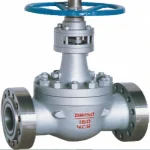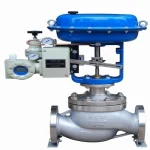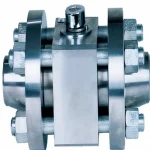
Quick Overview
Select a gas line shut-off valve by checking the complete material combination: body, ball or disc, stem, seats, O-rings, packing, gaskets and bolting. Carbon steel can suit many dry natural gas applications; low-temperature steel, stainless steel or other alloys may be needed for different conditions. The correct choice depends on gas composition, design pressure, minimum and maximum temperature, decompression conditions and the required valve qualification.
A quotation that says “carbon steel body, stainless steel trim, PTFE seat” is a useful starting point, but it does not fully define a gas shut-off valve. The stem might have a different corrosion resistance from the ball, an O-ring might be unsuitable for the lowest temperature, or a seat might exceed its allowable differential pressure during closure.
This guide focuses on industrial gas pipeline isolation. Domestic gas installations and burner safety shut-off systems have application-specific approval requirements; an industrial ball valve is not automatically a substitute for an approved safety shut-off valve. For a wider overview of pipeline applications, see Vcore’s natural gas valve solutions.
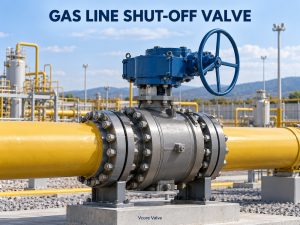
1. Identify the Gas Before Choosing the Metal
“Gas service” can mean dry treated natural gas, wet raw gas, LPG vapour, biogas, hydrogen blends or other process gases. These fluids do not have identical material requirements. Ask for the actual composition, including hydrogen sulphide (H₂S), carbon dioxide (CO₂), water, hydrogen, condensate and other contaminants.
Water availability matters because it can change the corrosion mechanisms in CO₂- or H₂S-containing streams. Solids and compressor oil also affect the sealing surfaces and non-metallic parts. Review normal operation, start-up, shutdown, cleaning and upset conditions rather than specifying materials from the main gas component alone.
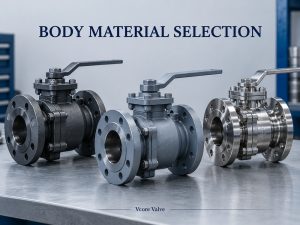
2. Compare Body Materials by Service Conditions
| Body material | Where it may be considered | What needs verification |
|---|---|---|
| ASTM A216 WCB / ASTM A105 | Cast or forged carbon steel valves for many conventional industrial gas duties | Pressure–temperature rating, corrosion allowance, minimum design temperature and impact-test requirements |
| ASTM A352 LCB/LCC / ASTM A350 LF2 | Low-temperature cast or forged steel constructions | Exact grade/class, heat treatment, required impact-test temperature and complete assembly suitability |
| ASTM A351 CF8M/CF3M / ASTM A182 F316/F316L | Applications requiring a suitable stainless steel construction | Chlorides, wet gas chemistry, localised corrosion and cracking resistance; cast and forged grades are distinct specifications |
| Duplex stainless steel or nickel alloy | Selected corrosive or otherwise demanding duties | Specific alloy, processing, environmental limits, qualification and cost justification |
| Brass or bronze | Certain approved small gas valve applications | Gas composition, pressure, temperature, local approval and restrictions on copper alloys |
Stainless steel is not a universal upgrade. It can address some corrosion concerns while still requiring a review for chlorides, sour conditions or hydrogen. Likewise, selecting a forged body does not by itself establish a higher working pressure: the finished valve rating and design govern.
Pressure class must be checked with the actual material and temperature. A Class 600 marking is not a statement that the valve can operate at 600 psi under every condition. Read the valve pressure–temperature rating guide when reviewing the datasheet.
3. Check Minimum Temperature, Including Depressurisation
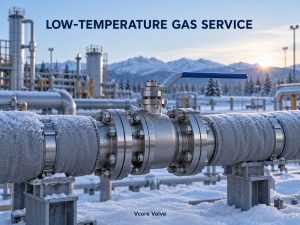
The normal gas temperature may be well above the minimum metal temperature experienced in service. Pressure reduction and blowdown can produce significant cooling for some gas conditions. The project’s process assessment should establish the relevant transient temperature.
Where low-temperature toughness is required, confirm the applicable code, minimum design metal temperature and impact-test evidence. Review bolting, stems, seals and seats as well as the body. A low-temperature body fitted with an unsuitable elastomer is still an unsuitable assembly.
LNG service is a separate cryogenic selection task. Materials, clearances, stem arrangements and sealing design must be selected and validated together. A general low-temperature gas valve should not be assumed suitable for LNG merely because it has a stainless steel body.
4. Specify the Ball, Stem and Other Wetted Parts
A “stainless steel trim” description can hide important differences. List the ball, stem, seat retainers, springs and other wetted parts separately. Confirm the exact grades, heat treatment and coating specification where applicable.
The stem transmits actuator torque while carrying mechanical loads. A higher-strength stem alloy may help with torque capacity, but its suitability must also be checked for the gas environment. Hardened components deserve particular attention in sour gas and hydrogen applications.
For plated or coated balls, specify the base metal, coating system, thickness and inspection acceptance criteria. A coating should not be treated as automatic proof of corrosion resistance for the whole component. Sand or other particles may also require different surface protection and seat arrangements.
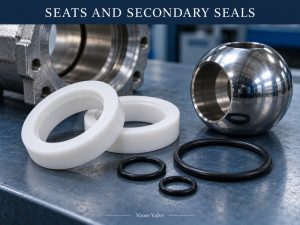
5. Match Seat Materials to Pressure, Temperature and Leakage
| Seat option | Selection advantage | Selection limitation |
|---|---|---|
| PTFE | Low friction and broad chemical resistance | Check creep, extrusion, differential pressure and the manufacturer’s operating envelope |
| Reinforced PTFE | Can improve mechanical performance over unfilled PTFE | Identify the filler and grade; different reinforced compounds are not interchangeable |
| PEEK | Can support demanding mechanical and thermal conditions in a suitable design | Confirm gas compatibility, sealing performance and required operating torque |
| PCTFE | Used in selected low-temperature and gas sealing designs | Requires a compatible seat design and validated pressure–temperature limits |
| Metal seat | May suit elevated temperature, erosion or duties beyond soft-seat capability | Define hard-facing, surface finish and permitted leakage; do not assume soft-seat tightness |
Use the valve manufacturer’s seat rating, not a generic polymer temperature range. Seat performance depends on geometry, support, differential pressure, cycling and the gas itself. A high body rating cannot compensate for a seat used outside its approved envelope.
Define the shut-off test medium, pressure, direction, duration and acceptance criteria. “Zero leakage” without a specified test method does not provide a measurable purchasing requirement. For related constructions, review Vcore’s high-pressure ball valve options.
6. Review O-Rings and Rapid Gas Decompression
NBR, HNBR, FKM and EPDM are material families, not complete seal specifications. Compound formulation, hardness and service history can change performance substantially. Confirm compatibility with the complete stream, including hydrocarbon liquids, lubricants and cleaning chemicals.
NBR and HNBR compounds may be considered for selected hydrocarbon duties. FKM compounds can offer useful resistance in some services, but low-temperature capability and chemical compatibility still need checking. EPDM should not be assumed suitable for hydrocarbon fuel or oil exposure; require compound-specific evidence for the actual mixture.
High-pressure gas can dissolve into an elastomer. If pressure falls faster than the gas can escape, internal expansion can damage the seal. This is known as rapid gas decompression (RGD), also called explosive decompression. Parker’s O-ring handbook describes this failure mechanism and the importance of decompression conditions and seal selection.
Where relevant, request qualification for the exact seal compound under a test regime representative of the gas, temperature, pressure and decompression rate. “RGD-resistant FKM” alone is incomplete. The seal geometry, extrusion gaps and actual operating cycle also matter.
7. Treat Sour Gas and Hydrogen as Specific Material Reviews
Sour gas containing H₂S
Where the service falls within its scope, NACE MR0175/ISO 15156 provides requirements for metallic materials in H₂S-containing oil and gas production environments. Specify the applicable project edition and assess the actual environment, including H₂S partial pressure, temperature and water chemistry.
A supplier statement of “NACE material” does not replace a component-level review. Check material condition, hardness, heat treatment, welding and environmental restrictions. Nor does ISO 15156 compliance by itself resolve general corrosion or qualify elastomer seals. Avoid applying one hardness limit to every alloy and component without checking the relevant provisions.
Hydrogen and hydrogen blends
Hydrogen requires attention to metallic embrittlement, non-metallic degradation, permeation and leakage. Swagelok’s hydrogen product guidance highlights the need to review hardened stems, springs and elastomers as well as body materials.
A natural gas valve should therefore not be relabelled hydrogen-compatible from its body grade alone. State hydrogen concentration, pressure, temperature and cycling, then request evidence covering the proposed construction. The selected seal and stem combination may differ from the standard natural gas version.
8. Include Packing, Gaskets and External Protection
Gas can escape through the stem or body joints even when the valve seat closes correctly. Packing and gasket selection must account for temperature, movement, joint loading and emissions requirements. For an emissions specification, identify the applicable qualification standard and ensure its scope covers the proposed valve and packing configuration. See our fugitive emission testing guide.
Fire-safe performance is an assembly qualification. Graphite packing, a metal seat or a stainless steel body alone does not prove it. If required, specify the applicable fire-test standard and review the report’s coverage. Anti-static continuity and the actuator’s required failure position are separate design checks.
Outdoor, coastal and buried installations also need external corrosion protection. Specify surface preparation, coating system, thickness and inspection suitable for the exposure. Review bolting protection and the risk of corrosion at joints. Our valve coating inspection guide explains relevant checks.
9. What to Include in a Gas Valve RFQ
- Gas composition, water content, contaminants and any hydrogen or H₂S content.
- Operating and design pressures, maximum shut-off differential pressure and blowdown conditions.
- Normal, maximum and minimum design temperatures, including transient conditions.
- Valve size, bore, end connection, pressure class and applicable piping specification.
- Component material schedule covering body, closure member, stem, seats, seals, packing, gaskets and bolting.
- Required seat leakage, emissions, fire-safe and gas-specific qualifications.
- Manual or actuated operation, failure position, closing time and cycle frequency.
- Material certificates, traceability, impact tests, hardness checks and other inspection records as applicable.
A useful quotation identifies exact materials and highlights any deviations. Material certificates support traceability, but do not alone demonstrate chemical compatibility, seat performance or suitability of the complete valve.
Field Insight: Why a Gas Valve Material Schedule Must Cover the Whole Assembly
A gas line shut-off valve specification should identify more than the body metal. A suitable body and ball cannot compensate for an O-ring, stem or seat that is incompatible with the actual service conditions.
For a practical procurement review, compare the proposed materials against gas composition, minimum temperature, maximum shut-off differential pressure and depressurisation conditions.
What to Check Before Ordering:
- Exact grades and material conditions for the body, ball, stem and wetted components.
- Seat ratings and compound-specific compatibility for secondary seals.
- Relevant sour-service, hydrogen or rapid gas decompression qualification.
- Traceable material records and an agreed inspection and testing scope.
Send Vcore Valve the operating conditions and project specification so the proposed construction and documentation requirements can be reviewed together.
Frequently Asked Questions
Is carbon steel suitable for a natural gas shut-off valve?
It can be suitable for many industrial natural gas applications when the pressure, temperature, corrosion conditions and project specification permit it. Wet, sour or low-temperature service may change the required material or qualification.
Is a stainless steel gas valve always better?
No. The right choice depends on the environment and the complete assembly. Stainless steel does not automatically solve sour cracking, hydrogen compatibility, low-temperature seal limitations or high-pressure seat performance.
Can PTFE seats be used for gas isolation?
Yes, in appropriately designed and rated valves. Check the specific seat grade, differential pressure, temperature, cycling and leakage acceptance criteria rather than relying on the name PTFE alone.
What is the most commonly overlooked material detail?
Secondary seals and small wetted components are easy to overlook. An unsuitable O-ring, spring or stem can undermine an otherwise appropriate body and seat selection.
Discuss Your Gas Shut-Off Valve Specification with Vcore
Send Vcore Valve your gas composition, operating conditions, size, connection and project specification. Our team can review suitable industrial ball valve constructions, material options and documentation requirements for the proposed duty. Confirm the final material schedule and inspection scope before ordering.
Contact Vcore Valve for a gas valve specification review.
Technical References
- Parker O-Ring Handbook — elastomer compatibility and decompression failure mechanisms.
- ISO 15156-1:2020 scope — metallic material selection for relevant H₂S-containing production environments. Use the edition required by the project.
- Swagelok hydrogen-compatible product guidance — component material considerations for hydrogen service.