Quick Overview
PN16 vs ANSI Class 150 flanges are frequently mentioned as alternatives in international valve enquiries, but similar nominal diameters do not guarantee compatible joints. EN 1092-1 and ASME B16.5 use different dimensional tables, bolt patterns and pressure-temperature rating systems. A DN100 joint normally cannot be assembled directly, whilst a DN150 joint may appear to line up without being demonstrably compliant. Before purchasing a replacement valve, verify pitch circle diameter, hole count, facing, gasket, bolting and service conditions against approved drawings.
Why PN16 vs ANSI Class 150 Flanges Cause Confusion
Imagine a maintenance buyer requesting a 4-inch flanged butterfly valve for an overseas pumping station. The old equipment is marked “PN16”; the quotation offers “ANSI 150”. Both sound suitable for relatively modest pressure. The order arrives, the installers lift the valve into position, and the stud holes refuse to line up. That is an expensive way to discover that pressure class is not a drilling standard.
The distinction matters for double-flanged butterfly valves, gate valves, check valves and replacement spool pieces. It is particularly important when equipment manufactured for different regional standards meets on the same site.
Three Problems Buyers Encounter with Mixed Flange Standards
1. Matching nominal size, mismatched bolt circle
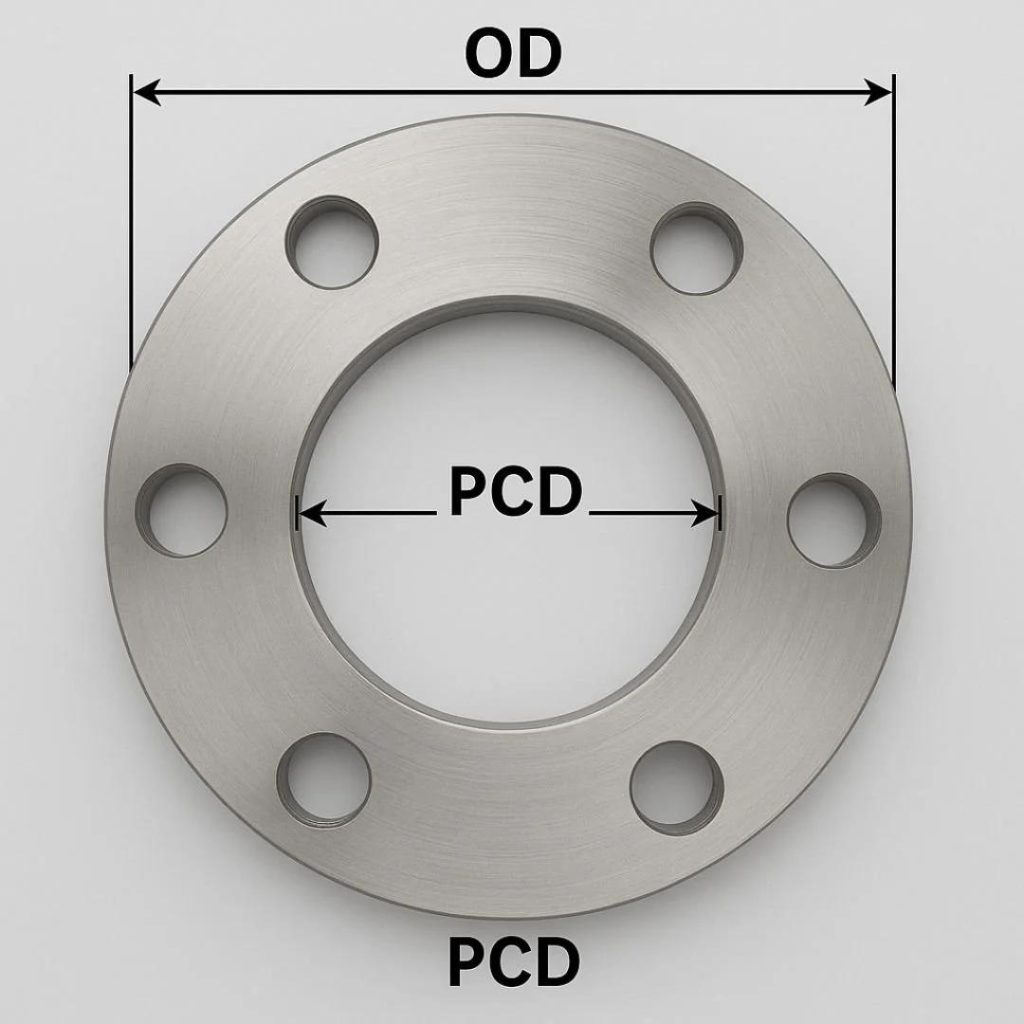
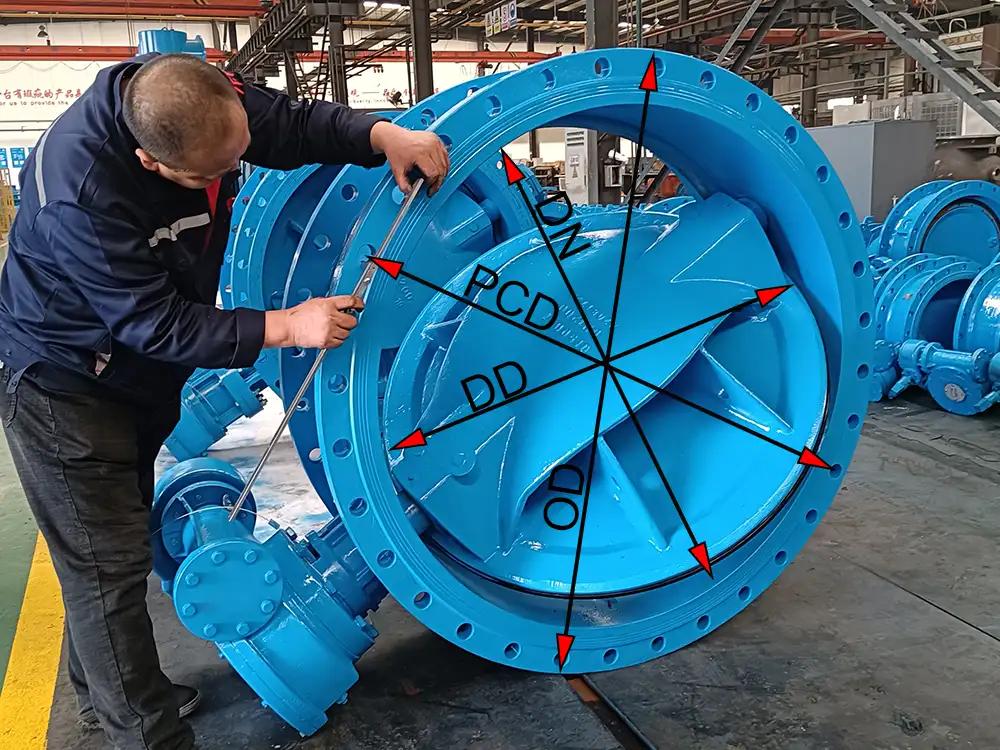
DN100 and NPS 4 describe comparable nominal pipe sizes, not identical end connections. A flange’s pitch circle diameter (PCD) places the bolt holes at a precise radius. Even when both sides use eight holes, a different PCD can prevent assembly. Forcing studs into misaligned holes risks bending the fasteners and disturbing gasket compression.
2. Assuming similar pressure designations mean equal ratings
PN16 flange dimensions belong to an EN designation system; Class 150 flange dimensions belong to ASME. Class 150 does not mean the joint is limited to 150 psi, and PN16 is not universally equivalent to Class 150. Material grades and temperature govern allowable pressure. Steam, elevated-temperature water and chemical service deserve particular care.
3. Overlooking the gasket and valve geometry
Bolts are only one part of a bolted joint. A flat-face joint, raised-face joint, elastomer-lined butterfly valve or wafer body may need a particular gasket arrangement. Differences in facing dimensions, flange thickness and the way the valve seat contacts the pipe flange can create leakage or structural loading even where the bolts slide through.
EN 1092-1 vs ASME B16.5: What Actually Changes?
EN 1092-1 sets requirements for steel flanges identified by PN ratings, whilst ASME B16.5 covers defined pipe flanges and flanged fittings by Class designations. Both encompass more than drilling: dimensions, materials and pressure-temperature considerations matter. Consult the ASME B16.5 standard description and the applicable authorised edition of EN 1092-1 for final design acceptance.
PN16 vs Class 150 Bolt Circle Comparison
The following figures are reference dimensions for common EN 1092-1 PN16 steel flanges and ASME B16.5 Class 150 flanges. They are not a substitute for checking flange type, edition, material and the certified component drawing.
| Nominal size | PN16 PCD / holes | Class 150 PCD / holes | Practical finding |
|---|---|---|---|
| DN50 / NPS 2 | 125 mm / 4 | 120.7 mm / 4 | Different PCD |
| DN80 / NPS 3 | 160 mm / 8 | 152.4 mm / 4 | Different hole count |
| DN100 / NPS 4 | 180 mm / 8 | 190.5 mm / 8 | 10.5 mm PCD difference |
| DN150 / NPS 6 | 240 mm / 8 | 241.3 mm / 8 | Nearly coincident; approval still needed |
| DN200 / NPS 8 | 295 mm / 12 | 298.5 mm / 8 | Different hole count |
| DN300 / NPS 12 | 410 mm / 12 | 431.8 mm / 12 | 21.8 mm PCD difference |
PCD values are rounded where appropriate. Hole diameters, facing dimensions and bolting specifications must be reviewed separately. Avoid treating a close nominal match as a standard-approved mixed joint.
Pressure and temperature: why a simple conversion fails
For illustrative carbon-steel ASME material groups, Class 150 can have a pressure rating of approximately 19.6 bar near ambient temperature. That figure must not be applied to every alloy, temperature or flange design. PN16 is a nominal rating, with actual permissible operating pressure similarly subject to the applicable EN material and temperature tables. Always compare allowable ratings at the design temperature, not merely a catalogue heading.
For example, a water line at 10 bar and 25°C may be within the pressure capability of separately suitable PN16 or Class 150 assemblies. That does not make their drilling interchangeable. Conversely, a higher-temperature system may need a different pressure class even though its room-temperature rating looked adequate.
Three Reliable Solutions for Flange Compatibility
1. Specify the exact connection standard on the RFQ
Instead of writing “DN100, 150 lb/PN16”, state either “DN100, EN 1092-1 PN16, facing type and flange material to specification” or “NPS 4, ASME B16.5 Class 150, RF/FF as required”. Add a drawing identifying PCD, hole diameter, number of holes and flange face. This gives manufacturers unambiguous acceptance criteria.
2. Choose an engineered transition rather than a field improvisation
If existing pipework is EN PN16 and the replacement unit has ASME Class 150 ends, consider ordering the correct valve-end drilling or installing a designed transition spool with one connection standard at each end. The spool must have suitable pressure design, materials, weld procedures, testing and documented approval. Enlarging holes or omitting studs is not a sound substitution.
3. Validate the entire gasketed joint
Confirm facing type, gasket inside and outside diameters, material compatibility, fastener grade and tightening procedure. For lug-type butterfly valves, check the actual lug drilling and any permitted dead-end service. For wafer valves, inspect centring features and disc clearance as well as the mating flange. Our butterfly valve bolt installation guide covers related installation checks.
Worked Example 1: DN100 Valve Replacement
Illustrative engineering scenario: A plant requests a replacement DN100 resilient-seated butterfly valve. The existing pipe flange is EN 1092-1 PN16, with eight holes on a 180 mm PCD. A proposed NPS 4 ASME Class 150 valve connection also has eight holes, but they lie on a 190.5 mm PCD.
The numerical difference is 190.5 − 180 = 10.5 mm across the bolt circle. It is not corrected by rotating the valve. A suitable response is to request EN PN16 drilling on the replacement valve, or seek an approved transition design if replacement of adjacent piping is planned. The purchase order should reference the confirmed drawing rather than a generic “PN16/150” product label.
Worked Example 2: The Deceptive DN150 Connection
Illustrative engineering scenario: A project team finds that an NPS 6 Class 150 flange and a DN150 PN16 flange both have eight holes. Their bolt circles are about 241.3 mm and 240 mm respectively. The bolts may physically enter because individual clearance holes offer some positional tolerance.
However, a 1.3 mm PCD difference is not formal evidence of suitability. The team must still assess gasket seating, facing profile, bolting, material ratings and the approved piping code. The safe engineering conclusion is “possible physical alignment, subject to design approval”, not “universally interchangeable”. This distinction helps avoid unsafe shortcuts during shutdowns.
What the Dimensional Data Tell Procurement Teams
These two scenarios show why a flange bolt hole compatibility check needs both quantities: bolt count and PCD. DN80 fails one test immediately because hole counts differ. DN100 shares the count but fails on spacing. DN150 can pass a visual alignment test yet still require additional engineering checks. No single number determines joint integrity.
A systematic comparison should assess flange outside diameter, PCD, hole diameter, bolt number, face profile, gasket contact area, flange thickness, joint loading and applicable pressure-temperature rating. Consult the drawings rather than scaling dimensions from photographs. For valve projects, the valve end-connection guide provides broader context, while this article addresses mixed-standard flange mating specifically.
Market Insight: Mixed-Standard Equipment in Global Projects
Cross-border EPC procurement brings valves, pumps, strainers and packaged skids from different manufacturing regions into common installations. European-style PN specifications can meet ASME-designed equipment in desalination, industrial water, chemical and energy projects. A growing emphasis on detailed digital submittals and dimensional approval can help teams identify interface discrepancies before shipment.
There is no universal preference for one flange family: the correct choice is the standard required by the piping specification and mating equipment. A manufacturer advertising both PN16 and Class 150 should supply a drawing identifying which drilling pattern applies to the quoted item. For relevant water-service configurations, compare our rubber-lined flanged butterfly valve and rubber-lined check valve pages, then request the exact connection drawing.
How to Specify the Right Flange for a New Valve
For a dependable RFQ, provide the following details together rather than in separate email exchanges:
- Valve type, size in DN or NPS and required quantity.
- Exact flange standard, pressure designation and flange facing (RF or FF).
- Measured or drawing-controlled PCD, bolt-hole count and hole diameter.
- Operating and design pressures, temperature range and working medium.
- Body, disc, seat, gasket and bolting materials where applicable.
- Required face-to-face dimension, pipe flange details and installation orientation.
- Drawing approval, pressure testing and material-document requirements.
For a butterfly valve, additionally specify wafer, lug or double-flanged construction and whether an actuator is needed. The supplier should confirm dimensions before production. These checks are particularly useful for brownfield replacements, where the nearest available component is not necessarily the correct one.
Conclusion: Will PN16 and Class 150 Fit?
The practical answer is do not assume they will. PN16 and ASME Class 150 describe different flange systems. Sometimes the bolt holes clearly differ; sometimes they appear close enough to tempt an installation shortcut. Neither a shared nominal size nor an apparently acceptable pressure rating proves that the mating joint is approved.
If you are replacing an industrial valve, send Vcore Valve your existing flange dimensions, technical datasheet and photographs. We can review the required connection standard and discuss a suitable valve configuration for quotation, subject to engineering confirmation.
Frequently Asked Questions: PN16 vs ANSI Class 150 Flanges
Are PN16 and ANSI Class 150 flanges interchangeable?
Not as a general rule. Their bolt circles, hole counts, facing details and pressure-temperature ratings can differ. Even if bolts pass through at one nominal size, the complete joint must be checked and approved.
Is PN16 equivalent to 150 lb?
No. PN16 is a nominal pressure designation within the EN system, whereas Class 150 is an ASME rating class, not 150 psi. Allowable pressure depends on the material and operating temperature.
Will a DN100 PN16 flange fit a 4-inch Class 150 flange?
No. Typical EN 1092-1 PN16 DN100 and ASME B16.5 Class 150 NPS 4 bolt circles are 180 mm and 190.5 mm respectively. The matching eight-hole count does not correct the 10.5 mm PCD difference.
Why can some DN150 PN16 and Class 150 flanges appear to line up?
Both commonly have eight holes, with bolt circles of 240 mm and approximately 241.3 mm. That small difference may permit bolt insertion, but it does not establish compliance or confirm gasket and facing compatibility.
Can I drill or enlarge flange holes to make them fit?
Do not alter pressure-boundary flange drilling on site without an approved engineered modification and the required code assessment. A correctly specified transition spool or replacement flange is generally a more defensible solution.
Does a wafer butterfly valve fit both PN16 and Class 150 flanges?
Only when the particular valve design and approved drilling or centring arrangement support both flange standards. Check the manufacturer’s dimensional drawing, seat geometry, disc clearance and applicable pressure rating.
What should I send a supplier before ordering replacement flanged valves?
Provide the nominal size, existing flange standard, PCD, number and diameter of holes, facing type, working pressure, design temperature, material, gasket specification, valve face-to-face dimension and photographs or a marked-up drawing.
Standards and Further Reading
For project approval, consult the current applicable editions of ASME B16.5 and EN 1092-1, alongside the piping design code and certified manufacturer drawings. See also the Vcore flange butterfly valve sizing guide for a complementary valve-sizing discussion.