Valve Comparisons

Valve Comparisons

PVC-ball-valve-vs-stainless-steel-ball-valve-comparison

PVC Ball Valve vs Stainless Steel Ball Valve: Which One Should You Choose?

Compare PVC and stainless steel ball valves by pressure and temperature capability, corrosion resistance, mechanical strength, weight, cost, and media compatibility. PVC ball valves offer a lightweight and economical solution for cold water, irrigation, water treatment, and compatible low-temperature chemicals, while stainless steel ball valves provide greater strength and durability for high-pressure, high-temperature, steam, oil, gas, and demanding chemical applications.

Read More »
Safety-Valve

Thermostat Valve vs Safety Valve: Key Differences Explained

Compare thermostat valves and safety valves by control purpose, trigger mechanism, response speed, operating role, and application. Thermostat valves regulate flow gradually in response to temperature changes for HVAC, hot-water, and heat-exchanger systems, while safety valves open automatically at a preset pressure to protect boilers, pressure vessels, compressors, and industrial pipelines from overpressure.

Read More »
Vcore Valve industrial 2 way and 3 way valves

Why Are 2-Way and 3-Way Valves Necessary?

Compare 2-way and 3-way valves by port configuration, flow function, control capability, piping complexity, and application. Two-way valves are used for isolation and basic flow regulation, while three-way valves mix, divert, or bypass flow in HVAC, heat-exchange, cooling, and automated process-control systems.

Read More »
vacuum-breaker-vs-check-valve comparison diagram

Vacuum Breaker vs Check Valve: Key Differences Explained

Compare vacuum breakers and check valves by backflow mechanism, pressure conditions, installation, and application. Vacuum breakers admit air to prevent backsiphonage in potable-water, irrigation, and plumbing systems, while check valves automatically stop reverse flow caused by backpressure in pumps, HVAC systems, and pressurized industrial pipelines.

Read More »
Backflow-preventers

Backflow Preventer vs Check Valve: Which One is Right for You?

Compare backflow preventers and check valves by protection level, internal design, testing requirements, cost, and application. Backflow preventers use multiple protective components to safeguard potable water from backsiphonage and backpressure contamination, while check valves provide simpler one-way flow control for pumps, HVAC, fire protection, and general industrial pipelines.

Read More »

How Plug Valves Differ from Gate Valves

Compare plug valves and gate valves by operating motion, sealing structure, flow resistance, maintenance, and media compatibility. Plug valves provide fast quarter-turn shutoff and are well suited to viscous, dirty, or slightly abrasive fluids, while gate valves provide unobstructed full-bore flow with very low pressure loss for clean water, gas, steam, and general pipeline isolation.

Read More »
stop valve vs gate valve internal structure comparison

Stop Valve vs Gate Valve: Key Differences, Applications and Selection Guide

Compare stop valves (globe valves) and gate valves by internal structure, flow-control capability, pressure loss, operating frequency, and application. Stop valves are suitable for throttling, frequent operation, steam, and process-control systems, while gate valves provide low-resistance, full-open or full-closed isolation for water, oil, gas, and transmission pipelines.

Read More »
NPT-Valve-End-Connection-Type-1

How to Choose Valve End Connection Type: NPT vs Flanged vs Socket Weld

Compare NPT, flanged, and socket-weld valve connections by pipe size, pressure and temperature capability, leak tightness, installation cost, maintenance access, and application. NPT connections suit small, low-pressure water and air lines; flanged ends allow easier removal and servicing in medium- to large-size industrial pipelines; socket-weld connections provide permanent, leak-resistant joints for small-bore, high-pressure, and high-temperature systems.

Read More »
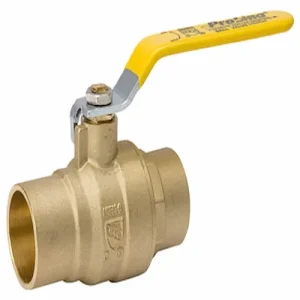
Solder Ball Valve product image, designed for easy installation with solder connections, providing efficient flow control in plumbing and fluid systems

Brass Ball Valve vs PVC Ball Valve: Engineersssing Insights for Modern Pipeline Systems

Compare brass and PVC ball valves by pressure and temperature capability, corrosion resistance, mechanical strength, weight, service life, and cost. Brass ball valves provide greater durability and sealing reliability for hot water, compressed air, HVAC, and pressure-cycling systems, while PVC ball valves offer lightweight, economical corrosion resistance for irrigation, swimming pools, water treatment, and compatible low-temperature chemical service.
Read More »