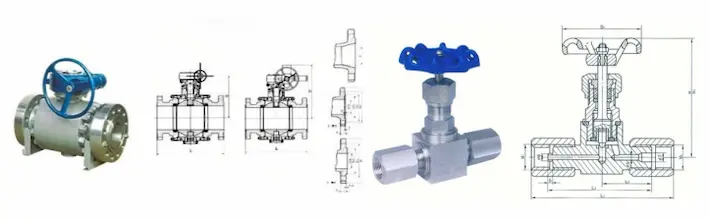
Valve Comparisons

Valve Comparisons

Double-vs-Triple-Offset-Butterfly-Valve

Double Offset vs Triple Offset Butterfly Valve Explained

Compare double-offset and triple-offset butterfly valves by sealing geometry, seat material, operating friction, temperature capability, fire safety, service life, and cost. Double-offset valves provide economical tight shutoff for clean, moderate-pressure and moderate-temperature service, while triple-offset metal-seated valves deliver low-wear, fire-safe, and reliable isolation for high-temperature, high-pressure, and critical industrial applications.

Read More »
Sluice-valve-vs-gate-valve-structure-comparison

Sluice Valve vs Gate Valve: Key Differences Explained

Compare sluice valves and gate valves by gate structure, media compatibility, debris resistance, sealing performance, maintenance, and application. Sluice valves are better suited to wastewater, sludge, slurry, and solids-bearing media, while conventional gate valves provide economical, low-resistance isolation for clean water, oil, gas, steam, and general industrial pipelines.

Read More »
Plug-Valve-vs-Ball-Valve-side-by-side-diagram

Plug Valve vs Ball Valve: Key Differences & Applications

Compare plug valves and ball valves by closure design, sealing performance, pressure drop, operating torque, maintenance, and media compatibility. Ball valves provide tight shutoff, low flow resistance, and easy automation for water, oil, gas, and high-pressure pipelines, while plug valves are better suited to throttling, slurry, abrasive media, and corrosive heavy-duty services.

Read More »
API-6D-ball-valve

API 607 vs API 6D Ball Valves: Key Differences Explained

Compare API 607 and API 6D ball valves by standard scope, fire testing, design requirements, inspection, and application. API 607 verifies a quarter-turn valve’s sealing performance during and after fire exposure, while API 6D governs the design, materials, dimensions, testing, and reliability of pipeline valves. For fire-risk transmission pipelines, both API 6D compliance and API 607 fire testing may be required.

Read More »
gate-valve-vs-butterfly-valve-comparison-chart

Gate Valve vs Butterfly Valve: Key Differences Explained

Compare gate valves and butterfly valves by operating mechanism, flow resistance, installation space, weight, cost, maintenance, and application. Gate valves provide full-bore flow and minimal pressure loss for high-pressure isolation and transmission pipelines, while butterfly valves offer compact construction, fast quarter-turn operation, easier automation, and economical control for water treatment, HVAC, cooling, and large-diameter piping systems.

Read More »
wafer-vs-lug-butterfly-valve-comparison-diagram

Wafer vs Lug Butterfly Valves: Differences & Uses

Compare wafer and lug butterfly valves by body design, installation method, pipeline isolation, end-of-line capability, maintenance flexibility, weight, and cost. Wafer butterfly valves provide a lightweight and economical solution for HVAC, water treatment, and general low- to medium-pressure systems, while lug butterfly valves allow one-sided pipeline disconnection and end-of-line service for industrial systems requiring easier maintenance and isolation.

Read More »
needle-valve-vs-ball-valve-comparison

Needle Valve vs Ball Valve: Full Comparison Guide

Compare needle valves and ball valves by flow-control precision, pressure drop, operating method, shutoff performance, and application. Needle valves provide fine, gradual adjustment for instrumentation, calibration, sampling, and low-flow control systems, while ball valves offer rapid quarter-turn operation, low flow resistance, and reliable isolation for water, oil, gas, and general industrial pipelines.
Read More »
angle valve vs gate valve comparison

Angle Valve vs Gate Valve: Differences & Applications

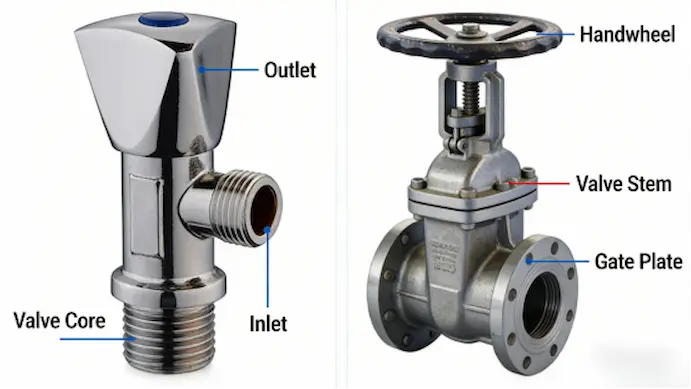
Compare angle valves and gate valves by flow path, installation space, pressure drop, operating frequency, and application. Angle valves redirect flow by 90 degrees and provide compact local shutoff for plumbing fixtures, branch lines, and confined spaces, while gate valves provide straight-through, low-resistance isolation for main water and industrial pipelines.

Read More »
industrial-globe-valve-and-gate-valve-applications.

Globe Valves vs Gate Valves: Differences & Applications

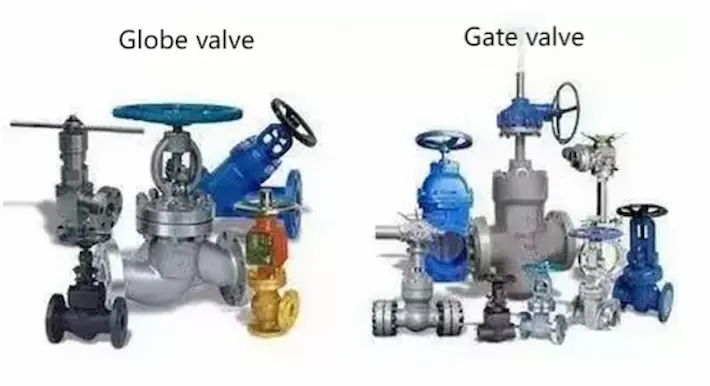
Compare globe valves and gate valves by flow path, throttling performance, pressure loss, operating frequency, sealing, and application. Globe valves provide accurate flow regulation and frequent operation for steam, fuel, and process-control lines, while gate valves offer straight-through flow and minimal pressure loss for full-open or full-closed isolation in water, fire-protection, and transmission pipelines.

Read More »