Valve Comparisons

Valve Comparisons

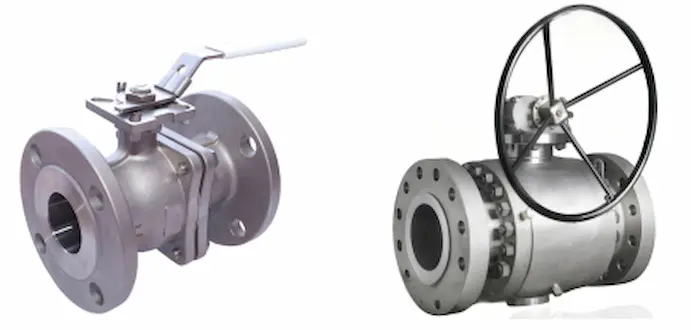
A compact solution for lower-pressure systems with space constraints.

Long Pattern vs Short Pattern Ball Valve: Key Differences and Applications

Compare long-pattern and short-pattern ball valves by face-to-face length, installation space, flow capacity, pressure suitability, cost, and application. Long-pattern valves offer a more robust body for demanding pipeline service, while short-pattern valves provide a compact, economical solution for space-limited water, HVAC, and general industrial systems.

Read More »
Butterfly-Valve-vs-Butterfly-Check-Valve-Comparison

What is the Difference Between Butterfly Valve and Butterfly Check Valve?

Compare butterfly valves and butterfly check valves by operating function, disc movement, flow direction, installation, maintenance, and application. Butterfly valves are manually or automatically operated for pipeline isolation and throttling, while butterfly check valves operate automatically to allow one-way flow and prevent reverse flow in water, cooling, HVAC, chemical, and industrial piping systems.

Read More »
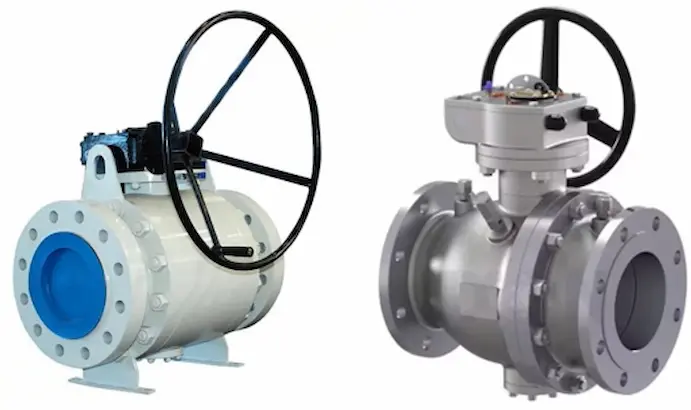
The Full Port Ball Valve

The Full Port Ball Valve vs. Standard Ball Valves: Which Delivers Better Industrial Performance?

Compare full-port and standard ball valves by bore diameter, flow capacity, pressure loss, pigging compatibility, installation size, and cost. Full-port ball valves provide an unrestricted flow path for high-flow, long-distance, and critical industrial pipelines, while standard reduced-port valves offer a more compact and economical option for low-flow, non-critical water, air, and general piping systems.

Read More »

2PC vs 3PC Ball Valve: Key Differences & Which to Choose

Compare 2-piece and 3-piece ball valves by body construction, maintenance access, installation space, cost, pressure capability, and application. Two-piece ball valves offer a compact and economical solution for general water, air, HVAC, and low-maintenance pipelines, while three-piece ball valves allow easier in-line servicing and component replacement for chemical, high-pressure, sanitary, and frequently maintained industrial systems.
Read More »
Butterfly-Valve-Discs

Through Shaft vs Split Shaft Butterfly Valve Discs

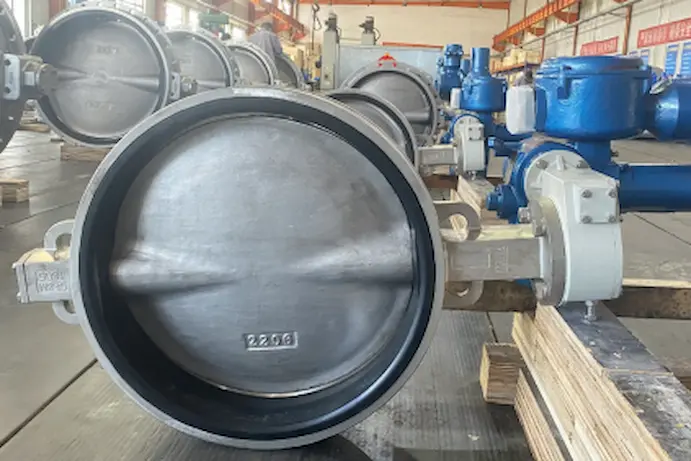
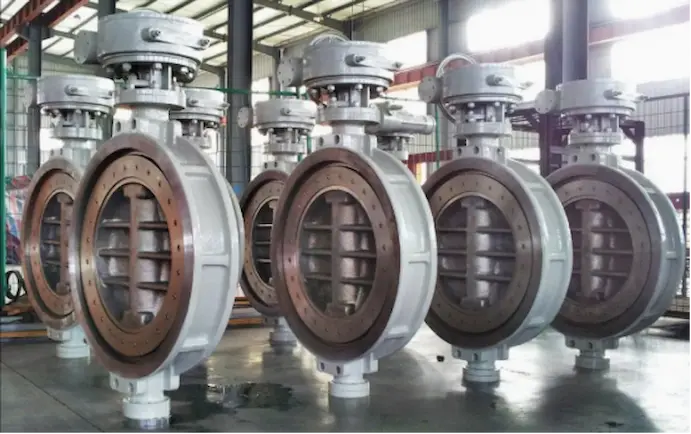
Compare through-shaft and split-shaft butterfly valve discs by shaft structure, mechanical strength, flow resistance, operating torque, weight, cost, and suitable valve size. Through-shaft designs provide strong, simple support for small- to medium-size valves, while split-shaft designs create a less obstructed flow path and are better suited to large-diameter, flow-efficient systems.

Read More »
triple offset butterfly valve sealing

Concentric vs Eccentric Butterfly Valve

Compare concentric and eccentric butterfly valves by shaft position, seat contact, sealing design, operating torque, pressure and temperature capability, service life, and application. Concentric butterfly valves provide a simple, economical solution for water, HVAC, and low-pressure utility systems, while double- and triple-eccentric designs reduce seat friction and offer more durable sealing for steam, gas, chemical processing, power generation, and other demanding services.

Read More »
ball-valve-seat-material-comparison-PTFE-vs-PEEK

PTFE vs PEEK: Choosing the Right Ball Valve Seal

Compare PTFE and PEEK ball valve seats by chemical resistance, temperature capability, pressure resistance, wear performance, operating torque, and cost. PTFE seats are economical and highly resistant to aggressive chemicals in moderate-temperature service, while PEEK seats provide greater mechanical strength, dimensional stability, and durability for high-pressure, high-temperature, and severe industrial applications.

Read More »
tilting-disk-check-valve-vs-silent-check-valve

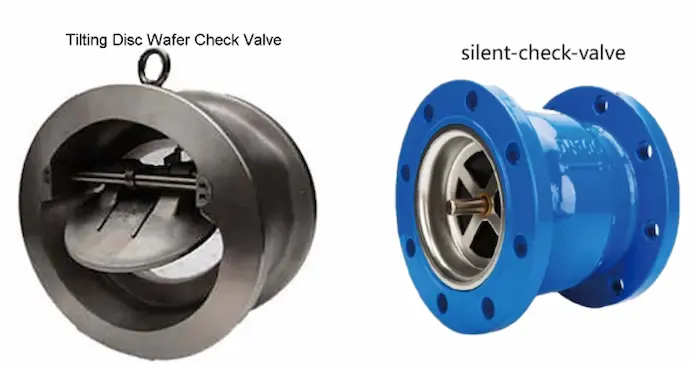
Tilting Disc vs Silent Check Valve Comparison

Compare tilting disc and silent check valves by closing mechanism, pressure loss, water-hammer control, installation space, noise level, and application. Tilting disc check valves provide low flow resistance for large, steady-flow pipelines, while spring-assisted silent check valves close rapidly to reduce reverse flow, noise, and pressure surges in pump discharge systems.

Read More »
Isolation Valves vs. Gate Valve

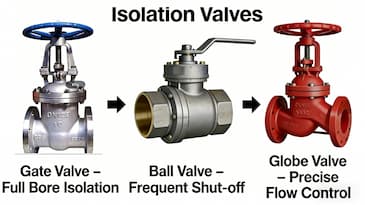
Isolation Valves vs. Gate Valves: What Is the Difference?

Compare isolation valves and gate valves by function, shut-off performance, flow resistance, operating frequency, maintenance, and application. Isolation valve is a broad category that includes gate, ball, butterfly, and globe valves, while gate valves are specifically designed for full-open or full-closed service with minimal pressure drop in large pipelines.

Read More »
soft-seat-vs-metal-seat-ball-valve-for-high-temperature-service

Soft Seat vs Metal Seat Ball Valve Explained

Compare soft-seated and metal-seated ball valves by sealing performance, temperature capability, media compatibility, operating torque, service life, and cost. Soft seats such as PTFE, RPTFE, and PEEK provide bubble-tight shutoff and low torque for clean, moderate-temperature fluids, while metal seats with hardened coatings are better suited to high-temperature, abrasive, corrosive, fire-safe, and severe-service applications.

Read More »