Dual plate check valve vs swing check valve selection is an important decision in industrial pipeline design. Both valve types prevent reverse flow automatically, but their internal structures, closing behavior, pressure drop, installation space, and water hammer performance are different.
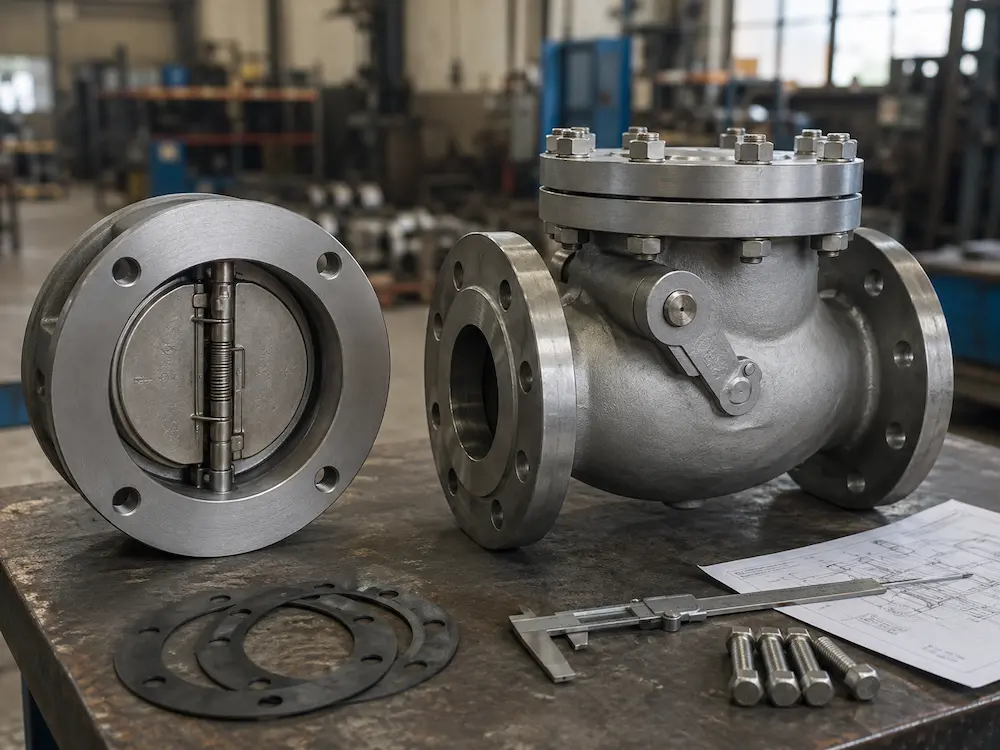
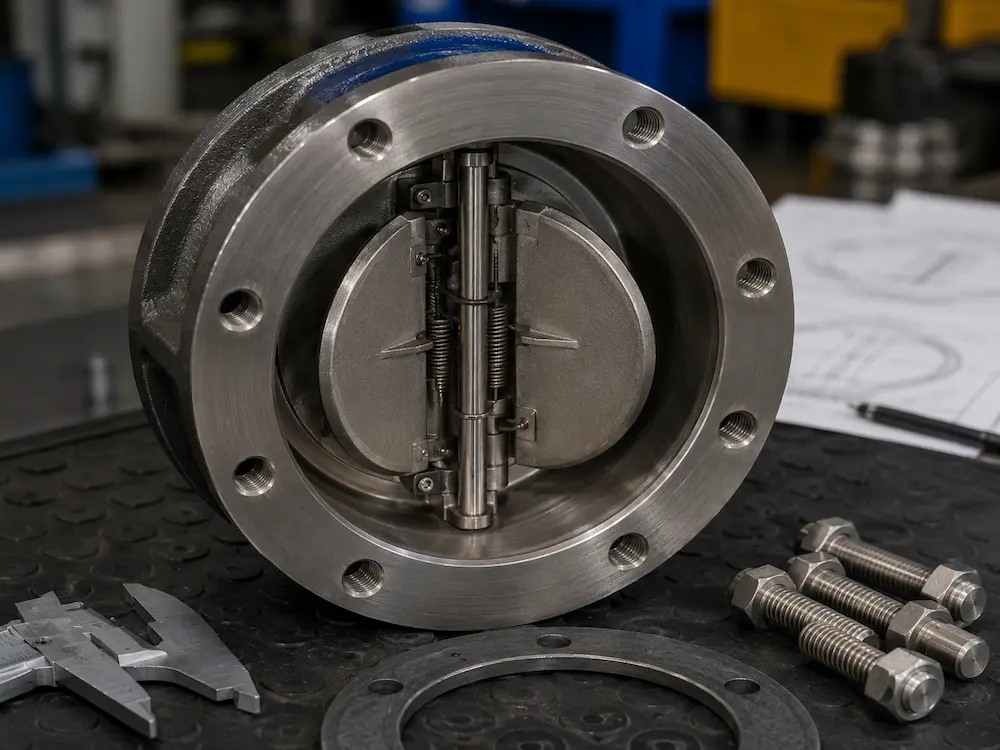
A swing check valve uses a single hinged disc. It is simple, widely used, and suitable for many steady-flow systems. A dual plate check valve uses two semicircular plates mounted on a central hinge with spring assistance. This compact wafer-style design can close faster and reduce reverse flow before the valve shuts.
For B2B buyers, the correct choice depends on flow rate, pressure, pipeline size, installation space, pump shutdown behavior, water hammer risk, medium, material compatibility, and maintenance requirements. For a broader overview of check valve types and selection logic, read our main guide on industrial check valves.
What Is a Swing Check Valve?
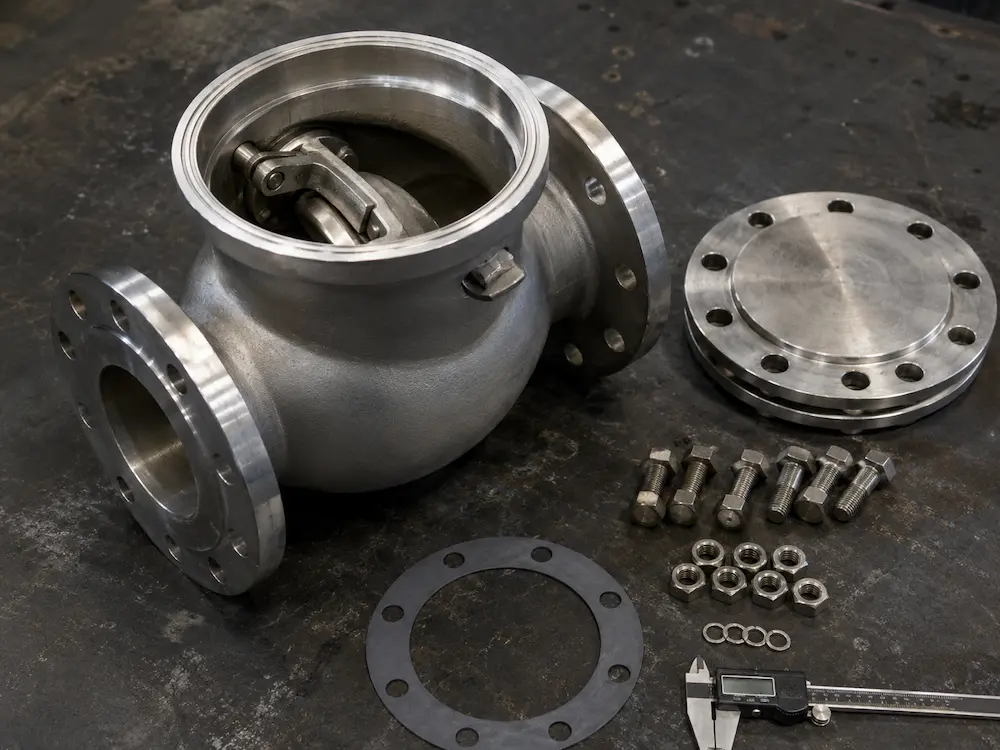
A swing check valve is a non-return valve that uses a hinged disc to prevent reverse flow. When the medium flows forward, the disc swings away from the seat. When flow stops or reverses, the disc swings back to the seat and blocks backflow.
Swing check valves are common in water systems, wastewater pipelines, oil and gas service, HVAC, power utilities, chemical utility lines, and general industrial pipelines. They are often selected where flow is relatively steady and low pressure drop is important.
For compact swing-style backflow prevention, buyers may review a wafer swing type check valve depending on pipeline size, pressure, medium, and installation requirements.
Key Features of Swing Check Valves
- Single hinged disc structure
- Simple and widely recognized design
- Common in medium and large pipelines
- Relatively low pressure drop in steady flow
- Suitable for horizontal pipelines and selected vertical upward flow
- May slam or chatter if flow is unstable or the valve is oversized
What Is a Dual Plate Check Valve?
A dual plate check valve, also called a double-door check valve or dual disc check valve, uses two spring-assisted plates instead of one large swing disc. The two plates open with forward flow and close toward the seat when flow slows or reverses.
Dual plate check valves are commonly designed as wafer, lug, or compact between-flange valves. Compared with many traditional swing check valves, they usually require less installation space and can provide faster closing response.
This makes them useful in pump discharge lines, water treatment plants, HVAC systems, marine pipelines, fire protection systems, chemical process lines, and compact process skids where space and closing speed matter.
Key Features of Dual Plate Check Valves
- Two semicircular spring-assisted plates
- Compact wafer or lug body design
- Short face-to-face dimension
- Faster closure than many traditional swing check valves
- Lower reverse flow before closure when correctly selected
- Useful where installation space and valve weight are important
- Spring and hinge materials must match the medium and corrosion risk
Dual Plate Check Valve vs Swing Check Valve: Core Difference Table
| Comparison Factor | Dual Plate Check Valve | Swing Check Valve |
|---|---|---|
| Closure Structure | Two spring-assisted plates mounted on a central hinge | One hinged disc swings open and closed |
| Closing Speed | Usually faster because of spring assistance | Usually slower because the disc travels a longer arc |
| Installation Space | Compact wafer or lug design, short face-to-face length | Larger body and longer face-to-face dimension |
| Weight | Usually lighter in many sizes | Usually heavier, especially in larger sizes |
| Pressure Drop | Depends on plate design and flow area | Often low in steady flow when correctly sized |
| Water Hammer Risk | Can reduce slam risk when properly selected | May slam if reverse flow develops before closure |
| Maintenance | Spring, hinge, and plate mechanism should be inspected | Disc, hinge pin, seat, and cover area should be inspected |
| Best Use | Compact pipelines, pump discharge, faster closure, space-limited systems | Steady-flow pipelines, larger lines, general backflow prevention |
How a Swing Check Valve Works
A swing check valve works by allowing the disc to pivot on a hinge. In forward flow, the disc swings away from the seat and remains open as long as flow velocity is sufficient. When the flow slows, stops, or reverses, the disc returns to the seat.
This simple mechanism works well in many pipelines. However, the disc must travel a relatively long distance before full closure. If flow reverses quickly, the disc may close suddenly, creating check valve slam, vibration, noise, or pressure surge.
Swing check valves should be sized carefully. If the valve is too large for the actual flow rate, the disc may not fully open and may flutter during operation. This can cause wear, leakage, and unstable pipeline performance.
How a Dual Plate Check Valve Works
A dual plate check valve works with two semicircular plates mounted on a central hinge. Forward flow pushes the plates open. When forward flow decreases, springs help the plates close quickly toward the seat.
Because the plates are smaller and spring-assisted, the closing travel is usually shorter than a traditional swing disc. This can help reduce reverse flow before closure and may reduce check valve slam in suitable systems.
However, dual plate check valves are not automatically suitable for every pipeline. The spring force, plate design, minimum flow velocity, pressure drop, and material compatibility must be reviewed before selection.
Installation Space and Weight Comparison
One major advantage of a dual plate check valve is compact installation. Many dual plate designs are installed between pipe flanges using wafer or lug-style bodies. This short face-to-face dimension reduces installation space and valve weight.
Swing check valves usually have a larger body and longer face-to-face dimension because the hinged disc requires enough internal space to swing open and close. In large pipelines, this can increase installation weight, support requirements, and maintenance space.
When Compact Design Matters
- Process skids with limited piping space
- Pump discharge lines with short straight pipe runs
- Retrofit projects where existing pipe spacing is fixed
- Marine, HVAC, and utility rooms with limited access
- Large-diameter pipelines where valve weight affects support design
Closing Speed and Water Hammer Risk
Check valve closing speed affects reverse flow and water hammer risk. If a valve closes too late, reverse flow can build momentum. When the valve finally closes, the sudden stop of reverse flow can create pressure surge, noise, vibration, and pipe stress.
Swing Check Valve Closing Behavior
A swing check valve may close more slowly because the disc travels through a longer swing path. In steady-flow pipelines, this can be acceptable. In pump discharge systems with rapid flow reversal, the valve may slam if the disc closes after reverse flow has already developed.
Dual Plate Check Valve Closing Behavior
A dual plate check valve usually closes faster because the two plates have shorter travel and spring assistance. This can reduce reverse flow before closure and may help lower slam risk when the valve is correctly sized and installed.
For severe water hammer conditions, buyers should still review the full system. A dual plate check valve may help, but nozzle check valves or non-slam check valves may be more suitable in high-risk pump systems.
Pressure Drop and Flow Performance
Pressure drop depends on valve size, internal geometry, disc or plate position, flow velocity, and whether the valve is fully open. A swing check valve can offer low pressure drop in large steady-flow pipelines because the disc can move out of the main flow path.
A dual plate check valve may have a more compact body and two plates in the flow path. Depending on the design, it may create different pressure drop characteristics. Buyers should not assume one valve always has lower pressure drop. The correct approach is to compare flow coefficient, pressure drop data, and actual operating flow rate.
For energy-sensitive pump systems, pressure drop matters because it can affect pump efficiency and operating cost. For low-flow systems, both valve types should be checked for stable opening and disc or plate chatter.
Installation Direction: Horizontal and Vertical Pipelines
Installation direction is important for both valve types. A swing check valve is commonly installed in horizontal pipelines. Some swing check valves may be suitable for vertical upward flow, but the design must be confirmed.
Dual plate check valves can often be installed in horizontal or vertical pipelines depending on the design, spring arrangement, flow direction, and manufacturer recommendation. Because the plates are spring-assisted, they may offer more installation flexibility than gravity-dependent swing designs.
For detailed vertical installation guidance, read our guide on whether a check valve can be installed vertically.
Application Comparison
| Application | Recommended Direction | Reason |
|---|---|---|
| Large steady-flow water pipeline | Swing check valve | Simple structure and low pressure drop may be suitable |
| Compact pump discharge line | Dual plate check valve | Short face-to-face length and faster closure are useful |
| HVAC system | Dual plate or swing check valve | Selection depends on space, pressure drop, and flow stability |
| Wastewater line | Depends on solids and clogging risk | Disc/plate movement and maintenance access must be reviewed |
| Marine pipeline | Often dual plate check valve | Compact size and lower weight are valuable |
| High water hammer risk | Dual plate or non-slam check valve review | Closing speed and reverse flow must be evaluated |
| Low-pressure steady utility line | Swing check valve | Simple design and cost-performance may be suitable |
Material and Seat Selection
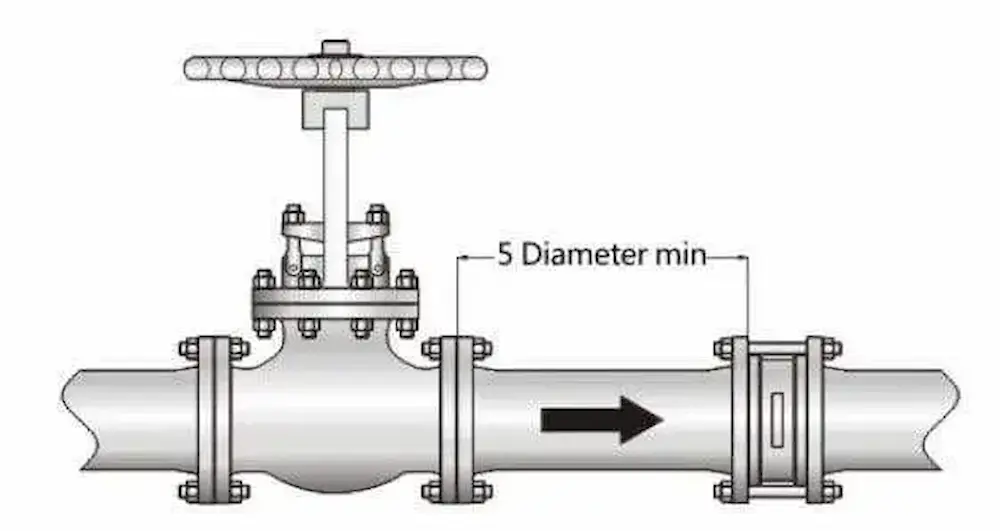
Whether buyers choose a dual plate check valve or a swing check valve, material compatibility is critical. The valve body, disc, plates, hinge pin, spring, seat, gasket, and sealing surfaces must match the medium, pressure, temperature, corrosion risk, and service condition.
| Component | Common Options | Buyer Notes |
|---|---|---|
| Body | Cast iron, ductile iron, carbon steel, stainless steel, alloy | Select according to pressure, corrosion risk, and project standard |
| Disc / Plates | Stainless steel, carbon steel, bronze, coated materials | Must resist impact, corrosion, and wear during closure |
| Spring | Stainless steel, alloy spring material, special corrosion-resistant spring | Critical for dual plate designs and corrosive service |
| Seat | Metal, EPDM, NBR, FKM, PTFE | Affects leakage performance and media compatibility |
| Gasket | Rubber, PTFE, graphite, spiral wound, project-specified material | Must match flange standard, temperature, pressure, and medium |
Common Selection Mistakes
Mistake 1: Choosing Only by Valve Price
A swing check valve may be cheaper in some cases, while a dual plate check valve may save space and reduce weight. The correct choice should consider total system performance, not only purchase price.
Mistake 2: Ignoring Water Hammer Risk
Check valve slam can damage piping, pumps, supports, and sealing surfaces. If reverse flow develops quickly, closing speed and valve type must be reviewed carefully.
Mistake 3: Oversizing the Check Valve
An oversized check valve may not open fully under normal flow. This can cause disc or plate flutter, noise, vibration, seat wear, and leakage.
Mistake 4: Assuming Dual Plate Always Means Non-Slam
Dual plate check valves usually close faster than many swing designs, but they are not automatically non-slam in every system. Pump behavior, flow velocity, and pipeline layout still matter.
Mistake 5: Ignoring Spring and Hinge Material
In dual plate check valves, springs and hinge pins are critical internal components. If these parts are not compatible with the medium, corrosion or fatigue may cause early failure.
Mistake 6: Ignoring Installation Space and Maintenance Access
A swing check valve needs space for its body, cover, and maintenance access. A dual plate valve saves space but may require careful access planning for between-flange installation and inspection.
How to Choose Between Dual Plate and Swing Check Valves
| Selection Question | If Yes | Likely Direction |
|---|---|---|
| Is installation space limited? | Short face-to-face length is important. | Dual plate check valve |
| Is the pipeline large and flow steady? | Low pressure drop and simple structure are priorities. | Swing check valve |
| Is faster closure required? | Reverse flow develops quickly. | Dual plate or non-slam check valve |
| Is valve weight a concern? | Pipe support load must be reduced. | Dual plate check valve |
| Is water hammer risk low? | Flow is steady and pump shutdown is slow. | Swing check valve may be suitable |
| Is the medium dirty or contains solids? | Clogging and maintenance access matter. | Special review required |
Information Buyers Should Provide Before Quotation
- Valve size and pipeline size
- Medium name and composition
- Operating pressure and design pressure
- Operating temperature and maximum temperature
- Normal, minimum, and maximum flow rate
- Installation direction: horizontal, vertical upward, or vertical downward
- Application: pump discharge, water treatment, chemical, HVAC, gas, oil, wastewater, or marine
- Water hammer or non-slam requirement
- Connection type: wafer, lug, flanged, or welded
- Body material requirement
- Disc, plate, spring, and seat material requirements
- Face-to-face dimension or space limitation
- Required test reports, certificates, and documentation
Related Check Valve Guides
For broader check valve selection and installation details, these related guides may help:
- Industrial Check Valves: Types, Applications and Selection Guide — main guide for check valve types, backflow prevention, materials, and selection logic.
- Swing Check Valve vs Spring Check Valve — compares hinged disc closure and spring-assisted closure for industrial pipelines.
- Can a Check Valve Be Installed Vertically? — explains vertical installation, flow direction, and check valve type suitability.
- Check Valve Product Range — compare swing, spring, lift, dual plate, nozzle, and other industrial check valve options.
Final Recommendations for Industrial Buyers
A swing check valve is usually a practical choice for steady-flow pipelines, larger pipe sizes, and applications where simple structure and low pressure drop are important. It is widely used in water, wastewater, oil, gas, HVAC, and general industrial systems.
A dual plate check valve is usually preferred when installation space, valve weight, faster closure, and reduced reverse flow are important. It is often selected for pump discharge systems, compact process skids, marine pipelines, HVAC systems, and applications where standard swing check valves may close too slowly.
If you need help choosing between dual plate check valves and swing check valves for water treatment, pump discharge, chemical processing, HVAC, oil and gas, wastewater, or industrial utility service, Vcore Valve can review your working conditions and recommend a suitable check valve configuration. Buyers can also compare available options in our check valve category.
For industrial sourcing, the key question is not only “dual plate or swing?” The better question is: “Which check valve can close at the right speed, fit the installation space, control pressure drop, and prevent backflow reliably in this exact pipeline system?”
FAQ
1. What is the difference between a dual plate check valve and a swing check valve?
A dual plate check valve uses two spring-assisted plates that close quickly. A swing check valve uses one hinged disc that swings open and closed with flow direction.
2. Which valve closes faster, dual plate or swing check valve?
A dual plate check valve usually closes faster because the plates have shorter travel and spring assistance. A swing check valve may close more slowly because the disc travels through a larger arc.
3. Which check valve is better for water hammer prevention?
A dual plate check valve can reduce slam risk compared with many swing check valves when properly selected. For severe water hammer conditions, a nozzle or non-slam check valve may also need to be reviewed.
4. Which valve has lower pressure drop?
It depends on valve size, design, and flow conditions. Swing check valves can provide low pressure drop in steady large pipelines, while dual plate check valves offer compact installation and faster closure. Buyers should compare actual pressure drop data.
5. When should I choose a dual plate check valve?
Choose a dual plate check valve when installation space is limited, valve weight matters, faster closure is required, or pump discharge backflow needs better control.