Quick Overview
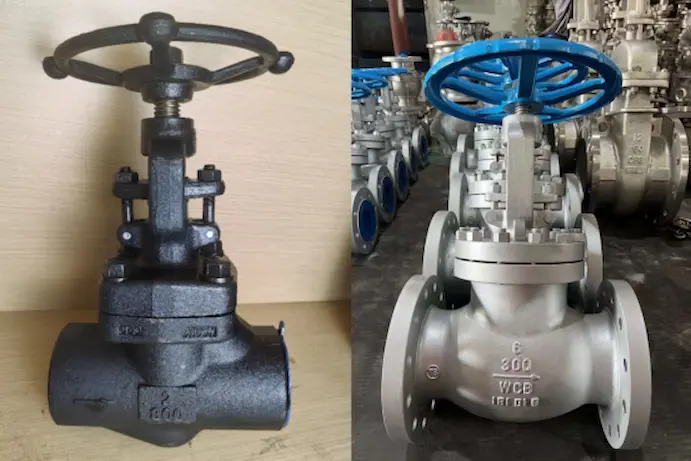
At Vcore Valve, we understand that choosing the right valve for your industrial applications is crucial for ensuring optimal performance, safety, and efficiency. One of the key factors that affect valve performance is the manufacturing process. In this article, we’ll discuss forged vs cast valves manufacturing methods, providing you with an in-depth comparison to help you make an informed decision for your specific needs.
1. Strength and Pressure Resistance: Why Forged Valves Excel
Forged Valves:
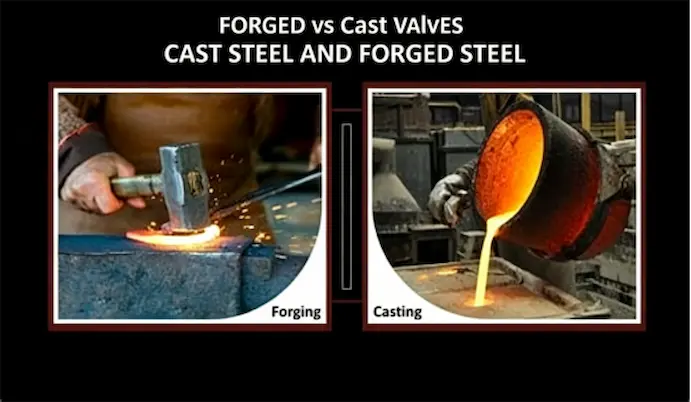
Forging involves shaping metal under extreme pressure and temperature, which results in a uniform grain structure that greatly enhances the tensile strength and pressure resistance of the valve. As a result, forged valves are ideal for high-pressure and high-temperature applications where strength and durability are paramount. The superior metal structure makes them highly resistant to fatigue, erosion, and cracking.
- High-Pressure Applications: Forged valves are best suited for critical industries like oil and gas, power generation, and chemical processing where systems are constantly exposed to high pressures and fluctuating environments.
- Recommended Use: For instance, in high-pressure steam systems, offshore oil platforms, or chemical reactors, forged valves ensure the integrity and safety of operations under demanding conditions.
Cast Valves:
While cast valves are generally more affordable and suitable for less demanding applications, they tend to have a less uniform structure due to the cooling process, which can introduce porosity and voids. This makes them less durable and more prone to failure under high-pressure conditions. Although casting techniques have improved, cast valves are not ideal for high-stress, high-temperature applications.
- Low to Medium Pressure Applications: Cast valves are best suited for systems that don’t experience extreme pressure or temperature variations, such as water distribution systems, HVAC systems, and light industrial applications.
Vcore Valve Expertise:
For critical systems requiring maximum strength and pressure resistance, forged valves are the right choice. Their performance in high-stress environments makes them invaluable for industries where reliability and safety are non-negotiable.
2. Design Flexibility: Cast Valves Offer More Complex Shapes
Cast Valves:
One of the significant advantages of casting is the ability to create complex valve designs. With casting, we can produce valves with intricate internal passageways, multi-functional flow paths, and non-standard shapes—something that forging often cannot achieve due to its material limitations.
- Flexible Designs: For valves that require unique internal flow channels or multi-way valve bodies, casting is the ideal process. It allows for greater design freedom and complexity, enabling us to meet specific project requirements.
- Key Applications: Cast valves are often used in specialized chemical reactors, multi-way valves in pharmaceutical plants, and large industrial systems where custom shapes are needed.
Forged Valves:
While forged valves offer outstanding strength, they are typically limited to simpler designs. Forging is not ideal for producing highly complex valve bodies or intricate flow structures. As a result, the design flexibility of forged valves is limited.
- Standard Designs: Forged valves are most commonly used for simple, robust designs like ball valves, gate valves, and globe valves, which don’t require complex geometries.
Vcore Valve Expertise:
For applications demanding custom valve shapes or multi-channel designs, cast valves are your best option. However, if you need high strength with simpler designs, forged valves provide optimal reliability.
Comparison of Forged and Cast Valves
| Feature | Forged Valves | Cast Valves |
|---|---|---|
| Manufacturing Process | Created by forging (shaping metal under high pressure and temperature) | Created by pouring molten metal into a mold and allowing it to cool and solidify |
| Material Strength | Generally stronger due to the alignment of grain structure | Weaker, as the casting process may result in uneven material distribution and defects |
| Durability | More durable, especially under high pressure and extreme temperature conditions | Less durable; more susceptible to cracking under high stress |
| Cost | More expensive due to the complex manufacturing process | Generally more affordable due to less expensive production methods |
| Applications | Ideal for high-pressure, high-temperature applications (e.g., power plants, oil and gas) | Suitable for low- to medium-pressure applications where cost efficiency is prioritized |
| Weight | Lighter in weight for similar sizes due to stronger material | Heavier due to thicker walls required to compensate for material weaknesses |
| Pressure Resistance | Excellent pressure resistance | Lower pressure resistance compared to forged valves |
| Customizability | Can be customized with more precision and specific requirements | Limited customization; typically mass-produced with standard dimensions |
| Defects | Less prone to defects like air pockets or cracks | More prone to defects like porosity, shrinkage, and surface irregularities |
| Maintenance | Requires less frequent maintenance due to its robust nature | May require more frequent inspection and maintenance due to material weaknesses |
3. Cost and Production Speed: Cast Valves Offer Greater Cost Efficiency
Cast Valves:
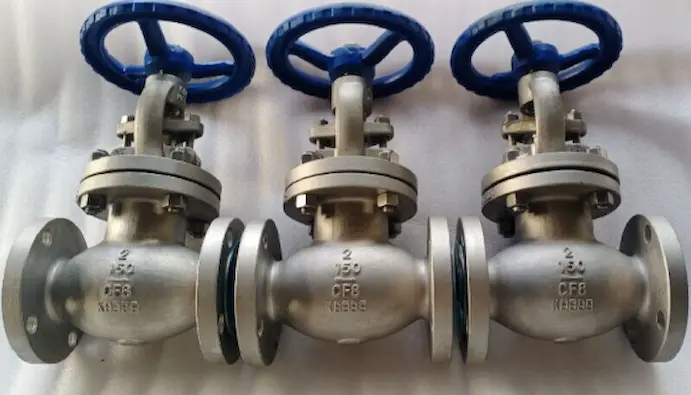
Casting is generally more cost-effective than forging, especially for large-scale production. The casting process allows for quick production of complex shapes, making it ideal for high-volume manufacturing runs. Additionally, material waste is minimized in casting, contributing to reduced costs.
- Cost-Effective for High-Volume Production: If your project requires large quantities of valves that don’t face extreme pressure or high temperatures, casting offers a great cost-to-performance ratio.
- Quick Production: The casting process has a shorter lead time, making it suitable for projects with urgent timelines.
Forged Valves:
The forging process is more expensive and time-consuming than casting. It requires higher temperatures and more extensive machining, which increases material waste and labor costs. Additionally, the lead time for forged valve production is generally longer due to the intensive process involved.
- Higher Initial Cost: While forging offers superior strength, the higher cost of production makes it better suited for applications where performance outweighs the cost factor.
- Longer Production Times: Forging requires more time for setup and processing, especially for custom-made valves.
Vcore Valve Expertise:
For projects requiring large batches of standard valves with medium pressure and shorter lead times, cast valves are a more cost-efficient choice. However, for high-performance applications, forged valves provide unmatched durability and strength, justifying their higher cost.
4. Durability and Service Life: Forged Valves Outlast the Rest
Forged Valves:
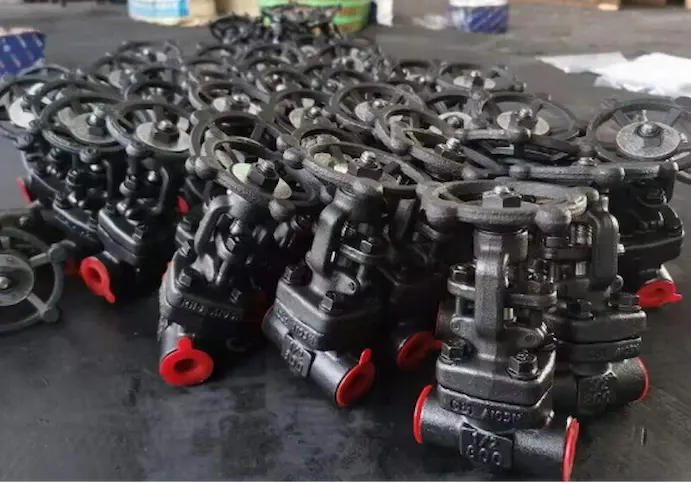
Forged valves are incredibly durable due to their uniform grain structure, which enhances their resistance to wear, corrosion, and fatigue. This makes them ideal for high-stress and high-temperature environments, where reliability is essential.
- Longer Service Life: Forged valves are built to withstand extreme operating conditions, ensuring a longer lifespan and reduced maintenance needs in demanding environments.
- Applications: Forged valves are the preferred choice for nuclear power plants, oil refineries, and high-pressure steam systems where reliability and long-term performance are critical.
Cast Valves:
While cast valves can handle moderate pressure and are suitable for lighter-duty applications, their durability is lower than that of forged valves. They are more susceptible to cracks, leaks, and wear, particularly when exposed to high-stress conditions.
- Shorter Service Life: Cast valves tend to require more frequent maintenance or replacement in environments where high pressures or severe operating conditions exist.
Vcore Valve Expertise:
For applications requiring high durability and long-term service life, forged valves provide superior performance. They are built to last and can handle demanding environments better than cast valves.
Conclusion: Choosing the Right Valve for Your Application
At Vcore Valve, we offer both forged and cast valves to meet the diverse needs of our customers. The right choice depends on your specific application requirements:
- Forged Valves: Ideal for high-pressure, high-temperature, and critical applications. Choose forged valves if you need maximum strength, durability, and long-term reliability.
- Cast Valves: Best for cost-effective, medium-pressure applications where design flexibility and high-volume production are key factors. If your project requires complex shapes and large quantities, cast valves are the way to go.
Our engineering team at Vcore Valve can help you select the right valve solution for your project. Contact us today to discuss your needs and find the perfect valve for your system.
FAQ
Q1: Why are forged valves better for high-pressure applications?
A1: Forged valves have a dense, uniform grain structure, which significantly enhances their strength and pressure resistance, making them ideal for high-pressure environments.
Q2: Can I use a cast valve in high-pressure systems?
A2: Cast valves are generally not suitable for high-pressure systems due to their lower tensile strength and potential for structural flaws.
Q3: What are the benefits of using cast valves?
A3: Cast valves offer design flexibility, allowing for the creation of complex internal channels and multi-way valve designs, making them ideal for custom applications.
Q4: How long do forged valves last compared to cast valves?
A4: Forged valves generally last longer than cast valves due to their superior durability and resistance to wear, corrosion, and fatigue.
Q5: Which industries benefit most from forged valves?
A5: Forged valves are preferred in critical industries such as oil and gas, power generation, and chemical processing, where reliability and performance are essential.