When buyers ask, “How many types of brass valves are there?”, they usually do not need a simple list only. What they really need is a practical way to decide which brass valve type should be used for shut-off, flow regulation, backflow prevention, pressure control, gas service, potable water, hot water, HVAC systems, irrigation, or OEM equipment.
This matters because many brass valves look similar from the outside. A brass ball valve, brass gate valve, brass globe valve, and brass stop valve may all appear to be simple yellow-metal pipeline components. Internally, however, they work very differently. Selecting the wrong type can cause leakage, excessive pressure drop, unstable flow control, premature wear, compliance problems, or project delays.
For B2B buyers, the better question is not only how many types exist. The more important question is: which type of brass valve matches the medium, pressure, temperature, operation frequency, installation space, market compliance, and maintenance plan?
This guide explains the main types of brass valves, how they work, where they are used, what material and compliance factors matter, and how overseas buyers can make better sourcing decisions when purchasing industrial brass valves from a manufacturer, supplier, factory, wholesaler, or OEM partner.
Why Brass Valve Type Selection Matters More Than Buyers Think
Brass valves are widely used in plumbing, HVAC, water treatment, gas distribution, compressed air, irrigation, and light industrial systems. Their popularity comes from a practical balance of machinability, corrosion resistance, sealing performance, cost control, and ease of installation.
However, a brass valve is not a universal component. A valve designed for quick shut-off should not automatically be used for precise flow regulation. A valve designed for water may not be suitable for gas. A standard brass valve may not satisfy drinking water compliance in some markets. A low-cost valve may work in mild water conditions but fail earlier in aggressive water chemistry.
In procurement, the wrong valve choice often creates hidden costs. The purchase price may look attractive, but the total cost can increase through leakage complaints, replacement labor, warranty claims, system downtime, failed inspection, or rejected shipments. For importers and distributors, the risk is even larger because one wrong batch can create customer dissatisfaction across multiple projects.
That is why professional buyers should evaluate brass valves by function, material, pressure rating, seal compatibility, thread standard, certification, and real application conditions. Size and price are important, but they are never enough.
What Is a Brass Valve?
A brass valve is a flow control device made mainly from a copper-zinc alloy. Depending on the valve design, it may be used to open or close a pipeline, regulate flow, prevent reverse flow, reduce pressure, release excess pressure, or isolate equipment for maintenance.
Brass is commonly used because it offers a useful combination of strength, corrosion resistance, machinability, and cost efficiency. It is easier to machine than many stainless steels, provides good sealing surface quality, and performs well in many water, air, gas, and HVAC applications.
Common brass valve components may include a brass body, brass bonnet, brass stem, ball, gate, disc, needle, spring, check mechanism, PTFE seat, rubber seal, EPDM seal, NBR seal, threaded ends, compression ends, solder ends, manual handle, lever, or handwheel.
For sourcing, buyers should remember that not all brass materials are the same. Brass alloy composition, lead content, dezincification resistance, surface treatment, machining accuracy, sealing material, and pressure testing all affect final performance.
How Many Types of Brass Valves Are Commonly Used?
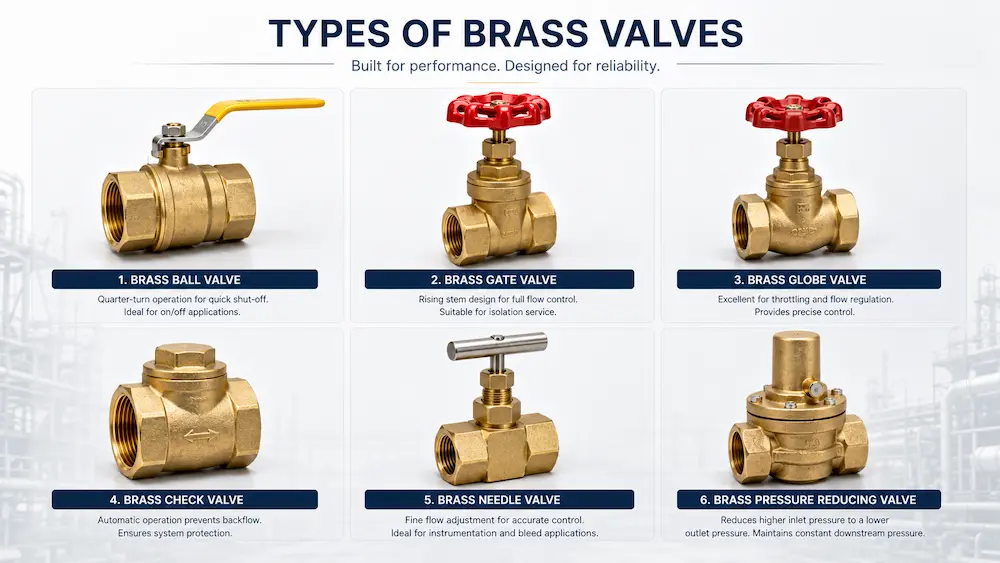
In most plumbing, HVAC, gas, water, irrigation, and light industrial systems, there are around 8–10 common types of brass valves. The exact number depends on how the valves are classified. Some buyers classify by function, some by structure, and others by application.
The most common types of brass valves include:
- Brass ball valve
- Brass gate valve
- Brass globe valve
- Brass check valve
- Brass angle valve
- Brass stop valve
- Brass needle valve
- Brass pressure reducing valve
- Brass safety valve
- Brass bibcock or hose valve
Each type has a different internal mechanism and should be selected according to the required function. A brass valve that performs well in one system may be unsuitable in another.
Brass Valve Types Compared by Function
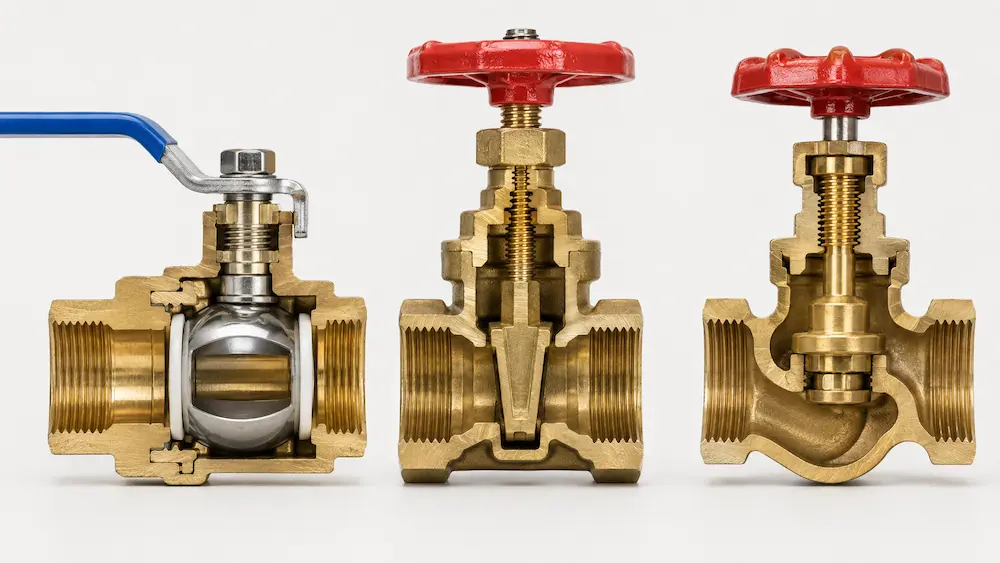
| Brass Valve Type | Main Function | Operation Style | Pressure Drop | Best Application | Buyer Warning |
|---|---|---|---|---|---|
| Brass Ball Valve | Quick shut-off | Quarter-turn | Low | Water, gas, HVAC, compressed air | Not ideal for precision throttling |
| Brass Gate Valve | Pipeline isolation | Multi-turn | Very low when fully open | Water supply isolation | Do not use partially open for control |
| Brass Globe Valve | Flow regulation | Multi-turn | Medium to high | Heating, balancing, process water | Higher pressure loss than ball valves |
| Brass Check Valve | Backflow prevention | Automatic | Low to medium | Pumps, water heaters, HVAC loops | Confirm installation direction |
| Brass Angle Valve | Local shut-off and direction change | Quarter-turn or multi-turn | Medium | Fixtures, sinks, toilets | Not for high-flow industrial lines |
| Brass Stop Valve | Local shut-off | Multi-turn | Medium | Plumbing branch lines | Confirm potable water suitability |
| Brass Needle Valve | Fine flow control | Multi-turn | High | Instrumentation and sampling lines | Not suitable for large-flow pipelines |
1. Brass Ball Valve
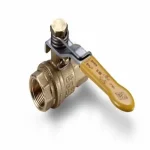
A brass ball valve uses a rotating ball with a bore through the center. When the handle is turned 90 degrees, the bore aligns with the pipeline to allow flow. When the handle is turned back, the ball blocks the flow path.
Brass ball valves are among the most popular brass valve types because they are simple, compact, easy to operate, and provide reliable shut-off. They are commonly used in residential plumbing, commercial water systems, gas pipelines, HVAC circuits, compressed air systems, irrigation systems, and equipment connections. For a more detailed product-level explanation, buyers can also review this guide to brass ball valves.
The main advantage is quick operation. A quarter-turn handle makes it easy for users to see whether the valve is open or closed. In full-port designs, pressure drop is low because the flow path is relatively open.
However, brass ball valves are not ideal for continuous precision throttling. Leaving a ball valve partially open for long periods may cause seat wear, vibration, noise, or unstable flow. For buyers who need accurate regulation, a brass globe valve or brass needle valve is usually more suitable.
Best for: quick shut-off, frequent operation, water, air, gas, HVAC, and general isolation.
Not ideal for: precision flow regulation or continuous throttling.
2. Brass Gate Valve
A brass gate valve uses a gate or wedge that moves up and down to open or close the flow path. When fully open, the gate is lifted out of the flow, allowing relatively low resistance. When closed, the gate blocks the pipeline.
Brass gate valves are mainly used for isolation. They are common in water distribution systems, plumbing lines, irrigation systems, and maintenance shut-off points. For buyers evaluating medium-size shut-off valves, this 4 brass gate valve page can help connect the general selection logic with a more specific product example.
The key benefit is low flow resistance when fully open. However, brass gate valves are slower to operate than ball valves because they require multiple turns of a handwheel. They are also not designed for throttling. If a gate valve is left partially open, the gate and seat may suffer erosion, vibration, and sealing damage.
Buyers should select brass gate valves when the valve will stay fully open or fully closed most of the time. For frequent operation, a ball valve is usually easier and faster.
Best for: pipeline isolation and low-resistance full-open flow.
Not ideal for: frequent operation or flow control.
3. Brass Globe Valve
A brass globe valve uses a disc and seat structure to control flow. Compared with ball valves and gate valves, globe valves create higher pressure drop, but they provide better flow regulation.
This makes brass globe valves useful in heating systems, process water lines, balancing circuits, and applications where the operator needs to adjust flow rather than simply open or close the pipeline.
The main advantage is controllability. The disc moves gradually toward or away from the seat, allowing more precise flow adjustment. The trade-off is that the flow path is less direct, so pressure loss is higher.
A common buyer mistake is choosing a brass ball valve because it is cheaper, then using it for throttling. In systems requiring flow balancing, this can lead to poor control and unstable operation. A brass globe valve is usually the more suitable choice when regulation matters.
Best for: flow regulation, balancing, heating lines, and controlled throttling.
Not ideal for: applications requiring very low pressure drop.
4. Brass Check Valve
A brass check valve allows flow in one direction and prevents reverse flow. It operates automatically based on fluid pressure and does not require manual control.
Common types include swing check valves, spring check valves, lift check valves, inline check valves, and foot valves. Brass check valves are used in pump outlets, water heaters, HVAC loops, compressed air lines, irrigation systems, and domestic water systems.
The main purpose is equipment protection. Backflow can damage pumps, contaminate water systems, reverse meter readings, or create water hammer problems. A properly selected check valve helps maintain flow direction and system safety. Buyers who need a deeper explanation of check valve types, installation direction, and application risks can read this brass check valve guide.
Buyers should pay attention to cracking pressure, installation direction, spring material, seal material, and whether the valve is suitable for horizontal or vertical installation. A check valve installed in the wrong orientation may fail to close properly.
Best for: backflow prevention and automatic one-way flow.
Not ideal for: manual shut-off or flow regulation.
5. Brass Angle Valve
A brass angle valve changes the flow direction by 90 degrees. It is widely used in fixture connections, under-sink plumbing, toilet water supply, kitchen equipment, and compact installation spaces.
The key benefit is space efficiency. Instead of using an extra elbow plus a separate valve, an angle valve combines direction change and shut-off control in one compact component.
For B2B buyers, brass angle valves are often purchased in bulk for plumbing projects, sanitary ware systems, hotel construction, apartment buildings, and commercial facilities. Surface finish, handle design, plating quality, thread accuracy, and packaging are important because many angle valves are visible after installation.
Best for: compact fixture connections and 90-degree water supply shut-off.
Not ideal for: high-flow industrial pipelines or precision regulation.
6. Brass Stop Valve
A brass stop valve is used to stop or regulate water flow in plumbing systems. It is often installed near fixtures, appliances, or branch lines to allow local isolation during maintenance.
Depending on design, a stop valve may provide better gradual control than a simple ball valve, but it is usually not as precise as a globe valve or needle valve. It is commonly found in domestic and commercial water distribution.
For procurement, buyers should confirm whether the valve is intended for potable water, hot water, cold water, or general non-potable service. Handle durability and sealing reliability matter because stop valves may remain unused for long periods and then need to operate reliably during maintenance.
Best for: local shut-off, fixture isolation, and maintenance access.
Not ideal for: high-cycle industrial operation unless specifically designed for it.
7. Brass Needle Valve
A brass needle valve uses a slender, tapered needle-like stem to control small flow rates with high precision. It is commonly used in instrumentation, pressure gauges, sampling lines, laboratory systems, pneumatic control, and low-flow applications.
The main advantage is fine adjustment. Needle valves can control flow much more precisely than ball valves or gate valves. However, the flow path is small, so they are not suitable for high-flow pipelines.
Buyers should check pressure rating, thread type, stem material, sealing material, and compatibility with the medium. For instrumentation applications, small leakage or poor machining accuracy can affect system readings.
Best for: precision flow control and instrumentation.
Not ideal for: large-flow water or gas pipelines.
8. Brass Pressure Reducing Valve
A brass pressure reducing valve is designed to reduce inlet pressure to a lower, controlled outlet pressure. It is commonly used in building water supply, irrigation, equipment protection, and systems where excessive pressure can damage fixtures, pipes, or appliances.
This type of valve is not just an open-close component. It is a pressure control device. Buyers must confirm inlet pressure range, outlet adjustment range, flow capacity, temperature rating, and whether a pressure gauge connection is required.
In commercial buildings, pressure reducing valves help protect downstream plumbing systems and reduce water hammer risk. In OEM equipment, they help maintain stable operating conditions.
Best for: pressure control and downstream equipment protection.
Not ideal for: simple isolation where a ball valve would be enough.
9. Brass Safety Valve
A brass safety valve is used to release excess pressure when system pressure exceeds a set limit. It is often used in boilers, water heaters, compressed air systems, pressure vessels, and heating equipment.
Safety valves are critical components. Buyers should never select them only by thread size. Set pressure, discharge capacity, temperature rating, certification, spring material, and application standard must be confirmed.
A wrong safety valve can create serious risk. If the set pressure is too high, the system may become unsafe. If it is too low, the valve may discharge unnecessarily and disrupt operation.
Best for: overpressure protection.
Not ideal for: normal flow control or shut-off.
10. Brass Bibcock or Hose Valve
A brass bibcock or hose valve is used for water outlets, garden connections, washing areas, outdoor taps, and hose supply points. It is simple, practical, and often purchased in large quantities for construction, agriculture, and commercial buildings.
For buyers, the main concerns are thread standard, handle strength, sealing durability, surface finish, corrosion resistance, and packaging. In outdoor use, resistance to weather, mineral deposits, and rough operation is important.
Best for: water outlets, hose connections, irrigation, and utility use.
Not ideal for: precision control or high-pressure industrial systems.
Brass Valve Material and Alloy Considerations
Choosing the right valve type is only half of the decision. The other half is selecting the right brass material.
Brass is mainly a copper-zinc alloy, but different grades contain different levels of copper, zinc, lead, tin, arsenic, or other elements. These differences affect machinability, strength, corrosion resistance, dezincification resistance, and compliance.
Standard Brass
Standard brass is widely used for general plumbing, HVAC, air, and non-critical water systems. It offers good machinability and cost efficiency. Many traditional brass valves use leaded brass because lead improves machining performance.
However, standard leaded brass may not be suitable for drinking water markets with strict lead requirements. Buyers must confirm local regulations before ordering.
Lead-Free Brass
Lead-free brass is increasingly important in potable water applications. It is commonly required for valves used in drinking water systems in regulated markets.
From a sourcing perspective, buyers should not rely only on supplier claims such as “eco brass” or “lead-free.” They should request material certificates, test reports, and relevant compliance documentation.
For potable water or low-lead purchasing requirements, buyers may also compare the material logic with a specific no-lead brass foot valve product example. This is useful when the project requires both backflow prevention and stricter material control for water-contact components.
DZR Brass
DZR means dezincification-resistant brass. Dezincification is a corrosion process where zinc is selectively removed from brass, leaving a weak copper-rich structure. This can reduce mechanical strength and cause leakage or failure.
DZR brass is recommended for aggressive water conditions, warm water systems, high chloride environments, or regions where dezincification risk is known. For long-term projects, the extra material cost may be justified by lower failure risk.
Brass vs Bronze vs Stainless Steel Valves
Brass is not always the best material. Buyers should compare brass with bronze and stainless steel depending on the application, water chemistry, corrosion risk, compliance requirement, and expected service life. For a more focused comparison, see this guide on brass valves vs bronze valves.
| Material | Main Advantage | Main Limitation | Better Use |
|---|---|---|---|
| Standard brass | Good machinability and cost efficiency | May contain lead; may face dezincification risk in aggressive water | Non-potable water, air, HVAC and light utility service where compatible |
| Lead-free brass | Helps meet lead-content requirements for potable-water markets | Does not automatically prove full drinking-water approval or corrosion resistance | Drinking-water products when required documents and approvals are confirmed |
| DZR brass | Improved resistance to dezincification | Not a universal solution for seawater or severe chloride corrosion | Aggressive water or warm water circulation where dezincification is a known risk |
| Bronze | Good castability and performance in selected water/marine utility services | Higher cost; exact bronze grade must be confirmed | Marine-related water service, strainers, pump/valve components, fire/water systems |
| Stainless steel | Better chemical and corrosion resistance in many industrial services | Higher cost; chloride pitting and chemical compatibility still need review | Chemical, food, clean process, and more demanding industrial services |
When the application involves corrosive fluids, high hygiene requirements, chemical processing, or demanding industrial service, buyers should also compare brass vs stainless steel valves before confirming the final material. Brass is cost-effective and easy to machine, while stainless steel usually provides stronger corrosion resistance in more severe environments.
How to Choose the Right Brass Valve for Your Application
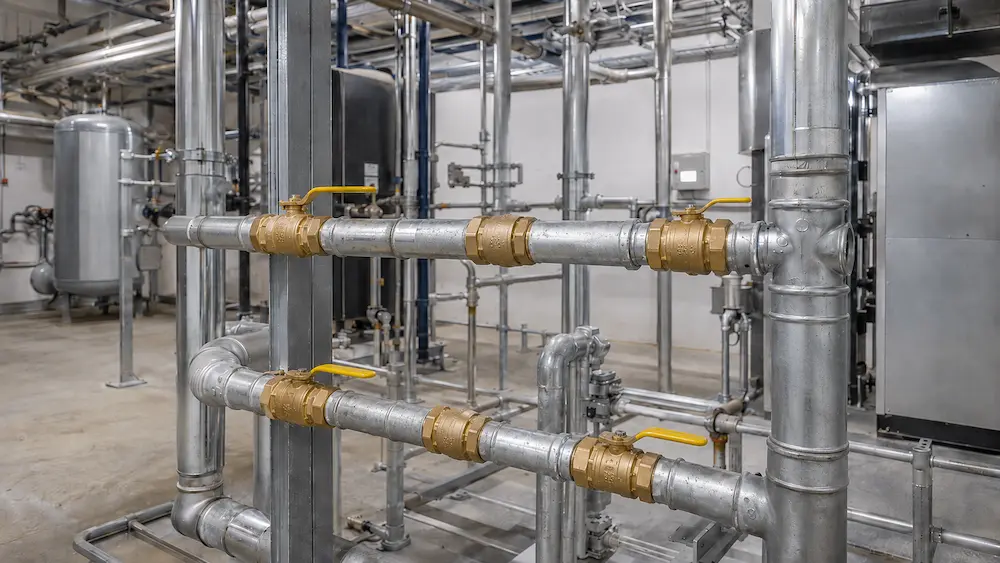
For Water Supply Systems
For general water shut-off, brass ball valves are often a practical choice because they are easy to operate and provide reliable sealing. For main line isolation where the valve stays open for long periods, brass gate valves may also be used.
For flow balancing or regulation, brass globe valves are more suitable. For backflow prevention, choose brass check valves. For potable water, lead-free compliance must be confirmed according to the target market.
For Gas Systems
Gas service requires extra caution. Buyers must confirm that the brass valve is approved for gas use and suitable for the specific gas type, pressure range, seal material, leakage standard, and local code requirements.
Ball valves are commonly used for gas shut-off because of their quick operation and sealing performance. However, pressure rating, thread standard, certification, and supplier documentation must be checked carefully.
For HVAC Systems
HVAC systems may use brass ball valves for isolation, brass globe valves for balancing, brass check valves for circulation loops, and brass pressure reducing valves for pressure control.
Temperature rating is especially important in hot water and heating systems. Seal material should be compatible with temperature, glycol concentration, and system chemistry.
For OEM Equipment
OEM buyers often care about consistency, machining precision, compact design, private label marking, packaging, and long-term supply stability. A valve that works in one prototype must also perform consistently across thousands of units.
For OEM projects, buyers should provide drawings, material requirements, testing standards, surface treatment needs, packaging instructions, and expected annual quantity.
For Light Industrial Pipelines
Brass valves can be suitable for compressed air, clean water, non-corrosive liquids, and some low-pressure industrial systems. However, they are not ideal for highly corrosive chemicals, severe steam service, or aggressive industrial media unless specifically engineered for that service.
When in doubt, compare brass with bronze, stainless steel, or specialized alloy valves.
Application Selection Table
| Application | Recommended Brass Valve Type | Main Reason | Avoid / Caution |
|---|---|---|---|
| Main water shut-off | Brass ball valve | Fast operation and tight shutoff | Needle valve or globe valve if only isolation is needed |
| Low-resistance isolation | Brass gate valve or full-port ball valve | Low resistance when fully open | Partially open gate valve for throttling |
| Manual flow balancing | Brass globe valve | Better regulation than standard ball/gate valves | Standard ball valve for precision throttling |
| Pump outlet | Brass check valve | Prevents reverse flow | Manual shutoff valve as a substitute for check valve |
| Instrument line | Brass needle valve | Fine low-flow adjustment | Large-flow pipeline service |
| Building pressure control | Brass pressure reducing valve | Controls downstream pressure | Simple shutoff valve when pressure control is required |
| Overpressure protection | Brass safety valve | Releases excess pressure at set pressure | Selecting by thread size only |
Common Buying Mistakes and Consequences
Mistake 1: Selecting by Price Only
Cheap brass valves may use lower-grade material, poor machining, weak handles, inconsistent thread accuracy, or unreliable sealing components.
Consequence: leakage, warranty claims, customer complaints, and early replacement.
Mistake 2: Ignoring Lead-Free Requirements
A valve may look correct but fail compliance requirements for potable water markets.
Consequence: failed inspection, rejected shipment, legal risk, or inability to sell in regulated markets.
Mistake 3: Using Gate Valves for Throttling
Gate valves are designed for full-open or full-close service. Partial opening can damage the gate and seat.
Consequence: vibration, erosion, leakage, and shorter service life.
Mistake 4: Using Ball Valves for Precision Control
Ball valves are excellent for shut-off but not ideal for continuous fine flow adjustment.
Consequence: unstable flow, seat wear, poor process control, and operator frustration.
Mistake 5: Ignoring Dezincification Risk
In aggressive water conditions, standard brass may suffer dezincification over time.
Consequence: weakened valve body, leakage, and possible failure.
Mistake 6: Not Confirming Thread Standard
BSP, NPT, metric, compression, and other connection standards are not interchangeable.
Consequence: installation delays, adapter costs, leakage at joints, and project complaints.
Buying Mistakes Table
| Buying Mistake | Technical Problem | Commercial Consequence |
|---|---|---|
| Buying by lowest price | Poor machining or weak sealing | Warranty claims and customer complaints |
| Ignoring alloy grade | Corrosion or dezincification | Early failure and replacement cost |
| Wrong valve type | Poor control or high pressure loss | System inefficiency |
| Wrong thread standard | Installation mismatch | Project delay |
| Missing certification | Failed market compliance | Shipment rejection or sales restriction |
| Wrong seal material | Temperature or media incompatibility | Leakage and downtime |
Compliance and Market Trends for Brass Valves
The brass valve market is moving toward safer materials, better documentation, and more application-specific sourcing. Buyers should pay attention to several trends.
First, lead-free brass valves are becoming more important in drinking water applications. In the United States, the EPA explains that “lead free” for relevant drinking water pipes, fittings, plumbing fittings, and fixtures generally means a weighted average of not more than 0.25% lead across wetted surfaces. Buyers can review the official EPA guidance here: EPA lead-free drinking water requirements.
Second, documentation is becoming part of the product itself. NSF/ANSI/CAN 372 is commonly used to address lead content for drinking water system components. Buyers can review the technical background here: NSF/ANSI/CAN 372 technical requirements.
Third, buyers selling into European markets should pay attention to drinking water material and quality requirements. Directive (EU) 2020/2184 provides the European regulatory framework for water intended for human consumption. The official EU text can be reviewed here: Directive (EU) 2020/2184.
Beyond compliance, DZR brass is gaining attention because water chemistry varies widely by region. In areas with aggressive water, high chloride levels, or warm water circulation, dezincification resistance can become a major durability factor.
OEM and project buyers are also asking for more customization, including custom handles, private labeling, laser marking, packaging, thread options, surface finishes, and special testing. For B2B buyers, brass valve sourcing is no longer a simple catalog purchase. It is a technical and commercial evaluation process.
What Information Should Buyers Provide Before Quotation?
| Required Information | Why It Matters |
|---|---|
| Valve type | Determines function and internal structure |
| Size | Confirms flow capacity and connection compatibility |
| Medium | Affects material and seal selection |
| Pressure rating | Ensures safe operation |
| Temperature range | Determines seal and body suitability |
| Connection standard | Avoids thread or installation mismatch |
| Material requirement | Confirms standard brass, lead-free brass, or DZR brass |
| Certification requirement | Important for potable water, gas, or regulated markets |
| Quantity | Affects pricing, production planning, and packaging |
| OEM needs | Determines marking, handle, and packaging customization |
Final Recommendation for Industrial Buyers
There are many types of brass valves, but the best choice depends on function first. Use brass ball valves for quick shut-off, brass gate valves for isolation, brass globe valves for regulation, brass check valves for backflow prevention, brass needle valves for precision control, and brass pressure reducing or safety valves for pressure management.
After function, evaluate material and compliance. Standard brass may be enough for general water or air service, but potable water may require lead-free brass, and aggressive water may require DZR brass. For gas service, certification and sealing compatibility are critical.
For overseas buyers, the safest sourcing strategy is simple: define the application, confirm technical requirements, verify compliance, request documentation, and work with a supplier that understands both manufacturing and project selection.
A brass valve is a small component, but when it fails, the cost is rarely small. Choosing the right brass valve type at the beginning helps reduce leakage risk, maintenance cost, customer complaints, and project uncertainty.
Final Buyer Insight
Understanding the types of brass valves is not only a technical classification task. For B2B buyers, it directly affects system reliability, compliance, installation efficiency, and long-term maintenance cost. A brass ball valve, gate valve, globe valve, check valve, needle valve, pressure reducing valve, or safety valve should be selected according to its function rather than appearance or price alone.
The best option depends on the working medium, pressure, temperature, flow-control requirement, installation standard, and market compliance. Buyers should avoid using gate valves for throttling, ball valves for precision regulation, uncertified valves for potable water, or standard brass in aggressive water conditions where DZR brass may be safer.
The current market trend is moving toward lead-free brass, dezincification-resistant materials, stronger documentation, and more application-specific sourcing. For importers, distributors, OEM buyers, and project contractors, brass valve sourcing should combine technical selection with supplier evaluation, testing control, and regulatory awareness.
FAQ
1. How many types of brass valves are commonly used?
There are usually 8–10 common types of brass valves, including brass ball valves, brass gate valves, brass globe valves, brass check valves, brass angle valves, brass stop valves, brass needle valves, brass pressure reducing valves, brass safety valves, and brass bibcocks. The exact number depends on whether the valves are classified by structure, function, or application. For buyers, the important point is not only the number of types, but choosing the correct valve for shut-off, regulation, backflow prevention, pressure control, or fixture connection.
2. Which brass valve type is best for water systems?
For general water shut-off, a brass ball valve is often the best choice because it provides quick operation, low pressure drop, and reliable sealing. For flow regulation or balancing, a brass globe valve is more suitable. For preventing reverse flow, a brass check valve should be used. If the water is for drinking, buyers should confirm whether lead-free brass and relevant potable water compliance are required in the target market.
3. Are brass valves suitable for gas applications?
Brass valves can be suitable for gas applications when they are specifically designed, rated, and certified for gas service. Buyers should not assume that every brass valve can be used for gas. Seal material, pressure rating, thread standard, leakage testing, and local gas regulations must be confirmed before purchasing. For gas shut-off, brass ball valves are commonly used, but certification and supplier documentation are essential.
4. What is the difference between standard brass and lead-free brass valves?
Standard brass may contain lead to improve machinability, while lead-free brass is designed to meet stricter requirements for potable water and health-related applications. Lead-free brass valves are often required in regulated drinking water markets. Buyers should request material certificates, compliance documents, and test reports instead of relying only on supplier claims. For non-potable systems, standard brass may still be acceptable if it matches the working conditions.
5. When should buyers choose DZR brass valves?
Buyers should choose DZR brass valves when the system has aggressive water conditions, warm water circulation, high chloride levels, or a known risk of dezincification. Dezincification can weaken brass by removing zinc from the alloy, leading to leakage or failure over time. DZR brass is usually more expensive than standard brass, but it can reduce long-term maintenance risk in demanding water environments.
References
- Use of Lead Free Pipes, Fittings, Fixtures, Solder, and Flux for Drinking Water — U.S. Environmental Protection Agency — Regulatory Guidance
- NSF/ANSI/CAN 372 Technical Requirements — NSF — Technical Reference
- Directive (EU) 2020/2184 on the Quality of Water Intended for Human Consumption — European Union — Official Journal
- Introduction to Brasses — Copper Development Association — Technical Publication
- Dezincification Resistance of Brass Materials — Copper Development Association — Technical Reference
- Industrial Valves: Selection, Testing, and Application Principles — ISO / Industry Standards Bodies — Technical Standards Reference