Quick Overview
Selecting the correct ball valve seal is just as important as choosing the valve body itself. Among the most common seat materials, PTFE vs PEEK dominate industrial applications. Each offers distinct advantages depending on pressure, temperature, and media conditions. In this guide, Vcore Valve explains the real differences between PTFE and PEEK, helping engineers and buyers make confident, cost-effective decisions for long-term valve performance.
A Common Engineering Conversation
“The valve body looks fine—but why did the seat fail so quickly?”
In many cases, the issue is not the valve design, but the wrong ball valve seat material for the application.
Key User Pain Points
Premature Seal Failure
Incorrect seat selection can cause deformation, leakage, or rapid wear.
Temperature and Pressure Limitations
Standard materials may fail under high-temperature or high-pressure conditions.
Chemical Compatibility Concerns
Aggressive media can degrade certain sealing materials, leading to safety risks.
How to Choose the Right Ball Valve Seal
Match the Seat to Operating Conditions
Temperature, pressure, and media compatibility must all be considered when selecting between PTFE vs PEEK.
Balance Performance and Cost
Higher-performance materials offer durability, but may not be necessary for every application.
Consider Long-Term Reliability
The right seal material reduces downtime, maintenance costs, and replacement frequency.
At Vcore Valve, seal selection is always aligned with real operating conditions—not just catalogue limits.
Understanding PTFE Seats in Ball Valves
Key Characteristics of PTFE
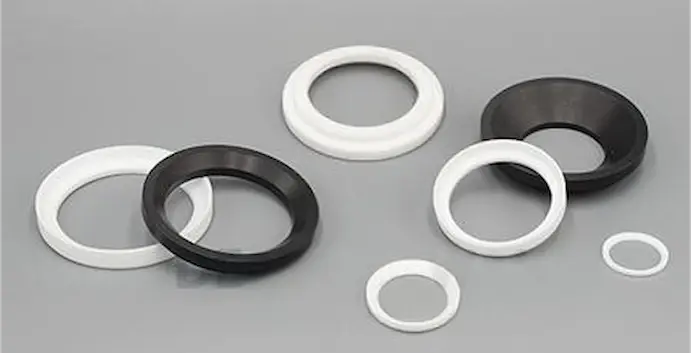
PTFE seats are widely used due to their excellent chemical resistance and low friction.
Advantages:
-
Outstanding chemical compatibility
-
Low torque during operation
-
Cost-effective solution for general service
Limitations:
-
Limited temperature resistance
-
Susceptible to cold flow under high pressure
PTFE remains the preferred choice for many chemical resistant ball valves operating at moderate temperatures.
Understanding PEEK Seats in Ball Valves
Key Characteristics of PEEK
PEEK seats are engineered for extreme environments where PTFE may fail.
Advantages:
-
Excellent high-temperature resistance
-
High mechanical strength
-
Superior wear resistance
Limitations:
-
Higher material cost
-
Slightly higher operating torque
For high temperature ball valves and demanding oil & gas applications, PEEK is often the safer long-term option.
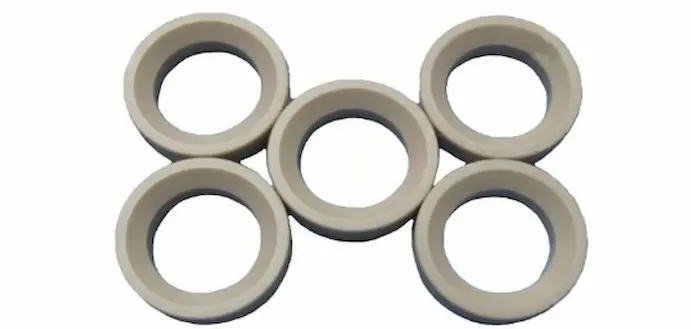
PTFE vs PEEK: Technical Comparison
| Property | PTFE Seat | PEEK Seat |
|---|---|---|
| Max temperature | ~200°C | ~260°C |
| Pressure resistance | Medium | High |
| Chemical resistance | Excellent | Very good |
| Wear resistance | Moderate | Excellent |
| Cost | Lower | Higher |
This comparison clearly shows why PEEK seats are favoured in severe service, while PTFE seats dominate general industrial use.
Case Studies from Real Applications
Case 1: Chemical Processing Plant
A customer using aggressive acids selected PTFE seats for their industrial ball valves.
Result:
-
Smooth operation
-
Excellent chemical resistance
-
Cost-efficient solution
Case 2: Oil & Gas High-Temperature Line
An offshore platform upgraded to PEEK seat ball valves.
Result:
-
No seat deformation
-
Stable sealing under high pressure
-
Extended service intervals
Engineering Data and Performance Analysis
Laboratory testing shows that PEEK seats maintain dimensional stability under sustained load far better than PTFE. While PTFE may creep under pressure, PEEK retains its shape, ensuring consistent sealing force over time—critical in oil and gas ball valve applications.
Industry Trends and Market Insight
-
Increasing demand for PEEK seat ball valves in high-temperature services
-
Continued dominance of PTFE in chemical and water treatment industries
-
Growing awareness of life-cycle cost over initial valve price
At Vcore Valve, customers increasingly request application-specific seat recommendations rather than default materials.
Selection Tips and Usage Recommendations
-
Choose PTFE seats for corrosive media at moderate temperature
-
Choose PEEK seats for high temperature and high pressure
-
Always verify media compatibility
-
Consider long-term operating cost, not just purchase price
Conclusion
There is no universal “best” seal—only the right one for your application. PTFE vs PEEK is a choice between chemical resistance and high-performance durability. Understanding the differences ensures better valve reliability and lower lifetime costs.
Vcore Valve provides expert guidance and customised ball valve sealing solutions for demanding industrial environments.
👉 Contact Vcore Valve today to select the right ball valve seat material for your project.
FAQs
What is the main difference between PTFE and PEEK seats?
PTFE offers superior chemical resistance, while PEEK provides higher temperature and pressure performance.
Are PEEK seats suitable for chemical service?
Yes, but PTFE is often preferred for highly aggressive chemicals.
Do PEEK seats increase valve torque?
Yes, slightly higher torque compared to PTFE.
Can PTFE seats be used at high pressure?
They can, but long-term pressure may cause cold flow.
Which industries prefer PEEK seat ball valves?
Oil & gas, power generation, and high-temperature industrial services.
Does Vcore Valve offer both PTFE and PEEK options?
Yes, Vcore Valve supplies ball valves with both PTFE and PEEK seat configurations.
References
-
ASTM D4894 – PTFE Material Specifications
-
ASTM D6262 – PEEK Polymer Standards
-
ASME B16.34 – Valve Pressure–Temperature Ratings
-
Valve Manufacturers Association (VMA) – Ball Valve Design
-
Engineering Toolbox – Valve Seat Materials
-
ISO 17292 – Ball Valves for Petroleum Industry
-
Vcore Valve Ball Valve Technical Manual