Rubber lined valves are widely used in chemical processing, slurry pipelines, wastewater treatment, mining, mineral processing, power plant auxiliary systems, and industrial fluid handling where both corrosion resistance and abrasion resistance are required. Unlike standard metal valves, rubber lined valves use an internal rubber lining to protect the valve body from direct contact with corrosive or abrasive media.
For B2B buyers, the key question is not simply whether a valve is rubber lined. The real question is whether the rubber compound, valve structure, lining thickness, seat design, pressure rating, temperature range, and operating conditions match the actual service. A rubber lined valve can perform very well in slurry or selected chemical service, but it can fail quickly if the rubber material is incompatible with the medium or if the valve is used beyond its mechanical limits.
This guide explains how to choose rubber lined valves for chemical and slurry applications from a practical industrial buyer’s perspective. It covers valve types, rubber lining materials, abrasion resistance, chemical compatibility, slurry service, common failure risks, and the information buyers should provide before requesting a quotation. For a broader overview of chemical valve selection, start with our main guide on industrial valves for chemical processing.
What Is a Rubber Lined Valve?
A rubber lined valve is an industrial valve with an internal rubber lining applied to the flow-contact surfaces. The rubber lining acts as a protective barrier between the process medium and the metal valve body. This helps reduce corrosion, abrasion, and direct chemical attack on the valve body.
Rubber lined valves are often used when the pipeline handles slurry, wastewater, mild acids, alkalis, abrasive particles, or chemical mixtures where a bare metal valve may corrode or wear too quickly. Common rubber lined valve types include butterfly valves, diaphragm valves, slurry valves, pinch valves, check valves, and selected plug valve designs.
Buyers can also review Vcore Valve’s rubber-lined valves category when comparing lined valve options for chemical processing, water treatment, mining, and abrasive fluid service.
Why Rubber Lining Is Used in Chemical and Slurry Service
Rubber lining is selected because it can provide two important functions: corrosion protection and mechanical wear resistance. In slurry or abrasive media, the lining can absorb particle impact and reduce damage to the metal valve body. In selected chemical services, the lining can also isolate the body from corrosive media.
Rubber lined valves are especially useful when the dominant failure risk is not only chemical corrosion but also abrasion. This is why they are often considered for slurry, wastewater, mineral processing, desulfurization, chemical dosing, and abrasive fluid pipelines.
Main Benefits of Rubber Lined Valves
- Good abrasion resistance in selected slurry applications
- Protection of the metal valve body from corrosive media
- Useful cost-performance for larger valve sizes
- Suitable for many water treatment and chemical utility systems
- Good sealing performance when the lining and seat are correctly selected
- Reduced metal exposure in abrasive or corrosive flow paths
Main Limitations of Rubber Lined Valves
- Rubber is not compatible with every chemical medium
- Solvents, oils, hydrocarbons, and oxidizing chemicals may attack certain rubber compounds
- High temperature can shorten rubber lining life
- Poor lining bonding can cause blistering, peeling, or delamination
- Sharp particles or high-velocity slurry can still damage the lining
- Incorrect installation can damage the rubber-lined flange face
Common Types of Rubber Lined Valves
Rubber Lined Butterfly Valves
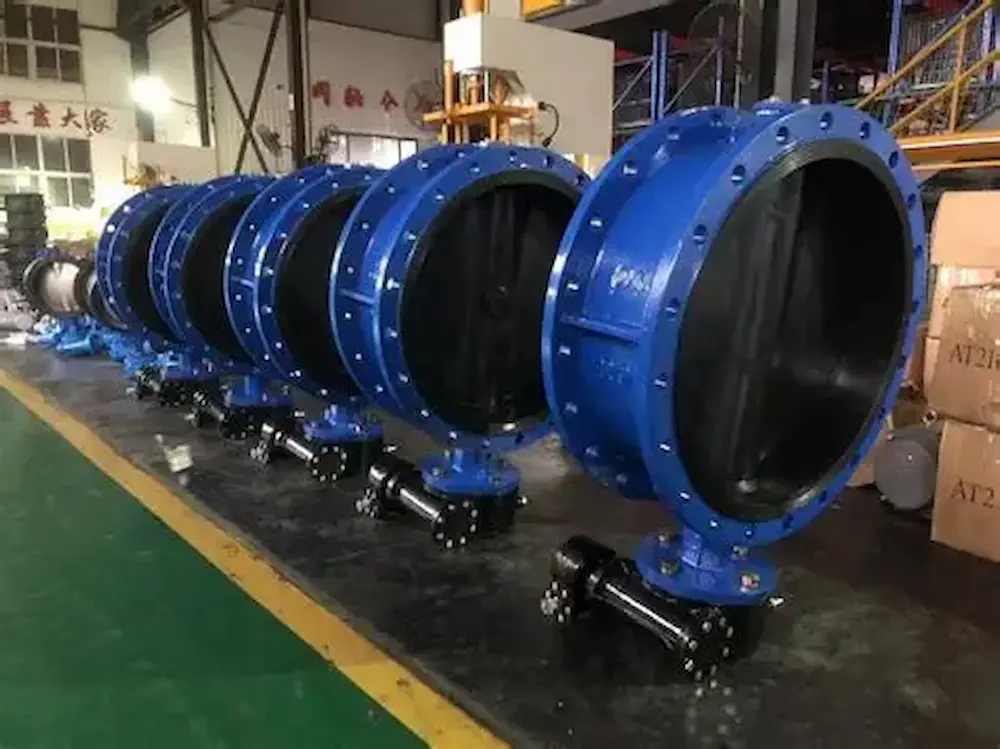
Rubber lined butterfly valves are one of the most common lined valve types. They are widely used in water treatment, wastewater, chemical slurry, cooling water, mild chemical pipelines, and large-diameter industrial systems. The rubber liner usually forms both the body lining and the sealing surface for the disc.
Rubber lined butterfly valves are compact, lightweight, and cost-effective for larger sizes. However, buyers must confirm liner material, disc material, pressure class, temperature range, shutoff requirement, and whether the valve will be used for isolation or control.
For wastewater, sludge, cooling water, pump station or double-flanged service, a rubber lined flanged butterfly valve may be considered when the liner, disc material, flange standard and operating position match the service.
For buyers comparing elastomer liner behavior in butterfly valves, this article on EPDM butterfly valve liners provides more focused information about EPDM liner properties and applications.
Rubber Lined Diaphragm Valves
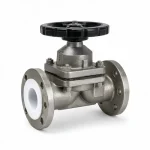
Rubber lined diaphragm valves are used in corrosive, abrasive, or contaminated media where the diaphragm isolates the stem and operating mechanism from the process fluid. They are common in chemical dosing, wastewater treatment, slurry, and selected chemical process lines.
The diaphragm material is critical. EPDM, natural rubber, nitrile rubber, or PTFE-faced diaphragms may be selected depending on chemical compatibility, temperature, pressure, and cycling frequency.
Rubber Lined Check Valves
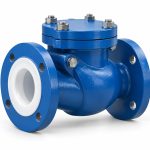
Rubber lined check valves help prevent reverse flow while protecting the internal body surfaces from corrosive or abrasive media. They may be used in pump discharge lines, slurry systems, wastewater systems, and chemical transfer applications.
For pump discharge, wastewater and slurry backflow prevention, a rubber lined swing check valve can be reviewed when flow direction, pressure drop, solids content and installation orientation are suitable.
Buyers should confirm flow velocity, pressure drop, installation direction, solids content, and whether the valve design can avoid chatter or water hammer.
Rubber Lined Slurry Valves
Rubber lined slurry valves are designed for media containing suspended solids or abrasive particles. They are used in mining, mineral processing, wastewater sludge, ash handling, and abrasive chemical pipelines. In these applications, wear resistance is often more important than broad chemical compatibility.
Valve cavity design, flow path geometry, rubber compound, lining thickness, and service velocity all affect service life.
Abrasion severity is not determined by solids percentage alone. It depends on the combined effect of solids concentration, particle size, particle shape and abrasiveness, flow velocity, valve internal geometry and valve operating position. A valve operating continuously in a partially open position may experience different local velocity and liner wear patterns from a valve used only for full isolation. Where a rubber lined butterfly valve will operate for extended periods in a partially open position, the expected local velocity, disc position and liner wear should be reviewed rather than assuming that an isolation-valve selection is automatically suitable for continuous throttling.
For slurry, sludge, tailings and solid-containing shutoff service, a rubber lined knife gate valve may be reviewed when the process requires a shutoff design suited to suspended solids.
Rubber Lined Valve Type Comparison
| Valve Type | Best-Fit Applications | Main Advantages | Selection Risk |
|---|---|---|---|
| Rubber Lined Butterfly Valve | Water treatment, wastewater, mild chemical, large pipelines | Compact, cost-effective, good for larger sizes | Liner compatibility, disc material, and shutoff performance must be checked |
| Rubber Lined Diaphragm Valve | Chemical dosing, corrosive fluids, contaminated media | Stem isolated from medium, good sealing in suitable service | Diaphragm material and cycling life are critical |
| Rubber Lined Check Valve | Pump discharge, slurry backflow prevention, wastewater systems | Protects against reverse flow and body wear | Wrong sizing may cause chatter or water hammer |
| Rubber Lined Slurry Valve | Mining, mineral processing, abrasive slurry | Designed for wear and particle service | Flow velocity and particle size must be reviewed carefully |
Rubber Lining Materials Used in Valves
Rubber lining is not one single material. Different rubber compounds have different chemical resistance, temperature limits, abrasion resistance, elasticity, and swelling behavior. Selecting the wrong rubber compound is one of the most common causes of early valve failure.
EPDM Rubber Lining
EPDM is commonly used in water treatment, wastewater, some acids, some alkalis, and selected chemical services. It is frequently used for butterfly valve liners, seats, seals, and diaphragm applications. EPDM can provide good sealing behavior and practical chemical resistance in suitable media.
However, EPDM is usually not suitable for many oils, hydrocarbons, and solvents. Chemical compatibility must be checked before selection.
Natural Rubber Lining
Natural rubber can provide strong abrasion resistance in selected slurry and mineral processing applications. It is often considered where particle wear is the dominant failure risk. For mining slurry, tailings and abrasive mineral service, a natural rubber lined valve may be considered when the compound and lining construction are qualified for the medium. However, natural rubber may have chemical and temperature limitations, so it should not be used without checking media compatibility.
NBR Rubber Lining
NBR may be considered for applications involving oils or certain industrial fluids, but it is not suitable for many strong acids, alkalis, or high-temperature corrosive services. It is more common in sealing applications than broad chemical lining applications.
Neoprene and Other Rubber Compounds
Neoprene and other rubber compounds may be used for selected services depending on chemical resistance, temperature, and mechanical requirements. Buyers should always confirm the exact rubber material rather than accepting “rubber lined” as a complete specification.
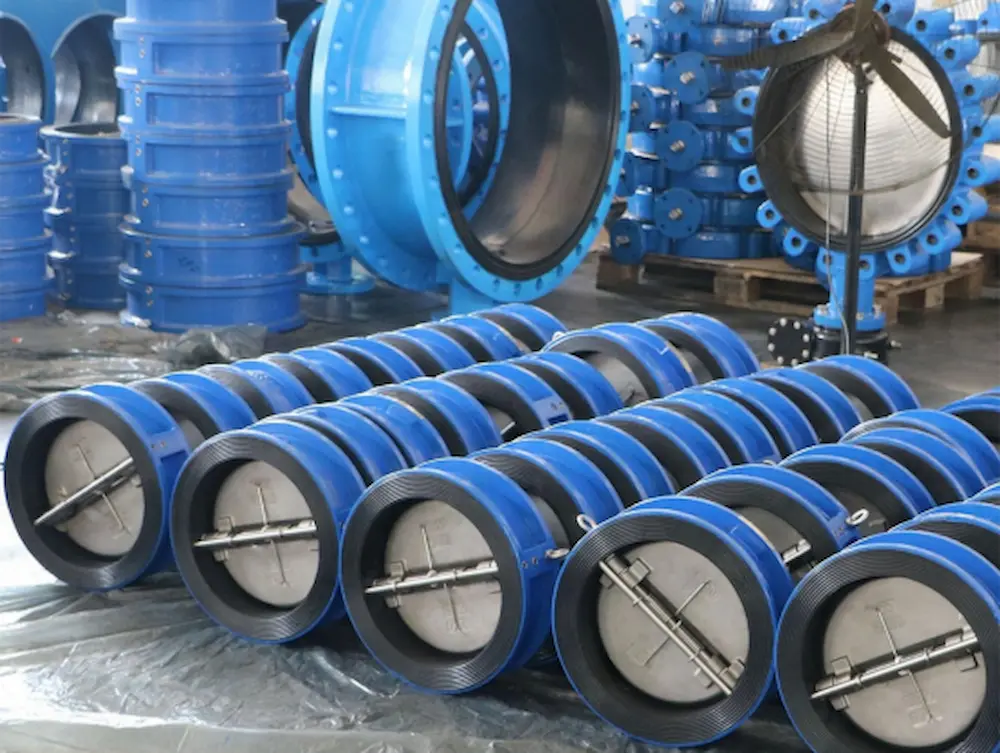
Rubber Lining Material Comparison Table
| Rubber Material | Main Strengths | Limitations | Typical Valve Applications |
|---|---|---|---|
| EPDM | Useful for water, wastewater, some acids, and some alkalis | Not suitable for many oils, hydrocarbons, and solvents | Butterfly valve liners, seats, diaphragms, water treatment valves |
| Natural Rubber | Good abrasion resistance in selected slurry service | Limited chemical and temperature resistance | Mining slurry, mineral processing, abrasive media |
| NBR | Useful for selected oil-related service | Not suitable for many strong chemicals | Seals, seats, selected industrial fluid applications |
| Neoprene | Balanced resistance in selected industrial environments | Application-specific compatibility required | Selected chemical, water, and industrial service |
Rubber Lined Valves vs PTFE Lined Valves
Rubber lined valves and PTFE lined valves are both used in corrosive service, but they solve different problems. PTFE lining is often selected for broad chemical resistance, while rubber lining is often selected when abrasion resistance and slurry performance are important.
If the main failure risk is strong chemical attack, PTFE may be a better direction. If the main failure risk is particle wear, slurry abrasion, or impact, rubber lining may be more practical. For corrosive slurry, buyers must balance chemical compatibility and abrasion resistance together.
For a detailed comparison, read our guide on PTFE lined valve vs rubber lined valve.
| Selection Factor | Rubber Lined Valve | PTFE Lined Valve |
|---|---|---|
| Chemical Resistance | Depends heavily on rubber compound | Usually broader chemical resistance |
| Abrasion Resistance | Often better in slurry and abrasive service | May be limited in heavy abrasive slurry |
| Slurry Suitability | Often suitable when rubber compound is compatible | Requires careful review for abrasive media |
| Solvent Service | May be limited depending on rubber type | Often stronger compatibility range |
| Cost-Performance | Often attractive in slurry, water, and mild chemical service | Often justified in highly corrosive service |
Where Rubber Lined Valves Are Commonly Used
Water Treatment and Wastewater
Rubber lined valves are widely used in water treatment and wastewater systems because they can handle many water-based chemicals, sludge, and moderate solids. Butterfly valves and diaphragm valves are common choices in these systems.
Mining and Mineral Processing
Mining and mineral processing systems often handle abrasive slurry. Rubber lined valves can help reduce wear in selected slurry service, especially where particle impact and abrasion are major concerns.
Chemical Slurry Pipelines
In chemical slurry pipelines, buyers must consider both chemical compatibility and mechanical abrasion. Rubber lining can be useful when the chemical medium is compatible with the rubber and solids are present in the flow.
Power Plant Auxiliary Systems
Some power plant auxiliary systems, such as slurry, ash handling, or chemical water treatment lines, may use rubber lined valves depending on media and project specifications.
Desulfurization and Abrasive Process Lines
Desulfurization and abrasive process lines can involve slurry and chemically active media. Rubber lined valves may be considered when abrasion resistance is important and the rubber compound is compatible with the process conditions.
Key Selection Factors for Rubber Lined Valves
Rubber lined valves should be selected according to real working conditions, not only by valve size or lining name. Buyers should provide enough technical data for the supplier to recommend the correct valve type, rubber compound and lining construction.
| Selection Factor | What to Confirm | Why It Matters |
|---|---|---|
| Medium | Exact chemical or fluid composition, including cleaning media if relevant | Determines rubber compatibility and whether a rubber lined valve is suitable |
| Concentration | Normal and maximum concentration | Chemical compatibility may change with concentration |
| Temperature | Normal, maximum and upset or start-up temperature where relevant | High temperature can accelerate rubber aging or reduce service life |
| Pressure | Operating and design pressure | Affects body rating, lining support and sealing load |
| Vacuum / Negative Pressure | Whether vacuum, suction or negative-pressure conditions can occur | Suitability depends on valve design, lining construction, bonding/support method and manufacturer qualification |
| Solids Content | Solids percentage or concentration | Important for abrasion risk, slurry behavior and valve type selection |
| Particle Characteristics | Particle size, shape and relative abrasiveness or hardness where known | Sharp, hard or irregular particles can change liner wear patterns |
| Flow Velocity | Normal and maximum velocity | High velocity can increase localized lining wear |
| Rubber Compound | EPDM, natural rubber, NBR, neoprene or project-specific compound | Must match chemical and mechanical service, not only the valve type |
| Lining Construction / Thickness | Lining type, thickness and construction to be confirmed by manufacturer or project specification | Affects wear allowance, body protection and service suitability |
| Valve Function | Isolation, throttling/control, backflow prevention or slurry shutoff | Determines valve type, internal geometry and expected wear location |
| Operating Position | Fully open/closed service versus frequent partial opening or throttling | Local velocity and wear pattern may change significantly in partial-open operation |
| Operation Frequency | Occasional or frequent operation; manual, electric or pneumatic actuation | Affects wear, torque behavior and actuator selection |
Common Rubber Lined Valve Failures
Rubber lined valves can fail when the rubber compound, lining quality, operating condition, or installation method does not match the service. Understanding common failure modes helps buyers prevent early replacement and downtime.
Lining Swelling
Lining swelling may occur when the rubber compound is chemically incompatible with the medium. Swelling can reduce sealing performance, increase torque, and damage the valve structure.
Lining Cracking or Hardening
Rubber may crack or harden when exposed to unsuitable temperature, chemical attack, aging, or repeated stress. Cracking can expose the metal body to corrosive media.
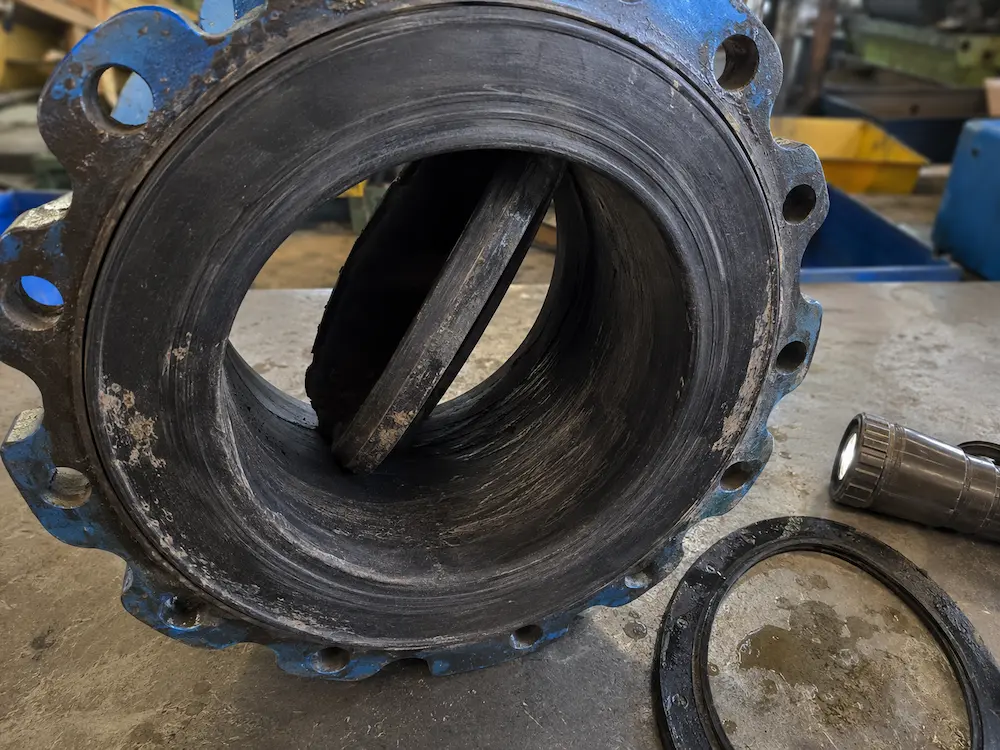
Abrasion Wear
Even wear-resistant rubber can be damaged by sharp particles, high flow velocity, or severe slurry conditions. Wear often appears near the flow path, seat area, or lower part of the valve bore.
Delamination or Peeling
Poor bonding, mechanical stress, pressure fluctuation, or unsuitable service conditions can cause rubber lining to separate from the metal body. Once delamination begins, the valve may fail rapidly.
Flange Face Damage
The rubber-lined flange face can be damaged during installation if gaskets, bolts, or pipe alignment are not handled correctly. Uneven compression can lead to external leakage.
For a broader failure-prevention framework, see our guide on common valve failures in chemical pipelines.
How to Prevent Rubber Lined Valve Failure
- Confirm the exact rubber compound before ordering
- Check chemical compatibility with medium, concentration, and temperature
- Confirm particle size, solids content, and flow velocity for slurry service
- Use the correct valve type for isolation, control, or slurry handling
- Protect rubber-lined flange faces during installation
- Avoid uneven bolt tightening and pipe misalignment
- Request lining inspection information when required
- Operate and flush valves according to process conditions
- Inspect lining condition during maintenance shutdowns
Rubber Lined Valve Selection Checklist for Buyers
Before requesting a quotation for rubber lined valves, buyers should prepare a complete working condition sheet. This reduces the risk of incorrect rubber selection and improves quotation accuracy.
- Medium name and composition
- Concentration
- Operating and maximum temperature
- Operating and design pressure
- Vacuum or negative-pressure condition if applicable
- Valve size and connection standard
- Required valve type
- Solids content and particle size
- Particle characteristics or abrasiveness where known
- Flow velocity
- Required rubber compound if project-specified
- Lining construction or thickness requirement if project-specified
- Required shutoff performance
- Whether the valve is for full isolation or extended throttling / partial-open operation
- Manual, electric, or pneumatic operation
- Operation frequency
- Indoor, outdoor, corrosive, or abrasive environment
- Required documents, drawings, and test reports
Documentation and Quality Control
For B2B chemical and slurry projects, rubber lined valves should not be purchased only from a short product description. Buyers should confirm lining material, lining quality, valve dimensions, pressure rating, and test documentation.
Useful documents may include:
- Valve dimensional drawing
- Rubber lining material confirmation
- Pressure test report
- Seat leakage test report
- Lining inspection information
- Installation and maintenance manual
- Actuator datasheet if automated
- Packing and marking details
Buyers comparing all material options can also read our guide on anti-corrosion valve materials for chemical processing.
Final Recommendations for B2B Buyers
Rubber lined valves are a strong option when chemical service also involves slurry, solids, abrasion, or cost-performance requirements. They are commonly used in wastewater, mining, water treatment, chemical slurry, and abrasive industrial pipelines. However, rubber lining must be selected carefully because different rubber compounds have different compatibility and temperature limits.
For clean, highly corrosive chemical media, PTFE lined valves may be more suitable. For abrasive slurry and selected chemical applications, rubber lined valves may provide better service life. For complex chemical slurry, buyers should compare both corrosion resistance and mechanical wear resistance before selecting the valve.
If you need help selecting rubber lined valves for chemical or slurry applications, Vcore Valve can review your medium, concentration, temperature, pressure, solids content, particle size, valve size, and operating conditions. Buyers can also browse our industrial valve product range to compare lined valves, butterfly valves, check valves, slurry valve options, and automated valve solutions.
For industrial sourcing, the best question is not only “Is this valve rubber lined?” The better question is: “Is this rubber lining compatible with the medium and strong enough for the actual slurry or chemical service?”
FAQs
1. What are rubber lined valves used for?
Rubber lined valves are used for chemical, slurry, wastewater, mining, water treatment, and abrasive media applications where the valve body needs protection from corrosion or mechanical wear. They are commonly used in butterfly valves, diaphragm valves, check valves, and slurry valve designs.
2. Are rubber lined valves suitable for chemical service?
Rubber lined valves can be suitable for selected chemical services, but the rubber compound must be compatible with the medium, concentration, and temperature. Rubber should not be selected as a general category because EPDM, natural rubber, NBR, neoprene, and other compounds have different chemical resistance.
3. Are rubber lined valves good for slurry?
Rubber lined valves are often a good choice for slurry and abrasive media because rubber lining can provide wear resistance and impact absorption in suitable services. Buyers should confirm particle size, solids content, flow velocity, pressure, temperature, and lining construction before selection.
4. What is the difference between rubber lined valves and PTFE lined valves?
Rubber lined valves are often selected for abrasion resistance and slurry service, while PTFE lined valves are often selected for broad chemical resistance. The better choice depends on whether the main failure risk is chemical corrosion, mechanical wear, or both.
5. How do I choose the right rubber lined valve?
To choose the right rubber lined valve, provide the medium name, concentration, temperature, pressure, valve size, solids content, particle characteristics, flow velocity, valve function, operation method, vacuum condition if applicable, and documentation requirements. The supplier can then recommend a suitable valve type and rubber lining material.
6. Can rubber lined valves be used under vacuum?
Rubber lined valves may be suitable for some vacuum or negative-pressure services, but suitability depends on the valve design, lining construction, bonding or support method and the actual pressure condition. Buyers should provide the expected minimum pressure or vacuum condition so the manufacturer can confirm whether the selected lining design is qualified for the service.