
Lift Check Valve vs Piston Check Valve: Structure, Pressure and Application Comparison
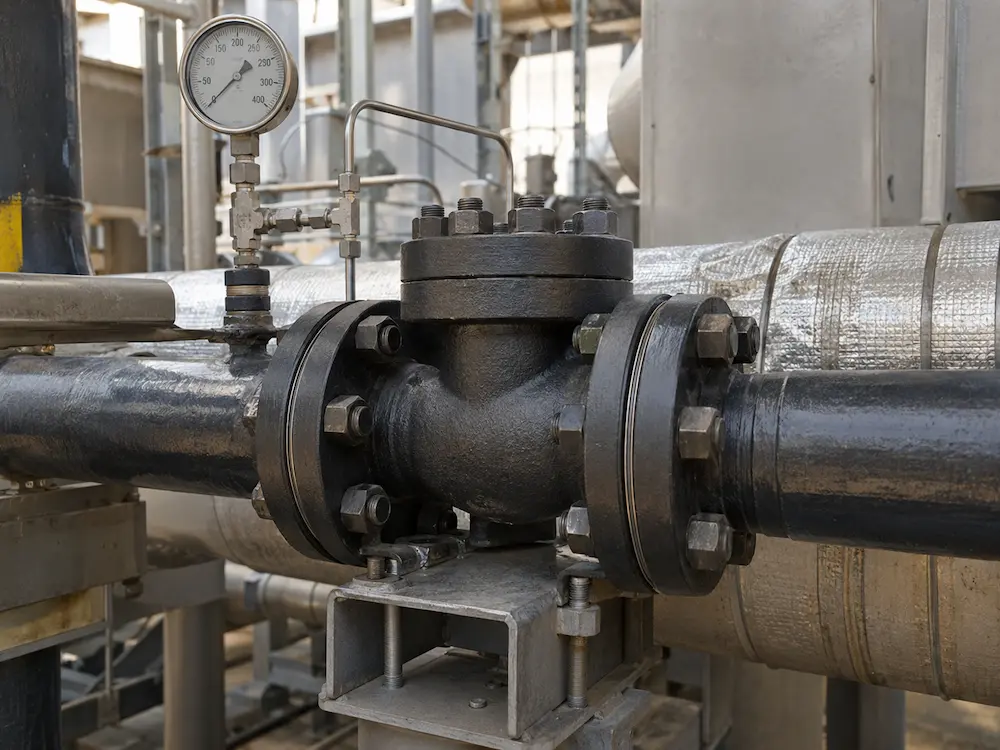
Compare lift check valves and piston check valves by structure, pressure performance, installation direction, flow resistance, sealing, maintenance, and industrial applications.
Industrial Check Valves: Types, Applications and Selection Guide
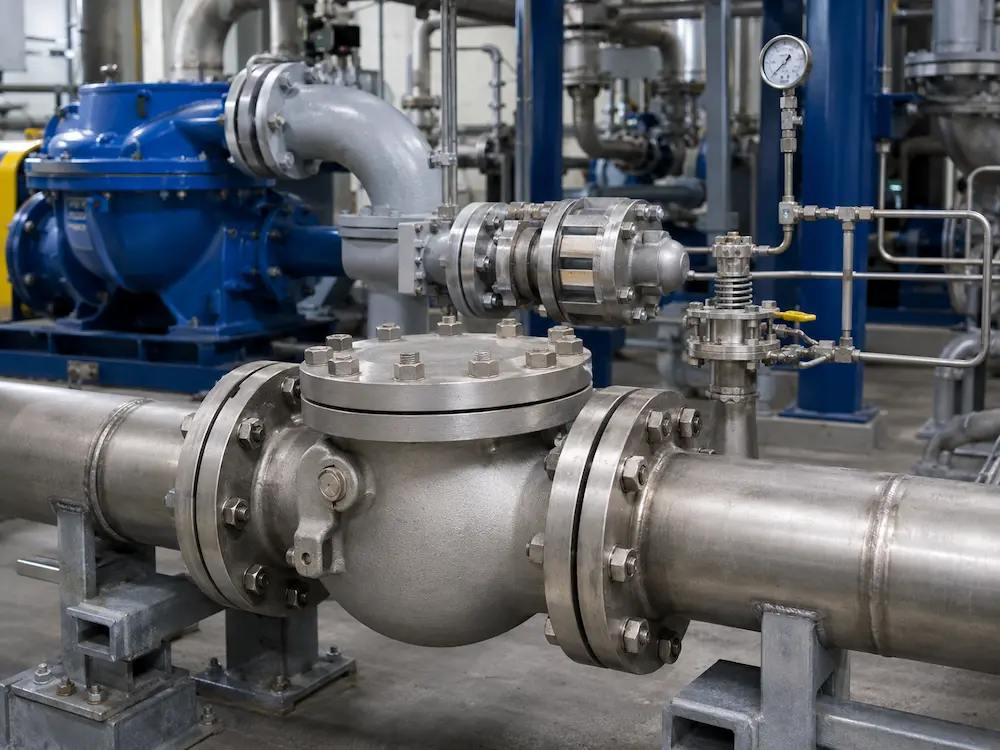
Learn how to choose industrial check valves by valve type, backflow prevention function, pressure, flow direction, installation position, material, application, and water hammer risk.
Can a Check Valve Be Installed Vertically?
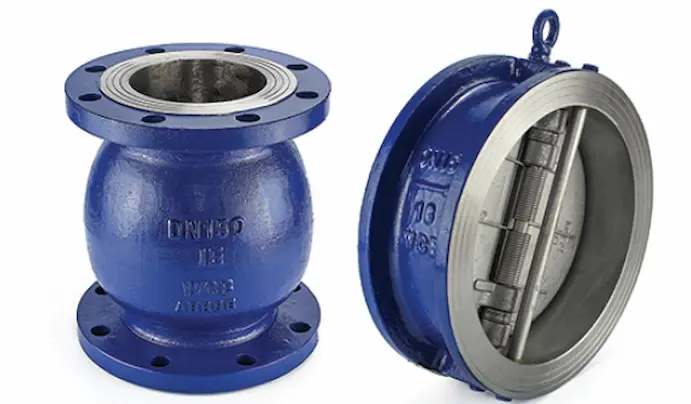
Can a check valve be installed vertically? This in-depth guide explains vertical check valve installation rules, suitable valve types, common mistakes, and engineering best practices from Vcore Valve.
Lift Check Valve Structure, Working Principle & Applications
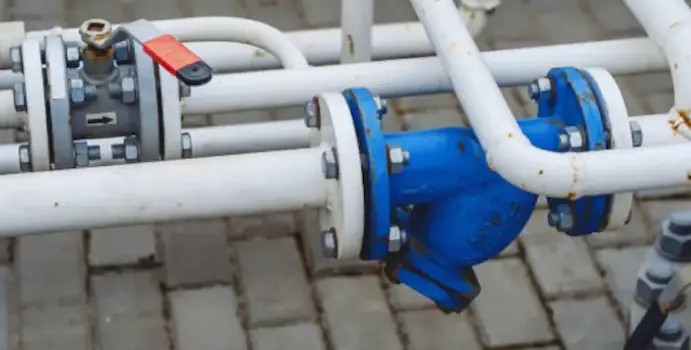
Learn how lift check valves use pressure differential, guided vertical disc movement, gravity, spring force, or back pressure to prevent reverse flow in pressurized pipeline systems. The guide explains lift check valve structure, working principle, horizontal and vertical installation requirements, flow stability, pressure-loss considerations, water-hammer limitations, and key selection factors for steam, oil, gas, boiler feed, refinery, and industrial process applications.