
Rising Stem vs Non-Rising Stem Gate Valves Explained
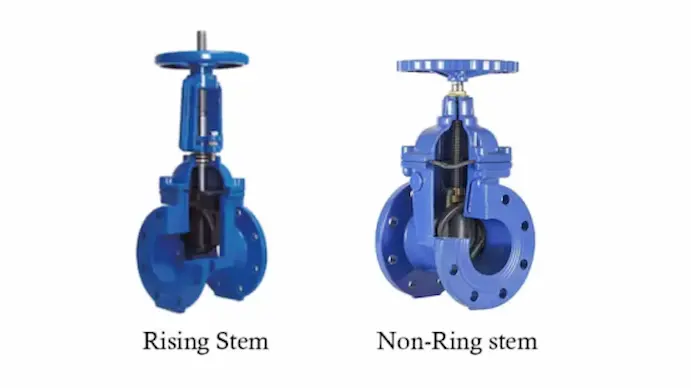
Compare rising-stem and non-rising-stem gate valves by stem movement, installation clearance, valve-position visibility, maintenance access, and application. Rising-stem gate valves provide clear open/closed indication and easier inspection for above-ground industrial systems, while non-rising-stem designs offer compact installation for underground pipelines, water networks, fire protection systems, and confined valve chambers.
Knife Gate Valve Guide: Working Principle, Applications and Selection
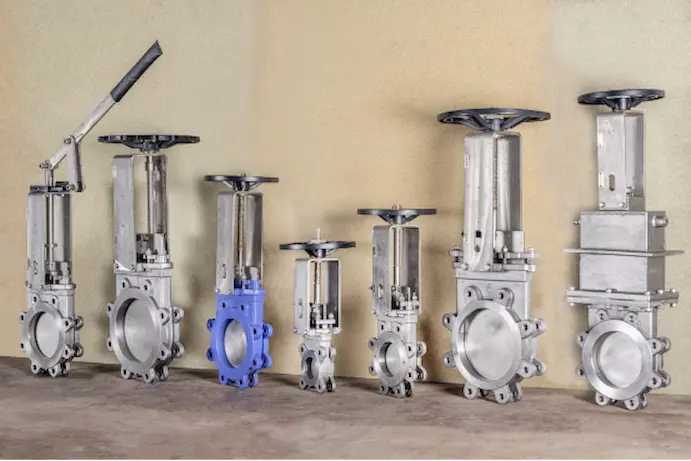
Learn how knife gate valves are selected for slurry, pulp, powder, wastewater, tailings, fibrous media, and other solids-containing services. The guide explains knife-edge gate design, wafer, lugged and flanged body options, soft-seat and metal-seat sealing, pressure and temperature limitations, installation orientation, clogging risks, maintenance considerations, and the key differences between knife gate valves and conventional gate valves.
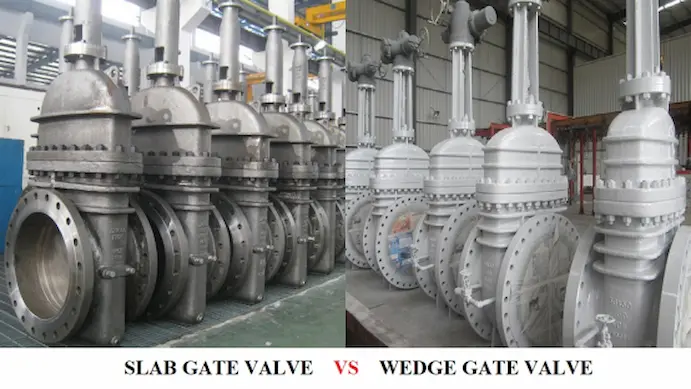
Wedge Gate Valve vs Slab Gate Valve: A Practical Guide
https://www.onoffvalve.com/knowledge-wedge-gate-valve-vs-slab-gate-valve/
Sluice Valve vs Gate Valve: Key Differences Explained
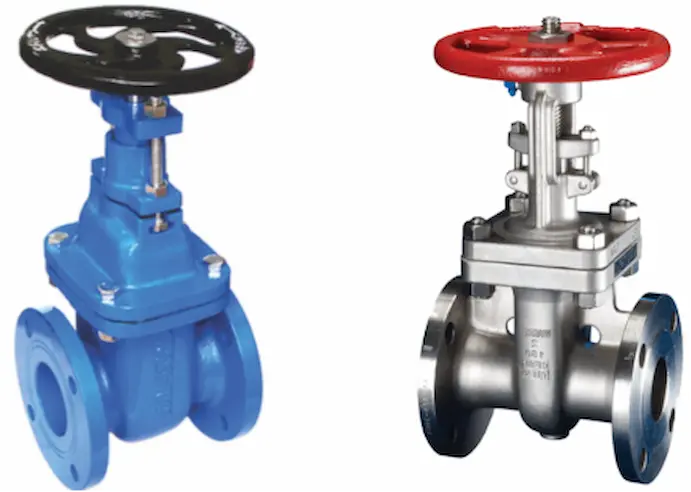
Compare sluice valves and gate valves by gate structure, media compatibility, debris resistance, sealing performance, maintenance, and application. Sluice valves are better suited to wastewater, sludge, slurry, and solids-bearing media, while conventional gate valves provide economical, low-resistance isolation for clean water, oil, gas, steam, and general industrial pipelines.
Floating vs Trunnion Ball Valve: What’s the Difference?
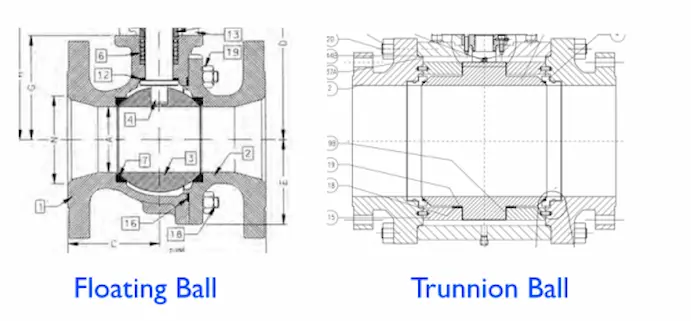
Compare floating and trunnion ball valves by structure, pressure capability, sealing principle, operating torque, size range, applications, cost, and buyer selection requirements.
Gate Valve vs Butterfly Valve: Key Differences Explained
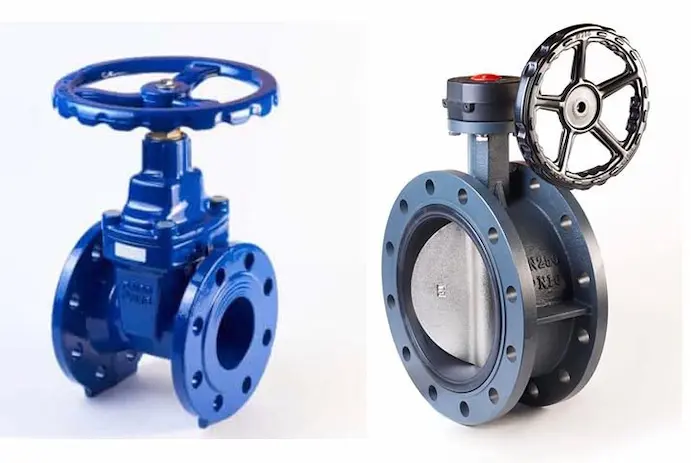
Compare gate valves and butterfly valves by operating mechanism, flow resistance, installation space, weight, cost, maintenance, and application. Gate valves provide full-bore flow and minimal pressure loss for high-pressure isolation and transmission pipelines, while butterfly valves offer compact construction, fast quarter-turn operation, easier automation, and economical control for water treatment, HVAC, cooling, and large-diameter piping systems.
Wafer vs Lug Butterfly Valves: Differences & Uses

Compare wafer and lug butterfly valves by body design, installation method, pipeline isolation, end-of-line capability, maintenance flexibility, weight, and cost. Wafer butterfly valves provide a lightweight and economical solution for HVAC, water treatment, and general low- to medium-pressure systems, while lug butterfly valves allow one-sided pipeline disconnection and end-of-line service for industrial systems requiring easier maintenance and isolation.
Thermostat Valve vs Safety Valve: Key Differences Explained
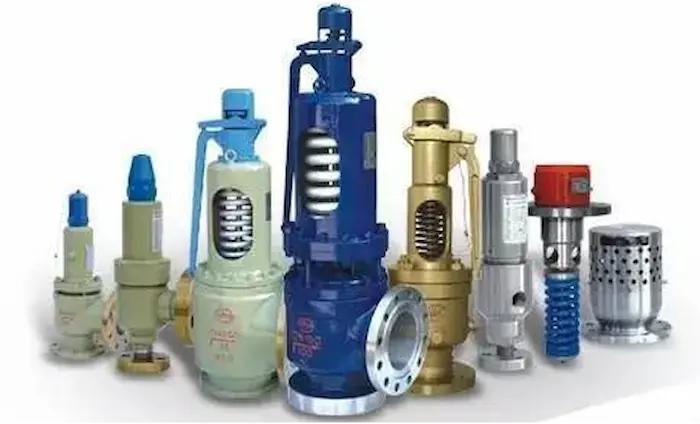
Compare thermostat valves and safety valves by control purpose, trigger mechanism, response speed, operating role, and application. Thermostat valves regulate flow gradually in response to temperature changes for HVAC, hot-water, and heat-exchanger systems, while safety valves open automatically at a preset pressure to protect boilers, pressure vessels, compressors, and industrial pipelines from overpressure.
Brass Check Valve Guide: Types, Applications and Selection
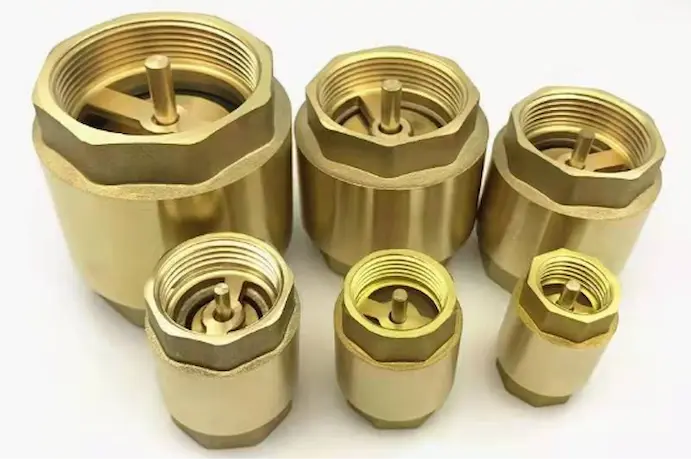
Learn how brass check valves prevent reverse flow in water, HVAC, plumbing, gas, and light industrial piping systems. The guide explains swing, lift, ball, and spring-loaded check valve types, brass and lead-free brass material considerations, pressure-temperature ratings, flow direction, installation orientation, debris sensitivity, pressure drop, maintenance inspection, and key selection factors for reliable backflow prevention.
Backflow Preventer vs Check Valve: Which One is Right for You?
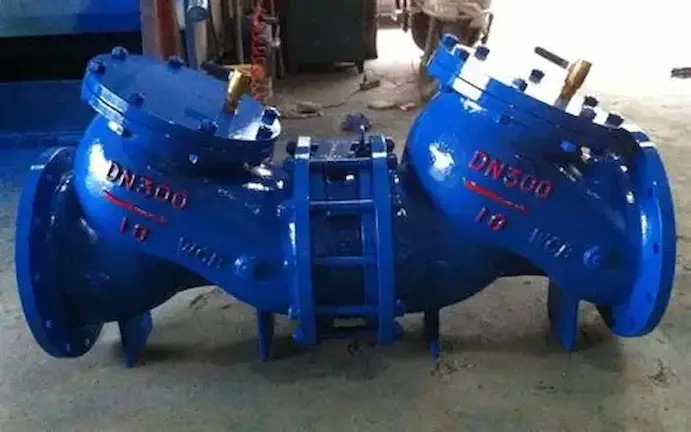
Compare backflow preventers and check valves by protection level, internal design, testing requirements, cost, and application. Backflow preventers use multiple protective components to safeguard potable water from backsiphonage and backpressure contamination, while check valves provide simpler one-way flow control for pumps, HVAC, fire protection, and general industrial pipelines.
What Is a 1/4 Turn Ceramic Disc Angle Valve?
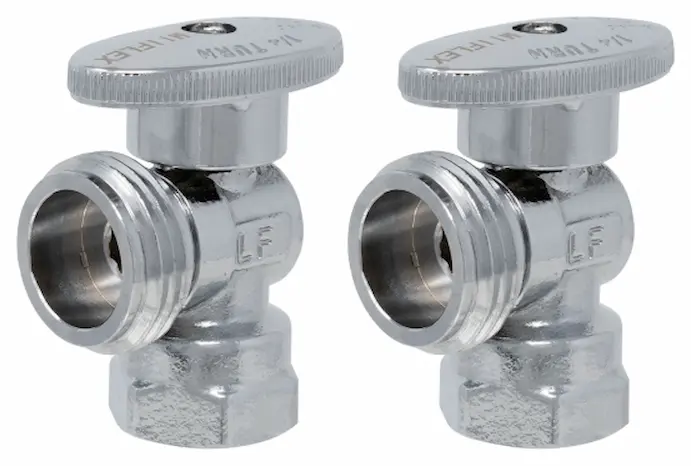
Learn how a 1/4 turn ceramic disc angle valve works as a compact fixture shutoff valve for sinks, toilets, faucets, and light commercial plumbing systems. The guide explains quarter-turn operation, ceramic disc sealing, brass and stainless steel body options, PEX, copper, threaded, compression, and push-fit connections, pressure-rating checks, potable-water material requirements, installation limitations, and when to replace a leaking or hard-to-operate angle valve.
Steam Control Valves: The Best Valve Options for Steam Systems
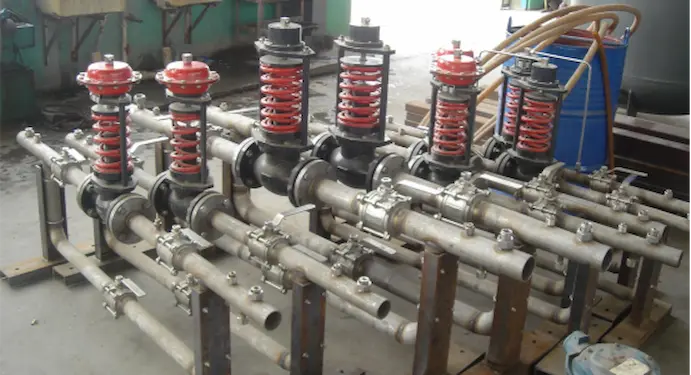
Explore the main valve options used in steam systems, including pressure-reducing valves, globe-style control valves, safety valves, isolation valves, and strainers. The guide explains how each valve supports pressure reduction, flow regulation, overpressure protection, shutoff, or debris removal, while highlighting key selection factors such as steam pressure, temperature, materials, control accuracy, and maintenance requirements.