Quick Summary
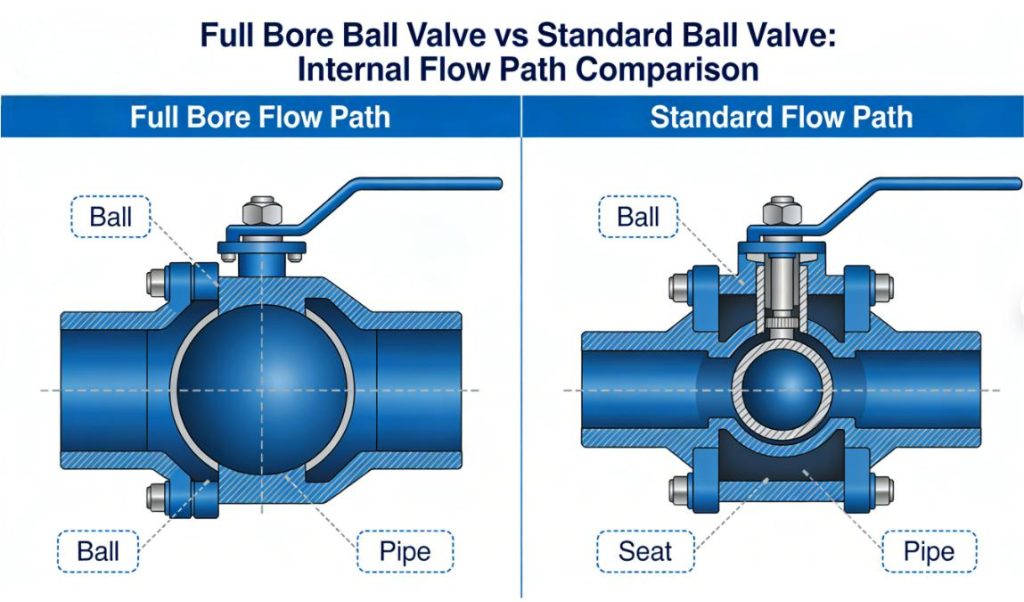
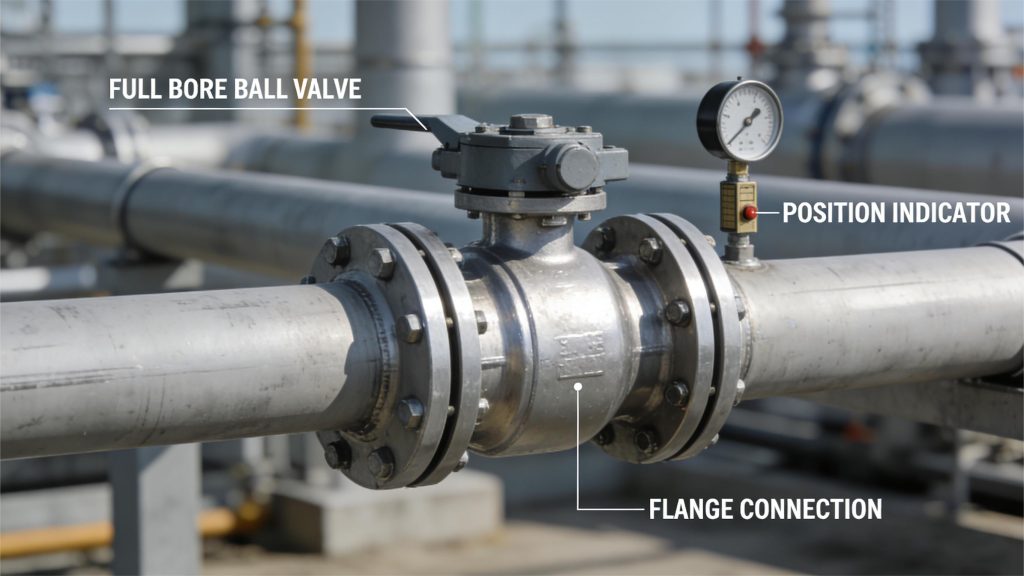
The Full Port Ball Valve (or full-bore valve) and standard ball valves (reduced port) are industrial staples—but their performance differs drastically. While standard valves restrict flow with smaller bores, the Full Port Ball Valve matches pipeline diameters, delivering unobstructed flow, lower pressure loss, and pigging compatibility. This guide compares their design, efficiency, and costs, helping you choose the right valve for oil & gas, chemical, or water systems. Compliant with API 6D and ISO 17292, the Full Port Ball Valve excels in high-flow, long-distance applications where reliability is non-negotiable.
Opening Scene
Tom, a project engineer at a UK oil refinery, is locked in a debate with his team. “We can save upfront costs with standard ball valves,” argues a colleague. Tom shakes his head: “Last year, those valves caused three shutdowns—turbulence eroded seats, and we couldn’t pig the pipeline.” He pulls up a pressure graph: “Look at the drop—standard valves are choking flow.” The team faces a classic dilemma: short-term savings vs. long-term efficiency. Enter the Full-Bore Valve—a solution that eliminates flow restrictions without sacrificing reliability. This article settles the debate, comparing the Full-Bore Valve and standard valves across key metrics to help you make a decision that saves money and avoids headaches.
User Pain Points
Flow Restrictions & Wasted Energy with Standard Valves
Standard ball valves have bores just 60-80% of pipeline diameters, creating bottlenecks that force pumps to work overtime. For a mid-sized chemical plant, this wastes $40,000+ in annual energy costs. In long-distance pipelines, even a small restriction reduces capacity, delaying production and straining equipment. The Full Port Ball Valve eliminates this pain point with its full-bore design, letting fluids flow unimpeded.
Frequent Maintenance & Downtime from Turbulence
Turbulent flow from standard valves erodes seats, scratches pipes, and causes leaks. Maintenance teams spend 3x more time repairing standard valves (1-2 years between overhauls) compared to the Full Port Ball Valve (5-7 years). For oil & gas facilities, unplanned downtime costs $1 million+ per day—costs that could be avoided with a valve that minimizes turbulence.
Pipeline Pigging Incompatibility & Compliance Risks
Standard valves block pig passage, forcing companies to install costly bypass systems or halt operations for maintenance. Delayed pigging leads to compliance violations, equipment damage, and safety hazards. Municipal water utilities, for example, risk contamination if pipelines can’t be cleaned. The Full Port Ball Valve’s full-bore design lets pigs pass unimpeded, ensuring seamless maintenance and compliance.
Solutions
Choose The Full Port Ball Valve for High-Flow & Long-Distance Applications
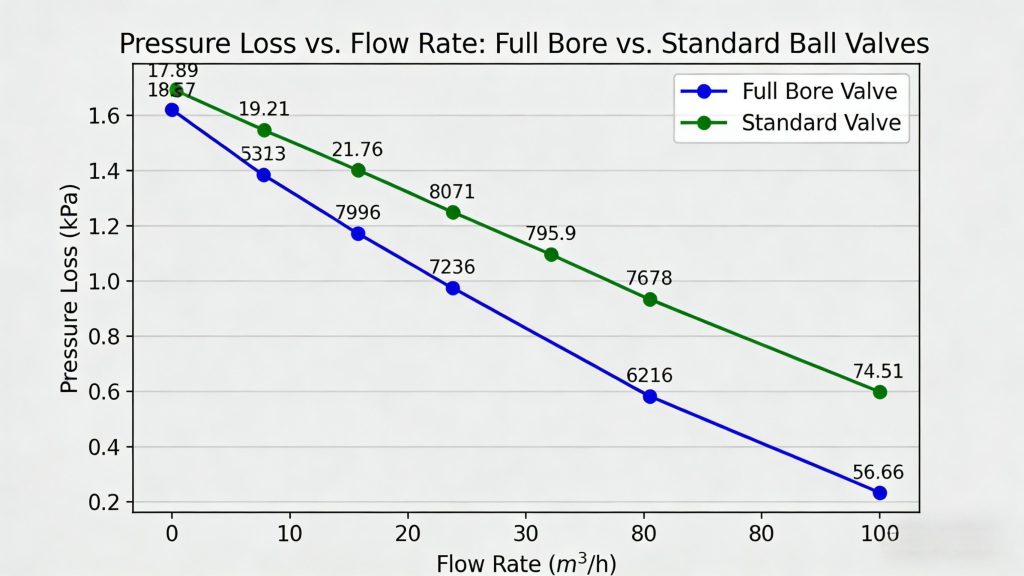
For pipelines requiring maximum flow efficiency (e.g., oil transmission, bulk water supply), the Full Port Ball Valve is non-negotiable. Its bore matches pipeline diameters, cutting pressure loss by up to 70% compared to standard valves. This translates to lower energy bills, smoother system performance, and reduced wear on downstream equipment. The Full Port Ball Valve also eliminates dead zones, reducing media buildup and contamination risks—both critical in chemical processing.
Opt for Standard Valves Only for Low-Flow, Budget-Conscious Projects
Standard ball valves are suitable for low-flow, non-critical applications (e.g., small-scale plumbing, low-pressure air lines) where upfront cost is a priority. They’re more compact and affordable than the Full Port Ball Valve, but come with trade-offs: higher pressure loss, frequent maintenance, and incompatibility with pigging. If you choose standard valves, limit their use to systems where flow restriction won’t impact productivity or safety.
Prioritize Material & Standard Compliance for Both Valve Types
Whether choosing the Full Port Ball Valve or standard valves, material selection is critical:
- The Full Port Ball Valve: Opt for carbon steel (general use), stainless steel (corrosive media), or alloy steel (high-temperature/pressure). Seats include PTFE (soft sealing), PEEK (heat-resistant), or metal-to-metal (abrasive media).
- Standard Valves: Use similar materials, but note that their smaller bores accelerate wear—choose durable options for harsh environments.
Both valves should comply with API 6D and ISO 17292 for reliability. The Full Port Ball Valve also offers fire-safe designs (API 607/6FA) for high-risk industries.
Case Study
A European gas transmission company operated a 400km pipeline using standard ball valves. They faced recurring issues: pressure loss of 20 psi, quarterly maintenance shutdowns, and inability to pig the line. The cost of downtime and repairs reached $300,000 annually.
In 2021, they replaced 80% of standard valves with the Full-Bore Valve (DN400, Class 600, carbon steel body, metal seats). Post-installation, the results were transformative:
- Pressure loss dropped to 4 psi (80% reduction), cutting energy costs by 35%.
- Maintenance intervals extended from 12 to 72 months, reducing downtime by 90%.
- Pigging became seamless, eliminating bypass installation costs of $50,000 per section.
- Annual operational costs fell by $220,000.
The company’s operations director noted: “The Full Port Ball Valve required a higher upfront investment, but the savings in energy and downtime paid for it in 18 months. Standard valves were a false economy.”
Data & Comparative Analysis
Performance Comparison Table
| Feature | The Full Port Ball Valve | Standard Ball Valve (Reduced Port) |
| Bore Diameter | Matches pipeline ID | 60-80% of pipeline ID |
| Pressure Loss | Low (≤5 psi at full flow) | High (15-25 psi at full flow) |
| Flow Efficiency | 95-100% | 60-75% |
| Turbulence | Minimal | Significant |
| Pigging Compatibility | Yes | No |
| Maintenance Frequency | Low (5-7 years between overhauls) | High (1-2 years) |
| Average Lifespan | 10-15 years | 5-8 years |
| Upfront Cost | 20-30% higher | Lower |
| Annual Energy Cost (per valve) | 1,800 | 5,000 |
| Total 10-Year Cost | 12,000 | 25,000 |
The data highlights the Full Port Ball Valve’s long-term superiority. While standard valves cost less upfront, their higher energy consumption, frequent maintenance, and shorter lifespan make them more expensive over a decade. The Full Port Ball Valve is the cost-effective choice for high-flow or critical applications.
Trends & Market Insights
The global ball valve market is projected to grow at 4.8% CAGR (2023-2028), with The Full Port Ball Valve driving much of this growth. Key trends include:
- Rising Demand for Energy Efficiency: Industries are ditching standard valves to reduce energy costs—The Full Port Ball Valve’s low pressure loss aligns with sustainability goals.
- Fire-Safe Adoption: Oil & gas facilities increasingly choose API 607/6FA compliant The Full Port Ball Valvefor enhanced safety during emergencies.
- Smart Valve Integration: IoT-enabled Full Port Ball Valveswith real-time monitoring are gaining traction, allowing remote performance tracking and predictive maintenance.
- Water Infrastructure Upgrades: Municipalities prioritize the Full Port Ball Valvefor water transmission systems, as their leak-free design and pigging compatibility ensure reliable supply.
Standard valves will remain popular for low-flow applications, but the Full Port Ball Valve is becoming the gold standard for critical industrial infrastructure.
Selection & Installation Tips
How to Choose Between The Full Port Ball Valve & Standard Valves
- Choose the Full Port Ball Valve if: You need high flow efficiency, pigging compatibility, or operate long-distance/high-pressure pipelines (oil & gas, chemical processing, water transmission).
- Choose Standard Valves if: You’re working on low-flow, low-pressure systems (small plumbing, non-critical air lines) and upfront cost is the primary concern.
- Key Question: Will flow restriction or downtime cost more than the valve’s upfront price? If yes, the Full Port Ball Valve is worth the investment.
Installation Best Practices
- The Full Port Ball Valve: Align flanged connections carefully to avoid stress; leave 30cm clearance for maintenance. For threaded models, use Teflon tape without over-tightening.
- Standard Valves: Ensure proper flow direction (indicated on the body); avoid using them in high-flow systems to prevent premature wear.
- Both Valves: Flush pipelines before installation to remove debris; conduct pressure tests post-installation (per API 6D) to verify sealing integrity.
Conclusion & Call to Action
The choice between the Full Port Ball Valve and standard ball valves boils down to long-term value vs. upfront cost. The Full Port Ball Valve delivers unobstructed flow, minimal maintenance, and pigging compatibility—critical for high-flow, critical applications—while standard valves suit low-pressure, budget-conscious projects. Compliant with global standards, the Full Port Ball Valve is a strategic investment that reduces energy costs, downtime, and operational risks.
Ready to choose the right valve for your project? Explore Vcore Valve’s range of the Full-Bore Valve (DN15-DN600, Class 150-600) or contact our engineering team for a customized recommendation. Don’t settle for flow restrictions—upgrade to The Full Port Ball Valve and experience superior performance today!
Internal Link: Vcore Valve The Full Port Ball Valve Product Page
FAQ
Q1: What’s the key difference between the Full-Bore Valve and standard ball valves?
A1: The Full Port Ball Valve has a bore matching the pipeline’s internal diameter, enabling unobstructed flow, low pressure loss, and pigging compatibility. Standard valves have smaller bores (60-80% of pipeline ID), causing restrictions, turbulence, and higher maintenance.
Q2: When should I choose a standard ball valve over the Full-Bore Valve?
A2: Choose standard valves for low-flow, low-pressure applications (e.g., small-scale plumbing, low-pressure air lines) where upfront cost is more important than flow efficiency or long-term reliability.
Q3: Is the Full Port Ball Valve more expensive than standard valves?
A3: Yes—The Full Port Ball Valve costs 20-30% more upfront, but its lower energy consumption, minimal maintenance, and longer lifespan (10-15 years vs. 5-8 years) make it cheaper over a decade.
Q4: Can the Full Port Ball Valve handle high-temperature or corrosive media?
A4: Yes—The Full Port Ball Valve offers material options (stainless steel, alloy steel bodies; PEEK/metal seats) to handle temperatures up to 450°C and corrosive media (acids, seawater), complying with API 6D standards.
Q5: Are standard ball valves compatible with pipeline pigging?
A5: No—standard valves’ smaller bores block pig passage, forcing costly bypass installations or operational halts. The Full Port Ball Valve’s full-bore design allows seamless pigging.
Q6: Which valve is more energy-efficient?
A6: The Full Port Ball Valve—its unobstructed flow path cuts pressure loss by up to 70% compared to standard valves, reducing pump energy consumption by 30-35% annually.
Q7: Do both valves comply with international standards?
A7: Top-quality Full-Bore Valve and standard valves comply with API 6D, API 608, and ISO 17292. However, the Full-Bore Valve offers additional fire-safe designs (API 607/6FA) for high-risk industries.
Reference
- API Standards. (2023). API 6D, API 608, API 607/6FA. American Petroleum Institute. [External Link: https://www.api.org/]
- International Organization for Standardization. (2022). ISO 17292: Industrial Valves—Specification for Steel Ball Valves. [External Link: https://www.iso.org/]
- Vcore Valve. (2023). The Full Port Ball Valve Technical Datasheet. https://www.onoffvalve.com/products/full-port-ball-valve/
- Market Research Future. (2023). Global Ball Valve Market Trends 2023-2028. Industry Research Report. [External Link: https://www.marketresearchfuture.com/]