Quick Summary
Knowing whether a valve is open or closed requires more than looking at the handle. Operators should confirm the valve type, handle direction, stem position, disc or gate movement, local indicator, actuator feedback, flow response, and site operating procedure before making decisions in critical systems.
Opening Scenario: A Familiar Moment on Site
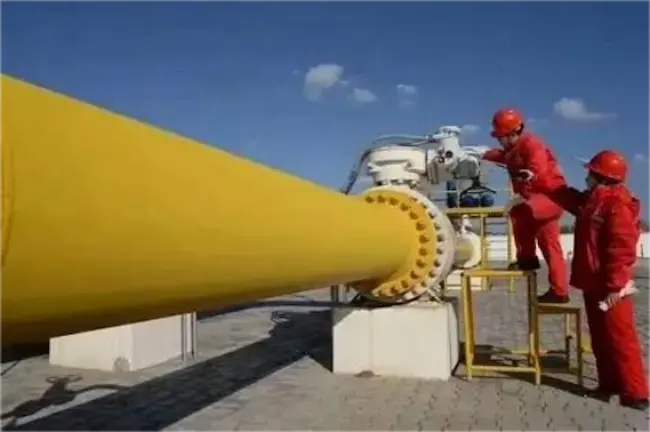
You’re standing in front of a pipeline.
No label. No drawing.
The pump operator asks: “Is that valve open?”
You hesitate.
That moment of uncertainty is exactly why understanding industrial valve operation matters more than people admit.
User Pain Points
Valve Handles Aren’t Always Obvious
Not all handles follow the same logic. Assuming incorrectly can shut down a system — or flood a room.
Different Valve Types Behave Differently
A ball valve open-closed position differs from a gate valve open-closed position, and butterfly valves add more confusion.
Missing or Damaged Indicators
In older systems, valve status indicators may be missing, painted over, or broken.
Practical Solutions & Clear Rules
✅ Solution 1: Understand Handle Direction Rules
For rising stem gate valves, a raised stem usually indicates the valve is open, while a lowered stem usually indicates the valve is closed. For non-rising stem gate valves, use the position indicator, turn count, gearbox indicator, actuator feedback, or site operating record.
✅ Solution 2: Identify the Valve Type First
Before judging a position, confirm whether it’s a ball, gate, globe or butterfly valve. Each follows its own logic.
✅ Solution 3: Check Flow & Mechanical Indicators
Many industrial valves include arrows, stems or position indicators that clearly show valve flow direction and status.
Typical Scenarios
Typical Scenario: Ball Valve in a Cooling Line
A perpendicular handle on a standard two-way ball valve usually indicates closed position, not half-open position. If the line has no flow, check handle direction, valve tag, downstream pressure, and whether the handle stop has been modified.
Typical Scenario 2: Rising Stem Gate Valve on a Fire Line
A raised stem may indicate opening movement, but corrosion, debris, stem damage, or disc jamming can prevent full flow. Critical fire or safety lines should be inspected and tested according to the site procedure.
Common Valve Open and Closed Position Rules
| Valve Type | Common Open Indicator | Common Closed Indicator | Important Caution |
|---|---|---|---|
| Ball valve | Handle usually parallel to pipe | Handle usually perpendicular to pipe | Applies mainly to standard manual two-way ball valves |
| Gate valve | Rising stem raised, or indicator shows open | Rising stem lowered, or indicator shows closed | Non-rising stem valves need indicator or turn count |
| Globe valve | Stem/disc lifted from seat | Stem/disc seated | Partial opening is common for throttling |
| Butterfly valve | Disc parallel to flow, indicator open | Disc perpendicular to flow, indicator closed | Use lever plate, gearbox or actuator indicator |
| Check valve | Opens automatically with forward flow | Closes automatically on reverse flow | Cannot be judged like manual isolation valves |
| Actuated valve | Open feedback / local indicator | Closed feedback / local indicator | Feedback must match actual valve travel |
⚠️ Always verify valve flow direction markings where available.

Industry Trends & Market Insight
Modern industrial systems increasingly use:
-
Valves with visual position indicators
-
Automated valves with electrical feedback
-
Colour-coded handles for faster identification
At Vcore Valve, we’ve seen growing demand for valves designed to eliminate ambiguity in valve open or closed position, especially in safety-critical environments.
Best Practice Tips
-
Never rely on handle position alone in critical systems
-
Always check valve status indicator if present
-
Label valves clearly during commissioning
-
When unsure, isolate and depressurise before testing
These habits prevent costly mistakes.
Conclusion
Correct valve-position identification should combine valve type recognition, handle direction, stem or disc movement, local indicators, actuator feedback, flow response, and site safety procedures. In critical systems, never rely on one visual cue alone.
FAQ – Common Questions About Valve Open & Closed Position
Q1: Is parallel always open for valves?
No. For most standard manual two-way ball valves and many quarter-turn valves, a handle parallel to the pipe usually indicates open position. For other valve types, actuated valves, three-way valves, or modified handles, confirm from the valve design and indicator.
Q2: How do I tell if a gate valve is open?
For a rising stem gate valve, a raised stem usually indicates open position. For a non-rising stem gate valve, check the position indicator, handwheel turn count, gearbox indicator, or actuator feedback.
Q3: Can a valve be partially open without obvious signs?
Yes. Damaged handles, incorrect reassembly, debris, corrosion, seat damage, actuator misalignment, or internal jamming can make a valve appear open or closed while the internal closure member is not in the expected position.
Q4: Are arrows on valves reliable?
Flow arrows show the intended flow direction through the valve. They do not by themselves confirm whether the valve is open or closed. Valve position must be confirmed from the handle, stem, disc, position indicator, actuator feedback, or actual process condition.
Q5: What’s the safest way to confirm valve status?
For non-critical systems, check the valve type, handle/stem/indicator and process response. For critical or hazardous systems, follow the site operating or lockout/tagout procedure before inspection or maintenance.