Quick Overview
Industrial Valve Failures and Repair is important for industry. Industrial valves are designed to be robust, but they are not immune to failure. From leakage and sticking to complete operational breakdowns, industrial valve failures can disrupt production, compromise safety, and drive up maintenance costs. Understanding why valves fail—and how to repair or prevent those failures—is essential for any engineer, plant manager, or procurement professional. At Vcore Valve, we see valve failures not as accidents, but as predictable outcomes of design, material, or operational mismatches.
A Familiar Plant-Side Conversation
“The valve was fine last year—why is it leaking now?”
This question echoes across refineries, power plants, and water treatment facilities. In most cases, the valve did not suddenly fail. Instead, small issues accumulated quietly until failure became unavoidable. Recognising these warning signs early makes the difference between a planned repair and an emergency shutdown.
The Most Common User Pain Points
Unexpected leakage during operation
Valve leakage—internal or external—is the most frequent complaint, often leading to safety concerns and product loss.
Shorter-than-expected valve lifespan
Valves that should last decades sometimes fail in just a few years due to improper material or service conditions.
High repair and downtime costs
Unplanned valve repairs often cost more in lost production than the valve itself.
Practical Solutions from Vcore Valve
Correct valve selection from the start
Matching valve type, material, and pressure class to actual operating conditions eliminates most premature failures.
Predictive maintenance instead of reactive repair
Regular inspection of sealing surfaces, stems, and actuators prevents small defects from becoming critical failures.
Repair-or-replace decision analysis
Not all failed valves should be repaired. In some cases, replacement offers lower long-term cost and higher reliability.
Common Industrial Valve Failure Modes
Valve leakage
Leakage may occur through the seat, stem packing, or body joints. Causes include seat wear, corrosion, debris damage, or incorrect torque.
Sticking or jamming
Deposits, corrosion, or thermal distortion can prevent valves from opening or closing fully, especially in gate and plug valves.
Actuator failure
In automated systems, actuators often fail before the valve body, caused by air supply issues, electrical faults, or incorrect sizing.
Cavitation and erosion
High-velocity flow and pressure drops can cause cavitation damage, particularly in control valves and throttling applications.
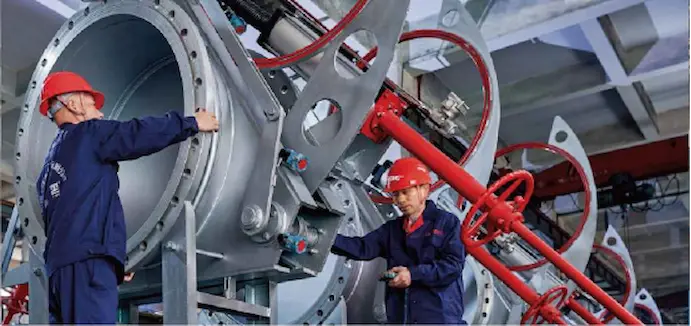
Valve Repair vs Replacement: Real Examples
Case 1: Gate valve leakage in a water plant
A DN300 ductile iron gate valve showed internal leakage after eight years. Inspection revealed seat erosion caused by sand particles. Seat refurbishment restored full sealing at less than 40% of replacement cost.
Case 2: Ball valve failure in a chemical unit
A cast steel ball valve suffered stem leakage due to incompatible packing material. However, body corrosion was advanced. Replacement with a corrosion-resistant alloy valve provided better long-term value than repair.
At Vcore Valve, we evaluate repair feasibility based on pressure rating, material integrity, and expected remaining service life.
Data-Driven Failure Analysis
Industry maintenance data shows that:
-
Over 60% of valve failures are related to sealing components
-
Nearly 30% result from incorrect material selection
-
Less than 10% are due to manufacturing defects
This highlights a critical truth: most industrial valve failures are avoidable with proper engineering decisions.
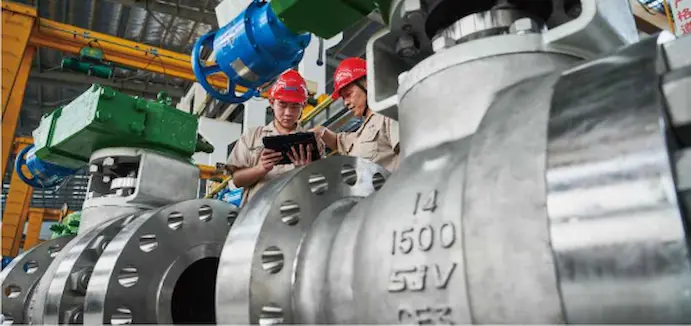
Industry Trends in Valve Maintenance
Modern plants are shifting towards:
-
Condition-based valve monitoring
-
Digital actuator feedback systems
-
Modular valve designs for faster repair
-
Standardised spare parts across valve types
Sustainability goals also push companies to extend valve life through refurbishment rather than replacement—when technically justified.
Best Practices for Valve Use and Maintenance
Select valves based on real operating data, not design assumptions
Avoid using isolation valves for throttling unless explicitly designed for it
Inspect stem packing and flange joints regularly
Document repair history to identify recurring failure patterns
Work with manufacturers who understand application-specific risks
These practices significantly reduce industrial valve failure rates over time.
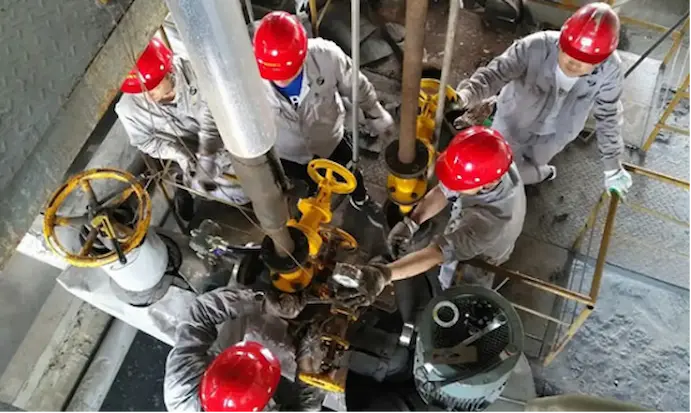
Conclusion
Valve failures are rarely random. They are signals—pointing to design mismatches, operational stress, or maintenance gaps. By understanding the root causes of industrial valve failures and applying structured repair strategies, plants can dramatically improve reliability and safety.
At Vcore Valve, we support clients not only with high-quality valves, but with engineering insight that prevents failures before they happen. If your system is experiencing repeated valve issues, our technical team is ready to help.
FAQ
What is the most common cause of industrial valve failure?
Seat and sealing component wear caused by improper service conditions.
Can leaking valves always be repaired?
Not always. Repair depends on body integrity, pressure rating, and remaining service life.
How often should industrial valves be inspected?
Critical valves should be inspected annually or based on operating cycles.
Do automated valves fail more often than manual ones?
Actuators introduce additional failure points, but proper sizing and maintenance minimise risk.
Does Vcore Valve provide repair support?
Yes. Vcore Valve offers technical guidance for repair, retrofit, and replacement solutions.
Reference
-
API 598 – Valve Inspection and Testing
-
ISO 5208 – Pressure Testing of Valves
-
ASM Handbook: Failure Analysis and Prevention
-
API RP 571 – Damage Mechanisms Affecting Equipment