Quick Summary
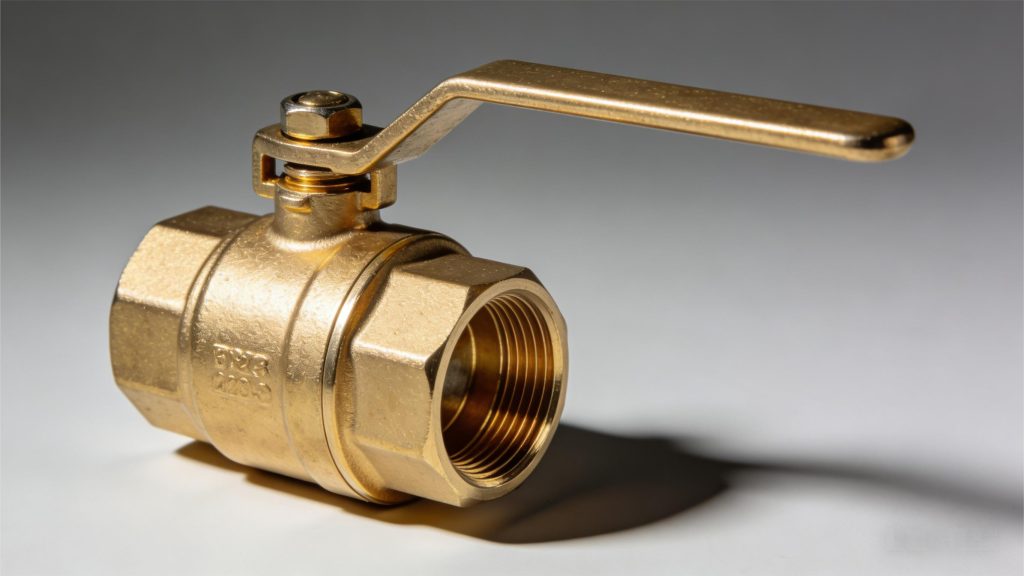
Brass ball valves are the unsung heroes of plumbing and industrial systems. Combining durability, affordability, and ease of use, these copper-zinc alloy valves outperform alternatives in countless applications—from residential heating to natural gas pipelines. This guide unpacks everything you need to know about brass ball valves, from their unique advantages to how they stack up against bronze, helping you make confident choices for any project.
Opening Scene: The Plumber’s Dilemma
Imagine a DIY enthusiast staring at a shelf of valves, scratching their head. “Brass or bronze?” they mutter. A seasoned plumber overhears and grins: “For your kitchen renovation? Brass ball valves—hands down. They’re cheap, easy to install, and safe for drinking water.” Sound familiar? Choosing the right valve doesn’t have to be stressful—especially when brass offers unbeatable value and versatility.
User Pain Points
Budget Constraints for Large-Scale Projects
Whether you’re upgrading a home’s plumbing or fitting an industrial facility, costs add up fast. Bronze valves, while durable, can be 3–4 times more expensive than brass, stretching budgets thin for large installations.
Difficulty Machining Valves for Custom Fittings
DIYers and small workshops often struggle with valves that are hard to cut, shape, or modify. Bronze’s rigidity makes machining a chore, leading to ill-fitting components and potential leaks.
Lead Contamination Fears in Potable Water Systems
Safety is non-negotiable for drinking water. Many users worry about lead leaching from valves, but not all alloys are created equal—bronze often contains higher lead levels, raising compliance concerns with regulations like the Clean Water Act.
Solutions & Recommendations
Opt for Brass Ball Valves to Cut Costs Without Sacrificing Quality
Brass ball valves are 3–4 times less expensive than bronze, thanks to their affordable zinc content and lower production costs. For residential plumbing, irrigation, or non-corrosive industrial systems, brass delivers reliability at a fraction of the price.
Leverage Brass’s Superior Machinability for Custom Projects
Brass’s malleability makes it a dream for machining—high cutting speeds and easy shaping mean you can customize fittings, drill holes, or adjust sizes without specialized equipment. Perfect for DIYers or small-scale manufacturers.
Choose Lead-Free Brass Ball Valves for Potable Water
Look for labeled lead-free brass ball valves (typically light yellow in color) to meet safety standards. With only 2–3% lead content (compared to bronze’s 5%+), brass ensures clean, compliant drinking water for homes and businesses.
Case Study: Brass Ball Valves in Residential Plumbing Renovation
A property developer was renovating 50 apartments and needed cost-effective, reliable valves for plumbing systems. After testing both brass and bronze, they opted for Brass ball valves—saving $15,000 on materials alone. The valves were easy to install, required no specialized tools, and passed all lead-safety tests. Two years later, zero leaks or failures were reported, demonstrating the durability of brass for residential use.
Data & Scientific Comparison: Brass vs. Bronze Ball Valves
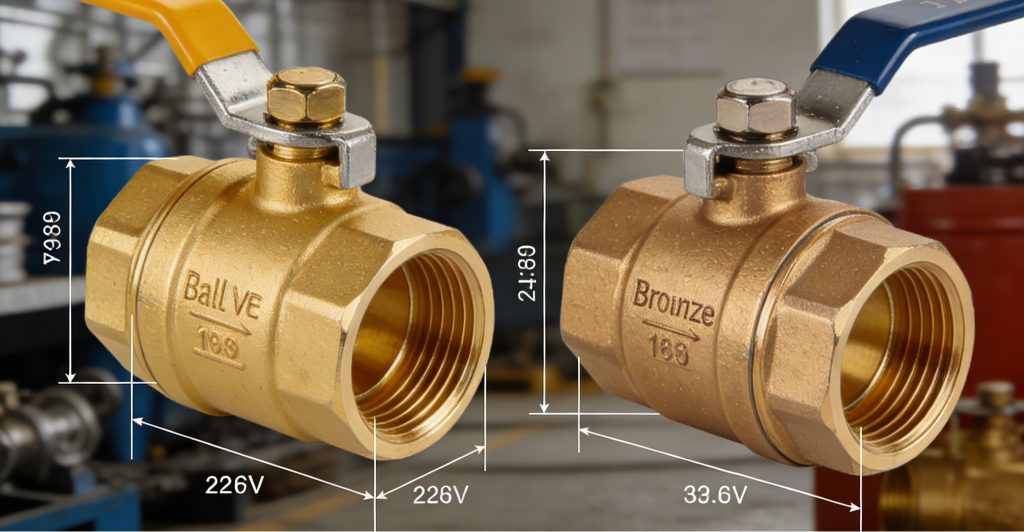
| Feature | Brass Ball Valves | Bronze Ball Valves |
| Composition | Copper + zinc | Copper + tin (plus aluminum/silicon) |
| Density | 8.4–8.73 g/cm³ | 8.6–8.9 g/cm³ |
| Melting Point | 1,710°F (932°C) | 1,590°F (866°C) |
| Corrosion Resistance | Good (except high chlorine) | Excellent (saltwater, chemicals) |
| Lead Content | 2–3% (lower than bronze) | Up to 5% (lead-free options available) |
| Malleability | Highly malleable | Less malleable |
| Machinability | Easy (high cutting speeds) | Challenging |
| Price | Budget-friendly | 3–4x more expensive |
| Key Applications | Plumbing, heating, and natural gas | Marine, petrochemical, industrial |
Trends & Market Insights
The global brass ball valves market is set to grow at a CAGR of 3.8% from 2024 to 2030, driven by demand from residential construction and the natural gas industry. With urbanization on the rise, especially in emerging economies, brass valves are becoming the go-to for affordable, reliable plumbing.
Lead-free brass variants are gaining traction, as governments tighten water safety regulations. Manufacturers are also innovating with brass alloys to improve corrosion resistance—closing the gap with bronze in non-extreme environments. Bronze remains dominant in marine and petrochemical sectors, but brass is capturing market share in commercial buildings and small-scale industrial projects.
Style & Usage Tips
- Installation: Use Teflon tape on brass threads for a tight seal—brass’s malleability means it forms a secure fit without over-tightening. Perfect for DIYers!
- Maintenance: Wipe Brass ball valves with a soft cloth to prevent tarnishing. Avoid harsh chemicals; mild soap and water work best to preserve their yellow-gold finish.
- Aesthetics: Brass’s warm, yellow-gold color complements modern and traditional plumbing fixtures. It even develops a charming patina over time—ideal for heritage homes.
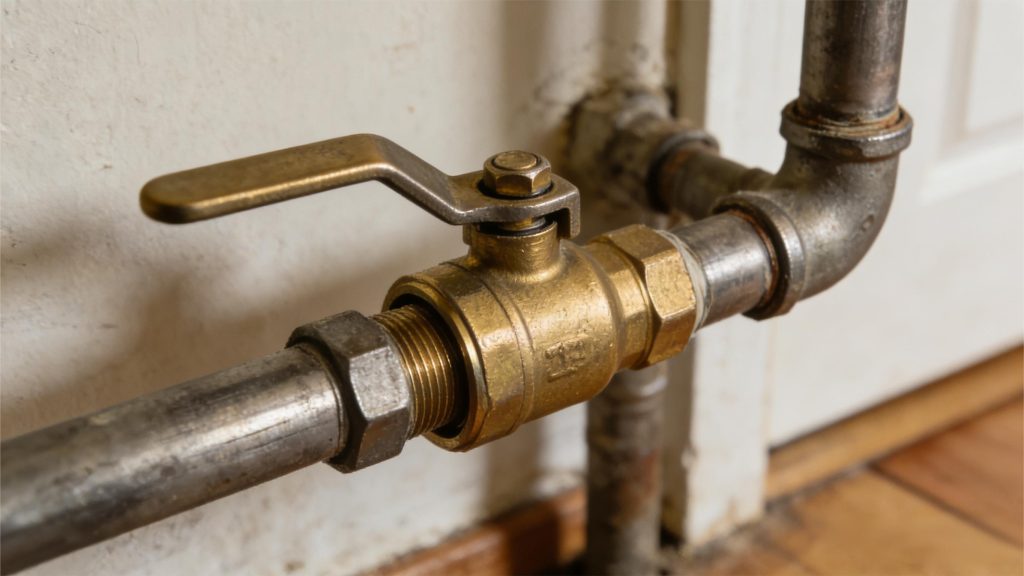
- Compatibility: Pair brass ball valves with copper, PVC, or PEX pipes in residential systems. For natural gas, ensure the valve is rated for gas use (most brass valves are!).
Conclusion
Brass ball valves are the smart choice for budget-conscious, versatile fluid control. Whether you’re a DIYer renovating your bathroom, a plumber fitting a commercial building, or an engineer designing a natural gas pipeline, brass delivers the perfect balance of cost, durability, and ease of use. Bronze is better for extreme environments, but brass shines in 90% of everyday applications—without breaking the bank.
Ready to upgrade your valves? Visit Kemus’s Brass Ball Valves Guide to explore lead-free, industry-certified options. Our team of experts is on hand to help you find the right valve for your project—whether you need a single fitting or bulk supplies. Invest in brass ball valves today and enjoy leak-free, hassle-free performance for years to come!
FAQ
- Are brass ball valves safe for drinking water?
Yes—lead-free brass ball valves (labeled as such) comply with the Clean Water Act, with only trace lead levels (2–3%) that pose no health risks.
- Can brass ball valves handle high temperatures?
Absolutely. Brass has a melting point of 1,710°F, making it suitable for heating systems and hot water lines without deforming.
- How long do brass ball valves last?
With proper maintenance, brass ball valves can last 15–20 years in residential use and 10–15 years in industrial settings—comparable to bronze in non-corrosive environments.
- Are brass ball valves easier to install than bronze?
Yes. Brass’s malleability means it’s easier to thread, cut, and adjust, making installation a breeze for DIYers and professionals alike.
- Can I use brass ball valves for natural gas?
Yes—most brass ball valves are rated for natural gas use. Check the manufacturer’s specifications to ensure compatibility with high-pressure gas systems.
- How do I tell if a brass ball valve is lead-free?
Lead-free brass is usually light yellow in color and labeled with a “lead-free” certification. Always check documentation or ask the supplier for proof of compliance.
- Are brass ball valves more cost-effective than bronze?
Yes—brass is 3–4 times cheaper than bronze, with lower production and machining costs. For most applications, brass offers the same reliability at a fraction of the price.
References
- (2023). Brass Vs. Bronze Ball Valves. https://plumberstar.com/brass-vs-bronze-ball-valves/
- International Organization for Standardization (ISO). (2022). ISO 8179: Brass Ball Valves for Water Supply Systems.
- Environmental Protection Agency (EPA). (2021). Lead-Free Plumbing Requirements Under the Safe Drinking Water Act.
- (2024). Brass Ball Valves Market Global Forecast Report.
- American Society of Plumbing Engineers (ASPE). (2023). Best Practices for Brass Valve Installation.