Quick Overview
Some lug butterfly valve installation leakage or operating problems after installation are caused by flange misalignment, incorrect bolt tightening, wrong disc position, piping stress, or end-of-line misuse. However, root-cause review should also consider valve selection, seat material, flange compatibility, storage, handling, pressure differential, testing condition, and manufacturing quality.
A Typical On-Site Scenario
“The valve passed factory testing, but it leaks after installation.”
This situation is far more common than most engineers would like to admit. n many field cases, leakage after factory testing can be linked to installation conditions such as flange alignment, bolt loading, disc position, or piping stress. A fair diagnosis should compare factory test records, installation photos, flange condition, bolt torque, gasket condition, and operating pressure.
Key User Pain Points
Leakage immediately after installation
Even brand-new valves may leak if flange alignment or bolt torque is incorrect.
Seat damage during commissioning
Improper disc positioning can permanently deform resilient seats before the system even starts.
Unexpected difficulty during maintenance
Incorrect installation can make future valve removal or servicing unnecessarily complex.
Practical Solutions from Vcore Valve
Follow valve-specific installation procedures
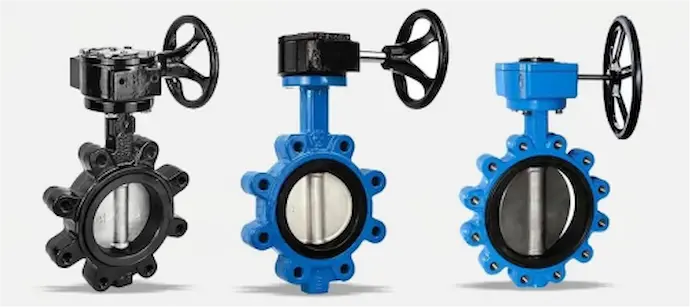
Lug butterfly valves are not installed the same way as wafer valves. Understanding these differences is critical.
Control torque and alignment precisely
Over-tightening bolts or forcing alignment can distort the valve body or seat.
Involve the valve manufacturer early
Application-specific guidance often prevents costly on-site corrections.
The Most Common Lug Butterfly Valve Installation Mistakes
Installing the valve with the disc fully closed
This is one of the most frequent errors. Installing a lug butterfly valve with the disc fully closed increases the risk of disc-to-seat damage during flange tightening. The disc should be slightly open to protect the sealing surface.
Misalignment between pipeline flanges
Even small flange misalignments can cause uneven loading on the valve body, leading to leakage or disc binding. Proper flange parallelism is essential for reliable operation.
Incorrect bolt tightening sequence
Uneven or excessive bolt torque can deform the valve body or compress the seat unevenly. A cross-tightening pattern with controlled torque is always recommended.
Using the valve to correct piping errors
Lug butterfly valves are not designed to compensate for pipe misalignment or piping stress. Forcing the valve into position introduces long-term mechanical stress.
Ignoring end-of-line service limitations
Although lug butterfly valves can be used for end-of-line service, pressure ratings and manufacturer limitations must be respected to avoid seat extrusion or body damage.
Typical Installation Scenarios
Scenario 1: Seat leakage during hydrotesting
If a lug butterfly valve leaks after hydrotesting, check whether the disc was fully closed during installation, whether the seat was pinched or deformed, whether bolt torque was uneven, and whether the flange faces were parallel.
Scenario 2: High operating torque after installation
If the valve becomes difficult to operate after bolting, check pipe alignment, flange spacing, disc clearance, seat compression, and whether the valve was forced into a stressed piping position.
Technical and Mechanical Analysis
Studies of butterfly valve failures show that:
-
Over 50% of early leakage issues originate from installation errors
-
Incorrect bolt torque is a leading cause of seat deformation
-
Proper alignment reduces operating torque by up to 30%
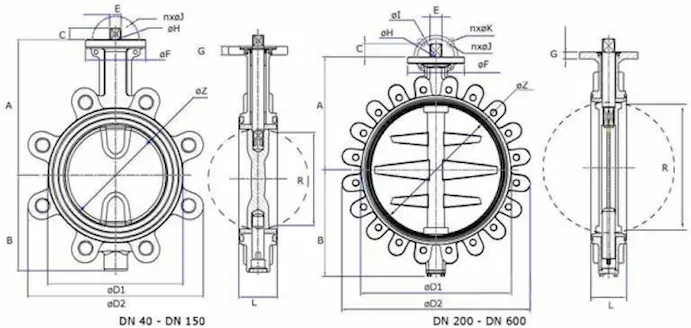
From an engineering perspective, lug butterfly valves rely on even load distribution across the body and seat. Any deviation directly affects sealing performance.
Market and Industry Trends
As systems become more compact and pressures increase, installation tolerance margins shrink. The industry is moving toward:
-
Clearer installation documentation
-
Pre-installation training for contractors
-
Valves with more robust seat designs
-
Digital torque tools for controlled installation
Manufacturers like Vcore Valve increasingly support customers with installation guidance to reduce post-installation disputes.
Installation Style and Best Practices
| Installation Check | What to Confirm |
|---|---|
| Valve and flange compatibility | Lug pattern, flange standard, pipe ID, gasket/seat contact, pressure rating |
| Disc position | Disc slightly open and within body profile during installation |
| Flange alignment | Parallel faces, correct spacing, bolt-hole alignment, no pipe stress |
| Bolt tightening | Cross pattern, gradual passes, manufacturer torque guidance |
| Disc clearance | Operate slowly before pressurization to confirm no disc interference |
| End-of-line service | Confirm manufacturer-rated pressure, flow direction and downstream-flange condition |
| Commissioning | Check leakage, operating torque, actuator travel and final open/closed position |
Conclusion and Call to Action
Lug butterfly valve failures are rarely caused by manufacturing defects. In most cases, installation mistakes are the real culprit. By understanding common errors and following proven installation practices, operators can dramatically improve valve performance and service life.
At Vcore Valve, we design lug butterfly valves for durability—but correct installation is what allows that durability to shine. If you need technical guidance or application-specific recommendations, our engineering team is ready to assist.
FAQ
Can lug butterfly valves be used for end-of-line service?
Yes, but only within the pressure and size limits specified by the manufacturer.
Should the valve disc be open or closed during installation?
Slightly open, to protect the seat and disc edges.
Is over-tightening flange bolts a common problem?
Yes. Excessive torque can distort the valve body and damage the seat.
Can a lug butterfly valve compensate for pipe misalignment?
No. Piping must be correctly aligned before installation.
Does Vcore Valve provide installation support?
Yes. Vcore Valve offers technical guidance for proper valve installation and commissioning.
Reference
-
ISO 5211 – Actuator Mounting Standards
-
API 609 – Butterfly Valves
-
MSS SP-67 – Butterfly Valve Installation Practices
-
Manufacturer Installation Guidelines (Industrial Valves)