Quick Summary
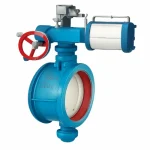
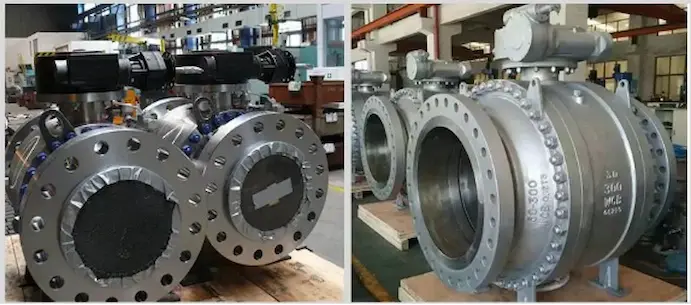
The eccentric half-ball valve is a specialised industrial valve designed for demanding services where conventional ball or butterfly valves struggle. By combining an eccentric shaft with a half-ball geometry, this valve achieves low operating torque, excellent sealing performance, and strong resistance to wear. In this guide, Vcore Valve explains how eccentric half ball valves work, where they perform best, and why they are increasingly chosen for slurry, wastewater, and abrasive media applications.
A Common On-Site Conversation
“Why does this ball valve keep leaking after six months?”
“It’s not leaking—it’s being destroyed.”
At Vcore Valve, we often hear this exchange during site audits. In abrasive or solids-laden services, standard ball valves fail not because of poor manufacturing, but because the wrong valve design was selected. This is precisely where the eccentric half-ball valve proves its value.
Key User Pain Points
Severe Wear in Slurry and Dirty Media
Traditional full-bore ball valves suffer constant seat abrasion when solids are trapped during rotation.
Excessive Operating Torque
High friction between the ball and the seat leads to oversized actuators and unreliable automation.
Unstable Sealing Over Time
Soft seats deform, while metal seats in standard designs experience continuous rubbing during opening and closing.
How Eccentric Half Ball Valves Solve These Issues
Controlled Contact Between Ball and Seat
The eccentric design ensures the ball does not contact the seat until the final closing stage, dramatically reducing wear.
Lower Torque, Smaller Actuators
Reduced friction means lower operating torque, improving automation reliability and cutting actuator cost.
Reliable Metal-to-Metal Sealing
Most eccentric half-ball valves use metal-seated designs, ideal for abrasive, high-temperature or corrosive services.
Understanding the Eccentric Half Ball Valve Design
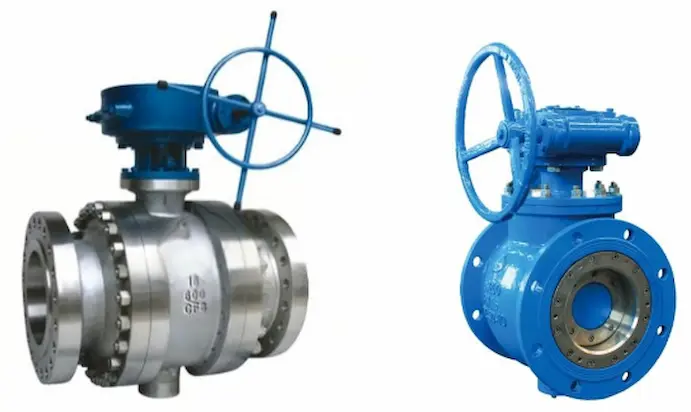
An eccentric half-ball valve differs fundamentally from a standard ball valve.
Core Design Characteristics
-
Half-ball closure element
-
Eccentrically offset shaft
-
Floating or fixed metal seat
-
Self-cleaning sealing action
-
Typically quarter-turn operation
During rotation, the ball moves away from the seat before turning, avoiding scraping. Only at the final moment does the ball press firmly against the seat, creating a tight seal.

Working Principle Explained Simply
-
Valve opens: ball lifts away from the seat first
-
The ball rotates with minimal friction
-
Flow path opens fully with reduced turbulence
-
During closing, the ball re-engages the seat only at the end
-
Sealing force increases progressively
This sequence explains why eccentric half ball valves perform so well in slurry, pulp, ash and wastewater systems.
Technical Comparison Table
| Selection Factor | Eccentric Half-Ball Valve | Standard Ball Valve | Butterfly Valve |
|---|---|---|---|
| Main advantage | Reduced seat rubbing and good solids-service potential | Tight shutoff and simple quarter-turn isolation | Compact, lightweight, cost-effective |
| Main limitation | Higher cost and more specialized design | Particle entrapment or seat wear in abrasive media | Disc remains in flow path; seat/disc wear possible |
| Suitable media | Slurry, wastewater, ash, pulp, fibrous or particle-containing fluids when correctly selected | Clean fluids, gas, oil, water; severe-service versions for selected abrasive duties | Water, HVAC, wastewater, utility systems; special designs for harsher service |
| Must confirm | Seat design, coating, torque, solids content, leakage class, Cv/Kv | Seat material, bore, torque, leakage class, solids tolerance | Seat material, disc material, torque, end-of-line limits, solids tolerance |
Case Study: Wastewater Sludge Line Upgrade
A municipal wastewater plant replaced rubber-seated butterfly valves with eccentric half-ball valves supplied by Vcore Valve on sludge discharge lines.
Results after 18 months:
-
Zero unplanned shutdowns
-
Actuator size reduced by 30%
-
Valve service life doubled
-
Improved flow control accuracy
Performance Data and Engineering Analysis
Field and laboratory data show that eccentric half-ball valves:
-
Reduce seat wear by over 60% compared to standard ball valves in slurry service
-
Maintain stable torque curves across long operating cycles
-
Achieve a tighter shut-off under fluctuating pressure conditions
These characteristics make them ideal for critical process control and isolation duties.
Market Trends and Industry Insight
Global demand for eccentric half-ball valves is rising due to:
-
Growth in wastewater and environmental projects
-
Increased mining and mineral processing investments
-
Stricter reliability requirements in industrial automation
More engineers are shifting away from “general-purpose valves” toward application-specific designs.
Selection and Usage Recommendations
Choose an eccentric half-ball valve when:
-
Media contains solids, fibres, or particles
-
Frequent operation is required
-
Long service life is critical
-
Metal-to-metal sealing is preferred
Avoid using them for:
-
Ultra-clean, low-pressure services where simpler valves suffice
-
Extremely small line sizes where geometry becomes impractical
Conclusion
The eccentric half-ball valve is not a niche product—it is a problem-solving valve engineered for the realities of industrial service. By reducing wear, lowering torque and stabilising sealing performance, it offers a long-term solution where standard valves repeatedly fail.
At Vcore Valve, we design eccentric half-ball valves based on real operating conditions—not theoretical assumptions.
👉 Contact Vcore Valve today to discuss your application or request a technical consultation.
FAQ
Q1: What is an eccentric half-ball valve used for?
It is used in abrasive, slurry, and solids-laden media where conventional valves wear out quickly.
Q2: How is it different from a standard ball valve?
The eccentric shaft prevents continuous contact between ball and seat during rotation.
Q3: Are eccentric half-ball valves suitable for automation?
Yes, their low torque makes them ideal for electric or pneumatic actuators.
Q4: Can they provide a tight shut-off?
Yes, especially metal-seated designs with controlled sealing force.
Q5: What industries commonly use them?
Wastewater treatment, mining, pulp and paper, power plants, and chemical processing.
Q6: Are they more expensive than standard ball valves?
Initial cost may be higher, but lifecycle cost is significantly lower.
Reference
-
ISO 17292. Metal Ball Valves for Petroleum, Petrochemical, and Allied Industries.
-
API 608. Metal Ball Valves – Flanged, Threaded,d and Welding Ends.
-
Engineering World. Valve Selection for Slurry and Abrasive Services.
-
Vcore Valve Internal Engineering Notes. Eccentric Ball Valve Performance in Abrasive Media