Quick Overview
When selecting control valves for your system, one of the primary decisions you’ll face is whether to go with a single-seated or double-seated valve. These valves serve similar purposes in fluid control but are designed for different applications and operational needs. In this article, we will explore the key differences between single-seated and double-seated control valves, the benefits of each, and guide you in making the best decision for your system.
Introduction: Choosing the Right Control Valve
Control valves are a critical component in regulating the flow of fluids in various systems. They control the flow, pressure, and temperature within pipelines, ensuring that everything runs smoothly. However, not all control valves are created equal. Single-seated and double-seated valves are two of the most common types used in industries, each offering distinct advantages depending on the application.
This article will help you understand the differences between single-seated and double-seated control valves, their strengths, and the factors to consider when choosing the right one for your system.
Pain Points: Why Do You Need to Choose Between Single-Seated and Double-Seated Valves?
1. System Reliability and Performance
Both types of control valves regulate fluid flow, but they do so in different ways. Choosing the wrong valve could lead to performance issues, downtime, or even failure in extreme conditions.
2. Pressure and Temperature Variability
The operating conditions, such as pressure and temperature, will influence the performance of single-seated and double-seated valves differently. You need to ensure the valve can handle your system’s specific needs.
3. Valve Maintenance and Longevity
The lifespan and maintenance requirements of single-seated and double-seated valves vary. An incorrect choice could lead to increased maintenance costs, downtime, and the need for frequent replacements.
Solutions: Single-Seated vs. Double-Seated Control Valves
1. Single-Seated Control Valves: Simple, Efficient, and Cost-Effective
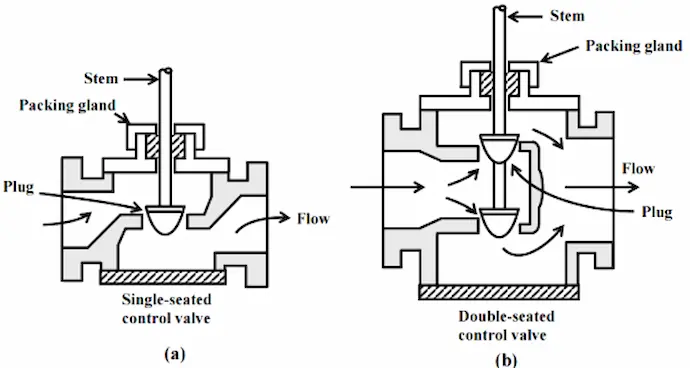
Single-seated control valves are designed with a single valve seat. This design offers simplicity, efficiency, and reliability, making them ideal for applications where high performance is required in relatively stable conditions.
-
Advantages:
-
Ideal for moderate pressure and flow conditions
-
More cost-effective due to their simpler design
-
Lower maintenance costs due to fewer moving parts
-
Better for clean, non-erosive fluids
-
-
Applications:
Single-seated valves are commonly used in smaller to mid-sized systems, where the flow and pressure are more predictable. These valves are perfect for HVAC systems, water treatment plants, and smaller chemical processing plants.
2. Double-Seated Control Valves: Better for Higher Pressures and Fluctuating Conditions
Double-seated control valves are designed with two seats, offering a higher level of sealing capability. This design helps the valve perform better under extreme pressures or high-temperature conditions.
-
Advantages:
-
Capable of handling high-pressure differentials
-
More resilient in fluctuating conditions
-
Provides redundancy, reducing the risk of leakage
-
Suitable for a wider range of fluids, including dirty, abrasive, or high-temperature fluids
-
-
Applications:
Double-seated valves are typically used in large-scale operations like oil and gas, petrochemical, and heavy industrial applications where high flow rates and pressure differentials are common.
Case Study: Single-Seated vs. Double-Seated in a Chemical Processing Plant
In a recent project for a chemical processing plant, the team faced a choice between single-seated and double-seated control valves for their high-flow system. After assessing the pressures, flow rates, and chemical properties of the fluids, the engineers selected double-seated control valves due to their ability to handle fluctuating pressures and high temperatures.
Since the installation of the double-seated valves, the plant has seen a significant improvement in system stability, with fewer instances of valve failure and better overall efficiency. The redundancy of the double seats provided added peace of mind, ensuring that even if one seat was compromised, the other would maintain its sealing function.
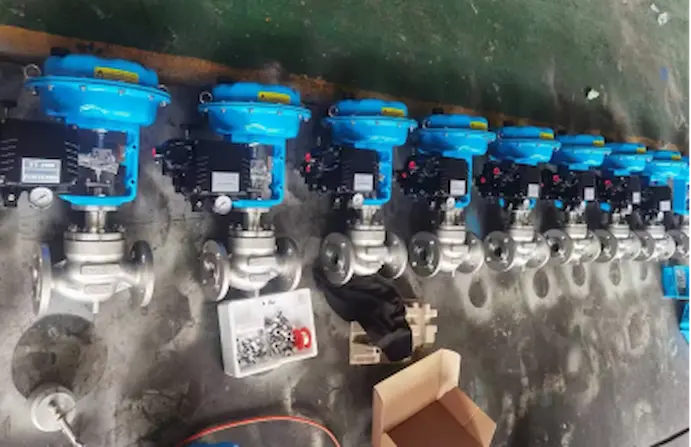
Data Comparison
Below is a comparison table to help understand the key differences between single-seated and double-seated control valves:
| Feature | Single-Seated Control Valves | Double-Seated Control Valves |
|---|---|---|
| Design | One valve seat | Two valve seats |
| Pressure Handling | Moderate pressure differential | High-pressure differential |
| Fluid Type | Clean, non-abrasive fluids | Abrasive, dirty, and high-temp fluids |
| Applications | Small to medium-sized systems | Large-scale operations |
| Maintenance Requirements | Low maintenance | Higher maintenance due to complexity |
| Cost | More affordable | Higher cost due to complexity |
Trends Insights
As industries demand more efficiency and reliability, the market for advanced control valves is growing. Manufacturers are focusing on improving the performance and durability of both single-seated and double-seated valves. The trend is moving towards more automated valve systems, where real-time data helps optimise performance and minimise maintenance costs.
The growing adoption of Industry 4.0 technologies also plays a role in this shift. Valves are now being integrated into digital control systems that allow operators to monitor and adjust valve performance remotely, enhancing system reliability and operational efficiency.
Style Suggestions
When choosing between single-seated and double-seated control valves, consider the following:
-
Evaluate Operating Conditions: If your system operates under moderate conditions, single-seated valves will suffice. However, if your system deals with extreme pressures or temperatures, double-seated valves will offer better performance and safety.
-
Consider Fluid Type: For clean fluids, a single-seated valve may be the most economical choice. For dirty, abrasive, or high-temperature fluids, double-seated valves are more suitable.
-
Maintenance Strategy: Single-seated valves are easier and cheaper to maintain. However, double-seated valves, while requiring more maintenance, offer a higher level of redundancy and reliability in critical systems.
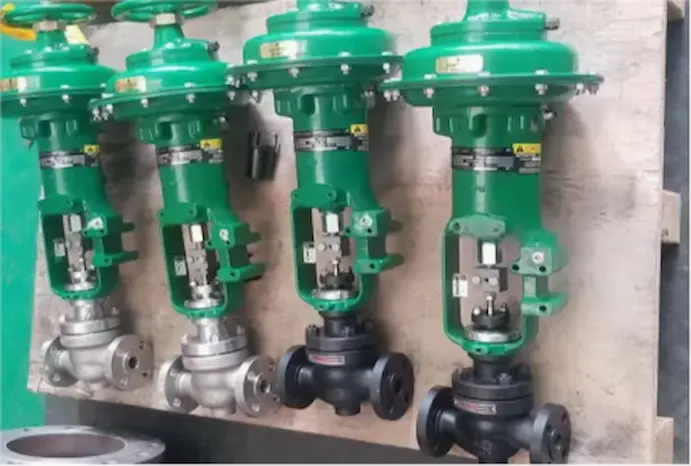
Conclusion: Selecting the Right Control Valve for Your System
Choosing between single-seated and double-seated control valves is a crucial decision that directly impacts the efficiency, reliability, and safety of your system. Understanding the specific needs of your application—whether it’s handling high pressures, fluctuating conditions, or abrasive fluids—will help guide you to the right valve solution.
At Vcore Valve, we offer both single-seated and double-seated control valves that cater to a wide range of industrial applications. Our team of experts can assist you in selecting the right valve to ensure optimal performance and safety for your system. Contact us today for more information.
FAQs
1. What is the primary difference between single-seated and double-seated control valves?
Single-seated valves have one seat, while double-seated valves have two. Double-seated valves are better suited for high-pressure differentials and more demanding applications.
2. Which control valve is best for handling high-temperature fluids?
Double-seated control valves are better suited for high-temperature fluids, as they offer enhanced sealing capabilities and durability under extreme conditions.
3. Are single-seated control valves cheaper to maintain?
Yes, single-seated valves are simpler in design and typically have lower maintenance costs compared to double-seated valves, which have more complex components.
4. Can double-seated control valves be used for clean fluids?
Yes, double-seated valves can be used for clean fluids, but they are particularly beneficial for systems handling high pressures or dirty, abrasive fluids.
5. How do I determine which valve to choose for my system?
Consider factors like pressure, temperature, fluid type, and system complexity when selecting between single-seated and double-seated valves. Consulting with a valve expert can help you make the right choice for your system.
Reference
-
Control Valve Design and Operation