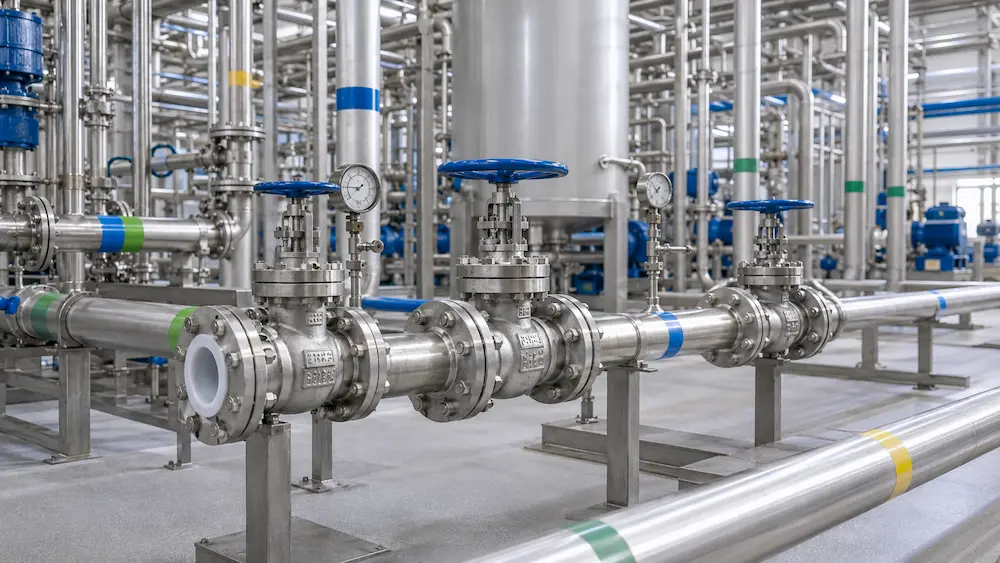
Choosing corrosion-resistant valves for acid and alkali pipelines is one of the most important decisions in chemical processing, water treatment, electroplating, fertilizer production, mining, wastewater treatment, and industrial chemical transfer systems. A valve that performs well in water or general industrial service may fail quickly when exposed to acids, alkalis, oxidizing media, solvents, or corrosive mixed chemicals.
For B2B buyers, corrosion is not only a material problem. It is also a safety, maintenance, downtime, and sourcing risk. A wrong valve selection can cause body corrosion, seat swelling, lining damage, stem leakage, actuator failure, media contamination, and unplanned shutdown. In severe cases, leakage of corrosive chemicals can create safety hazards and environmental problems.
This guide explains how to choose corrosion-resistant valves for acid and alkali pipelines from a practical industrial buyer’s perspective. It covers valve types, corrosion-resistant materials, PTFE lined valves, rubber lined valves, stainless steel valves, alloy valves, sealing materials, automation options, common selection mistakes, and the technical data buyers should provide before requesting a quotation.
For a broader overview of valve types, materials, linings, automation, and failure risks in chemical plants, read our main guide on industrial valves for chemical processing. This article focuses more specifically on corrosion-resistant valve selection for acid and alkali pipeline applications.
Why Corrosion-Resistant Valve Selection Matters
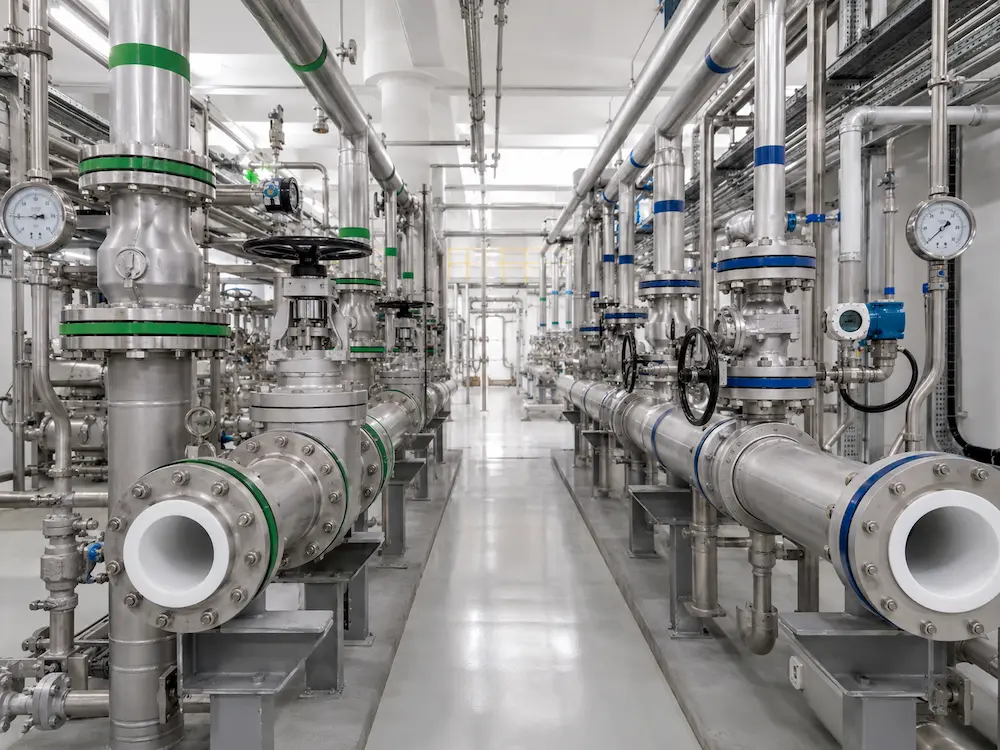
Acid and alkali pipelines are different from ordinary utility pipelines because the medium can chemically attack the valve surface, seal material, lining, or internal trim. A valve may look strong from the outside but fail internally if the body material, lining, seat, seal, or packing is not compatible with the actual chemical.
In chemical service, valve failure may happen in several ways:
- The valve body corrodes and loses pressure integrity.
- The ball, disc, plug, or stem is attacked by the medium.
- The seat or seal swells, cracks, hardens, or loses elasticity.
- The lining separates, blisters, cracks, or is worn by flow.
- The stem packing leaks and creates external chemical exposure.
- The valve torque increases because of corrosion, deposits, or crystallization.
- The actuator cannot operate the valve after torque increases.
For procurement teams, a low-cost valve can become expensive if it fails after installation. Replacement cost includes not only the valve itself, but also shutdown time, labor, cleaning, chemical handling, flange work, safety procedures, and possible production loss. This is why corrosion-resistant valve selection should focus on total service reliability rather than only purchase price.
What Makes Acid and Alkali Pipelines Difficult for Valves?
Acids and alkalis create different corrosion and compatibility challenges. Some acids attack metals aggressively. Some alkalis affect aluminum, zinc, certain elastomers, and some coatings. Some media are corrosive only at higher concentrations or higher temperatures. Some chemical mixtures are more difficult than a single chemical because each component may attack a different part of the valve.
The same valve material may perform differently under different process conditions. For example, a stainless steel valve may be suitable for one weak acid service but not suitable for a strong chloride-containing acid. A rubber lined valve may work well in some slurry or water treatment services but fail in solvent-containing media. A PTFE lined valve may provide broad chemical resistance, but buyers still need to check temperature, pressure, vacuum conditions, permeation risk, and mechanical stress.
Important acid and alkali pipeline factors include:
- Chemical name and composition
- Concentration
- Operating temperature
- Maximum pressure
- Flow velocity
- Solid particles or slurry content
- Crystallization or scaling risk
- Cleaning and flushing method
- Manual or automated operation
- Indoor, outdoor, or corrosive ambient environment
Without these details, no supplier can make a reliable valve recommendation. The phrase “acid valve” or “alkali valve” is not specific enough for serious industrial selection.
Key Information Buyers Must Confirm Before Selecting a Valve
Before choosing valve type or material, buyers should prepare a clear working condition sheet. This helps the valve supplier determine whether stainless steel, PTFE lining, rubber lining, alloy material, plastic material, or another configuration is more suitable.
| Selection Data | What to Provide | Why It Matters |
|---|---|---|
| Chemical Medium | Exact chemical name or mixture composition | Determines body, lining, seat, seal, and packing compatibility |
| Concentration | Percentage or concentration range | Corrosion behavior may change significantly with concentration |
| Temperature | Normal and maximum temperature | Higher temperature can accelerate corrosion and reduce seal life |
| Pressure | Operating pressure and design pressure | Determines pressure rating and body structure |
| Flow Condition | Clean liquid, slurry, gas, vapor, or mixed phase | Affects valve type, wear risk, and seat design |
| Solids Content | Particle size and concentration | Important for abrasion, blockage, and lining selection |
| Operation Mode | Manual, gearbox, electric, or pneumatic | Determines torque, actuator protection, and control requirements |
| Connection Type | Flanged, threaded, welded, wafer, or union | Must match pipeline design and maintenance requirements |
| Documentation | Drawings, test reports, material certificates | Supports project approval and quality control |
Main Valve Types for Acid and Alkali Pipelines
Ball Valves
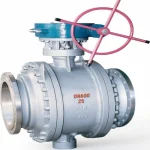
Ball valves are commonly used for shutoff and isolation in acid and alkali pipelines. They provide quarter-turn operation, tight sealing, low pressure drop, and easy automation. Stainless steel ball valves, PTFE seated ball valves, PTFE lined ball valves, titanium ball valves, and electric ball valves are commonly considered for corrosive chemical systems.
Ball valves are suitable for many clean chemical liquids, but they may not be ideal for heavy slurry or media that crystallizes inside the cavity unless the valve design is selected for that service. Buyers should confirm seat material, ball material, stem packing, and whether the valve cavity can trap chemicals.
Butterfly Valves
Butterfly valves are often used in larger acid and alkali pipelines where compact size, lower weight, and cost-effective flow control are important. Rubber lined butterfly valves and PTFE lined butterfly valves are common in many chemical and water treatment systems.
The key selection factors are disc material, liner material, seat compatibility, pressure rating, and shutoff requirement. Butterfly valves are useful for larger pipelines, but aggressive chemicals or high-pressure service may require special designs.
Diaphragm Valves
Diaphragm valves are often used for corrosive fluids, slurry, wastewater chemicals, and contaminated media because the diaphragm separates the process fluid from the stem and operating mechanism. This reduces the risk of stem leakage.
The diaphragm material is critical. PTFE, EPDM, natural rubber, or other elastomers may be used depending on the chemical medium, temperature, pressure, and operation frequency.
Plug Valves
Plug valves can be used for shutoff and flow routing in chemical services. Lined plug valves are often selected where corrosion resistance and durable flow routing are required. They may be used in applications where a full-bore design and chemical-resistant lining are important.
Buyers should confirm lining quality, operating torque, stem sealing, and whether the plug valve is suitable for the specific chemical and temperature.
Check Valves
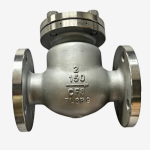
Check valves prevent reverse flow in acid and alkali pipelines. They are used to protect pumps, prevent backflow contamination, and maintain process direction. For corrosive service, body material, disc material, spring material, seat material, and sealing components must all be compatible with the medium.
Control Valves
Control valves are used when the system requires precise flow, pressure, or dosing control. In corrosive service, buyers should check body material, trim material, packing design, actuator type, and whether the valve can handle cavitation, flashing, or erosive flow.
Valve Type Comparison for Acid and Alkali Service
| Valve Type | Best Use | Advantages | Selection Risk |
|---|---|---|---|
| Ball Valve | Shutoff and isolation | Fast operation, tight sealing, low pressure drop | Cavity trapping, seat compatibility, slurry limitation |
| Butterfly Valve | Large pipeline isolation and control | Compact, lightweight, cost-effective in larger sizes | Liner compatibility and shutoff performance must be checked |
| Diaphragm Valve | Corrosive or contaminated fluids | Stem isolated from medium, good for many chemical services | Diaphragm life depends on material and cycling |
| Plug Valve | Corrosive flow routing | Durable and available with chemical-resistant lining | Higher torque and lining quality concerns |
| Check Valve | Backflow prevention | Protects pumps and prevents reverse flow | Wrong sizing may cause chatter, leakage, or water hammer |
| Control Valve | Flow or pressure regulation | Good process control capability | Trim corrosion, cavitation, flashing, and packing leakage risk |
Corrosion-Resistant Valve Materials
Stainless Steel
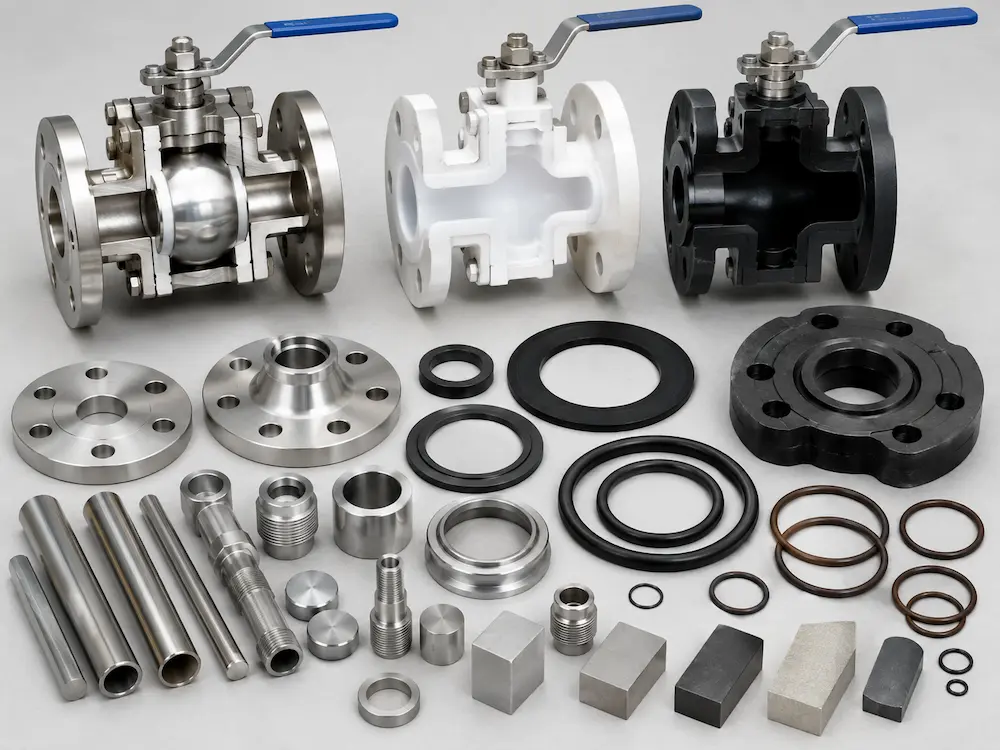
Stainless steel is widely used for corrosion-resistant valves because it offers good mechanical strength and corrosion resistance in many industrial environments. Common grades include 304, 316, and 316L. For many chemical services, 316 or 316L may be preferred over 304 because of better corrosion resistance.
However, stainless steel should not be treated as a universal solution. Chloride-rich media, strong acids, high-temperature corrosive fluids, and certain chemical mixtures may require lined valves or higher alloys. Buyers should confirm chemical compatibility rather than assuming stainless steel is always suitable.
PTFE
PTFE is widely used in corrosion-resistant valves as a lining, seat, seal, or diaphragm material. It has broad chemical resistance and low friction, making it useful for many acid and alkali applications.
PTFE lined valves are often selected when the metal body cannot directly contact the process medium. However, buyers should still evaluate temperature, pressure, permeation, vacuum service, mechanical stress, and lining quality.
Rubber Lining
Rubber lined valves may be suitable for selected acid, alkali, slurry, and water treatment applications. Rubber lining can provide corrosion protection and abrasion resistance in suitable services. EPDM, natural rubber, nitrile rubber, and other elastomer systems may be used depending on the medium.
The limitation is chemical compatibility. Rubber materials can be attacked by some solvents, oils, oxidizing chemicals, and high-temperature conditions. Buyers should select the rubber type according to the specific medium rather than choosing “rubber lined” as a general category.
EPDM
EPDM is commonly used in seats, seals, diaphragms, and linings for water, some acids, some alkalis, and selected chemical services. It is often considered in water treatment and chemical utility applications.
EPDM is not suitable for many oils, hydrocarbons, and certain solvents. Buyers should confirm compatibility with the actual chemical and temperature.
FKM
FKM is often used where resistance to oils, fuels, and many chemicals is needed. It can be useful for selected chemical services, but it is not suitable for every acid or alkali. The actual medium and temperature must be checked.
High-Alloy Materials
For severe acid, chloride, oxidizing, seawater, or high-temperature corrosive service, high-alloy materials may be required. Options may include duplex stainless steel, super duplex stainless steel, nickel alloys, titanium, or other specialty alloys depending on the chemical process.
Titanium is often considered for corrosion-critical pipelines where chloride resistance, seawater compatibility, or long-term corrosion stability is important. For example, a titanium ball valve may be evaluated for chemical transfer, desalination, marine, or chloride-rich systems where standard stainless steel may face higher localized corrosion risk.
High-alloy valves are usually more expensive, so buyers should evaluate service life, safety risk, downtime cost, chemical compatibility, and project requirements before selecting them. In many projects, the higher initial cost may be justified when valve failure would cause shutdown, leakage, or safety risk.
Material and Lining Comparison Table
| Material or Lining | Main Strengths | Limitations | Common Use in Acid and Alkali Pipelines |
|---|---|---|---|
| 304 Stainless Steel | Cost-effective, good general corrosion resistance | Limited in chloride-rich or strong corrosive service | Low-risk chemical utility lines |
| 316 / 316L Stainless Steel | Better corrosion resistance than 304 in many conditions | Still not suitable for all strong acids or chloride media | Chemical transfer, water treatment, general corrosive fluids |
| PTFE Lining | Broad chemical resistance and protection for metal body | Temperature, pressure, permeation, and lining quality must be checked | Strong acids, alkalis, corrosive chemical transfer |
| Rubber Lining | Good abrasion resistance and cost-performance in selected services | Not suitable for many solvents, oils, or high-temperature media | Slurry, water treatment chemicals, mild acid or alkali service |
| EPDM | Useful for water, some acids, and some alkalis | Not suitable for many oils and hydrocarbons | Seats, seals, diaphragms, and lined valves |
| FKM | Good resistance to many oils and chemicals | Compatibility must be checked for specific acids and alkalis | Seals and packing in selected chemical services |
| High Alloys | Strong resistance in severe corrosive environments | Higher cost and longer procurement cycle | Critical acid service, chloride-rich media, high-risk pipelines |
For projects where chloride exposure, seawater, oxidizing chemicals, or highly corrosion-sensitive media are key concerns, buyers may compare specialty alloy options such as a titanium ball valve. For broader valve type selection, Vcore Valve’s industrial valve product range can help buyers compare isolation, control, backflow prevention, and automated valve options for chemical processing systems.
Material Compatibility Logic for Acid Pipelines
Acid service requires careful selection because acid corrosion behavior can change significantly with concentration, temperature, impurities, and oxidizing strength. Buyers should not select a valve only by acid name. The full service condition must be reviewed.
For acid pipelines, key questions include:
- Is the acid organic or inorganic?
- Is the acid oxidizing or reducing?
- What is the concentration?
- What is the operating temperature?
- Does the medium contain chlorides or other aggressive ions?
- Is the line clean liquid, slurry, or mixed phase?
- Does the process include flushing, cleaning, or temperature cycling?
PTFE lined valves are often considered for strong corrosive acid service because PTFE provides broad chemical resistance. Stainless steel may be suitable for selected weak or moderate acid services, but it can fail in aggressive acid environments. Rubber lined valves may be useful for some acid slurry or water treatment services, but rubber compatibility must be confirmed.
When the acid is hazardous, high-value, or difficult to shut down, buyers should prioritize proven compatibility, documentation, and service life over lowest unit price.
Material Compatibility Logic for Alkali Pipelines
Alkali pipelines also require careful material selection. Some alkalis may be handled by stainless steel, lined valves, or selected elastomers, but the correct choice depends on concentration, temperature, and impurities.
For alkali pipelines, key questions include:
- What is the alkali chemical name?
- What is the concentration?
- Is the medium hot or near ambient temperature?
- Does the process contain solids or crystallization risk?
- Will the valve operate frequently or stay in one position for long periods?
- Are there cleaning cycles or mixed chemicals in the system?
Stainless steel may be suitable for many alkali services, but this should still be verified. EPDM and selected rubber materials may be useful for some alkaline solutions, especially in water treatment and chemical utility systems. PTFE lined valves may also be selected where broad chemical resistance is required.
The main mistake is assuming that alkali service is always easier than acid service. High concentration, high temperature, crystallization, and solids can all increase valve risk.
Seat, Seal and Lining Selection
Many valve failures in acid and alkali pipelines do not start from the valve body. They start from the soft parts: seats, seals, packing, diaphragms, and linings. These components often determine whether a corrosion-resistant valve can operate reliably in real service.
Seats
Seats create the sealing surface between the closure element and valve body. PTFE seats are common in chemical ball valves because of chemical resistance and low friction. Reinforced PTFE, PEEK, rubber, EPDM, and other materials may be used depending on the valve type and medium.
Seals and O-Rings
Seals and O-rings must be compatible with the chemical medium and temperature. NBR, EPDM, FKM, and PTFE each have different strengths and limitations. Using the wrong elastomer can cause swelling, cracking, hardening, leakage, or rapid failure.
Packing
Stem packing prevents leakage along the valve stem. In acid and alkali service, packing failure can create external leakage and safety risk. Buyers should confirm packing material, gland design, and whether frequent operation may affect packing life.
Lining
The lining protects the valve body from direct contact with corrosive media. PTFE lining, PFA lining, FEP lining, and rubber lining can all be used in selected services. Buyers should evaluate lining thickness, adhesion, pinhole risk, temperature limit, vacuum suitability, and mechanical damage risk.
Manual vs Electric Corrosion-Resistant Valves
Many acid and alkali pipelines use manual valves for simple isolation. However, electric and pneumatic automation is increasingly used where safety, remote operation, process consistency, or frequent cycling is required.
Manual Corrosion-Resistant Valves
Manual valves are suitable for low-frequency operation, accessible pipelines, and simple isolation duties. They are cost-effective and easy to maintain, but operator exposure may be a concern when the medium is hazardous or the valve is installed in a difficult location.
Electric Corrosion-Resistant Valves
Electric valves are useful when the pipeline requires remote control, PLC integration, timed operation, or safer operation. Electric ball valves and electric butterfly valves are commonly used in chemical transfer, water treatment, dosing, and tank systems.
For acid and alkali pipelines, actuator selection should consider torque margin, corrosion-resistant housing, enclosure protection, voltage, control signal, duty cycle, manual override, and fail-safe needs. If chemical deposits or corrosion increase valve torque over time, an undersized actuator may fail to open or close the valve.
Pneumatic Corrosion-Resistant Valves
Pneumatic valves are often used in chemical plants where fast operation, high cycle life, or fail-safe spring return is needed. They require compressed air and proper accessories such as solenoid valves, limit switches, positioners, and air treatment equipment.
Common Selection Mistakes and Consequences
Mistake 1: Choosing Stainless Steel Without Checking Compatibility
Stainless steel is widely used, but it is not suitable for every acid or alkali. In some corrosive environments, stainless steel may suffer pitting, crevice corrosion, or rapid chemical attack. Buyers should verify compatibility before selecting stainless steel as the default option.
Mistake 2: Selecting PTFE Lining Only by Price
PTFE lined valves can be very useful in corrosive service, but lining quality matters. Poor lining quality may cause pinholes, delamination, permeation, or mechanical damage. Buyers should evaluate supplier experience, lining inspection, and working condition suitability.
Mistake 3: Using Rubber Lining in Incompatible Chemical Service
Rubber lining is not universal. Some chemicals can attack rubber, cause swelling, or reduce mechanical strength. Rubber lined valves should be selected according to chemical compatibility, temperature, solids content, and abrasion requirements.
Mistake 4: Ignoring Temperature
Temperature can accelerate corrosion and reduce the life of seats, seals, linings, and diaphragms. A valve that works at room temperature may fail at elevated temperature.
Mistake 5: Ignoring Slurry or Solids
Solid particles can abrade lining, damage seats, block valve cavities, and increase torque. Slurry service requires careful valve type selection and may require rubber lining, diaphragm valves, or special designs.
Mistake 6: Forgetting Stem Leakage Risk
Stem packing is a common leakage point. In corrosive service, stem leakage can be dangerous and difficult to manage. Diaphragm valves or properly packed corrosion-resistant valves may be considered for higher-risk applications.
Mistake 7: Undersizing the Actuator
For automated valves, the actuator must be sized based on real valve torque under operating conditions. Corrosion, deposits, pressure, and long idle periods can increase torque. A weak actuator can leave the valve stuck in a partially open position.
Corrosion-resistant valve selection should also consider long-term maintenance risk. Corrosion can reduce valve performance, increase leakage risk, and create higher maintenance costs if the valve material, lining, coating, or sealing components are not suitable for the operating environment. For a more general maintenance-focused discussion, see this guide on basic knowledge and measures for valve corrosion prevention.
Valve Failure Risks in Acid and Alkali Service
Understanding failure mechanisms helps buyers choose valves more effectively. The most common failure risks include corrosion, leakage, lining damage, seal incompatibility, blockage, and actuation failure.
| Failure Risk | Possible Cause | How to Reduce Risk |
|---|---|---|
| Body Corrosion | Wrong metal material or damaged lining | Select compatible material or suitable lined valve |
| Seat Leakage | Chemical attack, particles, wear, or deformation | Choose compatible seat material and proper valve type |
| Stem Leakage | Packing failure or corrosion around stem area | Check packing material and consider diaphragm design for high-risk media |
| Lining Damage | Abrasion, delamination, temperature, vacuum, or poor lining quality | Confirm lining material, thickness, inspection, and service condition |
| High Torque | Deposits, crystallization, corrosion, or seat swelling | Review medium behavior and apply actuator torque margin |
| Actuator Failure | Undersized torque, wrong voltage, water ingress, or corrosive ambient air | Specify actuator torque, enclosure rating, control signal, and environment |
Technical Checklist for B2B Buyers
Before ordering corrosion-resistant valves for acid or alkali pipelines, buyers should prepare a complete specification. This reduces misunderstanding and helps the supplier recommend a safer valve solution.
- Chemical name and composition
- Concentration range
- Normal and maximum temperature
- Operating and design pressure
- Valve size and pipeline standard
- Required valve type
- Flow condition: clean liquid, slurry, gas, vapor, or mixed phase
- Solids content and particle size
- Required shutoff performance
- Body material preference
- Lining material requirement
- Seat, seal, diaphragm, or packing material requirement
- Connection type
- Operation method: manual, gearbox, electric, or pneumatic
- Actuator voltage and control signal if automated
- Indoor, outdoor, corrosive, or hazardous environment
- Testing and documentation requirements
Documentation and Quality Control
For acid and alkali pipeline projects, documentation is part of valve quality. Buyers should not rely only on product photos or short quotations. Clear documents help verify that the valve matches the project requirement and reduce installation or inspection problems.
Useful documents may include:
- Dimensional drawing
- Material certificate
- Pressure test report
- Seat leakage test report
- Lining inspection information
- Actuator datasheet for automated valves
- Wiring diagram for electric valves
- Installation and maintenance manual
- Packing and marking details
For B2B procurement, a supplier who can discuss material compatibility, lining options, actuator matching, and test documentation is usually more valuable than a supplier who only provides the lowest price.
Final Recommendations for B2B Buyers
The best corrosion-resistant valve for acid and alkali pipelines is not the same for every project. The correct choice depends on the medium, concentration, temperature, pressure, valve type, flow condition, lining material, seal compatibility, operation method, and documentation needs.
For clean corrosive liquid shutoff, a properly selected ball valve may be suitable. For larger pipelines, a lined butterfly valve may provide better cost-performance. For highly corrosive chemicals, PTFE lined valves may be preferred. For slurry or abrasive chemical service, rubber lined valves or diaphragm valves may be more practical. For precise control, a chemical-resistant control valve may be needed. For remote operation and safer automation, electric or pneumatic valves should be selected with enough torque margin and environmental protection.
This article is part of our chemical valve selection series. If you are still comparing overall valve types, chemical valve materials, PTFE lining, rubber lining, automation options, and common pipeline failure risks, start with the main industrial valves for chemical processing guide before selecting a specific corrosion-resistant valve.
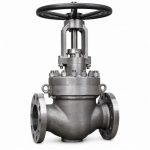
If your project involves acid, alkali, corrosive chemical transfer, water treatment chemicals, slurry, or automated chemical pipelines, Vcore Valve can help review your working conditions and recommend a practical corrosion-resistant valve configuration. Buyers can also explore our industrial valve product range to compare ball valves, butterfly valves, gate valves, globe valves, check valves, control valves, and other valve solutions for chemical processing projects.
Share your chemical medium, concentration, temperature, pressure, valve size, flow condition, connection type, operation method, and documentation requirements, and we can help compare suitable valve types, materials, linings, seats, seals, and actuator options. This helps buyers avoid overpaying for unnecessary specifications while reducing the risk of corrosion failure, leakage, and incompatible valve selection.
For industrial sourcing, the right question is not simply “Which valve is corrosion-resistant?” The better question is: “Which valve material and design can resist this specific chemical service while sealing reliably and reducing long-term maintenance risk?”
FAQ
1. What are corrosion-resistant valves?
Corrosion-resistant valves are valves designed to handle corrosive media such as acids, alkalis, chemical solutions, wastewater chemicals, and selected slurry services. They may use stainless steel, PTFE lining, rubber lining, EPDM, FKM, high-alloy materials, titanium, or other compatible materials depending on the medium, concentration, temperature, pressure, and flow condition.
2. Which valve is best for acid pipelines?
The best valve for acid pipelines depends on acid type, concentration, temperature, pressure, and flow condition. PTFE lined valves are often considered for strong corrosive acids, while stainless steel, titanium, or alloy valves may be suitable for selected acid services. Rubber lined valves may work in some acid slurry or water treatment applications, but chemical compatibility must be confirmed.
3. Which valve is best for alkali pipelines?
The best valve for alkali pipelines depends on the alkali chemical, concentration, temperature, pressure, and solids content. Stainless steel, PTFE lined valves, rubber lined valves, EPDM seals, or alloy materials may be suitable in different services. Buyers should not assume that one material works for all alkali pipelines.
4. Are PTFE lined valves better than rubber lined valves?
PTFE lined valves and rubber lined valves are used for different conditions. PTFE lining usually offers broader chemical resistance for many corrosive media, while rubber lining may provide better abrasion resistance and cost-performance in selected slurry or water treatment services. The better choice depends on chemical compatibility, temperature, pressure, solids content, and service life expectations.
5. What information should I provide when buying corrosion-resistant valves?
When buying corrosion-resistant valves, provide the chemical name, concentration, temperature, pressure, valve size, flow condition, solids content, required valve type, connection type, operation method, shutoff requirement, installation environment, and documentation needs. Complete working condition data helps the supplier recommend a safer and more reliable valve configuration.